
A car that starts to judder is hard to ignore. You feel it through the seat, steering wheel or pedals, and it usually shows up at the worst time – pulling away at a roundabout, accelerating onto the dual carriageway, or crawling through traffic on the school run. If you are asking, why does my car judder, the short answer is that something in the engine, transmission, fuel, ignition or drivetrain is not working smoothly.
The more useful answer is that the timing of the judder matters. A car that judders when pulling away points to different faults from one that judders at motorway speed or under braking. On Audi, Volkswagen, Škoda and SEAT models in particular, the exact symptoms can tell you a lot, especially on DSG-equipped cars or higher-mileage turbo petrol and diesel engines.
Why does my car judder at certain speeds or loads?
Judder is not a fault in itself. It is a symptom of uneven power delivery or unwanted vibration. That can come from the engine misfiring, a clutch slipping or grabbing, worn mounts allowing too much movement, or a gearbox not engaging cleanly.
This is why two cars with what feels like the same problem can need completely different repairs. One may need spark plugs and ignition coils. Another may need DSG fault-finding, a Haldex service, or attention to worn suspension or drivetrain components. Proper diagnosis matters because guessing gets expensive quickly.
Judder when pulling away
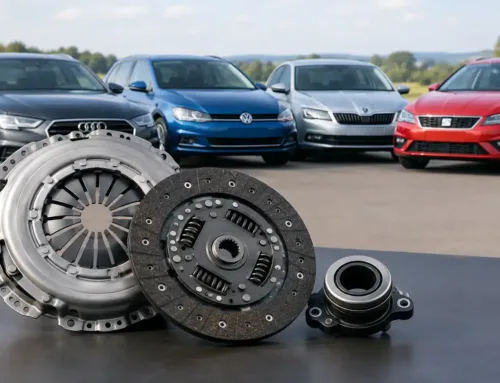
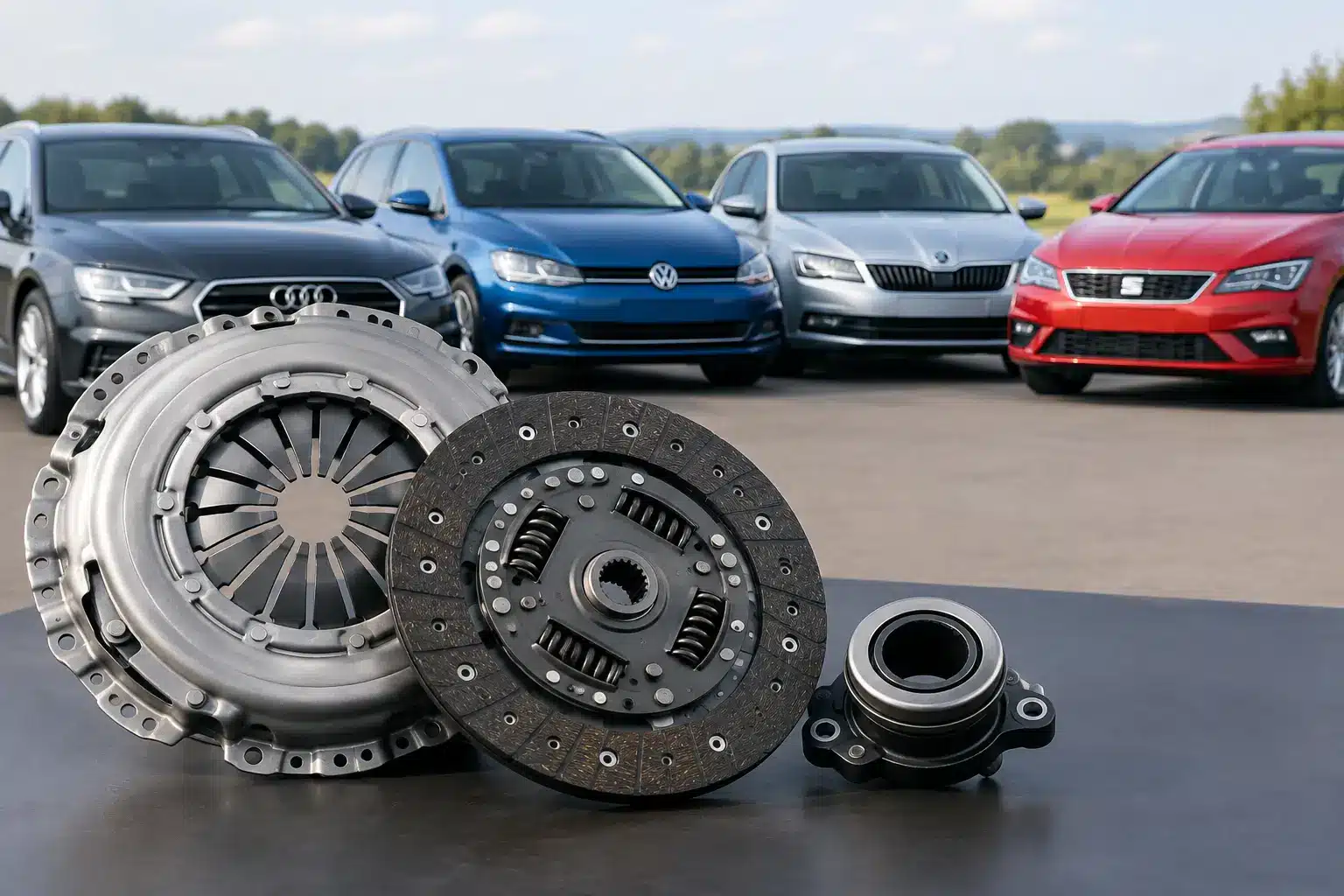
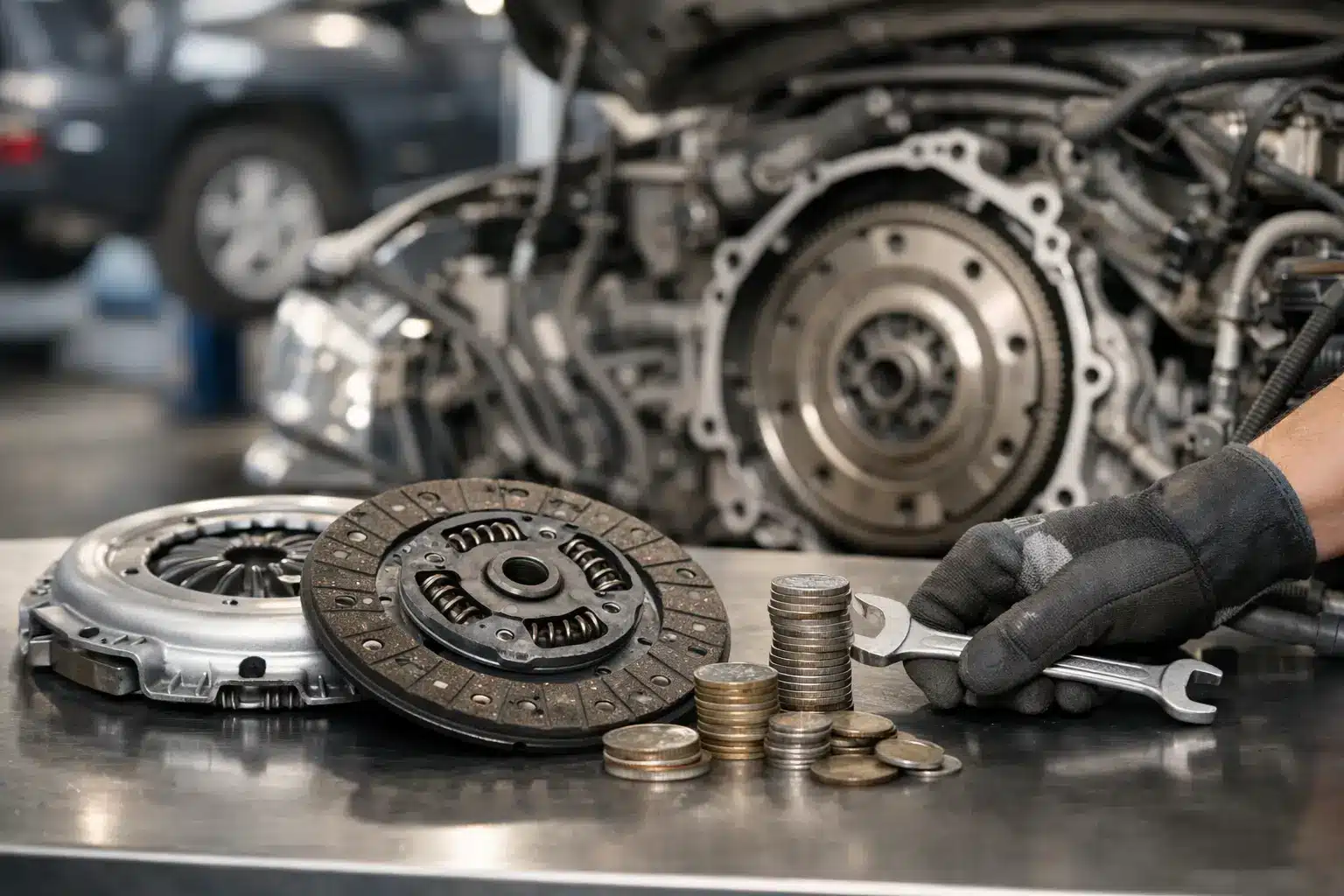
If the car shudders as you move off from a standstill, the clutch or gearbox is one of the first places to look. On a manual, a worn clutch friction plate or contamination on the clutch surface can make take-up uneven. On an automatic or DSG, the issue can be linked to clutch adaptation, worn internal components, fluid condition or mechatronic faults.
For VAG drivers, this is a common area where specialist knowledge helps. A DSG that feels jerky or judders when setting off does not always need a full gearbox replacement, but it does need accurate testing. Fluid service history, fault codes, live data and a proper road test all matter.
Judder under acceleration
If the car drives reasonably well at light throttle but judders when you accelerate, suspect an engine or fuel delivery issue first. Petrol engines often show this with tired spark plugs, failing ignition coils or air leaks. Diesel engines may judder because of injector problems, EGR issues or airflow faults.
Turbocharged engines can also judder if boost is not being controlled properly. A split hose, sticking actuator or sensor fault can make power come in unevenly. Drivers often describe this as hesitation, surging or a brief shaking through the whole car.
Judder at steady speed
A judder that appears at a fixed speed, especially on a smooth road, can point away from the engine and towards the wheels, tyres or drivetrain. Buckled wheels, tyre damage, poor balancing or worn driveshaft joints can all create vibration that feels like engine trouble.
This is where context matters. If the revs stay steady and the vibration changes mostly with road speed, the problem may be underneath the car rather than under the bonnet.
Judder when braking
Strictly speaking, brake judder is a separate issue, but many drivers describe it the same way. If the steering wheel shakes or the pedal pulses when braking, warped brake discs, uneven pad deposits or suspension wear are common causes. If it only happens while slowing down, focus there first.
Common causes of car judder
The most common causes are ignition faults, fuel delivery issues, clutch or gearbox problems, worn engine mounts, and wheel or tyre faults. The challenge is that symptoms can overlap.
On petrol VAG models, spark plugs and coil packs are frequent culprits. A small misfire can feel like a slight tremor at first, then become more obvious under load. If left alone, it can affect fuel consumption, performance and even damage the catalytic converter.
On diesel models, uneven running may come from injector imbalance, intake carbon build-up, EGR faults or DPF-related issues. Some cars will also drop into reduced performance before the problem becomes constant.
Transmission faults are another major cause. Manual clutch wear tends to build gradually. DSG issues can be more variable – some cars judder only when cold, others only in stop-start traffic, and some show fault codes while others do not. That is why VAG-specific diagnostic equipment and experience are valuable, particularly for owners trying to avoid unnecessary parts replacement.
Why does my car judder in a DSG automatic?
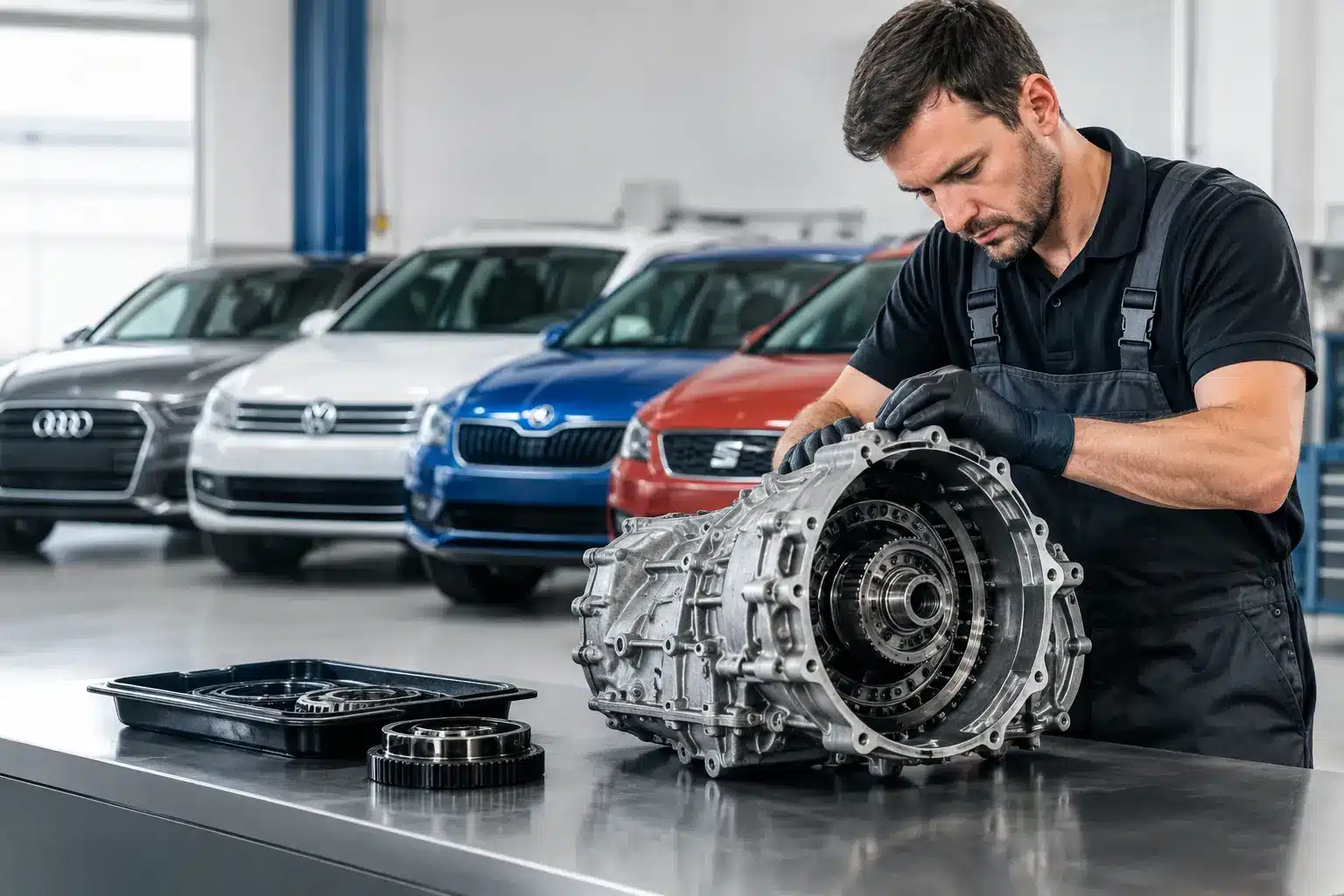
On a DSG-equipped Audi, Volkswagen, Škoda or SEAT, judder often points to clutch engagement issues, software or adaptation problems, worn internal components, or overdue servicing. Not every DSG judder means major failure, but it should not be ignored.
A gearbox that has missed its service interval can behave poorly simply because the fluid and filter are no longer doing their job properly. In other cases, the mechatronic unit may be struggling to control the gearbox as it should. Drivers often notice this as hesitation pulling away, shuddering in lower gears, rough engagement in traffic, or inconsistent changes when warm.
If you have been wondering where to get an Audi DSG service or a DSG inspection near Aldermaston, Tadley, Basingstoke, Reading or Newbury, it makes sense to use a workshop that sees these systems regularly rather than treating them like a generic automatic. The same applies whether you drive an Audi A3, VW Golf, Škoda Octavia or SEAT Leon.
When the problem is not the engine or gearbox
Not every judder comes from combustion or transmission. Worn engine mounts can make a minor rough-running issue feel much worse inside the cabin. A worn inner CV joint can cause vibration under acceleration that disappears when you lift off. Suspension wear can add shake through the steering, while tyre defects can mimic more serious faults.
On four-wheel-drive VAG models, neglected Haldex servicing can also contribute to drivetrain complaints. Not every vibration on a 4Motion or quattro car is Haldex-related, but the rear coupling system should be part of the wider diagnostic picture if the symptoms fit.
What you can check before booking in
You do not need to strip the car down, but a few simple observations help narrow it down. Notice whether the judder happens when the engine is cold or hot, only under acceleration, only when braking, or at a particular road speed. Pay attention to whether any warning lights appear and whether the rev counter jumps around when the judder happens.
It is also worth thinking about recent history. Has the car missed a service, had cheap ignition parts fitted, or developed the problem after a tyre change or pothole strike? Small details often save time in diagnosis.
What is not worth doing is carrying on indefinitely in the hope it clears up. A minor misfire can become a catalyst problem. A clutch that starts by juddering can end in complete failure. A gearbox issue caught early is usually cheaper to deal with than one driven until it causes wider damage.
Why specialist diagnosis saves money
The reason judder can be frustrating is that it is easy to misdiagnose from symptoms alone. Replacing plugs, coils, injectors or gearbox parts by guesswork can cost far more than a proper inspection. The right approach is a road test, fault-code scan, live data analysis and a mechanical check based on when and how the symptom occurs.
For owners in Aldermaston and the wider Tadley, Basingstoke, Reading and Newbury area, that local specialist route is often the sensible middle ground. You get dealer-level diagnostic capability and VAG familiarity without defaulting to main dealer pricing or generic advice. If your car is a daily driver, convenience matters too – especially when you need the problem identified properly rather than returning again and again for parts that did not fix it.
Mechalex deals with exactly this sort of fault on Audi, Volkswagen, Škoda and SEAT vehicles, from routine service-related issues to more involved DSG, mechatronic and drivetrain diagnosis. That matters because judder is one of those symptoms where platform knowledge makes the process quicker and more accurate.
When to stop driving the car
If the judder is mild and there are no warning lights, you may be able to drive short distances carefully while arranging an inspection. If the engine management light is flashing, the gearbox is refusing gears, the car feels unsafe, or the vibration is severe, stop using it until it is checked.
A harsh judder with loss of power is not something to push through on a commute to Reading or a motorway run past Newbury. The cost of recovery is usually less painful than the cost of turning a manageable repair into a major one.
The good news is that judder often has a fixable cause. The key is catching the pattern early and getting it diagnosed by someone who understands how these cars behave when something is just starting to go wrong. If your car has begun to feel rough, hesitant or shaky, trust the symptom – it is your car asking for attention before it asks for a bigger bill.
Need help with your Audi, VW, Škoda, SEAT or Cupra? Mechalex is an independent VAG specialist in Aldermaston, serving Reading, Newbury, Basingstoke and Tadley.
See our DSG gearbox service, try our free VAG AI diagnosis, or book online. Call 0118 380 1003.