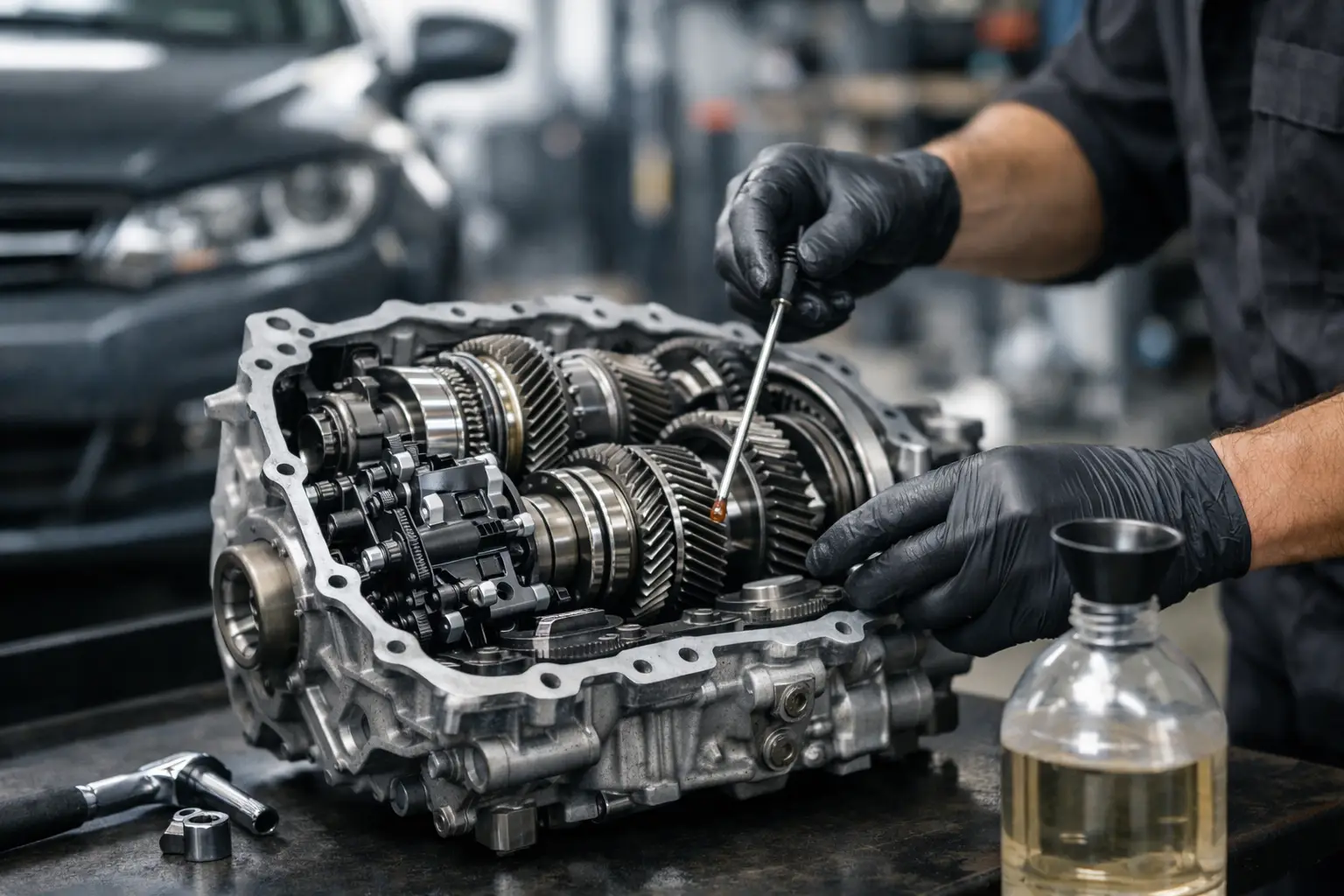
A DSG rarely gives much notice before small issues turn into expensive ones. One week the gearchanges feel slightly hesitant in traffic, the next you are dealing with jerks, warning lights or a gearbox that no longer behaves as it should. If you are wondering how to maintain DSG gearbox reliability, the answer is not complicated – but it does need to be done properly and on time.
For Audi, Volkswagen, Škoda and SEAT owners, DSG gearboxes offer quick shifts, good efficiency and a refined drive when they are healthy. They are also more complex than a conventional manual or older torque converter automatic. That means servicing matters, driving habits matter, and early diagnosis matters.
Why DSG maintenance matters
DSG stands for Direct Shift Gearbox. In simple terms, it uses two clutches and an electro-hydraulic control system to pre-select gears and shift quickly. That design is part of what makes a DSG feel sharp and efficient, but it also means the gearbox depends heavily on clean fluid, correct oil level, proper software behaviour and healthy internal components.
A neglected DSG can develop issues that start off feeling minor. You might notice a shudder pulling away, hesitation when selecting drive, rough shifting at low speed or a flashing PRNDS display. Sometimes the fault is mechanical, sometimes electrical, and sometimes it is down to poor service history. The common thread is that leaving it too long usually makes the repair more involved.
For daily drivers, that means inconvenience and cost. For enthusiasts, it can also affect performance, drivability and confidence in the car.
How to maintain DSG gearbox life in the real world
The biggest part of DSG maintenance is routine servicing at the correct interval. On many wet-clutch DSG units, this includes a gearbox oil and filter service, carried out with the right specification fluid and the correct filling procedure. That last point matters more than many owners realise. A DSG is not a gearbox you want serviced with guesswork.
Different VAG models use different DSG variants, and service requirements are not identical across the range. Some need regular oil and filter changes, while others have different maintenance demands depending on the transmission type and model year. This is where proper vehicle-specific knowledge helps. Assuming all DSG boxes are the same is a good way to get bad advice.
If your car is due for a DSG service, overdue, or has patchy history, it is worth dealing with it before symptoms begin. Preventative maintenance is almost always cheaper than mechatronic repairs or gearbox rebuild work.
Stick to the correct service interval
For many VAG applications, the DSG service interval is commonly around 40,000 miles, though it depends on the gearbox code and model. The safest approach is to check the exact requirement for your vehicle rather than relying on forum hearsay or generic online schedules.
Mileage is not the only factor. Age, stop-start driving and heat cycles all take their toll on gearbox fluid. A car that spends its life commuting through Reading or Basingstoke traffic may place very different demands on the transmission compared with one doing mostly steady motorway miles.
Use the right fluid and procedure
This is one of the areas where trying to save money can backfire. DSG servicing is not just an oil drain and refill. The gearbox needs the correct fluid specification, the proper filter where applicable, and the oil level set at the correct temperature. Diagnostic equipment is often part of doing the job correctly.
Too little fluid, the wrong fluid or an incorrect fill process can create shift quality problems and, in some cases, long-term damage. That is why specialist knowledge counts with these gearboxes.
Do not ignore software and adaptation issues
Not every DSG complaint means the gearbox is failing mechanically. Sometimes a transmission needs fault finding, software checks or adaptation values assessed after a repair or service issue. On VAG vehicles, proper diagnostics can make the difference between solving the actual cause and replacing parts unnecessarily.
If the gearbox feels different after battery issues, repairs, or a long period of poor driving behaviour, it may need more than a basic inspection. A specialist workshop with current diagnostic equipment can usually identify whether the problem is service-related, electrical, hydraulic or mechanical.
Driving habits that help your DSG last longer
Good maintenance is the foundation, but the way you drive also affects DSG wear. These gearboxes are designed to be used normally, but certain habits make life harder for the clutch packs and mechatronic system.
In slow-moving traffic, avoid using the throttle to creep constantly when you could leave a small gap and move more decisively. A DSG can handle low-speed manoeuvring, of course, but repeated feathering and holding the car on the bite point creates unnecessary clutch heat.
The same applies on hills. Use the brake to hold the vehicle rather than balancing it on the accelerator. If you are parking, come to a complete stop before shifting between drive and reverse. Selecting gears while the car is still rolling puts extra strain on internal components.
If you have a performance-tuned vehicle, gearbox condition becomes even more important. Extra torque can expose wear or servicing neglect more quickly, especially if the transmission was already overdue maintenance.
Warning signs you should not brush off
A healthy DSG should feel smooth, quick and predictable. Not every small quirk means disaster, but there are some signs that deserve proper attention.
Jerky take-up, shuddering from a standstill, delayed engagement, harsh changes, unexpected slipping between gears and warning lights all need investigating. So does a gearbox that suddenly behaves differently when hot.
Noises matter as well. Whining, clunking or rattling under load are not things to monitor for months in the hope they disappear. The earlier a fault is diagnosed, the better the chance of avoiding wider damage.
A common mistake is waiting until the car goes into limp mode. By that stage, what might have been a service, sensor or valve body issue may have developed into something more serious.
Can you extend DSG life with preventative checks?
Yes, provided they are the right checks. A general service is useful, but it will not replace DSG-specific inspection where symptoms exist. If your vehicle has high mileage, uncertain history or occasional shifting faults, it is sensible to have the gearbox assessed before committing to a longer journey or continuing to drive it daily.
A proper inspection may include checking for stored fault codes, reviewing service records, assessing fluid condition, road testing the car and evaluating live gearbox data. That level of diagnosis gives a clearer picture than simply saying the gearbox feels a bit rough.
For local VAG owners around Aldermaston, Tadley, Newbury, Basingstoke or Reading, using a workshop that sees these gearboxes regularly usually saves time and misdiagnosis. The DSG fitted to your Audi A3, Golf, Octavia or Leon may share design principles with other VAG models, but accurate diagnosis still depends on experience.
The trade-off between cost and doing it properly
Owners sometimes delay DSG servicing because the car still drives well. That is understandable, especially when routine maintenance competes with other costs. But a DSG service is one of those jobs where postponing it rarely saves money overall.
There is also a difference between the cheapest option and the right option. The gearbox may appear fine immediately after a poor-quality service, then develop issues later due to wrong fluid, contamination or incorrect oil level. By then, proving what caused the problem is not always straightforward.
That is why specialist VAG workshops are often the sensible middle ground. You get the right parts, fluid, tooling and diagnostic approach without defaulting to main dealer pricing.
When maintenance is no longer enough
Sometimes a DSG does need repair work. If the clutches are worn, the mechatronic unit has failed, or there is internal gearbox damage, servicing alone will not solve it. The key is identifying that early, before replacing good parts or wasting money on repeated fluid changes that were never going to fix the fault.
A proper diagnosis should tell you whether the gearbox needs maintenance, adaptation, mechatronic repair or more substantial transmission work. That clarity matters, especially if you rely on the car every day and need a realistic plan.
If you want to know how to maintain DSG gearbox performance for the long term, think of it this way: keep to the correct service schedule, drive it with a bit of mechanical sympathy, and get changes in behaviour checked early. These gearboxes can be excellent when cared for properly, and far less forgiving when they are ignored.
The best time to look after a DSG is before it gives you a reason to.