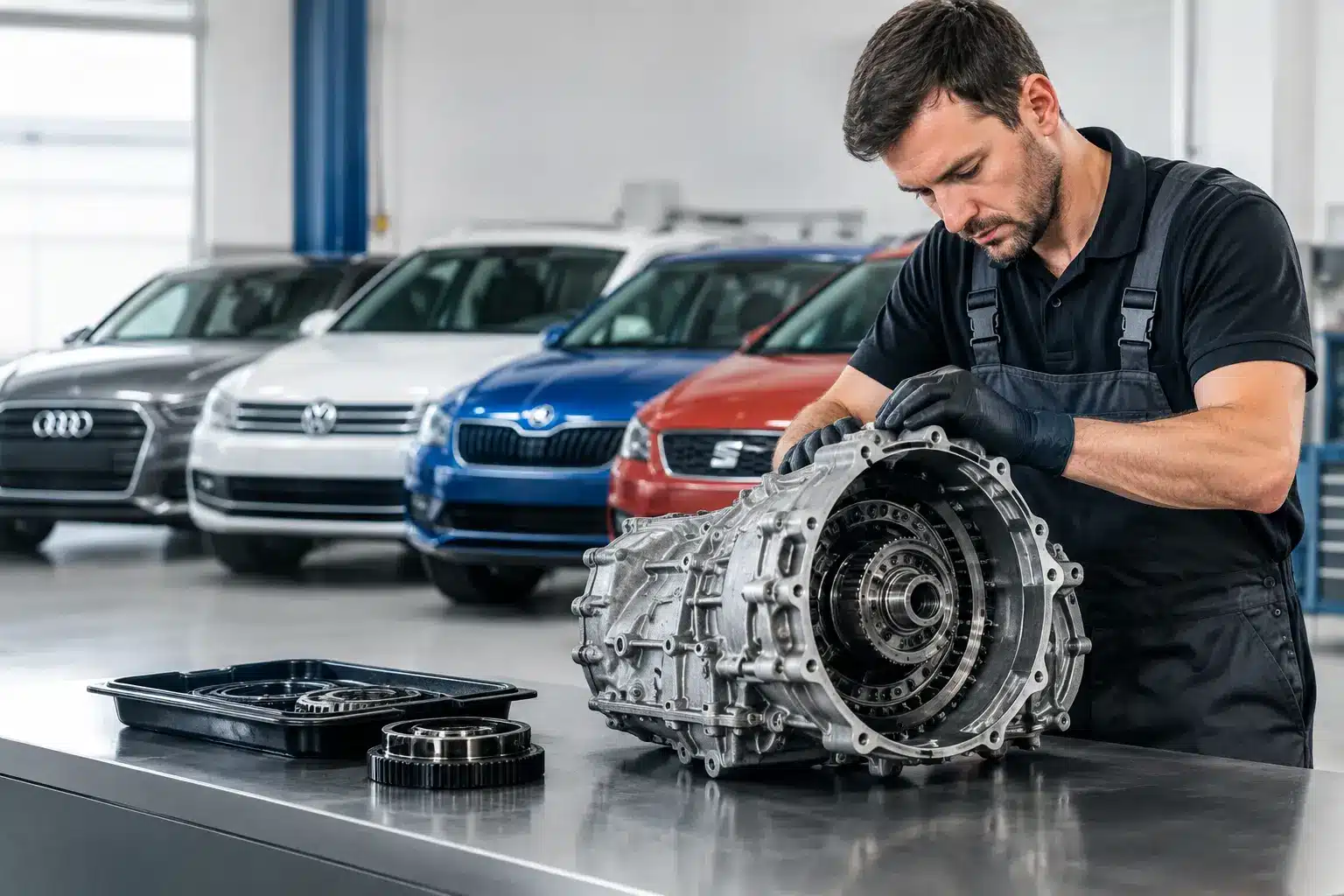
A DSG gearbox can make an Audi, Volkswagen, Škoda or SEAT a pleasure to drive: fast changes, smooth motorway cruising and responsive pull-away. But DSG servicing is not a job to put off simply because the car still drives normally. The oil, filter and adaptation settings all play a role in protecting the gearbox, and ignoring the correct maintenance can turn a routine service into an expensive repair.
For VAG owners around Aldermaston, Tadley, Basingstoke, Reading and Newbury, using a workshop that understands these transmissions can make a real difference. DSG gearboxes are not all the same, and the right approach depends on the gearbox fitted to your vehicle, its service history and how it is used.
What does DSG servicing involve?
DSG stands for Direct Shift Gearbox. It is a dual-clutch transmission, designed to pre-select the next gear so changes happen quickly and efficiently. Depending on the model, it may use wet clutches running in oil or dry clutches. This distinction matters because the service requirements, lubricants and common faults are different.
On many wet-clutch DSG units, servicing includes draining the old gearbox oil, replacing the filter where applicable, refilling with the correct approved fluid and setting the fluid level at the specified temperature. This is not simply an oil change. The gearbox must be handled correctly, with the right equipment and procedure, to avoid incorrect oil level or contamination.
A proper inspection should also consider fault codes, gearbox operation, service history and any concerns you have noticed while driving. If there is a stored fault, a delayed engagement or a warning light, changing the oil alone may not be the answer. Diagnosis comes first.
When should a DSG gearbox be serviced?
The correct interval is set by the manufacturer and varies between gearbox types, engine combinations and model years. Many wet-clutch VAG DSG gearboxes have a service interval around every 40,000 miles, but that should never be treated as a universal rule. Some units have different schedules, while dry-clutch gearboxes do not always have the same routine fluid-and-filter service requirement.
The practical advice is straightforward: check the service schedule for your registration and gearbox code rather than relying on forum advice or a generic mileage figure. This is especially worthwhile if you have recently bought a used Audi, VW, Škoda or SEAT with incomplete paperwork.
Short journeys, frequent stop-start traffic, towing, spirited driving and repeated commuting can all place additional heat and load on a transmission. A car covering motorway miles from Newbury to Reading may experience different conditions from one doing daily school runs around Tadley. Neither use is automatically a problem, but it reinforces why maintenance should be based on the right specification rather than guesswork.
Signs your DSG may need attention
Routine servicing is best done before symptoms develop. However, there are warning signs that deserve a professional check rather than being dismissed as normal DSG behaviour.
You may notice a hesitation when pulling away, a harsh change between gears, shuddering at low speed, a delay when selecting Drive or Reverse, or unexpected rev flare during acceleration. Gearbox warning messages, an engine management light and limp-home mode should also be investigated promptly.
Not every rough shift means the gearbox has failed. A software issue, worn engine or gearbox mount, clutch wear, a mechatronic fault or an unrelated engine problem can all affect how the car feels. Equally, a DSG service will not cure every transmission fault. Honest advice means identifying the cause before recommending work.
The mechatronic unit matters
The mechatronic unit is the electro-hydraulic control system that manages clutch operation and gear selection. It is a highly capable component, but it can develop faults that require more than maintenance. Symptoms can overlap with clutch or fluid-related issues, which is why VAG-specific diagnostic equipment and experience are valuable.
If a fault is found, the sensible route depends on the vehicle and the diagnosis. In some cases, adaptation or software work may help. In others, a repair or replacement may be necessary. The important point is not to authorise costly work based solely on a symptom description.
Where to get an Audi DSG service
If you are asking where to get an Audi DSG service, look for a specialist that can confirm the gearbox fitted to your car, follow the relevant VAG procedure and diagnose faults rather than treating every issue as a standard oil service.
Mechalex provides DSG servicing for Audi, Volkswagen, Škoda and SEAT vehicles from its Aldermaston workshop. With more than 30 years of VAG experience, modern diagnostic equipment and OEM or equivalent parts standards, the focus is on main-dealer-level technical care without the main-dealer cost.
Aldermaston is convenient for drivers travelling from Tadley, Basingstoke, Reading and Newbury, particularly when a booked service needs to fit around work or family commitments. Courtesy car availability can also help reduce disruption while your vehicle is with the workshop. It is worth discussing this when booking, especially if your car is your daily transport.
Why DSG fluid specification is not a detail
DSG transmissions rely on carefully specified fluids. The wrong oil can affect lubrication, hydraulic operation and clutch performance, even if the gearbox appears to work initially. Using a low-cost generic fluid because it is labelled as suitable for multiple vehicles is a false economy where a specialist transmission is concerned.
The filling process matters just as much. DSG oil levels are often set using a temperature-controlled procedure. Too little fluid can compromise lubrication and hydraulic operation; too much can cause its own problems. This is why a correct DSG service involves the proper tools, diagnostic monitoring and a technician familiar with the process.
For performance cars or vehicles that have been remapped, gearbox condition deserves even closer attention. Added torque can increase load through the drivetrain, particularly if the car is regularly driven hard. A DSG service is not a substitute for sensible calibration and maintenance, but it is a sensible part of looking after a tuned VAG vehicle.
Can a DSG service prevent gearbox failure?
No service can guarantee that a gearbox will never develop a fault. Electronics, clutches, seals and mechanical components can fail for reasons beyond routine maintenance. However, servicing at the correct interval helps maintain the fluid condition and filtration that wet-clutch DSG systems depend on.
It also creates an opportunity to identify concerns early. A stored fault code, a concerning road-test symptom or evidence of overdue maintenance is easier to address before it becomes a breakdown, recovery bill or major repair. For owners keeping a car long term, this is often where specialist maintenance offers real value.
There is a trade-off with any older vehicle. If a high-mileage car has poor history and clear gearbox symptoms, a service may be appropriate but should not be sold as a guaranteed fix. A proper workshop will explain what has been found, what the realistic options are and what can wait versus what needs attention now.
Book DSG servicing with the right information
When arranging a DSG service, have your registration number, mileage and any service records available. Mention whether the car has warning lights, unusual noises, slow engagement, shuddering or a remap. The more complete the starting information, the easier it is to plan the right work and avoid assumptions.
If you are unsure whether your Audi, VW, Škoda or SEAT is due a DSG service, asking before problems appear is the right time. A clear check of the vehicle’s requirements and condition gives you a practical plan for protecting one of the most complex and costly parts of your car.