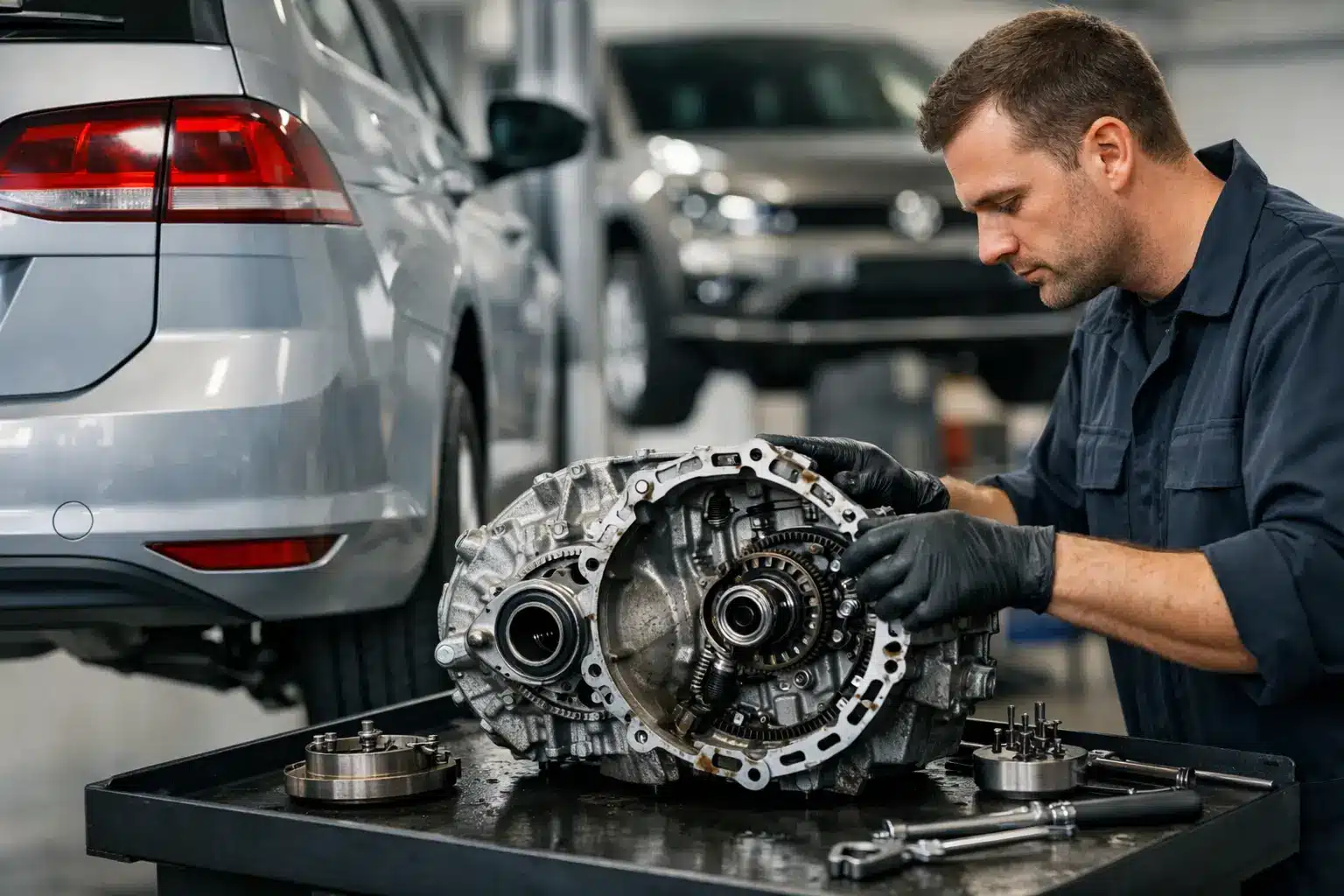
A clutch rarely fails at a convenient time. You may first notice the engine revs rising without the car picking up speed on the A4, a difficult gear change in Basingstoke traffic, or a burning smell after pulling away on a hill. This guide to clutch replacement costs explains what you are paying for, what can increase the bill, and why an accurate inspection matters before agreeing to a repair.
For Audi, Volkswagen, Škoda and SEAT owners, the cost is not simply the price of a clutch kit. The gearbox must usually be removed to reach it, and the condition of related parts can only be properly assessed once the work is under way. A clear estimate should explain the likely labour, parts and potential additional items rather than offering an unrealistically low headline figure.
What does clutch replacement usually cost?
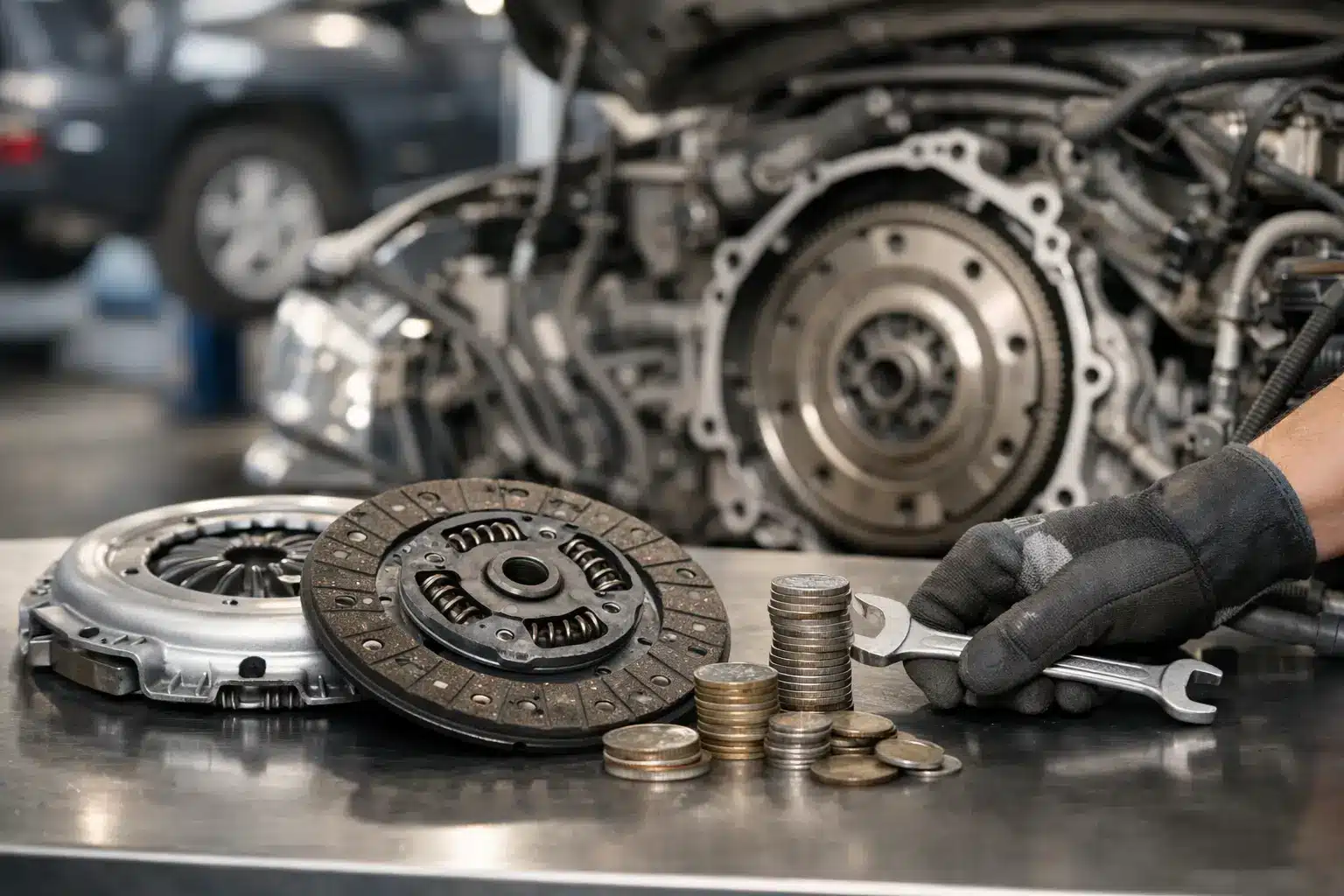
For many manual VAG cars, a clutch replacement commonly falls between £500 and £1,100, including parts and labour. Smaller, front-wheel-drive petrol models tend to sit towards the lower end, while larger engines, four-wheel-drive systems and vehicles with restricted access can require more time.
If the dual-mass flywheel also needs replacement, a more realistic total is often £900 to £1,600 or more, depending on the model and parts fitted. Performance models, vans and certain diesel engines may exceed this range because their clutch and flywheel assemblies are more expensive and the work is more involved.
These are useful guide prices, not a substitute for a vehicle-specific quotation. The registration, engine code, gearbox type and mileage all affect the correct parts and labour time. An independent VAG specialist can identify those details before work begins and help you avoid paying for parts that are not right for your car.
Why clutch replacement costs vary so much
The clutch itself is only one part of the job. On a manual vehicle, the gearbox has to be separated from the engine, which means a substantial amount of labour even when the replacement parts are straightforward. The layout of the car makes a real difference.
A front-wheel-drive Volkswagen Golf or Škoda Octavia may be more direct to work on than a quattro Audi, 4MOTION Volkswagen or a larger SUV with more drivetrain components around the gearbox. Corroded fasteners, worn mounts or previous repair work can also add time, although a good workshop will contact you before carrying out any chargeable extra work.
The main factors behind the final price are:
- the vehicle’s engine, gearbox and drivetrain configuration
- the quality and specification of the clutch components
- whether the dual-mass flywheel is worn or damaged
- any related faults, such as a leaking slave cylinder or gearbox oil leak
- the labour time needed to remove and refit the gearbox correctly
Cheap quotes can look attractive, but ask what is included. A price based on the clutch friction plate alone may not include the pressure plate, release bearing, hydraulic slave cylinder, flywheel bolts, gearbox oil or VAT. It may also assume that no other worn components are found.
The clutch kit: more than a friction plate
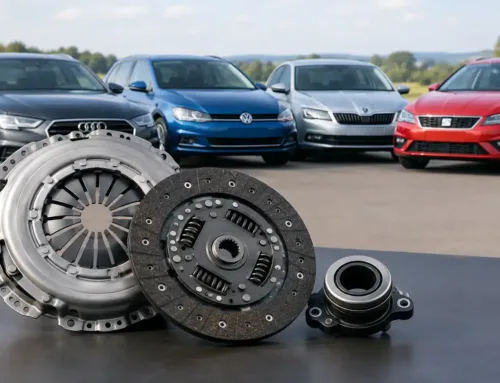
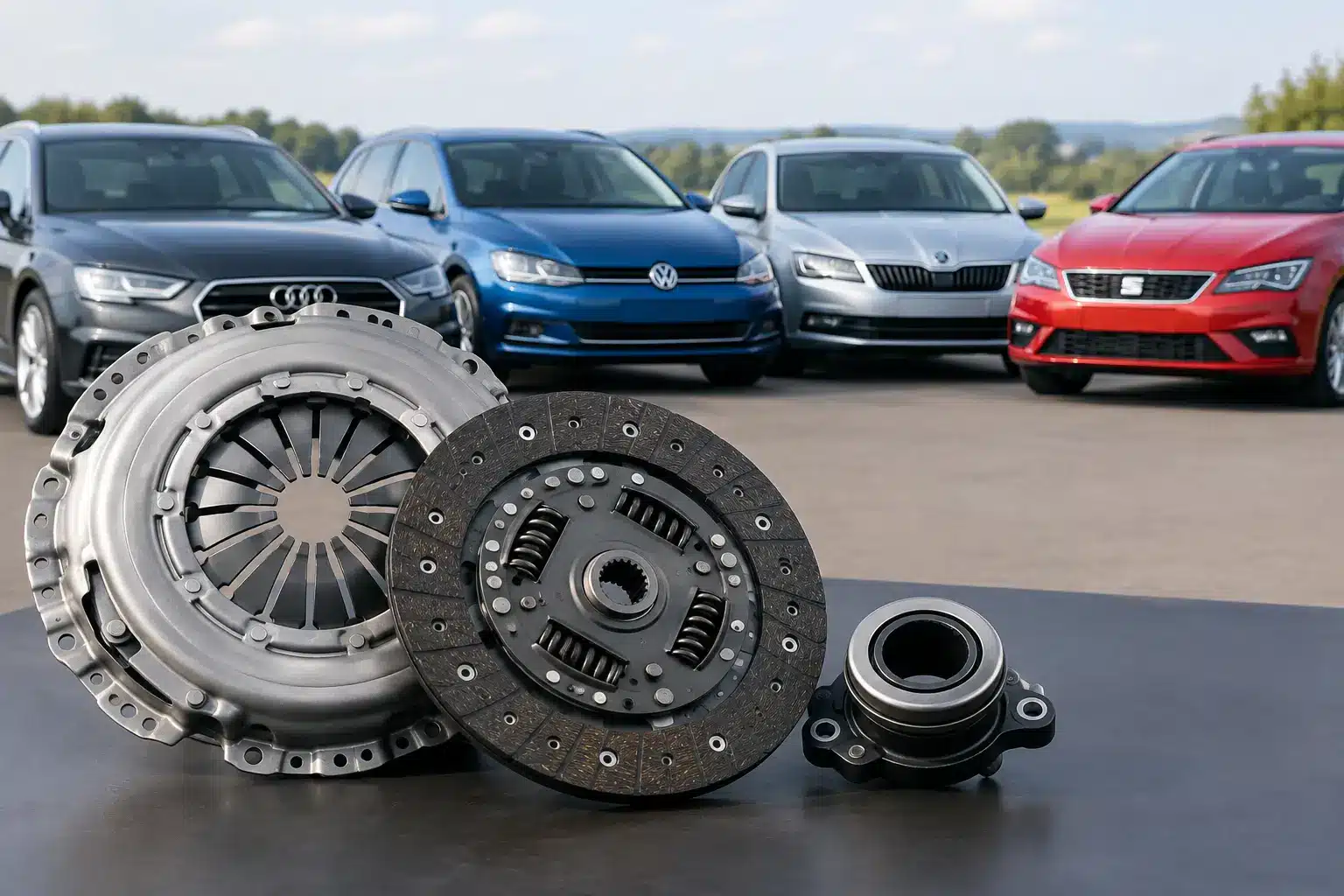
A proper replacement normally uses a complete clutch kit. This includes the friction disc, pressure plate and release bearing. On many modern VAG vehicles, the concentric slave cylinder is located inside the bell housing and is sensible to replace while the gearbox is already removed. Fitting a new clutch but retaining an ageing internal slave cylinder can create a false economy if it fails later.
Parts quality matters. OEM or equivalent-quality components are designed to handle the engine’s torque and provide the correct pedal feel and engagement. This is particularly relevant for diesel engines and cars that have been remapped, where the original clutch may already be working close to its limit.
The dual-mass flywheel can change the estimate
Many modern Audi, VW, Škoda and SEAT manual cars use a dual-mass flywheel, often called a DMF. It reduces vibration and smooths out drivetrain operation, but it contains internal springs and moving sections that can wear.
A noisy rattle at idle, vibration through the pedal, a judder when moving off or excessive rotational movement can indicate flywheel wear. It cannot always be confirmed without removing the gearbox. If the flywheel is outside specification, replacing only the clutch risks poor operation and means paying much of the labour again if the flywheel fails shortly afterwards.
That is why a trustworthy estimate should state whether flywheel replacement is included, excluded or subject to inspection. There is no benefit in hiding this possibility until the car is dismantled.
Signs your clutch may need attention
A slipping clutch is the symptom most drivers recognise. Engine revs rise under acceleration, particularly in a higher gear or when overtaking, but the car does not accelerate as strongly as expected. However, not every clutch problem is simple wear.
Difficulty selecting gears, a pedal that stays on the floor, fluid loss, a grinding noise or a vibration can point to the clutch hydraulics, release bearing, gearbox linkage, engine mounts or internal gearbox issues. Accurate diagnosis comes first. Replacing the clutch without confirming the cause may not resolve the original complaint.
If the clutch is slipping badly, avoid heavy acceleration, towing and long journeys where possible. Continued use can overheat the friction material and damage the flywheel, turning a manageable repair into a more expensive one.
Manual clutch replacement versus DSG repairs
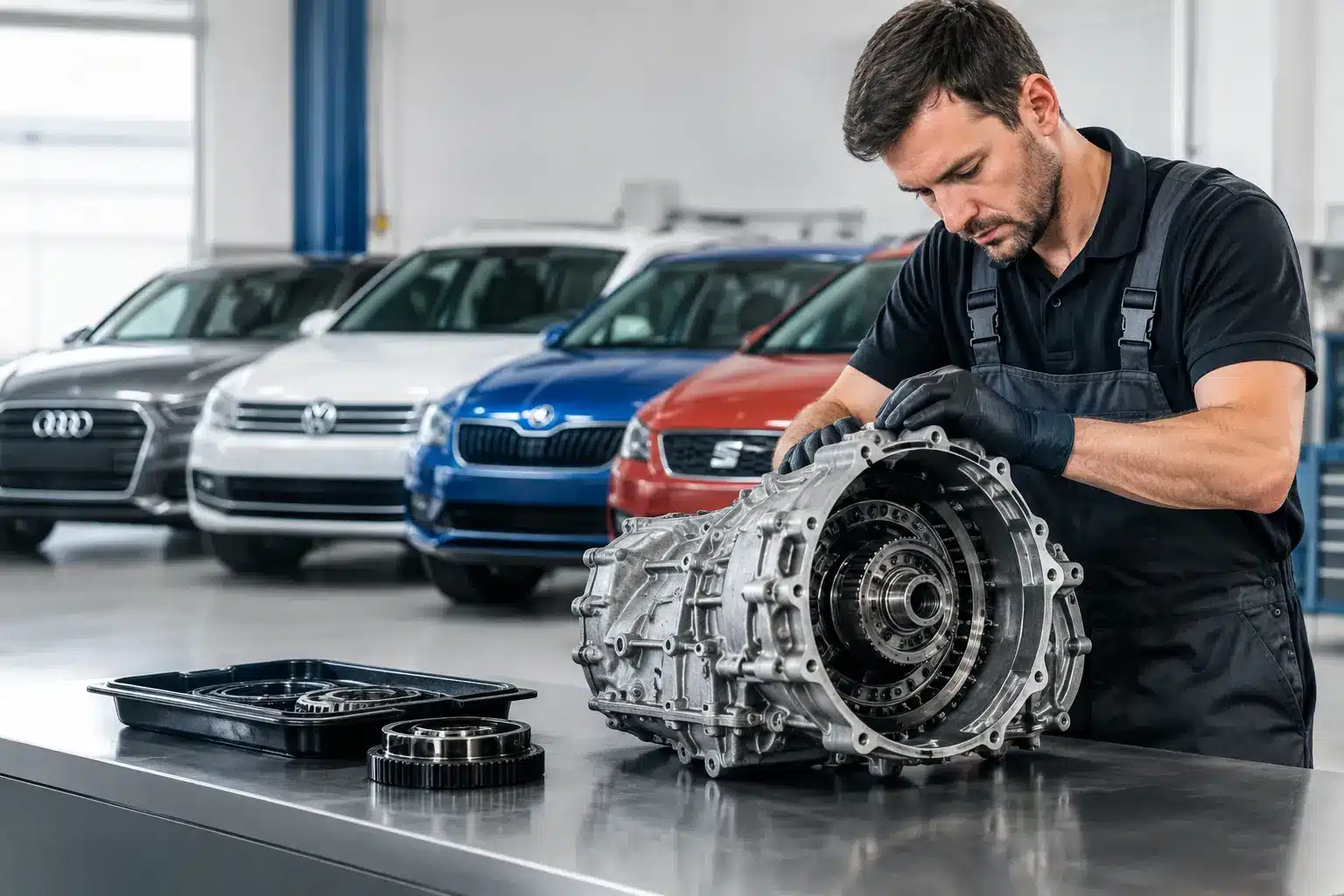
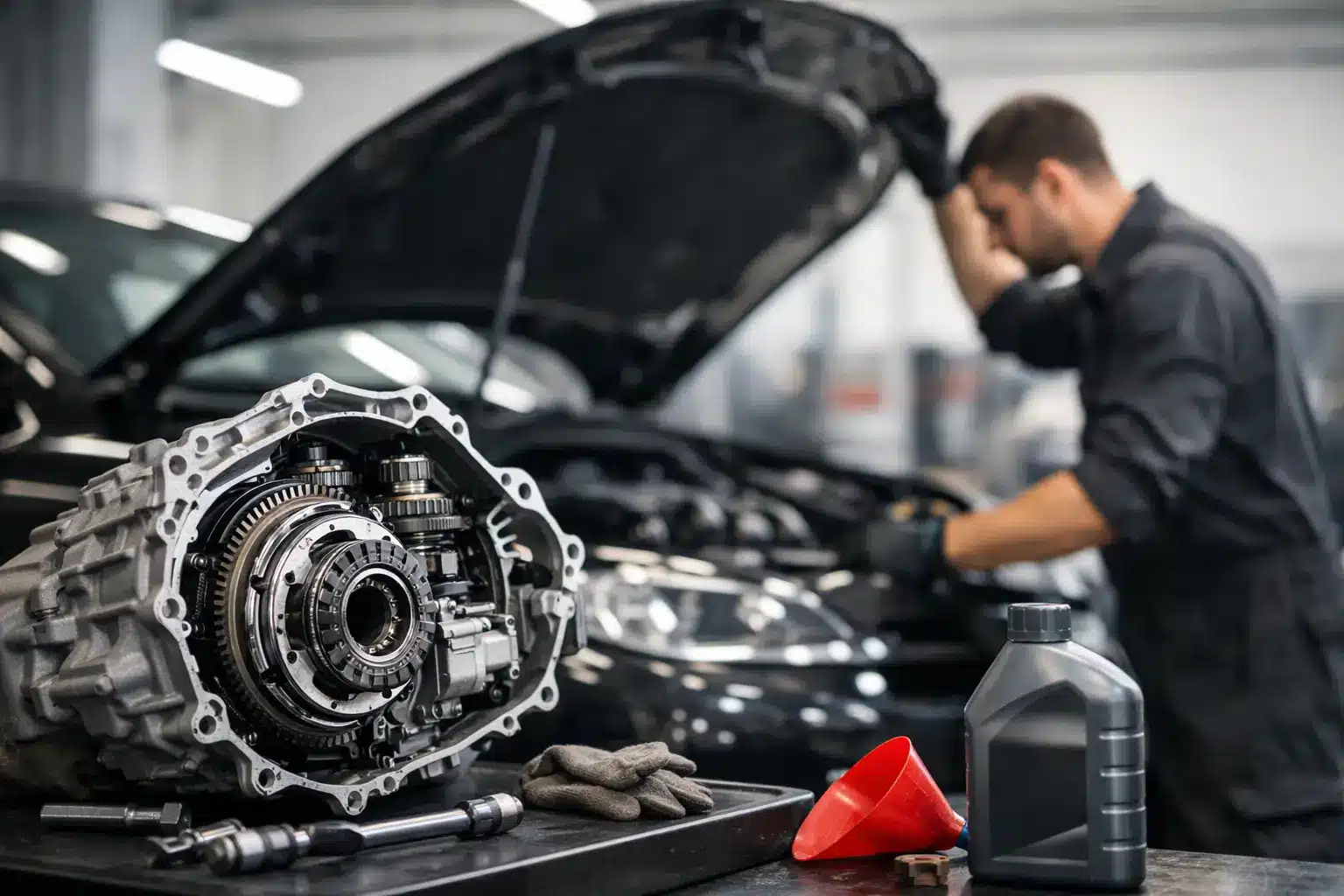
A common source of confusion is the word “clutch” on DSG-equipped cars. A DSG gearbox does have clutches, but it is not the same job as replacing a conventional manual clutch. Some VAG DSG units use wet clutch packs, others use dry clutches, and faults can involve the clutch assembly, mechatronic unit, adaptations, fluid condition or internal gearbox components.
So, where should you get an Audi DSG service or investigate a DSG clutch concern? Choose a workshop with VAG diagnostic capability and experience of the specific gearbox fitted to your vehicle. A proper assessment may include fault-code reading, live data, gearbox adaptations, service-history checks and, where relevant, confirmation that the correct DSG oil and filter service has been completed.
A routine DSG service can protect the gearbox, but it will not cure every shift-quality problem. Equally, a harsh change or warning light does not automatically mean the entire gearbox needs replacing. The right diagnosis can make a major difference to both the repair route and the cost.
How to compare clutch repair quotations fairly
When comparing quotes, make sure each workshop is pricing the same job. Ask whether the quotation includes the full clutch kit, release bearing or slave cylinder, flywheel inspection, new bolts, fluids, labour, VAT and any diagnostic work. It is also reasonable to ask which brand of parts will be fitted and whether the garage will call you if the flywheel or another component is found to need attention.
The lowest figure is not always the best value if it relies on budget parts or leaves out likely essentials. On the other hand, the highest price is not automatically necessary either. A VAG specialist can offer main-dealer standard maintenance and repair using current diagnostic equipment and quality parts, without the main-dealer cost structure.
For drivers in Aldermaston, Tadley, Basingstoke, Reading and Newbury, choosing a local specialist also makes the practical side easier. A clutch job can take your car off the road for a day or longer, depending on parts availability and what is found during inspection. Courtesy-car availability, clear booking arrangements and realistic timescales matter just as much as the initial number on the estimate.
Can you make a clutch last longer?
Clutch life varies widely. Regular motorway use may allow a clutch to last well over 100,000 miles, while repeated stop-start driving, hill starts, towing and slipping the clutch in traffic can shorten its life considerably. Keeping your foot off the pedal when not changing gear, selecting neutral at longer stops and avoiding holding the car on the bite point will all reduce unnecessary wear.
For tuned cars, it is worth considering torque as well as power. Extra torque can expose a tired standard clutch, especially on a higher-mileage diesel. Addressing it early gives you more choice over parts and avoids the inconvenience of a complete failure.
A clutch replacement is a significant repair, but it should not be a mystery purchase. At Mechalex, the aim is to identify the fault properly, explain the likely costs in plain English and fit the right parts for the vehicle. If your Audi, Volkswagen, Škoda or SEAT is showing early clutch symptoms, arranging an inspection before it leaves you stranded is usually the most cost-effective next step.
Need help with your Audi, VW, Škoda, SEAT or Cupra? Mechalex is an independent VAG specialist in Aldermaston, serving Reading, Newbury, Basingstoke and Tadley.
See our DSG gearbox service, try our free VAG AI diagnosis, or book online. Call 0118 380 1003.