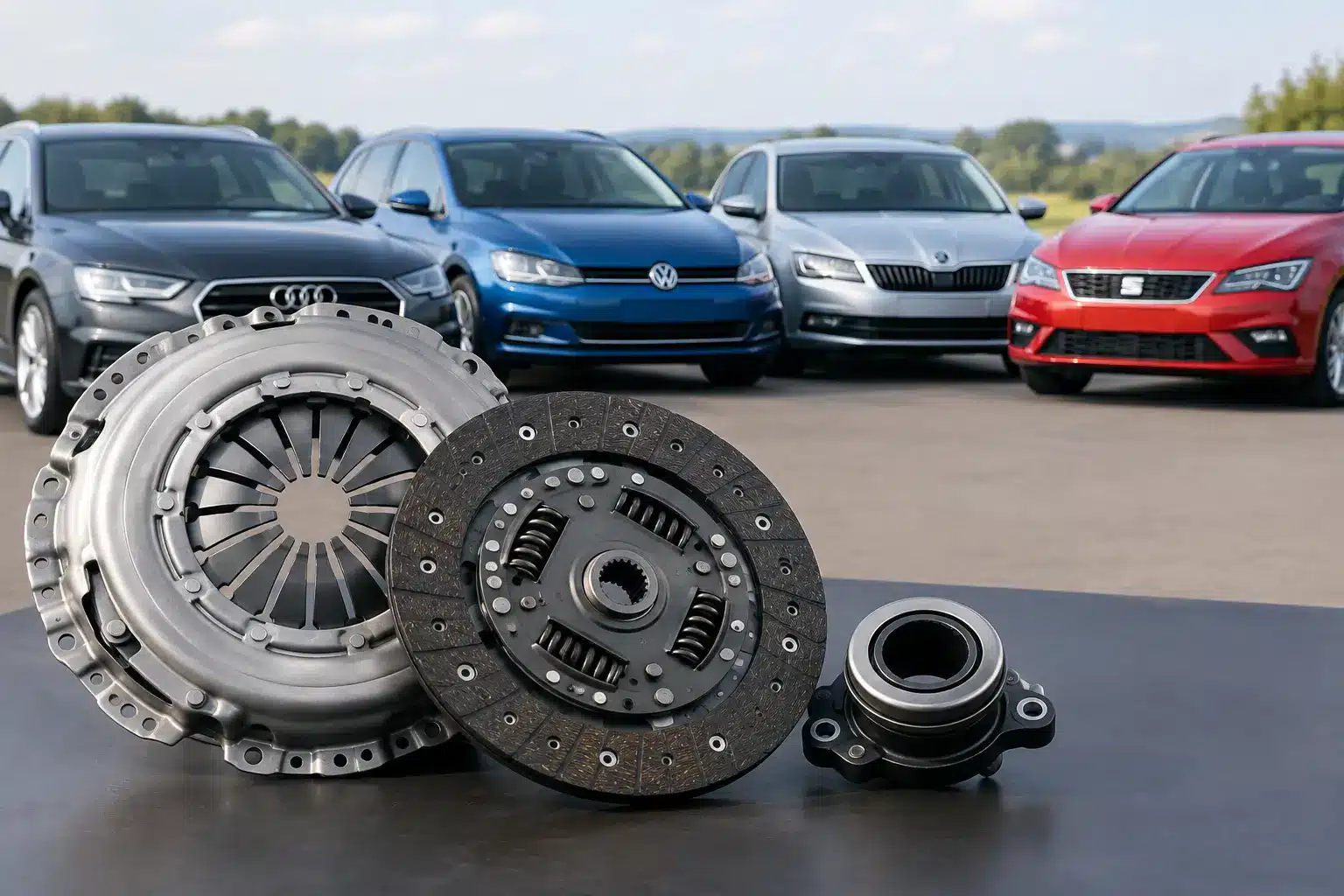
A clutch rarely fails without giving you a warning. The bite point may move higher, pulling away may feel juddery, or selecting a gear on the school run or commute into Reading can suddenly take more effort. If you need Newbury clutch repair for an Audi, Volkswagen, Škoda or SEAT, the sensible first step is accurate diagnosis – not simply replacing parts on assumption.
At Mechalex, VAG vehicles are what we work on every day. From our Aldermaston workshop, we provide practical clutch fault-finding and repairs for drivers from Newbury, Tadley, Basingstoke, Reading and the surrounding villages. You get experienced technicians, modern diagnostic equipment and OEM or equivalent-quality parts, without the inflexible pricing often associated with a main dealer.
When does a clutch need attention?
A manual clutch is a wear item, but there is no fixed mileage at which every car needs one. Stop-start traffic, frequent hill starts, towing and driving style all affect its lifespan. Some clutches cover well over 100,000 miles; others need attention much sooner.
The most common warning signs are a slipping clutch, a high or inconsistent bite point, difficulty selecting gears, vibration when pulling away and a burning smell after manoeuvring or climbing a steep hill. You may also notice the engine revs rise without a matching increase in road speed, particularly when accelerating in a higher gear.
Not every symptom means the clutch friction plate is worn out. A hydraulic fault, worn engine or gearbox mount, clutch release bearing, dual-mass flywheel, selector issue or even a gearbox concern can feel similar from the driver’s seat. That difference matters, because it changes both the repair required and the cost.
A quick slipping-clutch check
If your car accelerates normally in lower gears but the rev counter flares under firm acceleration in fourth, fifth or sixth, clutch slip is a possibility. Do not keep testing it repeatedly. Continued slip creates heat, which can damage other components and leave you unable to drive the car.
Difficulty engaging reverse or first gear is also worth investigating promptly. It may be a clutch that is not releasing fully, but it could equally be hydraulic pressure or gear-selection related. A workshop inspection is safer than forcing the gear lever.
Newbury clutch repair for VAG cars starts with diagnosis
Audi, Volkswagen, Škoda and SEAT models share a great deal of engineering, but the clutch arrangement still varies by model, engine and gearbox. A 1.0 TSI manual hatchback is a different job from a high-torque diesel estate or a four-wheel-drive performance model. Correct parts identification and an understanding of the wider drivetrain are essential.
Before recommending a repair, the cause should be confirmed. This can involve a road test, checking pedal feel and hydraulic operation, inspecting for leaks, assessing fault codes where relevant, and considering drivetrain movement or noise. If gearbox removal is necessary, it also makes sense to inspect components that are difficult to access later.
When a clutch has genuinely worn out, replacing the complete clutch kit is normally the right approach. Depending on the vehicle, that can include the friction plate, pressure plate and release bearing or concentric slave cylinder. If the dual-mass flywheel shows excessive play, heat damage or noise, it may need replacement too. Reusing a failing flywheel to reduce the initial bill can create another major labour job shortly afterwards.
That is not an argument for replacing every related part automatically. It is an argument for inspecting properly, explaining what has been found and giving you clear options before work begins.
Manual clutch or DSG problem?
This is one of the most important distinctions for VAG owners. A manual gearbox uses a conventional driver-operated clutch pedal. DSG is a dual-clutch automatic transmission controlled electronically and hydraulically. Both can produce jerking, poor pull-away, warning lights or gear-selection problems, but they are not repaired in the same way.
If you are asking where to get an Audi DSG service near Newbury, look for a VAG specialist with the right equipment and knowledge, rather than a garage treating it as a standard automatic gearbox. DSG units have model-specific service schedules, correct fluid specifications and adaptation requirements. Some faults relate to clutch wear, while others point to the mechatronic unit, sensors, wiring or internal transmission components.
A DSG service can protect the transmission where it is due, but it will not cure every gearbox fault. Equally, replacing clutches without proper diagnosis can be expensive and ineffective. The same principle applies to Haldex-equipped four-wheel-drive vehicles, where drivetrain servicing and diagnosis need to consider the whole system.
Do not ignore warning lights or limp mode
A flashing gear display, gearbox warning message, delayed engagement or limp-home mode needs attention quickly. Avoid assuming it is “just the clutch”, particularly on DSG-equipped Audi, VW, Škoda and SEAT models. Reading manufacturer-level fault information and checking live data helps identify the right repair route.
What affects the cost of clutch repair?
A clutch replacement is labour-intensive because the gearbox has to be removed. The final price therefore depends less on the size of the clutch itself and more on access, vehicle layout and what is found once the gearbox is out.
Front-wheel-drive manual cars are often more straightforward than four-wheel-drive or higher-performance models. The condition of the dual-mass flywheel, hydraulic parts and gearbox mounts can also affect the scope. On older vehicles, seized fixings or previous repair quality may add time. A clear estimate should distinguish the confirmed work from any sensible recommendations that depend on inspection.
Choosing the cheapest clutch quote is not always best value. Inferior parts may have poor pedal feel, reduced durability or fitment issues. More importantly, cutting corners on a job that requires substantial labour can mean paying twice. Mechalex uses OEM or equivalent parts standards and will discuss the parts route appropriate for your vehicle and budget.
Why Aldermaston is convenient for Newbury drivers
For drivers in and around Newbury, our Aldermaston workshop is a practical alternative to travelling into a main dealer network or waiting weeks for an appointment. It is also convenient for owners coming from Tadley, Basingstoke and Reading, particularly if you work across the area or need specialist VAG support closer to home.
A clutch or gearbox concern can disrupt far more than a journey. It affects work, family commitments and everyday reliability. Courtesy car availability can help reduce that disruption when booked in advance, while direct communication means you can understand what is being checked and why. The aim is friendly, reliable service and a repair carried out properly – not a vague diagnosis followed by unexpected additions.
How to look after a new clutch
Once repaired, a clutch should feel natural rather than needing special treatment. A few habits will help it last: avoid resting your foot on the pedal, use the handbrake rather than holding the car on the clutch on inclines, and do not sit stationary in gear with the pedal depressed for long periods.
For DSG vehicles, keep to the specified gearbox service interval and address changes in shift quality early. If your car has been remapped or produces substantially more torque than standard, tell the workshop. Additional torque can affect clutch capacity and changes the conversation around component choice, especially on manual performance models.
Book a clutch inspection near Newbury
If your Audi, Volkswagen, Škoda or SEAT is slipping, juddering, struggling to select a gear or showing a gearbox warning, arrange an inspection before the problem leaves you stranded. A proper assessment can confirm whether you need a clutch repair, a DSG diagnostic check or a different drivetrain repair altogether.
Bring the symptoms you have noticed – when they occur, whether the car is cold or hot, and any warning messages – and we can start with useful information rather than guesswork. That is usually the quickest route back to confident, dependable driving.