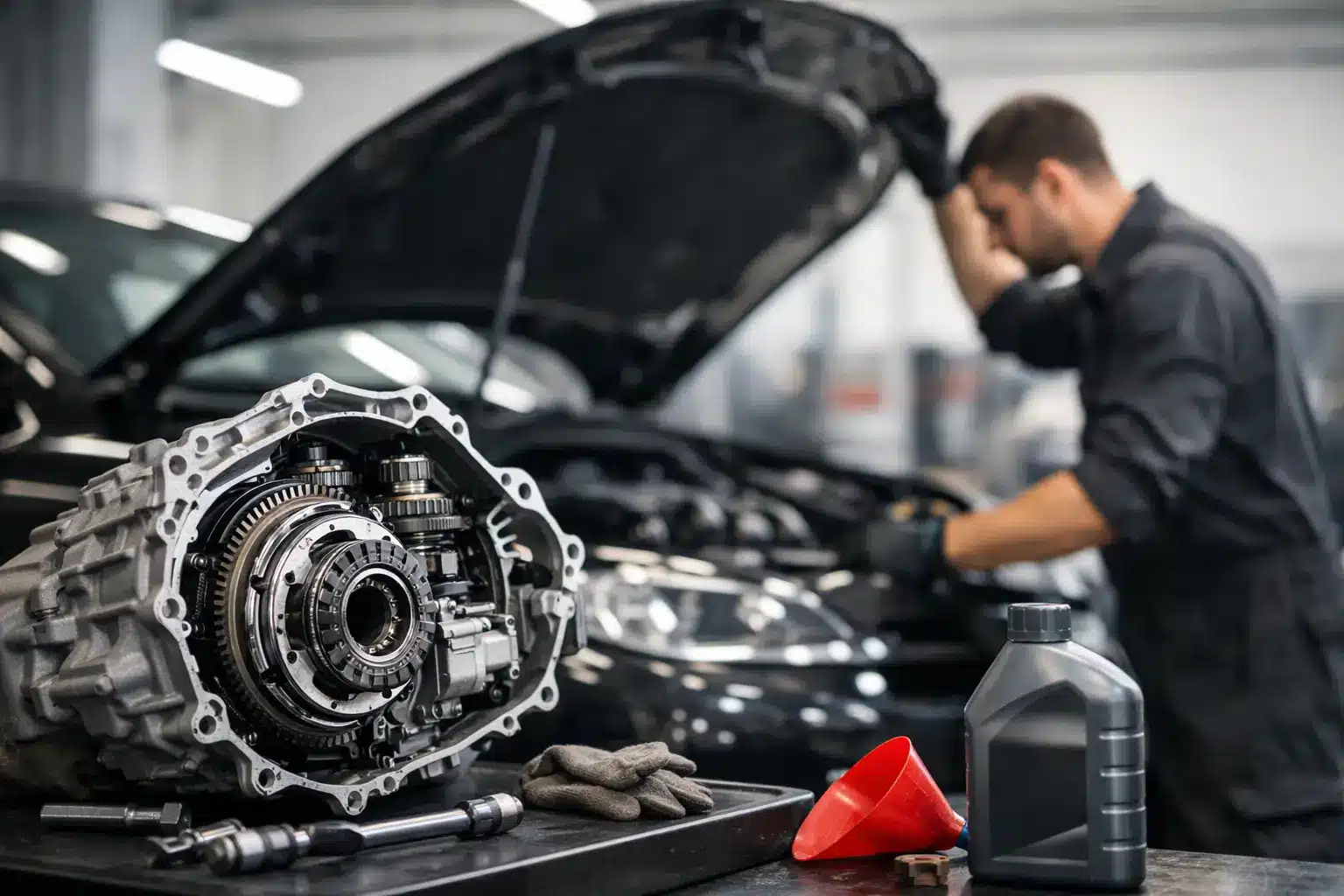
A brief pause, shudder or reluctant pull-away on a cold morning is a familiar concern for many Audi, Volkswagen, Škoda and SEAT owners. DSG cold hesitation can feel like the car is thinking before it moves, particularly when selecting Drive or Reverse, creeping from a junction or manoeuvring off a driveway. It is not always a sign of imminent gearbox failure, but it should not simply be dismissed as ‘normal’ either.
The key is understanding what is happening, how severe it is and whether it improves once the vehicle is warm. A proper diagnosis can distinguish normal cold-operation behaviour from a service, calibration or mechanical issue before a smaller problem becomes an expensive repair.
What DSG cold hesitation feels like
Drivers describe cold hesitation in different ways. The engine may rev slightly before the vehicle moves, the car may judder as the clutch takes up, or there may be a delay after selecting D or R. Some cars feel fine once moving but are awkward during the first few minutes of urban driving. Others may hesitate only on an incline, when pulling out of a side road, or while performing a three-point turn.
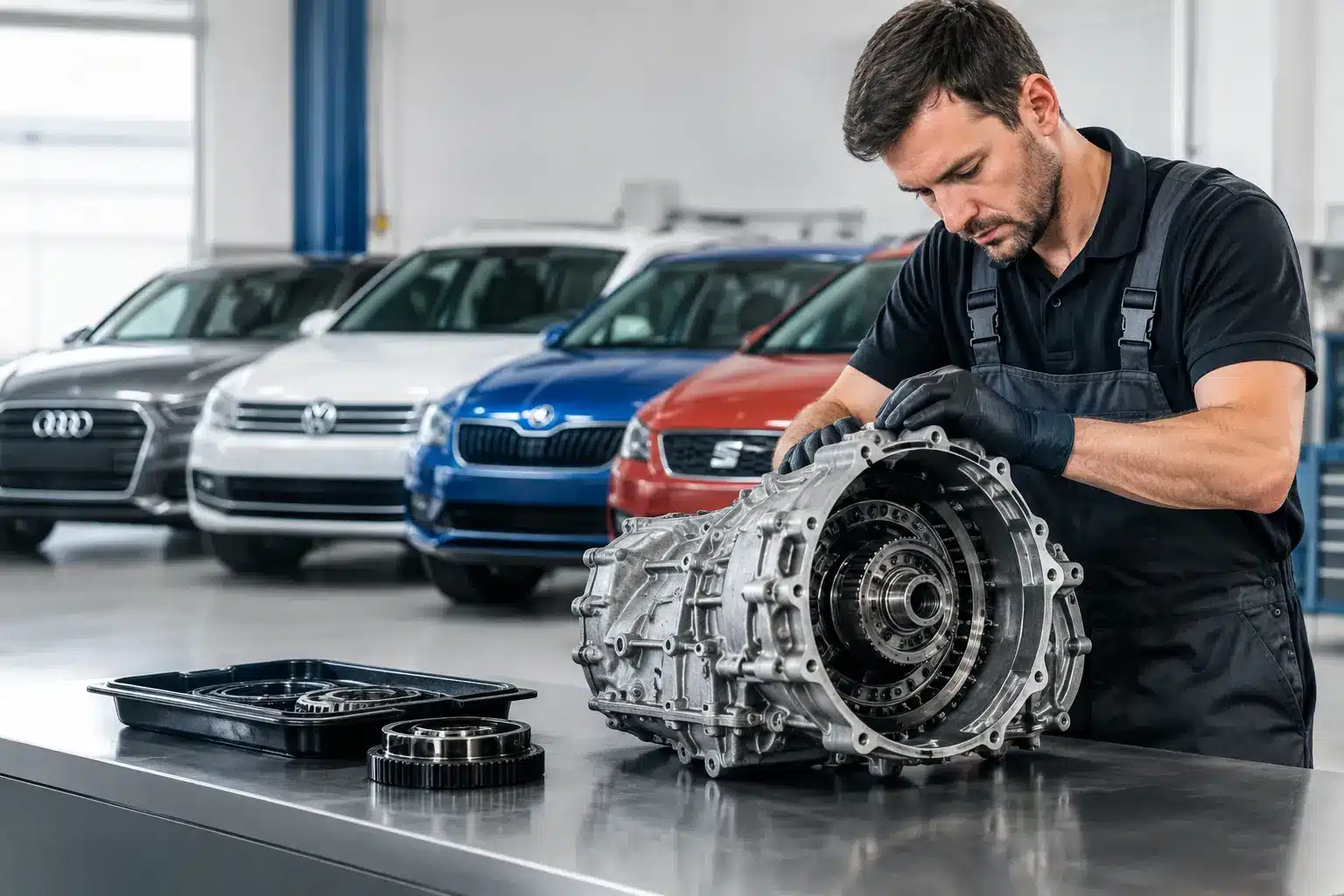
A DSG gearbox is an automated dual-clutch transmission. Rather than using a conventional torque converter, it uses electronically controlled clutches and a mechatronic unit to select gears and manage clutch engagement. That makes it quick and efficient, but it also means low-speed manoeuvres can reveal problems that might not be obvious at motorway speed.
Cold oil, colder clutch components and the gearbox control strategy can all make the first few engagements feel different. However, pronounced shuddering, long delays, warning lights, harsh gear changes or a worsening pattern are reasons to investigate promptly.
Why a DSG can hesitate when cold
Gearbox oil condition and service history
Many wet-clutch DSG gearboxes rely on correctly specified transmission fluid and a filter to protect their internal components and help the hydraulic control system operate accurately. As fluid ages, its protective qualities reduce and contamination can affect operation. Cold temperatures can make an already marginal fluid condition more noticeable.
A DSG service is not a generic oil change. The correct fluid specification, fill level and temperature-controlled procedure matter. Using unsuitable fluid or setting the level incorrectly can create shifting issues rather than cure them. Service intervals also vary by gearbox type and vehicle, so the registration number, gearbox code and maintenance history need checking rather than guessing.
Dry-clutch DSG units use a different design and do not follow the same oil-service requirements. That is why advice based solely on what another owner has read online can be misleading.
Clutch wear or clutch adaptation
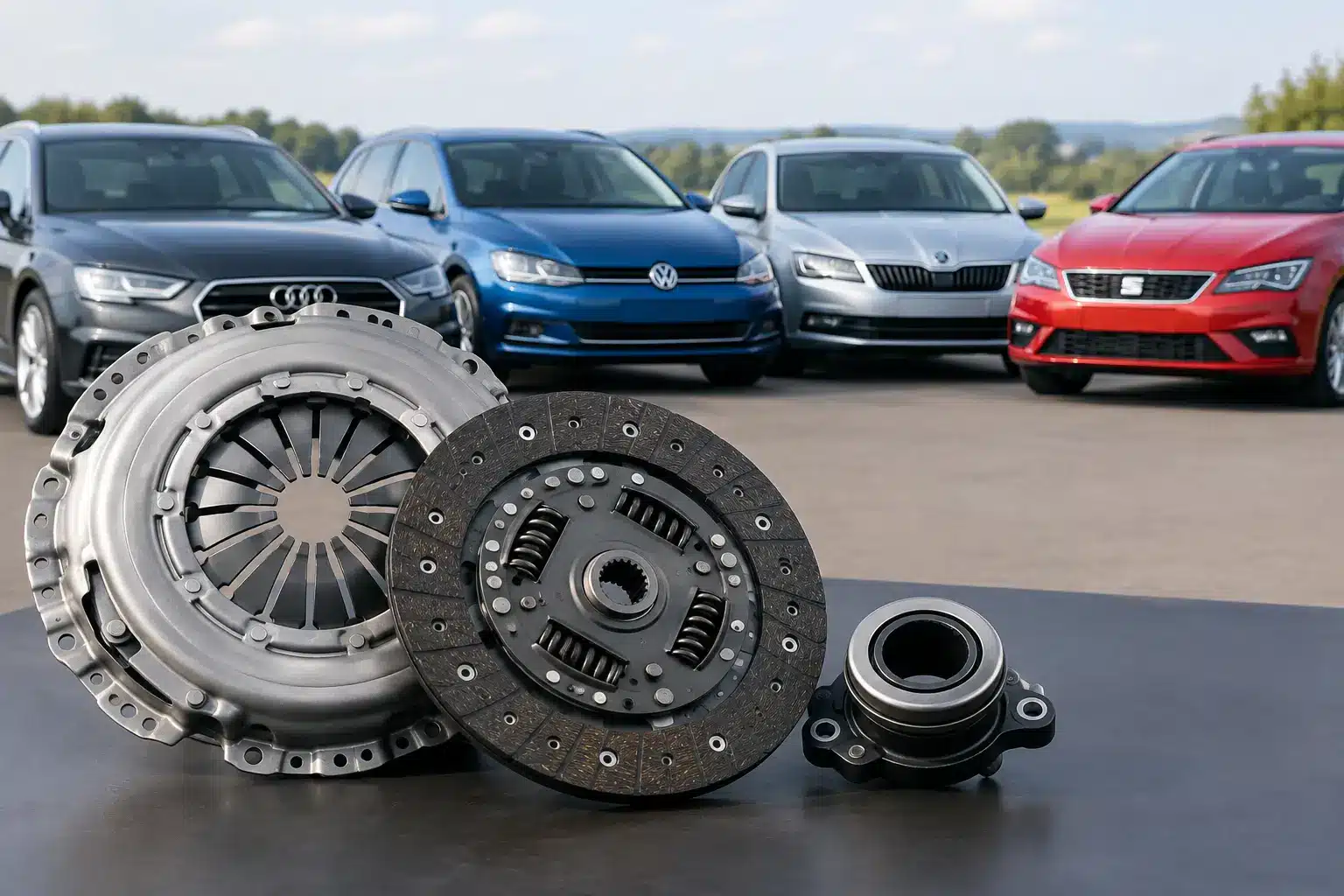
Like any clutch, DSG clutch packs wear over time. Stop-start commuting, frequent hill manoeuvres, towing and heavy traffic can all increase the workload. As the system compensates for wear, it may need adaptation values checked and, where appropriate, recalibrated using VAG-capable diagnostic equipment.
An adaptation is not a cure for a worn clutch. It can help where learned values are out of range or following relevant repair work, but it cannot restore friction material that has reached the end of its useful life. A specialist should look at live data and fault information before recommending any reset or basic setting.
Mechatronic or hydraulic-control faults
The mechatronic unit is the electro-hydraulic control centre of the DSG. It uses solenoids, valves, sensors and software to control clutch pressure and gear selection. If pressure builds slowly, a solenoid response is inconsistent or a sensor reading is implausible, cold hesitation may be one of the early symptoms.
These faults do not always trigger a dashboard warning immediately. Sometimes the vehicle stores intermittent fault codes that only appear during a full scan. Other times, the diagnosis depends on comparing requested and actual values during a road test and workshop checks. Replacing parts without that evidence can be costly and ineffective.
Engine issues that feel like gearbox trouble
Not every lurch or pause is caused by the DSG itself. A weak battery, poor engine running, an air leak, ignition fault, injector issue or incorrect engine-management reading can make initial pull-away feel rough. Engine and gearbox systems exchange data constantly, so accurate diagnosis must consider the whole drivetrain.
This is particularly relevant if the hesitation is accompanied by uneven idle, a misfire, reduced power or a warning light. Treating it as a gearbox problem alone risks overlooking the actual cause.
When is cold DSG behaviour normal?
A mild change in feel during the first minute or two can be normal, especially in colder weather. The gearbox may hold lower gears for longer and clutch engagement can feel more deliberate while components reach operating temperature. If there are no fault codes, no abnormal noises and no deterioration over time, it may simply be characteristic of that transmission.
The line is crossed when the car regularly takes several seconds to engage, shudders strongly, bangs into gear, slips under acceleration or feels unsafe when joining traffic. A burning smell, flashing gear display, gearbox warning message or inability to select a gear requires more urgent attention.
Do not repeatedly apply heavy throttle to force the car through a hesitation. That can increase clutch heat and turn a manageable issue into a bigger one. Select the gear, allow a moment for engagement, and arrange an inspection if the behaviour persists.
How DSG cold hesitation should be diagnosed
A worthwhile DSG diagnosis starts with questions: when does it happen, how long has it been present, does it occur in both Drive and Reverse, and what servicing or repair work has been carried out? A technician should then confirm the exact gearbox fitted, inspect for leaks and assess the vehicle’s battery and engine condition.
Next comes a proper VAG diagnostic scan. This checks gearbox, engine and related control modules for current and historic fault codes. Live data can reveal clutch adaptations, temperature readings, hydraulic values and gear-selection information that a generic code reader may miss.
A controlled road test matters too. The aim is to reproduce the concern from cold, not test the vehicle only once it has warmed up. That helps separate a genuine cold-operation fault from a general shift-quality issue. The result may point to a DSG fluid and filter service, adaptation procedure, electrical repair, mechatronic work, clutch replacement or an engine-side repair. It depends on the evidence, not a one-size-fits-all fix.
Where to get an Audi DSG service or diagnosis
For an Audi DSG service, choose a workshop that can identify the transmission correctly and follows the required VAG procedure, rather than treating every automatic gearbox the same. The same principle applies to Volkswagen, Škoda and SEAT models, many of which use closely related DSG systems but have different service needs depending on age, engine and gearbox code.
For drivers in Aldermaston, Tadley, Basingstoke, Reading, Newbury and surrounding villages, a VAG specialist can provide a practical alternative to a main dealer. Mechalex uses modern diagnostic equipment and more than 30 years of VAG experience to investigate gearbox concerns properly, with OEM or equivalent parts used where required. Courtesy-car availability can also make planned DSG servicing or diagnostic work easier to fit around commuting and family commitments.
Bringing service records is useful, especially if the car has recently been purchased or its gearbox history is unclear. It allows the technician to establish whether maintenance is overdue and avoid unnecessary work.
Habits that help protect a DSG
DSG gearboxes are designed for everyday driving, but a few habits reduce unnecessary clutch stress. Avoid holding the vehicle on the throttle on a hill – use the brake or Auto Hold instead. During slow manoeuvres, let the car creep where safe rather than alternating rapidly between throttle and brake. When parking, come to a complete stop before selecting Reverse or Drive.
If your vehicle has a scheduled DSG service, keep to it. Delaying a due service to save money can be false economy when the transmission depends on clean, correct fluid and accurate hydraulic control. Equally, do not authorise a transmission flush or adaptation simply because it is offered – the correct work should follow a diagnosis and the manufacturer’s requirements.
If your DSG is hesitating only when cold, make a note of the conditions and book it in before the symptom becomes part of every journey. A clear description and a cold vehicle give a specialist the best chance of finding the real cause and keeping your VAG car dependable when you need it most.
Need help with your Audi, VW, Škoda, SEAT or Cupra? Mechalex is an independent VAG specialist in Aldermaston, serving Reading, Newbury, Basingstoke and Tadley.
See our DSG service, try our free VAG AI diagnosis, or book online. Call 0118 380 1003.