The first hint an Audi DSG needs attention is rarely dramatic. It is usually a slightly busier take-up in traffic, a faint shudder pulling away, or that moment of hesitation when you ask for a quick downshift and it thinks about it for half a beat too long. Most owners notice it most on the school run or the commute – exactly the kind of driving where a DSG works hardest.
An Audi DSG gearbox service is one of those jobs that feels optional right up until the point it becomes expensive. Done on time, it protects the clutches, the hydraulic control system and the bearings. Left too long, the same symptoms that were “probably nothing” can turn into a mechatronic fault, clutch wear, or a gearbox that no longer behaves like Audi intended.
What “DSG service” actually means on an Audi
DSG is Volkswagen Audi Group’s twin-clutch automatic. It behaves like a fast auto, but internally it is closer to a manual gearbox with two clutches and an electro-hydraulic control unit (the mechatronic) choosing gears for you. That design gives you the crisp shifts people buy these cars for, but it also means the condition of the oil and filter matters.
On the common wet-clutch DSG units fitted to many Audi models (often referred to as 6-speed DSG), the gearbox oil does more than lubricate gears. It also supports hydraulic control and manages heat. Over time, heat cycles and clutch material contaminate the oil. The filter’s job is to trap that debris, but it cannot do that forever.
A proper service is not “drain a bit and top it up”. It is the correct oil, the correct filter, the correct level set at the correct temperature, using the correct diagnostic procedure so the gearbox is neither under-filled nor over-filled.
When should an Audi DSG gearbox service be done?
Service intervals can vary by gearbox code and model year, so the safest approach is to follow the manufacturer schedule for your specific vehicle. As a rule of thumb, many wet-clutch DSG units are due a service around every 40,000 miles. If you are unsure, it is worth checking the service history rather than guessing.
There are also “it depends” situations where doing it earlier can be the sensible choice. If your Audi spends a lot of time in stop-start traffic, does frequent short trips, tows, or has been tuned for more torque, the gearbox works harder and heats the oil more. In those cases, a shorter interval can be cheap insurance.
Dry-clutch DSG variants (often 7-speed on smaller engines) are different again – they do not always have a routine oil-and-filter service in the same way, but they still have oils and fluids that may require inspection or replacement depending on the exact unit and fault pattern. The key point is that “DSG” is not one gearbox – service needs to match the unit.
Signs your DSG is overdue for service (and when it might be more)
If your Audi drives perfectly, that is not proof the DSG service can wait. Oil degrades quietly. That said, certain behaviours are worth paying attention to because they can be early warnings.
A slight judder pulling away can be as simple as old oil, but it can also point to clutch wear or a calibration issue. Hesitation selecting Drive or Reverse, harsher shifts when cold, or inconsistent shift quality between journeys can suggest the hydraulics are not as happy as they should be. If you are getting a warning on the dash, limp mode, or fault codes logged, a routine service may not be enough on its own – that becomes a diagnostic job.
The important trade-off here is time. If you book the car in when symptoms are mild, the odds are better that the fix is straightforward. If you keep driving it while it flares, bangs into gear, or slips, you can turn a service and adaptation into a clutch pack or mechatronic repair.
What a proper Audi DSG gearbox service includes
You are paying for accuracy and process as much as parts.
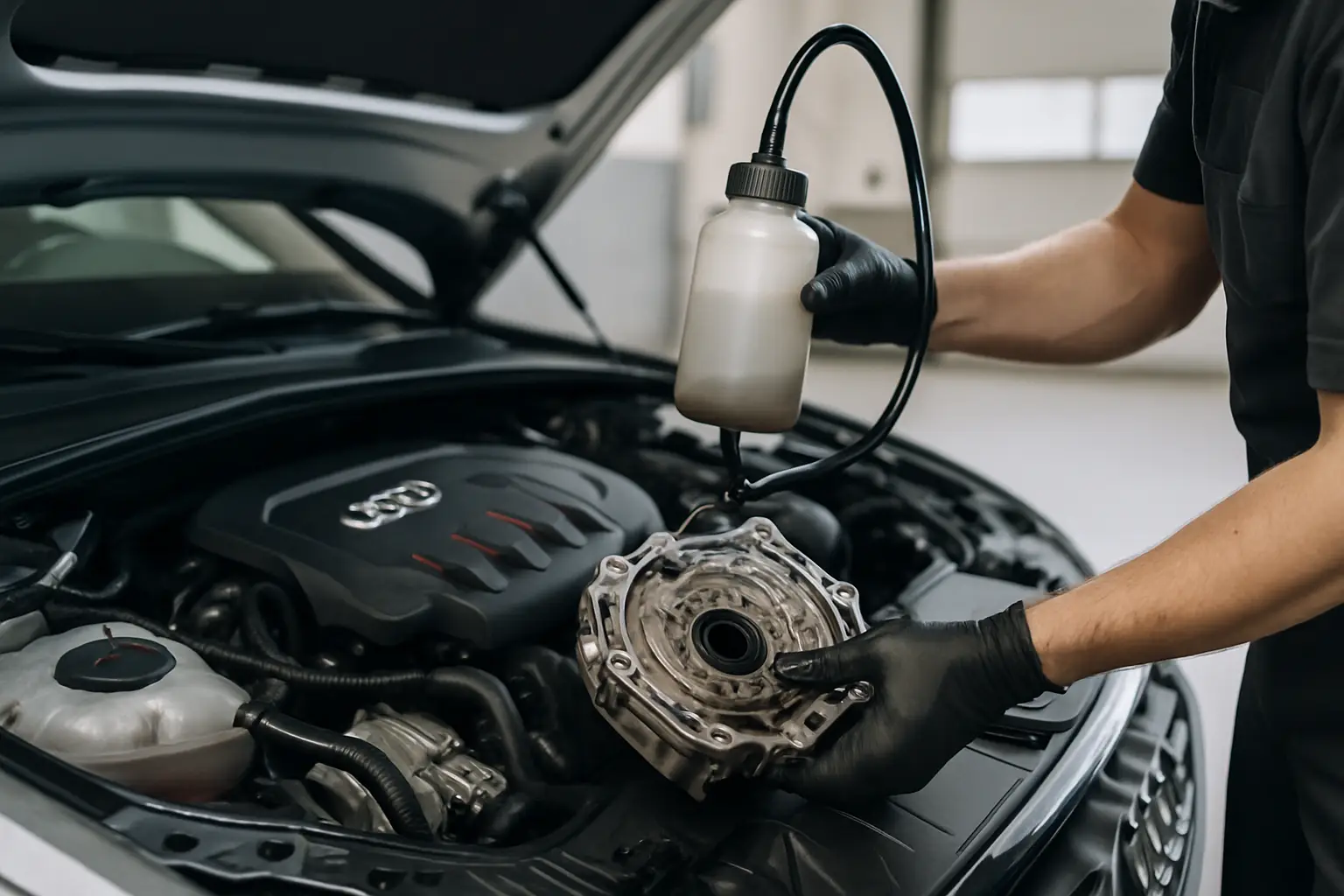
First, the correct DSG oil is used. These gearboxes are sensitive to fluid specification – the wrong oil can change shift feel and, in the worst cases, contribute to premature wear. Alongside the oil, the filter is replaced where the gearbox design includes one as part of scheduled maintenance.
Next is level setting. DSG oil level is not checked like engine oil. The level must be set at a specified temperature range, with the engine running and the gearbox in the right state. That is why a workshop will use diagnostic equipment to monitor gearbox oil temperature while filling and setting the final level.
Finally, it is checked for leaks and road-tested. On some cars, it is also sensible to perform basic settings or adaptations after the service, especially if shift quality has been inconsistent. That is not a magic reset, but it can help the gearbox recalibrate its clutch control within normal parameters.
Why the “right temperature” bit matters more than most people realise
DSG oil expands as it warms. Set the level too cold and you can end up over-filled once it heats up, which can cause aeration and pressure issues. Set it too hot and you can under-fill it, starving components under load and increasing heat.
This is where specialist equipment and experience pay for themselves. A general garage can drain and refill oil. The difference with VAG gearboxes is doing it to the letter, because small errors can show up later as shift quality complaints that are hard to pin down.
Main dealer vs specialist: what you are really comparing
Most Audi owners are not choosing between “good” and “bad”. They are choosing between two ways of getting to the same standard.
A main dealer follows factory processes and uses the right fluids. You also pay main dealer labour rates and you may have less flexibility on booking, communication and how the job is explained.
A good independent VAG specialist aims for the same technical outcome – correct parts, correct process, correct diagnostics – with a more direct relationship with the technician, clearer value for money, and often better continuity if the car returns for future work.
If you are in the Aldermaston area and want dealer-grade DSG servicing without main dealer pricing, Mechalex focuses specifically on Audi, Volkswagen, Škoda and SEAT, with the diagnostic kit and VAG experience to carry out DSG work properly.
Common questions that affect cost and timing
Owners often ask why prices vary between cars that “both have DSG”. The answer is usually access, fluid capacity, and gearbox type. Some units take more oil, some have different filter arrangements, and some require additional steps to reach the correct fill procedure. If undertrays, brackets or battery trays need moving to access service points, labour time changes too.
Service history also matters. If the DSG has missed one or more scheduled services, the oil can come out very dark and contaminated. That does not mean the gearbox is finished, but it does mean you should be realistic. A service will not reverse mechanical wear that has already happened. What it can do is stabilise operation and reduce the risk of further damage.
If your car is tuned, you should mention it when booking. More torque can mean more clutch load and more heat, and it is better to tailor advice and service intervals than to treat it like a standard car.
What you can do as an owner to keep a DSG happy
Driving style and maintenance meet in the middle with DSG. If you are constantly inching forwards on the clutch in heavy traffic, you are creating heat and wear. Using the brake to hold the car rather than balancing it on the throttle can make a difference over thousands of miles.
It is also worth taking any new behaviour seriously. A DSG that suddenly starts shunting between gears, or that feels noticeably different after a battery issue or electrical work, may need a proper scan and basic settings rather than just “a good run”. DSG systems are mechatronic – mechanical and electronic together – so fault-finding should treat them that way.
Booking the service: what information helps
If you have the registration, mileage, and any notes on symptoms, that is usually enough to get the right conversation started. If you can also tell a workshop whether the car has full service history and whether it is stock or modified, you will get a more accurate recommendation on timing and likely outcomes.
If you are already feeling judder, slipping, or delayed engagement, say so upfront. It may still be service-related, but it may also be pointing towards clutch adaptation limits or mechatronic pressure control issues. The earlier you catch that, the more options you typically have.
A DSG is one of the best reasons to buy an Audi. It is also one of the best reasons to stay on top of maintenance. If your shifts have become a little less crisp than they used to be, treat that as useful information, not an inconvenience – it is your car telling you what it needs next.