A dashboard reminder is useful, but it does not tell the whole story. VAG service schedules vary by model, engine, gearbox, age and mileage, while several important items – particularly DSG, Haldex and cambelt work – need planning separately from a routine oil service. For Audi, Volkswagen, Škoda and SEAT owners, following the right schedule is one of the simplest ways to protect reliability, performance and resale value.
At Mechalex, we provide main dealer service without the main dealer cost for drivers who want their VAG vehicle maintained properly. From our Aldermaston workshop, we are conveniently placed for owners travelling from Tadley, Basingstoke, Reading, Newbury and surrounding villages.
How VAG service schedules work
Most VAG cars use either a fixed service regime or a flexible long-life regime. A fixed regime usually calls for an oil and inspection service at set time or mileage intervals, commonly every 12 months or around 10,000 miles. Long-life servicing uses the vehicle’s monitoring system to calculate an interval based on driving conditions, oil quality and usage, often allowing up to two years or higher mileage between services.
Long-life intervals can suit a car that regularly covers longer motorway journeys. However, they are not automatically the best choice for every driver. Short school-run trips, congestion, cold starts, towing and low annual mileage can all be harder on engine oil than the mileage suggests. For many local commuters and family cars, an annual oil and filter service is sensible preventative maintenance, even when the dashboard says there is longer remaining.
The service indicator is a prompt, not a substitute for knowing the vehicle’s maintenance history. A proper inspection considers the car in front of us: its age, engine, mileage, stored fault codes, previous work and how it is used.
Oil service and inspection service
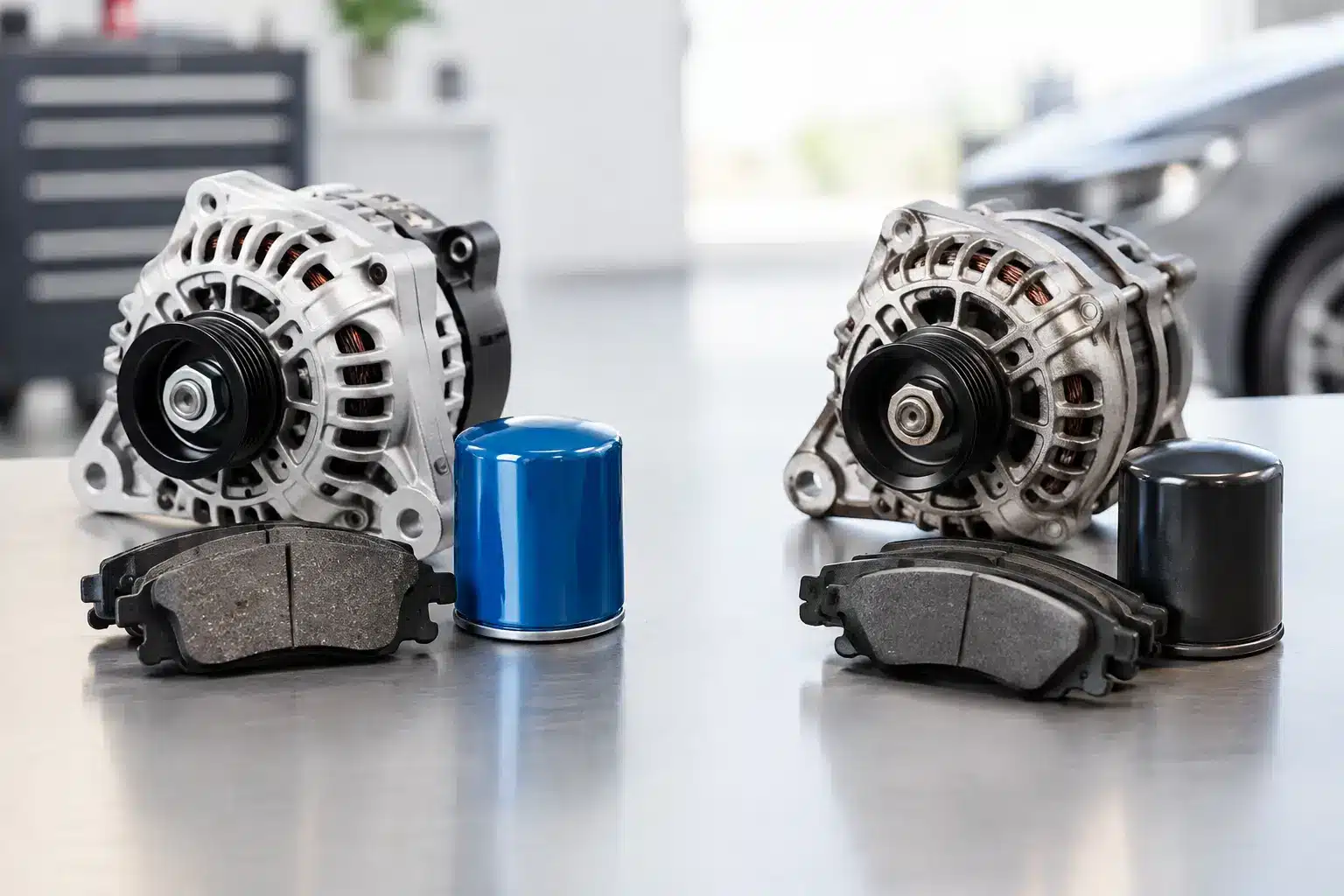
An oil service generally includes replacing the engine oil and oil filter using the correct manufacturer-approved specification, then resetting the service display. The exact oil specification matters on modern VAG engines, particularly those with turbochargers, diesel particulate filters and extended service intervals. Using a cheaper oil that is merely close enough can create problems later.
An inspection service is more comprehensive. It checks key safety and wear items such as brakes, tyres, lights, suspension, steering, fluid levels and the condition of components visible underneath the car. Depending on the model and service due, it may also include a pollen filter, air filter, fuel filter or spark plugs.
Neither service should be treated as a generic package. A petrol Audi A3, a diesel Volkswagen Tiguan, a Škoda Octavia estate and a SEAT Leon Cupra may share parts of a platform, but their engines, transmissions and scheduled requirements can differ considerably.
VAG service schedules that are easy to miss
Routine servicing keeps the engine protected, but it is the additional scheduled work that is often overlooked when a car changes hands or moves away from dealer servicing. These jobs can be expensive if neglected and usually cost far less when carried out at the correct interval.
Brake fluid is commonly due every two years. Brake fluid absorbs moisture over time, which can lower its boiling point and contribute to corrosion within the braking system. This is a time-based requirement, so a low-mileage car still needs it.
Spark plugs on petrol engines are typically changed at model-specific mileage intervals. The right plugs and fitting procedure are particularly relevant on turbocharged and performance models, where incorrect parts or gaps can cause misfires under load.
Air, cabin and fuel filters have different roles and intervals. A blocked air filter can restrict performance and economy, a neglected cabin filter can affect ventilation quality, and a fuel filter is especially relevant on many diesel vehicles.
Cambelt and water pump replacement is a major planned maintenance item for belt-driven engines. The interval depends on the engine code, model year and manufacturer guidance. Do not rely on guesswork or the appearance of the belt. If there is no evidence that it has been changed, it is safer to investigate before the due date passes. A cambelt failure can cause serious engine damage.
Some VAG engines use timing chains rather than cambelts. A chain is not automatically maintenance-free. Rattles at start-up, warning lights, rough running or correlation fault codes deserve prompt diagnostic attention rather than being ignored.
DSG servicing: where to get an Audi DSG service
If you are asking where to get an Audi DSG service, choose a workshop that understands the particular gearbox fitted to your car, has suitable diagnostic equipment and follows the correct fluid procedure. That same advice applies to Volkswagen, Škoda and SEAT DSG models.
“DSG” covers several different transmissions. Some require regular oil and filter changes, while others have different maintenance requirements depending on their design. On many wet-clutch DSG units, servicing is commonly due around every 40,000 miles, but this is not a universal rule. The exact gearbox code and vehicle specification must be checked first.
A DSG service is not simply draining and refilling fluid. The correct oil specification, temperature-controlled level setting process and diagnostic checks matter. A poor-quality service can lead to harsh shifts, warning messages or incorrect oil levels. Equally, a gearbox fault should not be labelled as needing a service without proper diagnosis. Mechatronic issues, clutch wear, wiring faults and engine-related problems can all affect how a DSG behaves.
Signs worth booking in include delayed engagement when selecting drive or reverse, juddering, unexpected gear changes, warning lights, limp mode or a noticeable clunk. Early investigation can sometimes prevent a smaller issue becoming a larger repair.
Haldex servicing for four-wheel-drive VAG cars
Owners of quattro, 4MOTION and certain other four-wheel-drive VAG vehicles should also check whether their Haldex coupling requires servicing. The system helps distribute drive to the rear axle when conditions demand it, but its oil and, on applicable versions, filter need attention at prescribed intervals.
A neglected Haldex unit may reduce four-wheel-drive operation, trigger fault codes or place unnecessary strain on related components. This can be missed because the car may still feel normal in everyday dry-weather driving. If you have bought a used Audi, Volkswagen, Škoda or SEAT with four-wheel drive and cannot confirm its Haldex history, it is worth checking rather than assuming it has been done.
What changes the right schedule for your car?
The handbook and digital service record provide a starting point, but real-world use matters. A car covering 20,000 motorway miles a year has different needs from one that makes repeated two-mile trips around town. Likewise, an enthusiast-driven Golf R, S3 or Cupra may benefit from more frequent checks of fluids, brakes, tyres and drivetrain components than a lightly used family hatchback.
Age also changes the conversation. Rubber hoses, coolant condition, suspension bushes, batteries and air-conditioning systems do not wait for a specific mileage number. A careful inspection can identify developing problems before they cause a breakdown or MOT failure.
For vehicles still within their manufacturer warranty, servicing must follow the required schedule and use parts and fluids of the appropriate standard. Keeping clear invoices and maintenance records is important for warranty support and future resale, whichever workshop carries out the work.
Why specialist VAG servicing makes a difference
Modern VAG cars are packed with control modules, sensors and service functions. A warning light may relate to a straightforward issue, but it can also be the symptom of a wider fault. Generic code reading is not the same as proper diagnosis.
Our technicians bring more than 30 years of VAG experience, modern diagnostic equipment and OEM or equivalent parts standards to every job. That means we can assess what is actually due, identify model-specific requirements and explain the work clearly before it is carried out. Courtesy cars can also help keep daily life moving when a larger service or repair is needed.
If your service history is incomplete, bring the vehicle registration and any paperwork you have. We can help build a sensible maintenance plan based on confirmed work, current condition and the way you use the car. For drivers across Aldermaston, Tadley, Basingstoke, Reading and Newbury, that is a practical route to dependable motoring: service the car for its real needs, not just the reminder on the dashboard.
Need help with your Audi, VW, Škoda, SEAT or Cupra? Mechalex is an independent VAG specialist in Aldermaston, serving Reading, Newbury, Basingstoke and Tadley.
See our VAG servicing, try our free VAG AI diagnosis, or book online. Call 0118 380 1003.