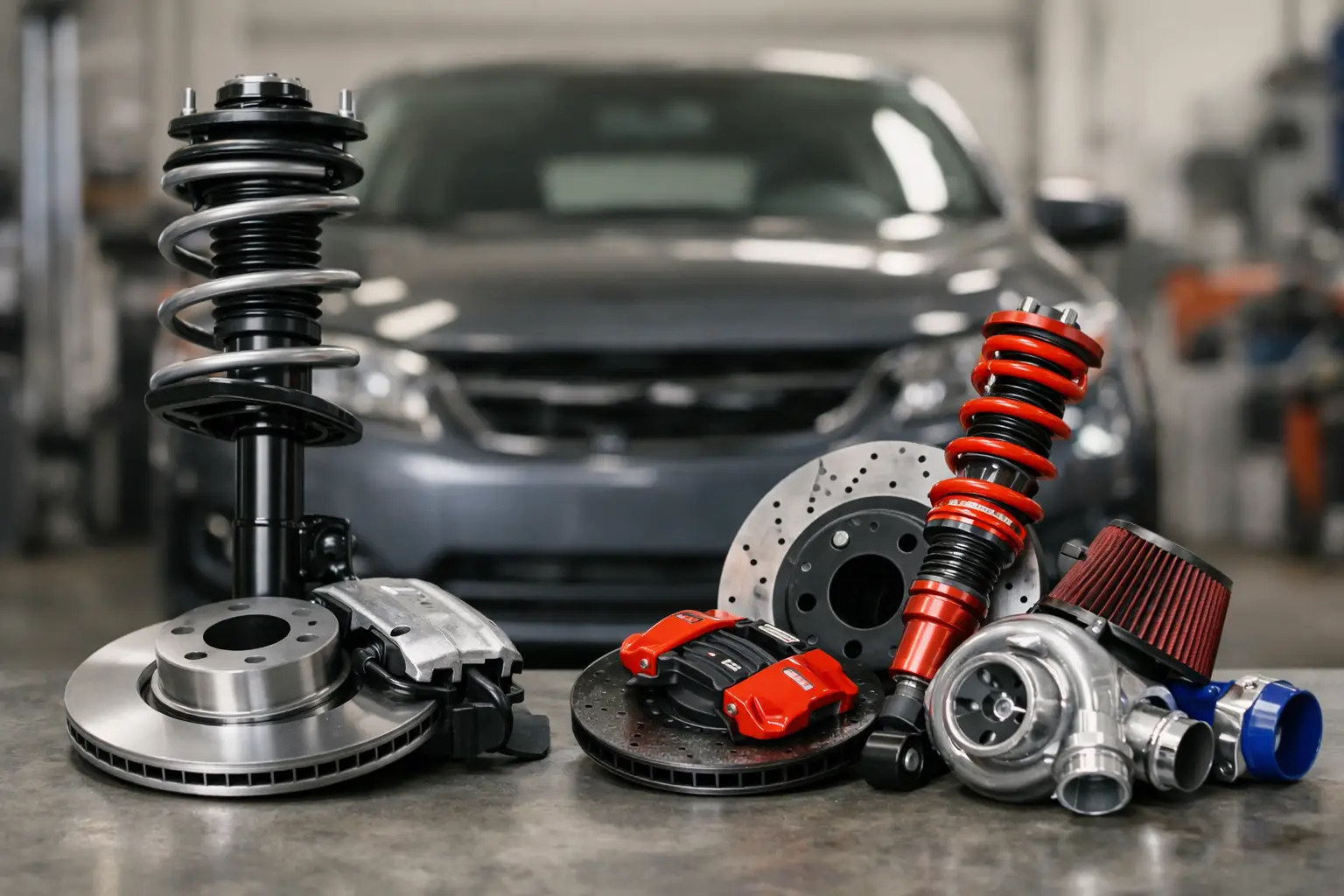
If you’ve ever been quoted for brakes, suspension parts or a cambelt job and wondered why one option is noticeably dearer than another, you’re already asking the right question. OEM vs aftermarket car parts is not just a pricing issue – it affects fit, reliability, performance and, in some cases, how long the repair actually lasts.
For Audi, Volkswagen, Škoda and SEAT owners, this matters even more than it does on many other makes. VAG vehicles often rely on parts that need to work properly with specific engine codes, chassis variations and electronic systems. A part that is technically compatible on paper is not always the part you want fitted to your car.
OEM vs aftermarket car parts: what is the difference?
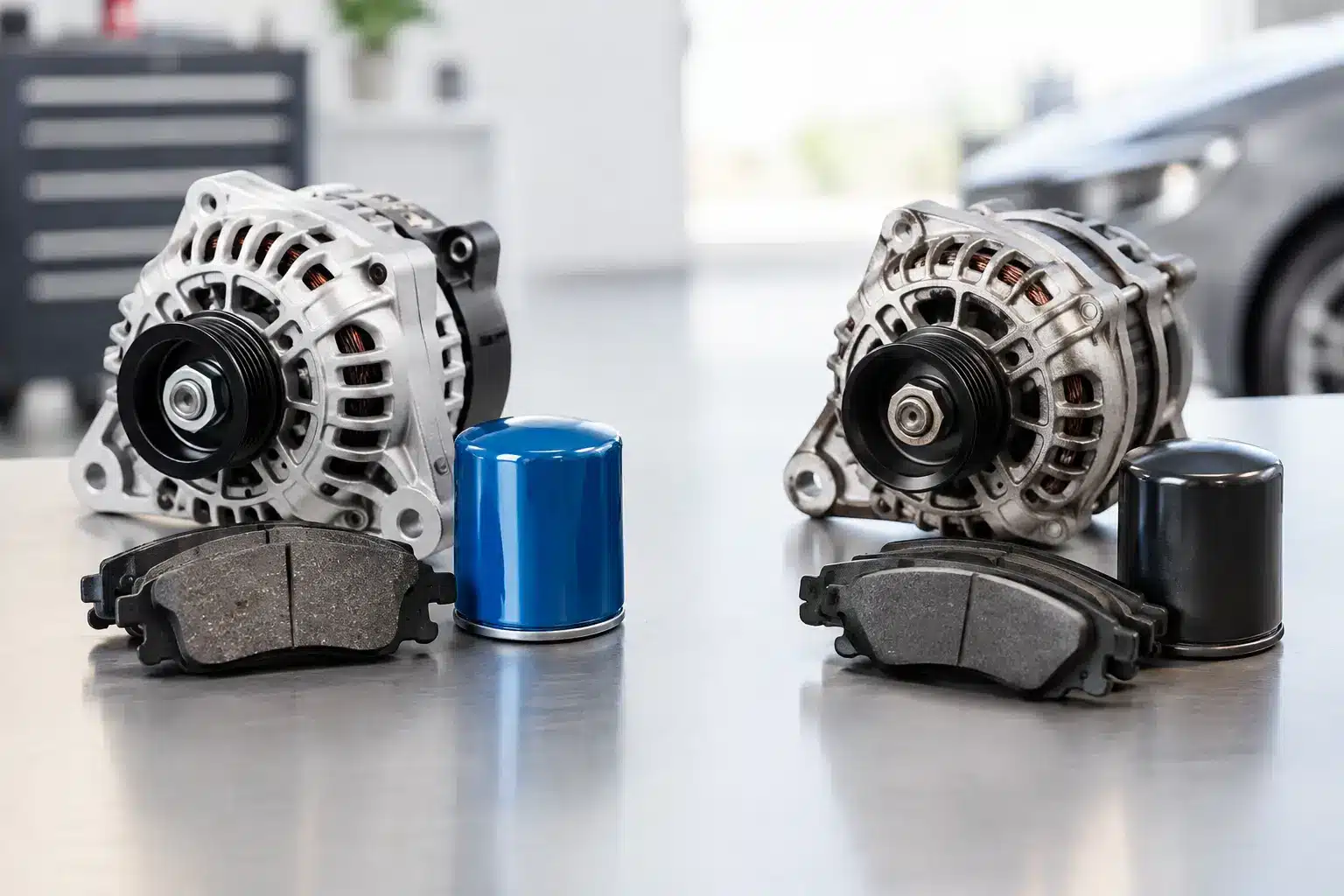
OEM stands for Original Equipment Manufacturer. In simple terms, these are parts made to the same specification as the components fitted when the vehicle was built. Sometimes they are supplied in manufacturer packaging, and sometimes they come from the same producer without the vehicle brand box. Either way, the key point is consistency of specification, fit and quality.
Aftermarket parts are replacement components made by third-party manufacturers. That is a wide category, and it is where confusion starts. Some aftermarket parts are excellent and come from respected brands that supply high-quality components across the motor trade. Others are built down to a price and may not offer the same lifespan, tolerance or finish.
That is why this is never as simple as saying OEM is good and aftermarket is bad. The real comparison is usually OEM versus quality aftermarket versus cheap aftermarket. Those are very different conversations.
When OEM parts make the most sense
OEM parts are often the safer choice when the job is labour-intensive, technically sensitive or likely to create further problems if the part is slightly off. Timing components, water pumps, DSG-related parts, sensors, mechatronic components and certain cooling system items all fall into that category.
On VAG vehicles, exact fit matters. A poor-quality sensor can cause intermittent faults that waste time and money in repeat diagnostics. A cheap water pump on a cambelt job can fail long before it should, which is the last thing any owner wants after paying for substantial labour. On systems such as Haldex, DSG or advanced engine management, the wrong part can create issues that are far more expensive than the saving made upfront.
OEM also tends to make sense if your car is newer, still within warranty considerations, or you want to maintain a service and repair history that follows manufacturer-level standards. Many owners around Aldermaston, Tadley, Basingstoke, Reading and Newbury want exactly that balance – dealer-grade work without dealer pricing, but not at the expense of quality.
When aftermarket parts are a sensible choice
A good aftermarket part can be the right answer. In plenty of cases, it offers strong value without compromising reliability. Brake components, filters, suspension arms, bearings and service items are often available from established manufacturers whose products perform very well.
This is particularly relevant on older vehicles where owners want to keep the car in sound condition without overspending. If your Volkswagen Golf or Škoda Octavia is a few years on, fitting a reputable equivalent part may be entirely sensible. The decision should be based on the vehicle’s age, mileage, intended use and the quality level of the replacement part – not just the cheapest line on the estimate.
For some enthusiast owners, aftermarket can also mean upgraded rather than simply alternative. Performance brake parts, certain suspension upgrades and selected intake or drivetrain components can improve the car when chosen properly. That said, upgrades should still suit the way the vehicle is driven. Not every modified part is better for daily road use.
The problem with cheap aftermarket parts
This is where many horror stories begin. A budget aftermarket part can look acceptable out of the box, but problems often show up later. The fit can be slightly off. The material quality can be poorer. The lifespan may be shorter. In some cases, the part works well enough to pass an initial check, then starts causing noise, vibration, leaks or warning lights weeks later.
That matters because labour is a large part of repair cost. If a cheap part fails early, you may end up paying for the job twice. Any saving disappears quickly.
It is especially risky on VAG platforms with complex electronics and tightly packaged engine bays. What looks like a small compromise can become repeat workshop time, extra diagnosis and more disruption. For drivers commuting through Reading or Basingstoke, or relying on the family car around Tadley or Newbury, inconvenience matters just as much as the invoice total.
OEM vs aftermarket car parts on Audi, VW, Škoda and SEAT
Audi, Volkswagen, Škoda and SEAT models share many platforms, but they do not all respond equally well to bargain-basement parts. Engines such as TSI and TDI units, along with DSG gearboxes and Haldex-equipped drivetrains, benefit from correct specification parts and proper installation.
Take a DSG service as an example. Owners often ask where to get an Audi DSG service or a Volkswagen gearbox service done properly without going to a main dealer. The answer is not just about who can change the oil. It is about using the right fluids, filters, procedures and diagnostic equipment, then checking the vehicle correctly afterwards. Parts quality is tied to process quality.
The same applies to mechatronic repairs, carbon cleaning, cambelt replacements and drivetrain work. On these jobs, experienced VAG specialists will usually advise OEM or high-grade equivalent parts because they know where corners cause trouble. That knowledge often comes from seeing the same faults repeatedly over many years.
How a good workshop decides what to fit
A dependable workshop should not push one answer for every car. It should explain the options clearly. If OEM is the better route, you should be told why. If a quality aftermarket part is a sensible value option, that should be explained as well.
The right recommendation usually depends on five things: the job itself, the quality level available, the age of the vehicle, your budget and how you use the car. A car that covers motorway miles every week needs a different conversation from a second vehicle doing low annual mileage. Likewise, a performance-focused Audi S or VW GTI model may justify different choices from a standard daily-runner.
That is one reason many local owners prefer an independent specialist workshop over a large dealer group. You are more likely to get practical advice rather than a one-size-fits-all quote. For drivers based around Aldermaston, the convenience is part of the appeal too – easier access than travelling into bigger town centres, but with the technical depth needed for modern VAG cars.
Is OEM always worth the extra money?
Not always. Sometimes yes, absolutely. Sometimes no.
If the extra cost buys proven reliability on a labour-heavy job, it is usually money well spent. If the aftermarket option comes from a trusted manufacturer and performs to the same standard, that can be the smarter buy. The key is knowing which situation you are in.
This is where experience matters more than theory. Two parts may be listed as suitable, but a workshop that regularly works on Audi, VW, Škoda and SEAT models will often know which one gives fewer issues in the real world. Catalogues do not tell you everything. Repeat repairs do.
What should you ask before approving a repair?
Before agreeing to the work, ask what brand of part is being fitted, whether it is OEM or equivalent, and why that option has been recommended. A good garage should be comfortable answering that plainly.
It is also reasonable to ask whether the part choice affects warranty on the repair, whether there are known quality differences, and whether a cheaper option is false economy. If the answer is vague, that tells you something. If the explanation is specific and sensible, that usually means the workshop has thought the job through properly.
For local VAG owners, this matters on everything from routine servicing to fault-finding and specialist repairs. Whether you need brakes on a SEAT Leon, a cambelt on a Škoda Superb, diagnostics on a Volkswagen Passat or an Audi DSG service, the part fitted should match the standard of the work.
The sensible way to choose
The best choice is rarely the cheapest part and not always the most expensive one either. It is the part that gives the right fit, reliability and value for your specific vehicle and repair.
For everyday owners, that often means OEM or high-quality equivalent parts from a workshop that knows VAG vehicles properly. For enthusiasts, it may mean a carefully chosen upgrade in the right place and OEM-standard parts everywhere else. Either way, the goal is the same: fix the car once, fix it properly, and avoid paying twice.
If you are unsure which route makes sense for your Audi, Volkswagen, Škoda or SEAT, ask for the reasoning behind the quote. A trustworthy specialist will not just tell you the price – they will tell you why the parts choice suits your car, your budget and the way you actually use it.
Need help with your Audi, VW, Škoda, SEAT or Cupra? Mechalex is an independent VAG specialist in Aldermaston, serving Reading, Newbury, Basingstoke and Tadley.
See our servicing & repairs service, try our free VAG AI diagnosis, or book online. Call 0118 380 1003.