If you are asking whether the DSG gearbox is reliable in the UK, the honest answer is yes – often very reliable – but only when the gearbox is the right type for the car, serviced at the right intervals and diagnosed properly when symptoms first appear. That matters for Audi, Volkswagen, Škoda and SEAT owners because a DSG can feel excellent when it is healthy, yet become expensive if early warning signs are ignored.
For many drivers, the appeal is obvious. A DSG gives you the convenience of an automatic with faster, cleaner shifts than a traditional torque-converter gearbox in many situations. On the right car, it can make stop-start commuting easier, motorway driving more relaxed and performance noticeably sharper. The problem is that “reliable” gets discussed far too broadly, as if all DSG gearboxes are the same. They are not.
Is the DSG gearbox reliable for UK owners?
As a general rule, a well-maintained DSG is capable of good long-term reliability in the UK. Plenty of VAG cars cover high mileages on their original gearbox. But reliability depends on three things more than most owners realise: which DSG variant the vehicle has, whether its service history is correct, and whether faults are diagnosed by someone who understands VAG systems rather than treating it like a generic automatic.
The UK tends to be hard on transmissions in a very specific way. A lot of cars spend their lives in traffic, on school runs or doing short journeys with constant pulling away, slowing and manoeuvring. That repeated low-speed clutch work can expose wear sooner than a car used mainly for long steady runs. Add missed servicing, poor previous repairs or low battery voltage affecting gearbox behaviour, and the picture becomes less straightforward.
So, is a DSG inherently bad? No. Is it maintenance-free? Definitely not.
Why DSG gearboxes get a mixed reputation
The mixed reputation usually comes from owners hearing one horror story and assuming it applies to every DSG fitted across the VAG range. In reality, some versions have proved more durable than others, and some applications are more forgiving.
Wet-clutch DSG gearboxes generally have the stronger reputation, especially when the oil and filter service is carried out on time with the correct specification parts and fluids. These gearboxes are commonly found in higher-torque applications and are designed with regular servicing in mind.
Dry-clutch DSG units can be efficient and pleasant to drive, but in some models they have attracted more complaints about clutch wear, low-speed hesitation and mechatronic-related issues. That does not mean every dry-clutch DSG is a problem. It means buyers and owners need to be realistic. If the car spends most of its time creeping in traffic or doing repeated urban journeys, wear patterns can be different from a vehicle used mainly on A-roads and motorways.
A lot also comes down to how the issue is described. Drivers may say “the gearbox is failing” when the fault is actually linked to adaptation values, clutch wear, fluid condition, a mechatronic issue or a drivability complaint that needs proper diagnosis. Those are very different things, with very different costs.
Common DSG faults in the UK
When DSG problems do appear, they tend to show themselves in recognisable ways. Jerky pull-away, hesitation when selecting drive or reverse, shuddering at low speed, harsh shifting, warning lights and the gearbox dropping into limp mode are all signs that should be checked promptly.
One of the best-known fault areas is the mechatronic unit. This is effectively the electro-hydraulic control centre of the gearbox, and when it starts to fail the symptoms can be confusing. The car may feel inconsistent rather than obviously broken. On one journey it may shift reasonably well, then on the next it may thump into gear, flare between gears or throw up a transmission warning.
Clutch wear is another common issue, particularly on vehicles used heavily in town. Unlike a traditional automatic, a DSG still relies on clutch operation, and those components do wear. If a driver is constantly creeping, holding the car on the throttle on an incline, or doing short low-speed trips, that can contribute to earlier wear.
Servicing mistakes also cause avoidable trouble. Incorrect fluid, poor procedures or skipped service intervals can shorten gearbox life. That is one reason specialist knowledge matters with VAG vehicles.
Servicing matters more than most owners think
If there is one thing that most affects the answer to “is DSG gearbox reliable UK”, it is servicing. A DSG is not the sort of gearbox you want to guess with. Correct oil, correct filter where applicable, correct fill procedure and correct interval all matter.
Many expensive gearbox repairs start with a cheaper service being skipped. The owner may not notice anything immediately, but degraded fluid or overdue maintenance can affect shift quality, internal wear and heat management over time. Then the problem gets blamed on the gearbox design itself.
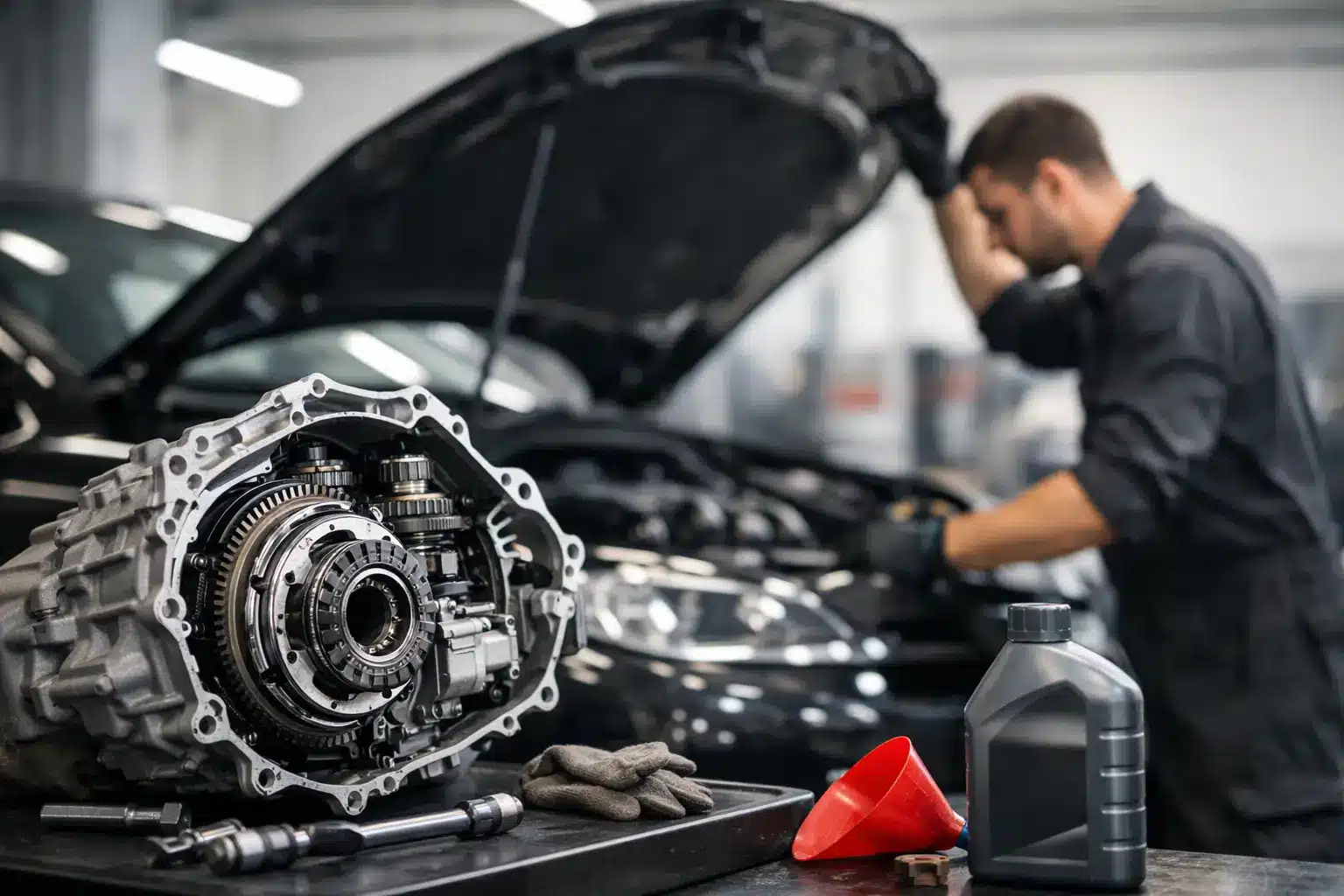
This is where specialist servicing pays off. A workshop that regularly works on VAG cars will know the difference between gearbox types, the correct maintenance schedule and the usual fault patterns. That means fewer assumptions and a better chance of catching a developing issue before it turns into a larger repair.
Warning signs you should not ignore
A DSG rarely goes from perfect to failed overnight without giving some clue. The challenge is that the clues can seem minor at first.
If the car has started hesitating as you move off, feels more abrupt than usual between gears, shudders when warm, struggles selecting reverse or flashes a gearbox warning, it is worth having it checked. The same applies if the gearbox feels unsettled after battery issues or if another garage has cleared a fault code without identifying why it returned.
Drivers sometimes adapt around the problem. They leave more space, avoid certain manoeuvres or accept that the car is “a bit funny when cold”. That can delay diagnosis until the fault worsens. Early inspection is usually cheaper than waiting for the car to enter limp mode or refuse a gear selection altogether.
Is a used VAG car with DSG a risk?
Not automatically. In fact, plenty of used Audi, VW, Škoda and SEAT models with DSG are sensible buys if the history stacks up. What matters is evidence.
A proper service record is worth far more than a vague assurance that the gearbox is “fine”. You want to know whether the correct DSG servicing has been done at the right time, whether there is any history of mechatronic or clutch work, and whether the test drive shows smooth, consistent behaviour from cold and at operating temperature.
It is also sensible to look at how the car has likely been used. A higher-mileage motorway car with excellent maintenance can be a better bet than a lower-mileage example that has spent years doing short urban trips with patchy history.
The cost question behind DSG reliability
Part of the reason people ask whether DSG gearboxes are reliable is because they are really asking whether they are likely to become expensive. That is fair. Repairs can be costly, especially if faults are misdiagnosed or ignored.
Routine servicing is far cheaper than major gearbox work. A mechatronic repair, clutch replacement or more involved transmission repair is a different level of spend entirely. That does not make DSG ownership poor value. It means the gearbox rewards preventive maintenance and informed diagnosis.
For local drivers around Aldermaston, Tadley, Reading, Basingstoke and Newbury, that usually means choosing a workshop that understands VAG transmissions properly rather than hoping a generic inspection will be enough. The right diagnosis at the start can save a lot of unnecessary parts and repeat visits.
So, is the DSG gearbox reliable enough for UK drivers to buy with confidence?
Yes, with conditions. If the car has the right service history, the gearbox has been maintained correctly and any symptoms are dealt with early, a DSG can be a very good transmission to own in the UK. It offers strong drivability, quick shifting and a better driving experience than many people expect from an automatic.
The trade-off is that it asks for more discipline than some owners give it. Skip servicing, ignore shuddering, buy on price alone or let non-specific faults drag on, and the reliability story changes quickly.
That is why DSG ownership tends to suit drivers who value proper maintenance. For VAG owners, especially those who rely on the car every day, the gearbox is usually reliable enough to recommend – but only if it is treated like a precision system rather than a sealed-for-life component.
If your DSG feels different from how it used to, trust that instinct and get it checked before a small drivability issue turns into a gearbox repair.
Need help with your Audi, VW, Škoda, SEAT or Cupra? Mechalex is an independent VAG specialist in Aldermaston, serving Reading, Newbury, Basingstoke and Tadley.
See our DSG gearbox service, try our free VAG AI diagnosis, or book online. Call 0118 380 1003.