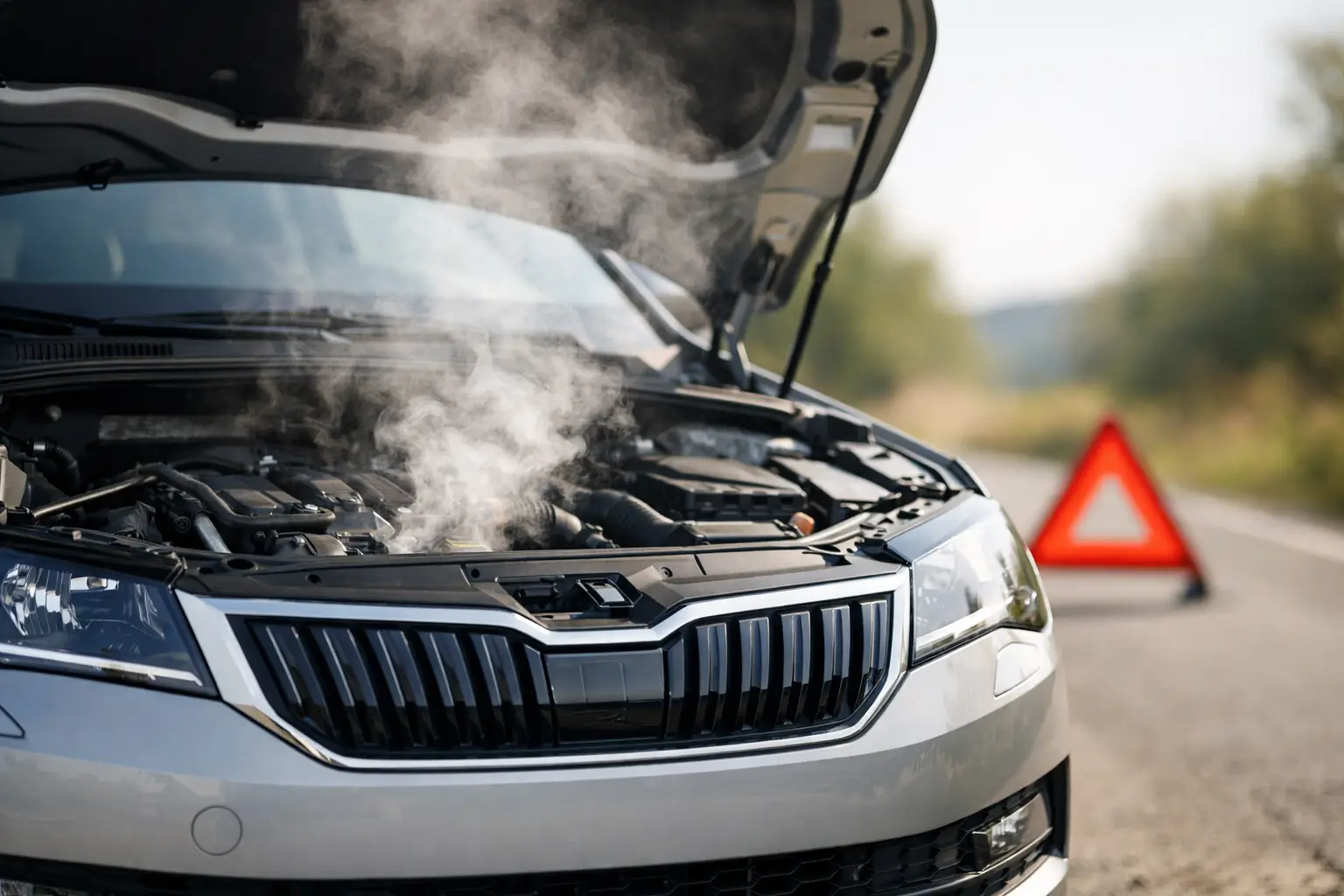
You glance down at the temperature gauge in traffic near Reading or on the A34 and realise it is climbing higher than normal. If you are asking, why is my Škoda overheating, it is not a question to leave until next week. An overheating engine can turn a manageable cooling system fault into a warped cylinder head, damaged gasket or a much larger repair bill if the car keeps being driven.
On Škoda models, overheating is rarely random. There is usually a fault somewhere in the cooling system, and the key is finding the actual cause rather than just topping the coolant up and hoping for the best. Some issues are relatively straightforward. Others need proper diagnostic work, especially on modern VAG vehicles where electric fans, sensors, thermostats and water pumps all have to work together.
Why is my Škoda overheating? The most common causes
The most obvious starting point is low coolant. If the level has dropped, the system cannot carry heat away from the engine properly. That low level may be due to a simple leak from a hose or radiator, but it can also point to a water pump problem, a failing expansion tank cap or, in more serious cases, internal engine issues.
A thermostat fault is another common cause. The thermostat regulates coolant flow through the engine and radiator. If it sticks closed, hot coolant cannot circulate as it should, so the temperature rises quickly. Sometimes this shows up as overheating in normal driving. In other cases, it happens mainly in traffic or after a longer run.
Water pump failure is high on the list as well, particularly on some VAG engines where the pump can wear, leak or lose efficiency. If the pump is not circulating coolant correctly, the engine will struggle to stay at the right operating temperature. On certain engines, the water pump and cambelt service schedule also matter, so this is not an area to ignore.
Radiator issues can also be part of the problem. A radiator may be leaking, partially blocked internally or restricted externally by dirt and debris. If airflow or coolant flow is reduced, heat cannot escape efficiently. The result is often a car that runs hotter when pushed, when carrying passengers or when sitting in queues.
Then there are cooling fan faults. If the fan does not cut in when it should, engine temperature can rise sharply at lower road speeds where natural airflow through the radiator is limited. A faulty fan motor, relay, control module, wiring issue or temperature sensor can all be responsible.
Warning signs that matter before the engine gets too hot
Overheating does not always begin with steam pouring from the bonnet. Quite often, there are earlier signs. You may notice the heater blowing cold when it should be hot, which can suggest poor coolant circulation or low coolant level. You might smell coolant, see a warning light, or spot temperature readings creeping up higher than usual.
In some cases, the car may lose coolant gradually over days or weeks before the overheating becomes obvious. White residue around hose joints, damp patches near the radiator, or pinkish coolant marks under the engine bay can all point to a leak. A rough-running engine, unexplained coolant loss or pressure building up too quickly in the system may suggest a more serious fault that needs investigating properly.
If your Škoda only overheats in certain conditions, that detail helps. Overheating in stop-start traffic often points towards fan problems or restricted cooling efficiency. Overheating at motorway speed can suggest poor circulation, thermostat issues or a more significant cooling system fault.
What to do if your Škoda starts overheating
If the temperature warning appears or the gauge climbs into the red, the safest move is to stop driving as soon as it is safe to do so. Continuing on because you are only ten minutes from home is where minor faults turn into major engine damage.
Switch the engine off and allow it to cool fully before opening the bonnet. Do not remove the coolant cap while the system is hot. Pressurised coolant can cause serious burns. Once cool, the coolant level can be checked, but adding coolant is not a repair. It may help in the short term, but the cause still needs to be found.
If there is obvious steam, a large leak, repeated overheating or signs of engine running badly, recovery is usually the sensible option. A proper inspection will almost always cost less than the damage caused by driving an overheating car further.
Why guessing can get expensive
Cooling system faults are one of those areas where replacing parts on guesswork can waste a lot of money. A thermostat, radiator, fan and sensor can all produce similar symptoms from the driver’s seat. On modern Škoda models, especially those sharing VAG platforms and engine families, accurate diagnosis matters.
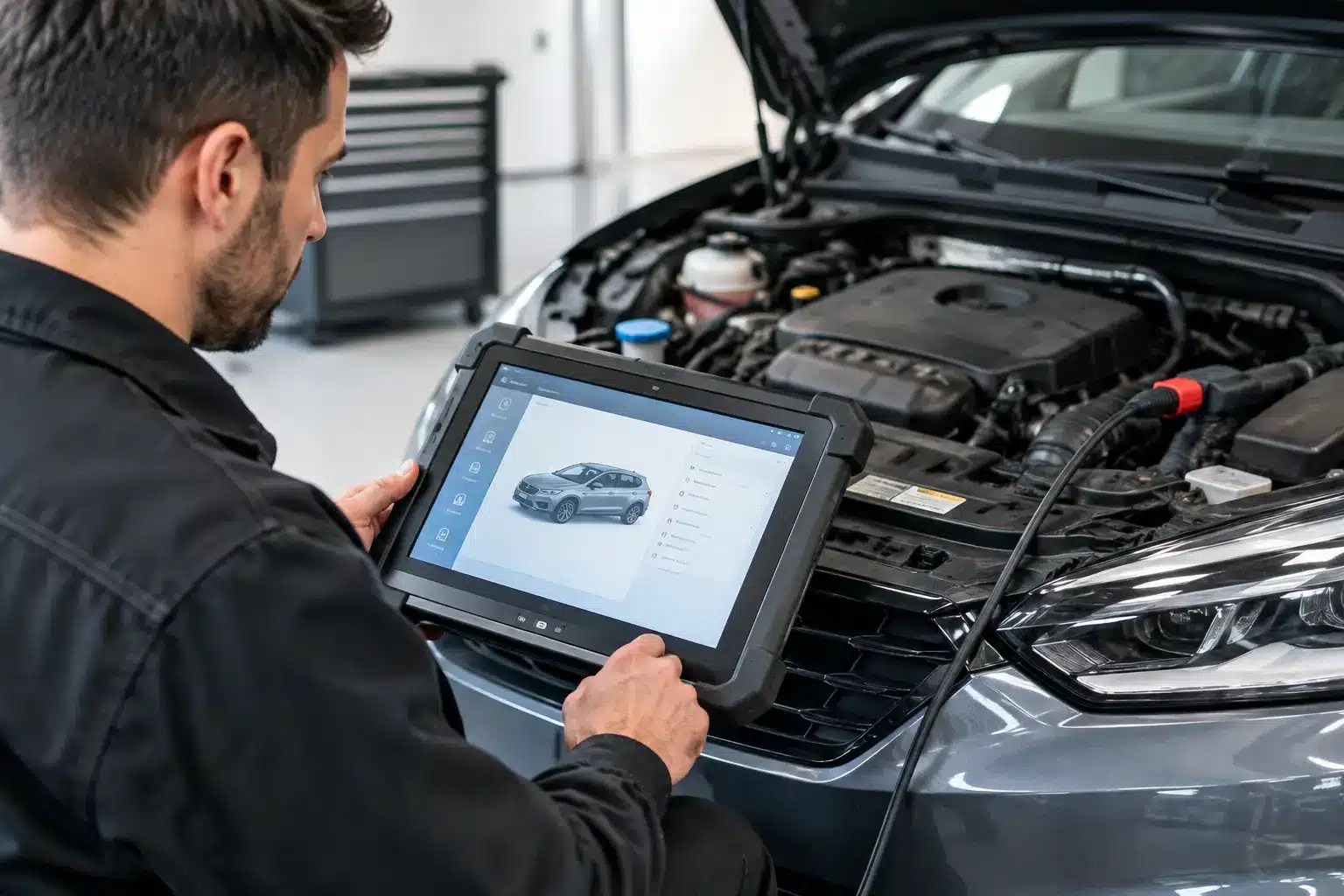
That means checking for leaks, pressure testing the system, verifying fan operation, reading fault codes where relevant, monitoring live data and confirming whether coolant is circulating correctly. If a water pump issue is suspected, that needs to be assessed in the context of the engine design and service history. If there is concern about head gasket failure, that should be tested rather than assumed.
For local drivers in Aldermaston, Tadley, Basingstoke, Newbury and Reading, that is where using a VAG specialist makes practical sense. A workshop that regularly works on Audi, Volkswagen, Škoda and SEAT models will know the common platform-related faults and how to diagnose them without turning the job into a parts lottery.
Some Škoda overheating faults are more common than others
It depends on the model, engine and age of the car. A Fabia used mainly for local trips may present differently from an Octavia doing motorway miles every day. Some engines are more prone to thermostat housing leaks. Others may be known for water pump concerns, especially where the pump is integrated with other components.
This is why service history matters. If the coolant has not been changed when required, if the wrong coolant has been used, or if previous repairs were done with poor-quality parts, the cooling system may become less reliable over time. Likewise, if a cambelt and water pump replacement is overdue on an engine where that service is relevant, overheating risk can increase.
There is also a trade-off with delaying repairs. A small leak from a housing or hose might seem tolerable if you keep topping it up, but coolant loss can worsen quickly. Air entering the system can also create circulation problems and unstable temperatures. What begins as an inconvenience can become a breakdown.
When to book your Škoda in
If your temperature gauge is rising above normal, your coolant level keeps dropping, your heater goes cold unexpectedly or you have had any overheating warning at all, book the car in sooner rather than later. Even if the temperature returns to normal, intermittent faults still need attention.
For drivers around Basingstoke, Reading and Newbury who rely on their car for commuting, school runs or work, downtime is rarely convenient. Getting a cooling fault checked early is often the difference between a straightforward repair and a much longer interruption. A specialist workshop in the Aldermaston area is also an easier option than travelling to a main dealer for many owners in Tadley and the surrounding villages.
The value is not just in replacing the failed part. It is in making sure the full system is checked, the right coolant is used, OEM or equivalent parts are fitted where needed and the root cause is confirmed. That is especially important on VAG cars, where one fault can sometimes mask another.
Can you prevent overheating?
You can reduce the chances, although not every failure gives advance notice. Keeping to the correct service schedule helps. So does acting on coolant loss early rather than waiting for a warning light. If the car is due a cambelt and water pump on the relevant engine, it makes sense to have that dealt with on time.
It is also worth paying attention to changes that seem minor. A fan running unusually often, a sweet coolant smell after parking, or the heater not performing normally can all be early signs. Catching those signs before the car overheats is always the better outcome.
If you are still wondering why is my Škoda overheating, the honest answer is that the symptom is simple but the cause is not always obvious. The sooner it is diagnosed properly, the better your chances of keeping the repair sensible and the engine healthy. A cooling system fault rarely fixes itself, but dealt with promptly, it usually stays far less dramatic than drivers fear.
Need help with your Audi, VW, Škoda, SEAT or Cupra? Mechalex is an independent VAG specialist in Aldermaston, serving Reading, Newbury, Basingstoke and Tadley.
See our VAG diagnostics service, try our free VAG AI diagnosis, or book online. Call 0118 380 1003.