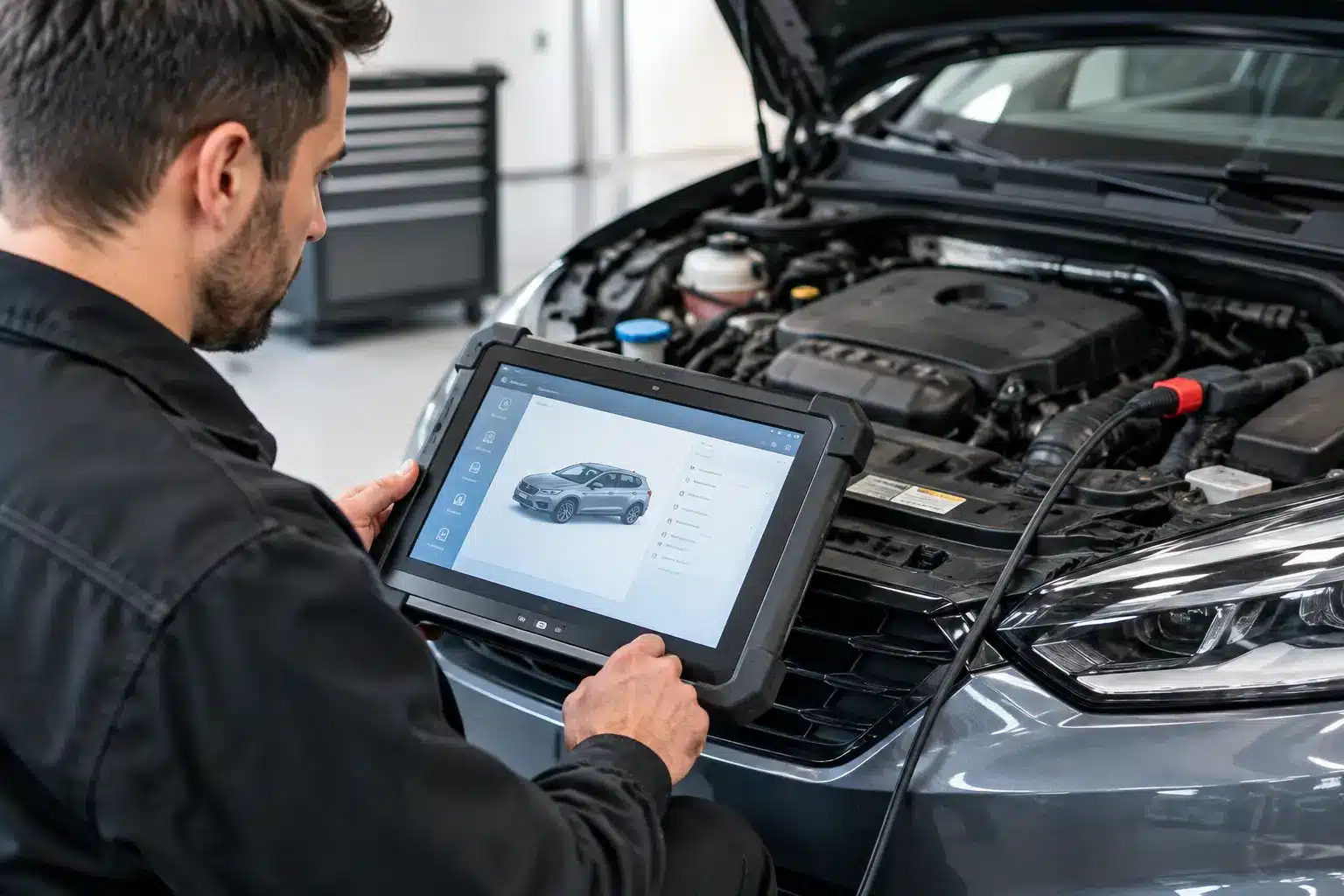
A warning light is not a diagnosis. Nor is a fault code a list of parts to replace. For owners of Audi, Volkswagen, Škoda and SEAT vehicles, a proper guide to VAG diagnostic testing starts with that distinction. Modern VAG cars are sophisticated, tightly integrated machines, and the right repair depends on understanding why a control unit has recorded a fault, not simply what it has recorded.
That matters whether your car has lost power on the A4, a DSG gearbox has started to hesitate in Basingstoke traffic, or an intermittent engine warning light has appeared on the school run around Tadley. Accurate diagnosis protects you from unnecessary parts costs, repeat visits and the frustration of a problem that returns a week later.
What VAG diagnostic testing actually involves
VAG diagnostic testing is the process of communicating with the electronic control modules fitted to Volkswagen Group vehicles. These modules manage far more than the engine. Depending on the model and specification, they can oversee the gearbox, ABS, airbag system, steering, infotainment, climate control, parking sensors, four-wheel-drive system and driver-assistance features.
A specialist diagnostic tool can read stored fault codes, live data and module information. It may also carry out output tests, adaptations, basic settings and guided functions. This provides valuable evidence, but it is only the beginning. A code can point to an electrical circuit, a sensor reading or a system operating outside its expected range. It does not always identify the failed component.
For example, an engine fault relating to air pressure may be caused by a boost leak, a sticking actuator, a vacuum issue, carbon build-up, damaged wiring or a sensor giving an implausible reading. Fitting a new sensor without checking the rest of the system can waste time and money.
A technician who knows the VAG range will combine scan-tool results with a road test, visual inspection, electrical checks and an understanding of common platform-specific faults. That is how a fault code becomes a confident repair plan.
Why generic code reading is not enough
Many garages and retailers can plug in a basic code reader. It can be useful for an initial indication, especially when an engine management light first appears. The limitation is that generic equipment may only show broad powertrain codes and may not access manufacturer-specific data or functions.
VAG-specific diagnostic equipment gives a clearer view of how the car is behaving. It can reveal communication issues between modules, show live gearbox temperatures and clutch values, confirm service history information and allow authorised procedures after certain repairs. On later models, software, coding and security access may also be relevant.
The difference is especially clear with intermittent faults. A customer may report that an Audi occasionally enters reduced-power mode, or that a Volkswagen will not start once every few weeks. If no warning is present when the car reaches the workshop, stored data, freeze-frame information and live readings can help recreate the conditions in which the fault occurred.
This is why clearing a warning light without finding the cause is rarely a sensible solution. The light may stay off temporarily, but the original issue can remain and may develop into a more expensive repair.
The VAG diagnostic testing process
A worthwhile diagnostic appointment should be methodical. The first stage is listening to what the vehicle has been doing. Details such as when the fault occurs, whether the engine is hot or cold, which warning lights appear and whether work has been completed recently can narrow the investigation considerably.
Initial health check and fault scan
The vehicle is scanned across the relevant control modules, rather than only checking the engine ECU. The technician will note fault codes, their status and supporting data. Low battery voltage, historic communication errors and unrelated old faults must be separated from faults that are active and relevant to the customer’s concern.
A battery and charging-system check is often sensible at this stage. Modern Audi, VW, Škoda and SEAT models can behave unpredictably when system voltage is low. Multiple warning lights do not automatically mean multiple failed components.
Live data, testing and inspection
The next step depends on the symptom and the codes found. Live readings might be compared with expected values while the engine runs or during a controlled road test. Electrical circuits may be tested for voltage, continuity and signal quality. Hoses, connectors, fluid condition and mechanical components may need inspection.
This is where experience saves money. A technician who understands common VAG engine, DSG, Haldex and electrical-system issues knows where to look first, while still testing rather than guessing.
Repair recommendation and verification
Once the cause is established, the repair should be explained in plain terms: what has failed, why it matters, what work is recommended and whether there are any sensible alternatives. After repair, faults are cleared only once appropriate checks have been completed. The vehicle is then retested to confirm the original symptom has been resolved.
Common reasons VAG owners book diagnostics
Engine warning lights are the most familiar reason to book in, but diagnostics are equally valuable when no warning message is showing. A car that feels different is often telling you something before a dashboard light appears.
Loss of power, poor fuel economy, rough idle, misfires and difficult starting can relate to ignition, fuelling, air leaks, sensors, emissions systems or mechanical wear. Diesel models may need investigation for DPF, EGR or boost-control problems. Petrol direct-injection engines can also suffer from carbon build-up that affects drivability and performance.
DSG concerns deserve early attention. Delayed engagement, harsh changes, shuddering, warning messages or a flashing gear display should not be dismissed as normal. The issue may be linked to servicing, fluid condition, adaptation values, sensors, wiring or mechatronic faults. The right answer depends on the gearbox type, mileage, service record and test results.
On four-wheel-drive models, Haldex-related faults can affect how the vehicle delivers drive to the rear wheels. A warning light may appear, but some owners only notice reduced traction or unusual behaviour in poor conditions. Diagnosing the system properly can involve checking fault memory, pump operation, fluid condition and associated electrical connections.
Parking sensor faults, airbag warnings, central-locking problems, battery drain and infotainment issues also require more than a quick scan. Each has its own possible causes, and a good diagnostic process avoids treating a symptom as the whole problem.
When should you book a diagnostic check?
Book promptly when a red warning light appears, the vehicle feels unsafe, the gearbox will not select gears correctly, the engine misfires badly or the car enters limp mode. Continuing to drive can turn a manageable issue into damage to a catalytic converter, DPF, gearbox or engine.
An amber warning light is not always an emergency, but it should still be investigated. If the car drives normally, you may be able to arrange a convenient appointment rather than stopping immediately. Check the vehicle handbook if you are unsure, and do not ignore changes in performance, noises or smells simply because the warning light disappears.
Diagnostics also make sense before buying a used VAG vehicle, after a repair that has not solved the original problem, or when a car is approaching a significant service decision. Spending time identifying the actual condition of the vehicle can be better value than replacing parts on speculation.
Where to get Audi, VW, Škoda or SEAT diagnostics locally
For drivers in Aldermaston, Tadley, Basingstoke, Reading, Newbury and the surrounding area, a VAG specialist offers a practical middle ground between a basic code read and a main-dealer visit. You want current diagnostic capability, but you also want someone who can explain the findings clearly and consider whether repair, servicing or further testing is the right next step.
Mechalex provides VAG-focused fault-finding for Audi, Volkswagen, Škoda and SEAT vehicles, backed by more than 30 years of experience. The workshop approach is built around dealer-level diagnostic capability, OEM or equivalent parts standards and friendly, reliable service without main-dealer pricing. For commuters and families, the Aldermaston location is convenient from the wider Reading, Basingstoke, Newbury and Tadley area, while courtesy-car availability can help reduce disruption when booked in advance.
How to make your diagnostic appointment more effective
Before booking, make a note of the warning lights, messages and symptoms you have seen. If it is safe to do so, take a photograph of the dashboard message before it disappears. Mention whether the issue happens after rain, on a cold start, at motorway speed, under acceleration or after recent servicing.
Do not clear codes repeatedly before the appointment unless advised to do so. Stored information can be useful evidence. Equally, avoid fitting several inexpensive sensors in the hope that one will cure the problem. It can complicate diagnosis and conceal the original fault.
If your Audi, VW, Škoda or SEAT is not driving as it should, arranging a proper diagnostic assessment early gives you the best chance of a targeted repair, a clear cost explanation and confidence for the journeys ahead.