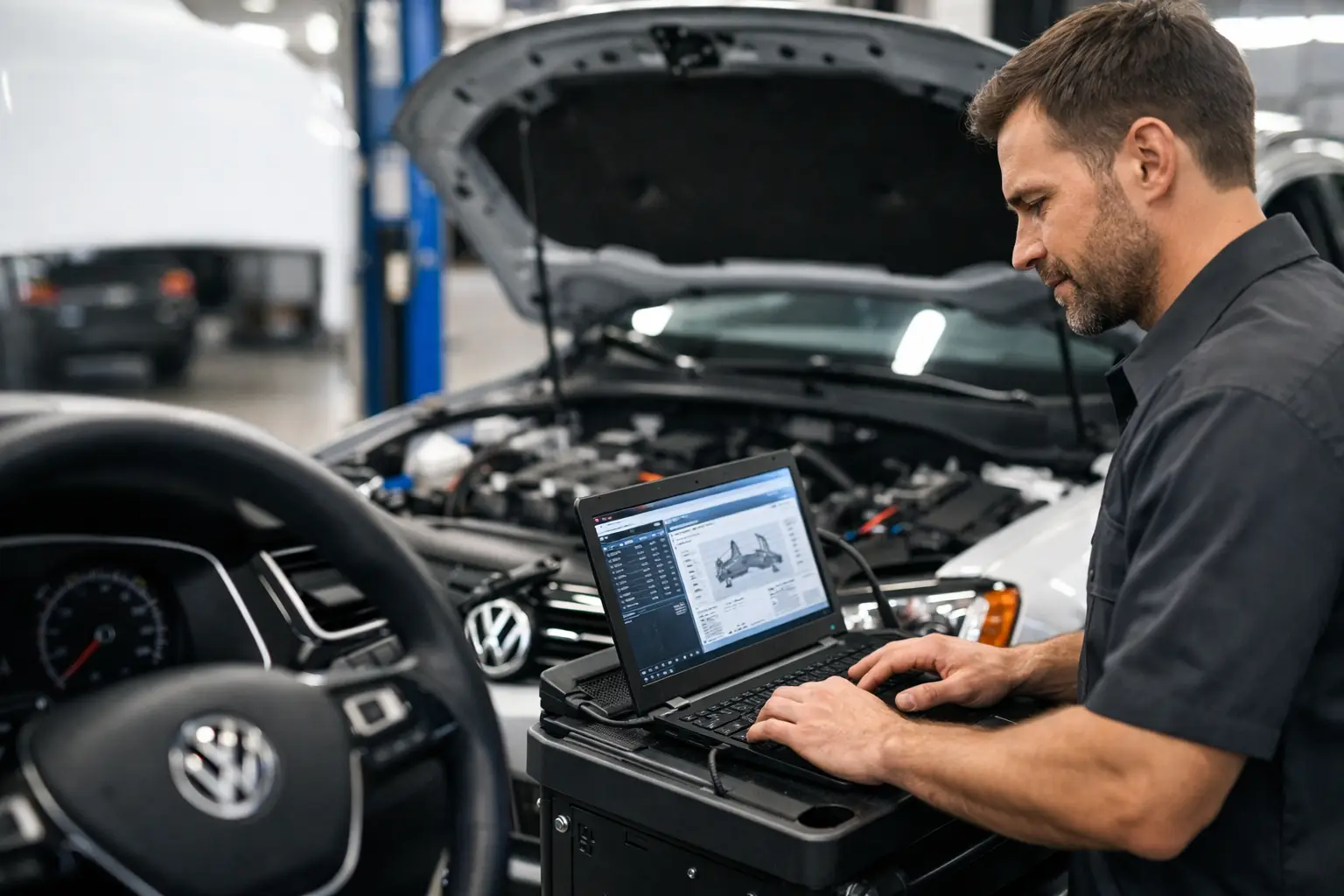
A warning light on a VW rarely tells the full story. Proper VW diagnostics is not about plugging in a scanner, reading a code and guessing what part to fit next. It is about understanding how Volkswagen systems talk to each other, what the data is saying, and how to test the fault before any repair is recommended.
That matters because modern VW models are packed with control units, sensors and software. A single symptom like poor starting, gearbox hesitation or an engine management light can have several possible causes. If the diagnosis is rushed, it is easy to replace the wrong part, waste money and still have the same problem on the drive home.
What VW diagnostics should actually involve
A proper diagnostic process starts with the customer concern, not just the fault memory. If your Golf is misfiring when cold, your Passat is dropping into limp mode, or your Tiguan has an intermittent DSG fault, the first job is to understand when it happens, how often it happens and what other symptoms come with it.
From there, the vehicle needs a full system scan using the right diagnostic equipment. On VAG vehicles, that means more than reading generic OBD codes. Volkswagen, Audi, Škoda and SEAT models store manufacturer-specific faults and live data that often make the difference between a fast, accurate diagnosis and a costly guess.
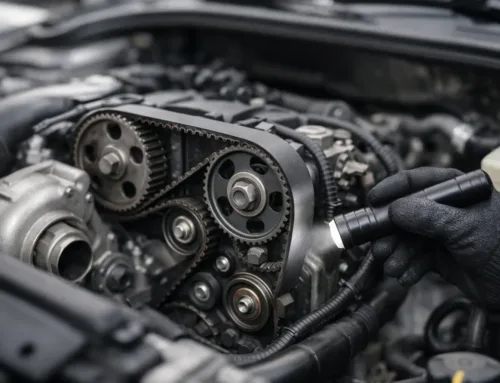
After that, the real work begins. Live data needs to be checked. Basic settings and adaptations may need reviewing. Wiring, sensors, actuators and mechanical condition often need testing to confirm the fault. In some cases, software issues or known platform patterns are part of the picture too. That is why experience matters just as much as the machine being used.
Why generic code reading is not enough
A lot of owners have had the same experience. The light comes on, a quick scan says there is a fault with a sensor, the sensor gets replaced and the problem comes straight back. That is usually because the code pointed to the circuit or operating condition, not automatically to a failed component.
For example, a boost pressure fault on a VW diesel might be caused by a vacuum issue, a sticking actuator, a split hose, a sensor reading problem or carbon build-up affecting airflow. A gearbox fault code may suggest an electrical issue but the root cause could be fluid condition, internal wear or mechatronic problems. The code is a starting point, not a verdict.
Good VW diagnostics saves money because it reduces repeat visits and unnecessary parts replacement. It also helps avoid the common trap of treating the symptom while missing the fault underneath.
Common faults where VW diagnostics matters most
Volkswagen Group vehicles are well engineered, but like any modern car, they have known weak points and recurring issues. The benefit of using a VAG specialist is that common platform faults are familiar rather than mysterious.
Engine management lights are one of the most frequent reasons people book in. On petrol models, ignition faults, timing issues, intake leaks and carbon build-up can all cause similar symptoms. On diesel models, EGR issues, DPF problems, boost control faults and sensor discrepancies are common areas to investigate.
DSG gearboxes are another area where proper testing is essential. Juddering, delayed engagement, warning messages or poor shift quality can point to servicing needs, adaptation issues, mechatronic faults or internal wear. Jumping straight to the biggest repair bill is not the right approach, but neither is ignoring early symptoms and hoping they disappear.
Electrical faults can also be deceptively complex. Battery condition, charging faults, parasitic drains, control module communication errors and intermittent wiring problems can all produce strange behaviour. If your car has multiple warnings at once, it does not always mean multiple failed parts. Sometimes one underlying fault is creating a chain of issues across several systems.
VW diagnostics for local drivers
For drivers in Aldermaston, Tadley, Basingstoke, Reading and Newbury, reliable diagnosis matters for a simple reason – most people cannot afford to have their car off the road for long. Whether you commute daily, do the school run, or need your vehicle for regular motorway miles, you want the fault found properly and a clear plan for what happens next.
Using a local independent VAG specialist can make that process far easier. You get workshop-level diagnostic capability without the usual main dealer cost, and you are dealing with technicians who regularly see Volkswagen Group vehicles rather than every make under the sun. That familiarity often speeds up fault-finding and keeps the advice practical.
Aldermaston is also a convenient base for the wider area. Drivers coming from Tadley, Basingstoke, Reading or Newbury can access a specialist workshop without having to build their whole day around a dealer visit in a busier town centre. That local convenience counts when the issue is urgent or the car is already showing clear warning signs.
What a specialist sees that others may miss
There is a big difference between having a diagnostic tool and knowing how to interpret what it is showing. VAG vehicles have brand-specific systems, service requirements and recurring fault patterns that only really become familiar through experience.
If you are dealing with Haldex problems on a four-wheel-drive model, mechatronic concerns in a DSG car, or drivability issues after missed maintenance, specialist knowledge matters. The same goes for faults linked to timing, carbon build-up, software behaviour or adaptations after repairs.
A workshop with proper VAG experience will usually look at the full picture. Has the car had the right service history for the gearbox or four-wheel-drive system? Are OEM or equivalent parts fitted? Has previous work been carried out correctly? Is the fault electrical, mechanical or a mix of both? Those questions help avoid shallow diagnosis.
At Mechalex, that approach is backed by more than 30 years of VAG experience, modern diagnostic equipment and a focus on doing the job properly rather than rushing to the first easy answer.
VW diagnostics and performance cars
Diagnostics is not only for warning lights and breakdowns. It also plays a big role in performance and optimisation work. If a car feels flat, hesitant or inconsistent, there is no point talking about tuning until the base vehicle is healthy.
On turbocharged VW Group engines, issues such as boost leaks, fuelling discrepancies, ignition weaknesses or carbon deposits can all affect performance. A proper diagnostic assessment helps separate normal wear from faults that are holding the car back. Sometimes the fix is straightforward. Sometimes it reveals why the car has never felt quite right since a previous repair or modification.
This is where honesty matters. Not every problem has a cheap answer, and not every fault needs a major repair. The right advice depends on what testing shows, how the vehicle is used and whether the goal is reliability, restoration of lost performance or planned upgrades.
When to book VW diagnostics
If a warning light is on, book it in. That part is obvious. But there are other signs worth paying attention to before they turn into bigger issues.
Intermittent hesitation, rough starting, increased fuel consumption, gearbox shudder, odd noises, loss of power and repeated regeneration behaviour on a diesel all deserve investigation. So do recurring battery problems or electrical gremlins that seem to come and go.
The key is not to wait for a small fault to become a stranded-at-the-roadside fault. Early diagnosis is usually cheaper, simpler and less disruptive than dealing with the damage caused by prolonged driving with an unresolved problem.
What you should expect from a diagnostic appointment
A good workshop should be clear about what diagnostic time covers and what happens after the initial assessment. In some cases, the issue can be identified and quoted quickly. In others, especially with intermittent or more complex faults, additional testing may be needed before a proper repair recommendation can be made.
That is not a sign that anyone is guessing. Quite the opposite. Honest diagnostics means taking the time needed to confirm the root cause rather than fitting parts on hope. You should expect clear communication, sensible explanations and a repair path based on evidence.
For owners of VW, Audi, Škoda and SEAT vehicles, that approach is usually the best balance of cost and confidence. You are not paying for a badge on the building. You are paying for accurate fault-finding, relevant experience and repairs carried out to the right standard.
If your VW is showing a warning light, driving differently or just does not feel right, getting it checked by a specialist early is often the smartest move. A proper diagnosis does more than identify a code – it gives you a clearer answer, a more reliable repair and far less chance of paying twice for the same problem.