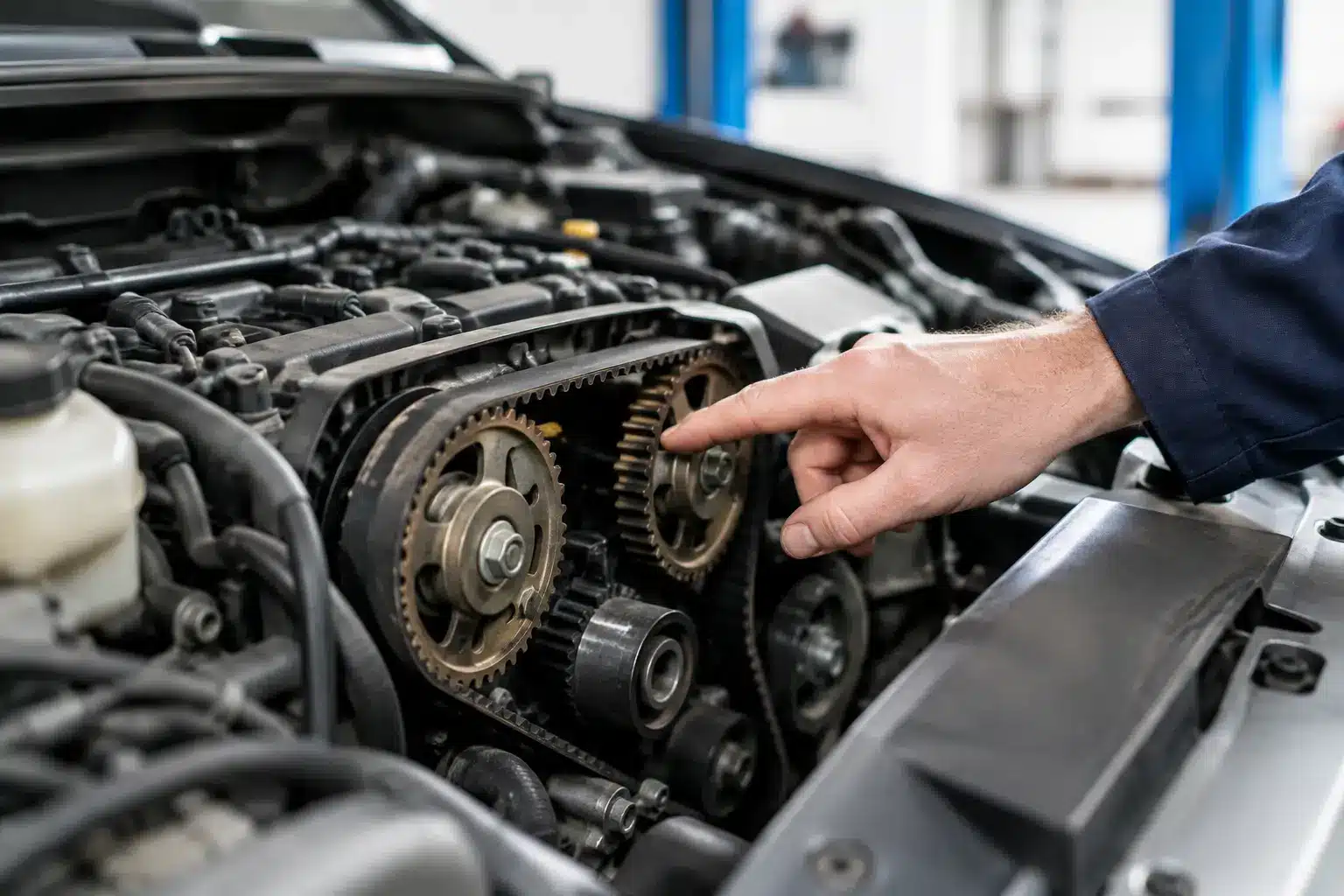
A cambelt rarely gives a clear warning before it fails. That is what makes knowing how to spot early cambelt failure signs useful – but it is no substitute for replacing the belt at the correct interval. On many Audi, Volkswagen, Škoda and SEAT engines, a failed cambelt can allow pistons and valves to collide, turning a planned maintenance job into a major engine repair.
For drivers around Aldermaston, Tadley, Basingstoke, Reading and Newbury, the practical approach is simple: know your vehicle’s cambelt schedule, act on unusual noises or running faults promptly, and do not keep driving if there is a credible risk that the timing system is involved.
Why cambelt problems are so serious
A cambelt, also called a timing belt, keeps the crankshaft and camshaft(s) turning in precise synchronisation. This controls when the engine’s valves open and close. The belt itself is made from reinforced rubber, but the complete timing system also includes tensioners, idler rollers and, on many VAG engines, the water pump.
If the belt stretches, loses teeth, slips or breaks, valve timing can move out of position instantly. Some engines may stop without internal damage, but many VAG petrol and diesel engines are interference designs. In those engines, even a small timing error can bend valves and damage pistons, cylinder heads or more.
That is why a cambelt should be treated as a scheduled replacement item rather than a component to run until it looks worn. The cost of preventative replacement is predictable. The cost of failure often is not.
The early cambelt failure signs worth taking seriously
There is no reliable dashboard warning light for cambelt wear. A belt can look acceptable externally while its internal fibres, teeth or tensioner are deteriorating. However, the following symptoms justify a prompt inspection and proper diagnostic assessment.
A ticking, clicking or whirring noise from the timing-belt end
A light noise is not automatically a failing cambelt. Auxiliary belts, pulleys, injectors and other components can all create sounds that seem to come from the same area. But a new ticking, rhythmic clicking, chirping or high-pitched whirring from the belt end of the engine can indicate a worn tensioner, idler bearing, misaligned pulley or belt tracking issue.
If the noise changes with engine speed, do not assume it will settle down. Continuing to drive can turn a worn roller bearing or failing tensioner into a belt derailment. A technician needs to identify the source rather than replace parts on guesswork.
Rough running, misfires or difficult starting
An engine that is slightly out of time may run unevenly, misfire, lack response or become difficult to start. You may also see an engine management warning light. These symptoms have many possible causes, including ignition faults, fuelling issues, air leaks and sensor problems, so they do not prove that the cambelt is at fault.
They do, however, make professional diagnostics essential. On a VAG vehicle, live data and fault codes can help establish whether camshaft and crankshaft correlation is correct. If timing correlation is outside specification, driving the car further may cause serious damage.
Oil, coolant or water around the timing-belt area
Cambelts do not cope well with contamination. Engine oil can degrade the belt material, while coolant leaks can affect the belt and the bearings in tensioners or rollers. A leaking camshaft seal, crankshaft seal or water pump should never be ignored simply because the car still drives normally.
This is one reason a cambelt replacement commonly includes the water pump, tensioners and rollers. Replacing only the belt may appear cheaper, but leaving an ageing water pump or bearing behind risks paying for much of the labour again later. The right package depends on the specific engine, its mileage and the quality of parts already fitted.
Visible cracking, fraying or missing belt teeth
If a belt cover has been removed during inspection and there are visible cracks, frayed edges, glazing, contamination or damaged teeth, the vehicle should not be driven until it has been assessed. A visual check has limits – much of the belt is hidden, and age-related deterioration is not always obvious – but visible damage is a clear warning.
Do not attempt to inspect the belt by removing covers at home unless you know the engine and correct procedure. Improper refitting can create the very problem you are trying to avoid.
An overdue or uncertain service history
The most common cambelt risk is not an unusual sound. It is a missing invoice, unclear history or a vehicle that has passed its age or mileage interval. This particularly matters on used cars where the previous owner says the belt was changed but cannot provide evidence.
Service intervals vary significantly by engine code, model year and market. A Volkswagen Golf, Audi A3, Škoda Octavia or SEAT Leon can have different requirements despite sharing a platform or engine family. Time matters as well as mileage, especially for lower-mileage cars that make short trips around town.
When should you stop driving?
Stop the engine and arrange recovery rather than driving to a workshop if the engine suddenly cuts out while driving, there is a loud snap or bang from the timing-belt side, the engine cranks unusually quickly without starting, or a timing-related fault has been identified. Do not keep trying to restart it. Repeated cranking can worsen internal damage if the belt has slipped or broken.
If the car is simply overdue for a cambelt but running normally, it is still wise to book the replacement as soon as possible and minimise unnecessary journeys. There is no safe grace period once an interval has been exceeded. The belt may last longer, or it may not.
Cambelt warning signs can be misleading
It is tempting to wait for a noise or warning light before spending money on preventative work. Unfortunately, cambelt systems do not offer that reassurance. A belt may fail with no noticeable symptom, while a noisy engine may have an unrelated issue.
That is why the service record is more valuable than assumptions. A proper check should confirm the engine code, manufacturer interval, date and mileage of the last replacement, and whether the tensioners, rollers and water pump were changed at the same time. If this cannot be verified, budget for replacement rather than gambling on the engine.
For performance-tuned or enthusiast-owned cars, maintenance discipline matters even more. Extra power does not automatically cause cambelt failure, but a well-maintained timing system is fundamental before investing in tuning, long-distance driving or demanding use.
What a proper VAG cambelt replacement involves
A correct cambelt job is more than fitting a new belt. The technician must lock the engine using the correct tools, set timing accurately, inspect related components and torque fasteners to specification. Depending on the engine, the job may also require replacement of the tensioner, idler rollers, water pump, coolant and single-use bolts.
Using OEM or equivalent-quality parts is equally important. A low-cost kit can undermine an otherwise careful repair. The goal is not merely to get the engine running again, but to provide confidence through the full next service interval.
At Mechalex, cambelt and water pump work is carried out with VAG-specific knowledge, modern diagnostic equipment and quality parts standards. That is particularly useful for owners who want main-dealer capability without the main-dealer cost, while still understanding exactly what has been replaced and why.
A practical next step for local VAG owners
If you are unsure whether your Audi, Volkswagen, Škoda or SEAT cambelt is due, gather the registration, current mileage and any service paperwork before booking. A specialist can then check the likely interval for the vehicle and advise whether an inspection, diagnostic assessment or full cambelt replacement is the sensible next move.
For busy commuters and families in the Aldermaston, Tadley, Basingstoke, Reading and Newbury area, planned maintenance is far easier to manage than a sudden breakdown and an avoidable engine rebuild. If the history is unclear or one of these warning signs has appeared, deal with it before the next journey becomes the expensive one.