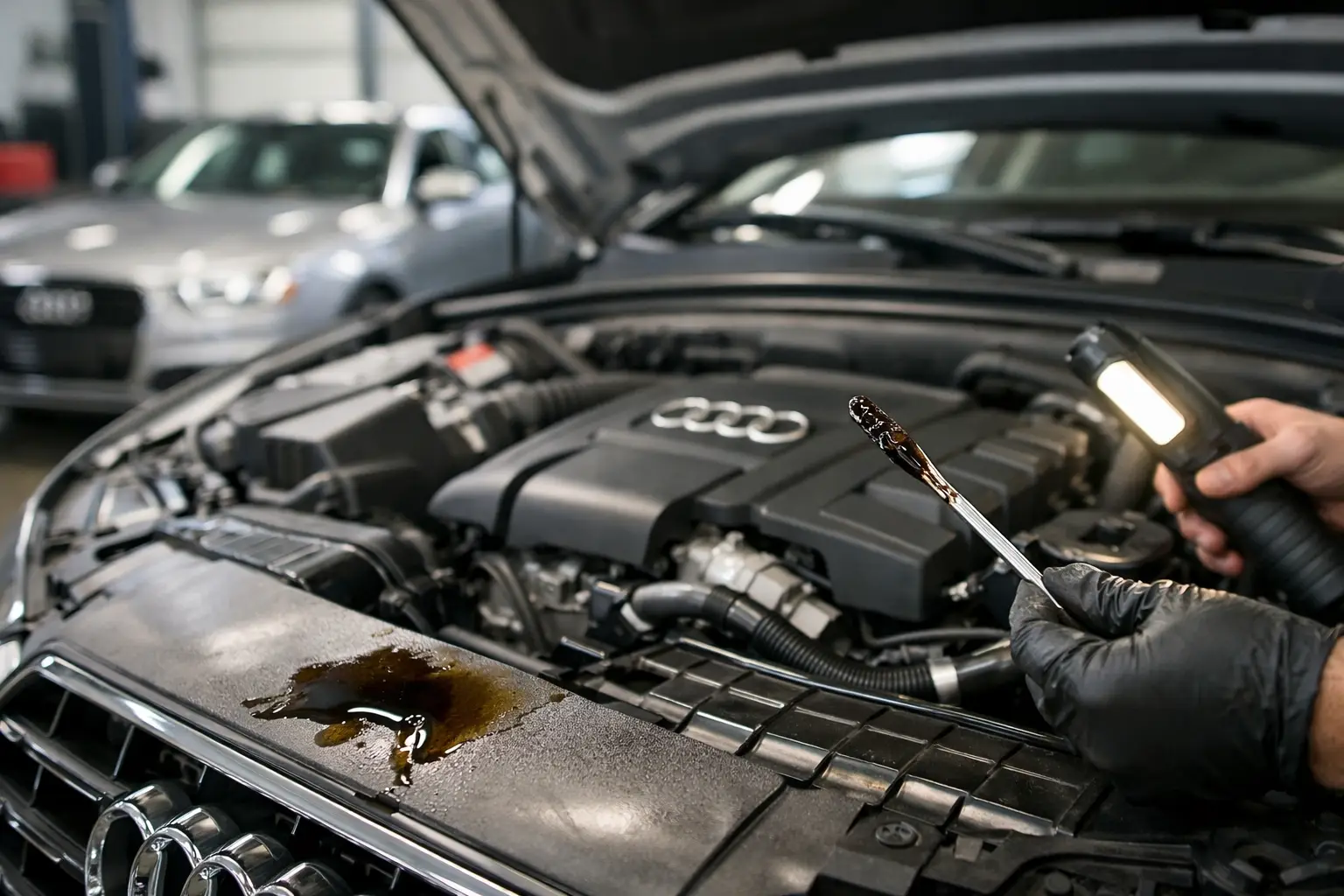
That faint burnt-oil smell after a run, a dark patch on the drive, or oil mist collecting underneath the engine cover is usually where an Audi oil leak diagnosis guide becomes useful. With Audi engines, especially across popular VAG platforms, the hard part is not spotting that oil is escaping. It is working out where it is really coming from, how serious it is, and whether the apparent leak is the actual fault or just the point where oil has finally dripped.
On many Audis, oil does not simply fall straight down from the failed seal. It travels along castings, wiring trays, undertrays and subframes before showing itself somewhere entirely different. That is why guessing can get expensive. Replacing the wrong gasket may reduce the mess for a week or two, but it does not solve the problem if the true source is higher up the engine or linked to excessive crankcase pressure.
How an Audi oil leak diagnosis guide helps
A proper Audi oil leak diagnosis guide starts with one basic principle – clean evidence matters more than assumptions. If the whole underside is wet, every seal can look guilty. Before any meaningful diagnosis, the affected area often needs to be cleaned so fresh oil traces can show the true path.
That matters because several common Audi leak points can mimic each other. A rocker cover leak can run down and look like a timing cover issue. A vacuum pump leak can spread across the back of the engine and resemble a sump problem. An oil filter housing leak may leave oil around the front or side of the engine, depending on the model and airflow underneath the car.
For owners in Aldermaston, Tadley, Basingstoke, Reading and Newbury, that is often the difference between a quick targeted repair and repeated visits chasing the wrong fault. If you rely on your Audi for commuting or family use, getting the diagnosis right first time saves both money and disruption.
The most common Audi oil leak points
Audi engines vary, but some leak areas appear time and again across petrol and diesel models. The rocker cover or cam cover gasket is a regular one. As the seal hardens with age and heat cycles, oil starts to seep from the top of the engine. Left alone, this can drip onto hot components and create that unpleasant burning smell.
The oil filter housing is another frequent culprit. On certain engines, the housing or its seals can leak under pressure, often leaving a messy build-up around the front of the engine. This one can be easy to misread because road grime quickly sticks to the oil and creates a much larger-looking mess than the leak may first suggest.
The sump gasket or sump sealant can also fail, particularly on older vehicles or those that have had previous work. A sump leak tends to show lower down, but that does not always mean the sump is the source. Oil from higher up can run down the engine and collect around the sump flange.
Then there are timing covers, crankshaft seals and vacuum pump seals, all of which can leak in ways that are awkward to see without proper access. Turbo oil feed and return lines deserve attention too, particularly on higher mileage cars. If an Audi has had inconsistent servicing, incorrect oil grades or excessive crankcase pressure, these areas can become more vulnerable.
Signs the leak is more urgent than it looks
Not every oil leak is an emergency, but some are much closer to one than drivers realise. If the oil warning light comes on, the level drops noticeably between short journeys, or there is visible smoke from oil reaching hot exhaust parts, it needs prompt attention. A small weep and an active leak are not the same thing.
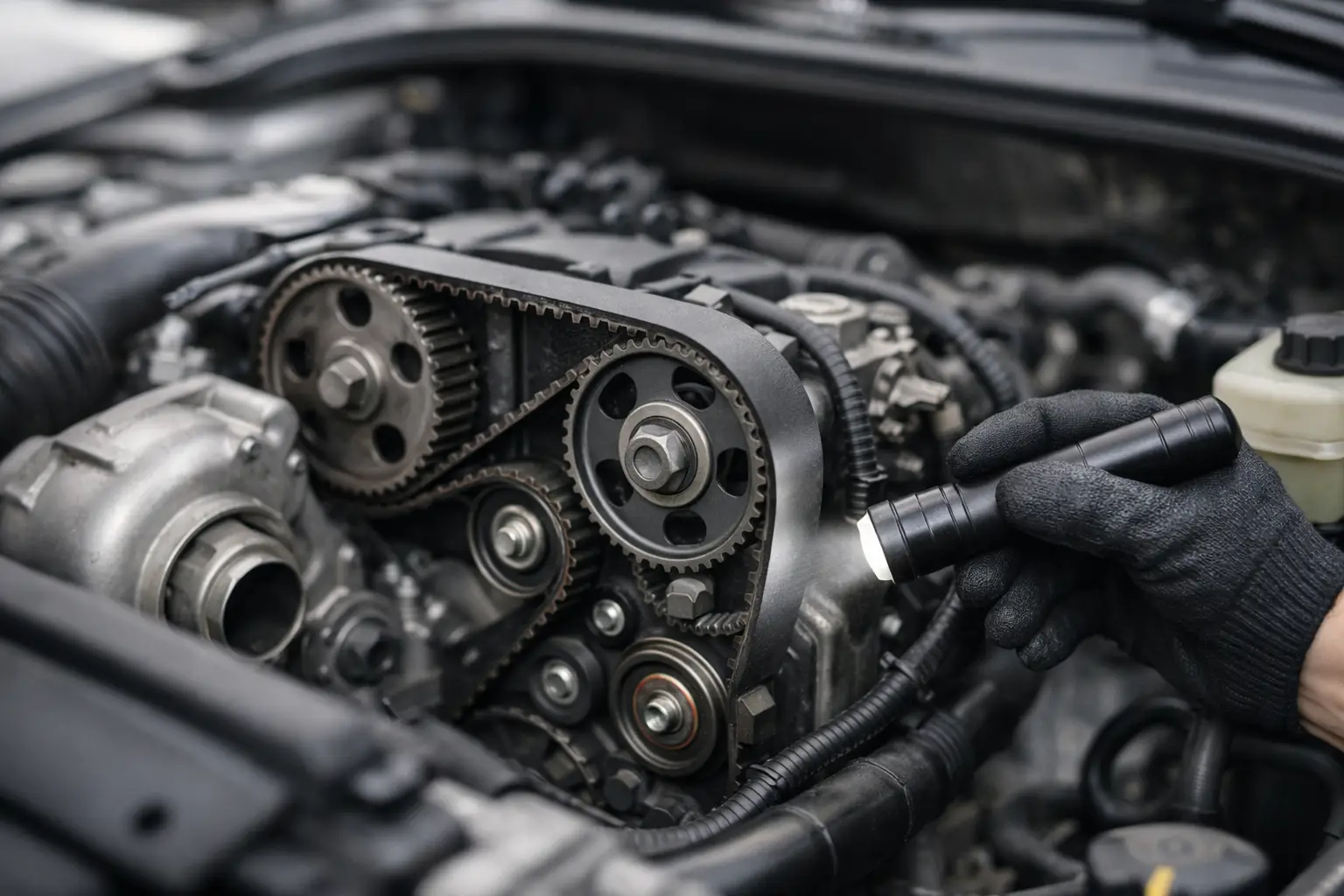
Leaks around timing components also deserve care. If oil contaminates belts, auxiliary components or rubber mounts, what started as a sealing issue can spread into a wider repair. On some engines, access to the leaking area is labour-intensive, so delaying can mean paying twice if related parts fail soon after.
There is also the fire risk people tend to dismiss. It is not the most common outcome, but oil dripping onto hot exhaust sections should never be treated casually. Even without that, an oil-starved engine is one of the fastest ways to turn a manageable repair into major internal damage.
Why DIY diagnosis often goes wrong
The obvious temptation is to top the oil up, have a quick look with a torch and order the gasket that seems most likely. Sometimes you get lucky. Quite often, though, the visible leak point is only where gravity has taken it.
Modern Audi engine bays are tightly packaged. Covers, pipework, undertrays and sound insulation all make visual checks less straightforward than they first appear. Add in airflow while driving, and oil can spread well beyond the original fault. Without lifting the vehicle and checking from above and below, you can miss the pattern entirely.
There is also the question of why the seal failed. Age is one possibility, but not the only one. A blocked breather system or crankcase ventilation fault can raise internal pressure and push oil past otherwise serviceable seals. In that case, replacing the gasket alone is only half a repair.
What proper diagnosis should include
A reliable diagnosis is methodical rather than dramatic. First comes confirmation of fluid type. Engine oil can be confused with gearbox oil, power steering fluid on older systems, or even residue from a previous spill. From there, the technician needs to identify whether the leak is active, historic or caused by overfilling.
The next stage is access and inspection. That may involve removing covers, checking common VAG leak points, examining the PCV or breather system, and looking for signs of pressure-related failure. If the area is badly contaminated, cleaning and rechecking after a short run is often the only honest way to pinpoint the source.
This is where VAG experience makes a real difference. Audi engines share many design traits across the wider Volkswagen Audi Group, but each engine family has its own patterns. Knowing where these engines typically leak, how oil tends to travel, and which faults commonly appear together shortens the diagnostic process considerably.
For drivers around Reading, Basingstoke or Newbury, using a specialist workshop near Aldermaston can be more practical than heading to a main dealer for an older or higher mileage Audi. You still want proper diagnostic equipment and experienced technicians, but you also want sensible repair advice based on the car’s condition and value.
Repair decisions depend on the source
Once the leak is identified, the right repair depends on access, severity and surrounding condition. A straightforward rocker cover gasket is one thing. A rear main seal, timing cover or turbo oil line issue is another. Labour can vary far more than the part cost itself.
It is also worth looking at related items while access is available. If an oil leak repair requires removal of surrounding components, there may be value in replacing tired seals, breather parts or service items at the same time. That is not upselling for the sake of it. It is often the most cost-effective way to avoid repeat labour.
Good workshops will be clear about what is essential now, what can reasonably be monitored, and what is best handled proactively. That matters on older Audis where owners want to balance reliability with sensible spend. Main dealer service without the main dealer cost only really means something if the advice is practical and the work is done properly.
When to book your Audi in
If you have fresh oil spots where you park, a smell of burning oil, visible residue in the engine bay or a dropping oil level, it is time to have it checked. The earlier the diagnosis, the more likely it is that the fix stays localised and affordable.
At a specialist workshop such as Mechalex, the advantage is not just replacing seals. It is understanding the wider VAG picture – the engine layout, the common fault patterns, the correct parts standards and the importance of proper fault-finding before any parts are fitted. For Audi owners in Tadley and the surrounding area, that means dealer-level capability with a more personal, value-led approach and less wasted time.
If your Audi is leaking oil, do not wait for the patch on the drive to tell the whole story. Small leaks have a habit of becoming expensive when they are left to spread.