A quicker response joining the A4, more assured overtaking on the way to Reading, or less effort when your car is fully loaded for a family holiday can all be reasons to consider ECU remapping. But a good remap is not simply about chasing the biggest power figure. For Audi, Volkswagen, Škoda and SEAT owners, it should suit the engine, gearbox, maintenance history and the way the car is actually used.
At Mechalex, we take a practical view: the right calibration can improve drivability and usable torque, while the wrong one can expose existing faults or place unnecessary strain on components. That is why a proper assessment matters before any performance work begins.
What ECU remapping actually changes
The engine control unit, or ECU, is the computer that manages how the engine runs. It uses information from a wide range of sensors to control fuel delivery, turbo boost, ignition timing, throttle response and torque output. Manufacturers often use conservative software settings so one engine calibration can work across different markets, climates, fuel qualities and model variants.
ECU remapping adjusts carefully selected parameters within that software. On a healthy turbocharged petrol or diesel VAG vehicle, this can produce more mid-range torque and stronger acceleration without changing physical engine components. The result should feel natural rather than abrupt: better pull through the rev range, more confident motorway joining and fewer unnecessary gear changes.
The exact outcome depends on the engine. A 2.0 TDI, for example, will normally feel quite different after tuning from a 1.5 TSI or an Audi S model. Published maximum figures are only part of the picture. Smooth delivery, sensible limits and repeatable performance matter far more in a daily-driven car.
Is ECU remapping right for your car?
A remap is best considered when the vehicle is in good mechanical condition and has been serviced properly. It is not a cure for a flat spot caused by a boost leak, a tired turbo actuator, carbon build-up, a blocked intake, injector concerns or stored fault codes. Adding power before identifying those issues risks making a small problem more expensive.
This is especially relevant for cars that cover short journeys around Tadley and Basingstoke, or spend much of their time in stop-start traffic. Diesel emissions systems need to be operating correctly, while direct-injection petrol engines may benefit from checking for intake-valve carbon deposits. Where appropriate, walnut blasting can restore lost airflow before performance software is considered.
Mileage alone does not rule a car out. A well-maintained higher-mileage Volkswagen can be a better candidate than a lower-mileage example with poor servicing or unresolved warning lights. The condition of the clutch, dual-mass flywheel, DSG gearbox, Haldex system and drivetrain should all be part of the conversation.
Petrol, diesel and hybrid VAG models
Turbocharged petrol and diesel engines usually offer the clearest gains because their factory calibration has more scope for adjustment. Naturally aspirated engines can still benefit in throttle response, but owners should have realistic expectations about outright power increases.
Modern hybrids and electric vehicles are a different proposition. Their power delivery is controlled by several interconnected systems, and not every vehicle is suitable for conventional ECU tuning. A vehicle-specific assessment is always safer than assuming a similar-looking engine or badge will respond in the same way.
ECU remapping and DSG gearboxes
Many VAG cars use DSG transmissions, and engine torque is a key part of the tuning decision. The gearbox software contains torque limits and shift strategies designed to protect the clutches and internal components. If engine torque rises significantly, the gearbox may need its own calibration assessment to ensure engine and transmission are working together correctly.
That does not mean every remapped DSG vehicle needs gearbox software. It does mean the condition and service history of the gearbox should not be ignored. DSG oil and filter servicing at the correct interval is essential on applicable gearboxes, particularly before asking the transmission to handle more torque.
Drivers looking for an Audi DSG service near Aldermaston, Reading, Newbury, Tadley or Basingstoke should choose a workshop that understands VAG service procedures, correct fluids and diagnostic checks. A remap can only be as sensible as the mechanical foundations beneath it. If there is shuddering, delayed engagement, harsh shifts or a gearbox warning light, diagnose that first.
The checks to make before remapping
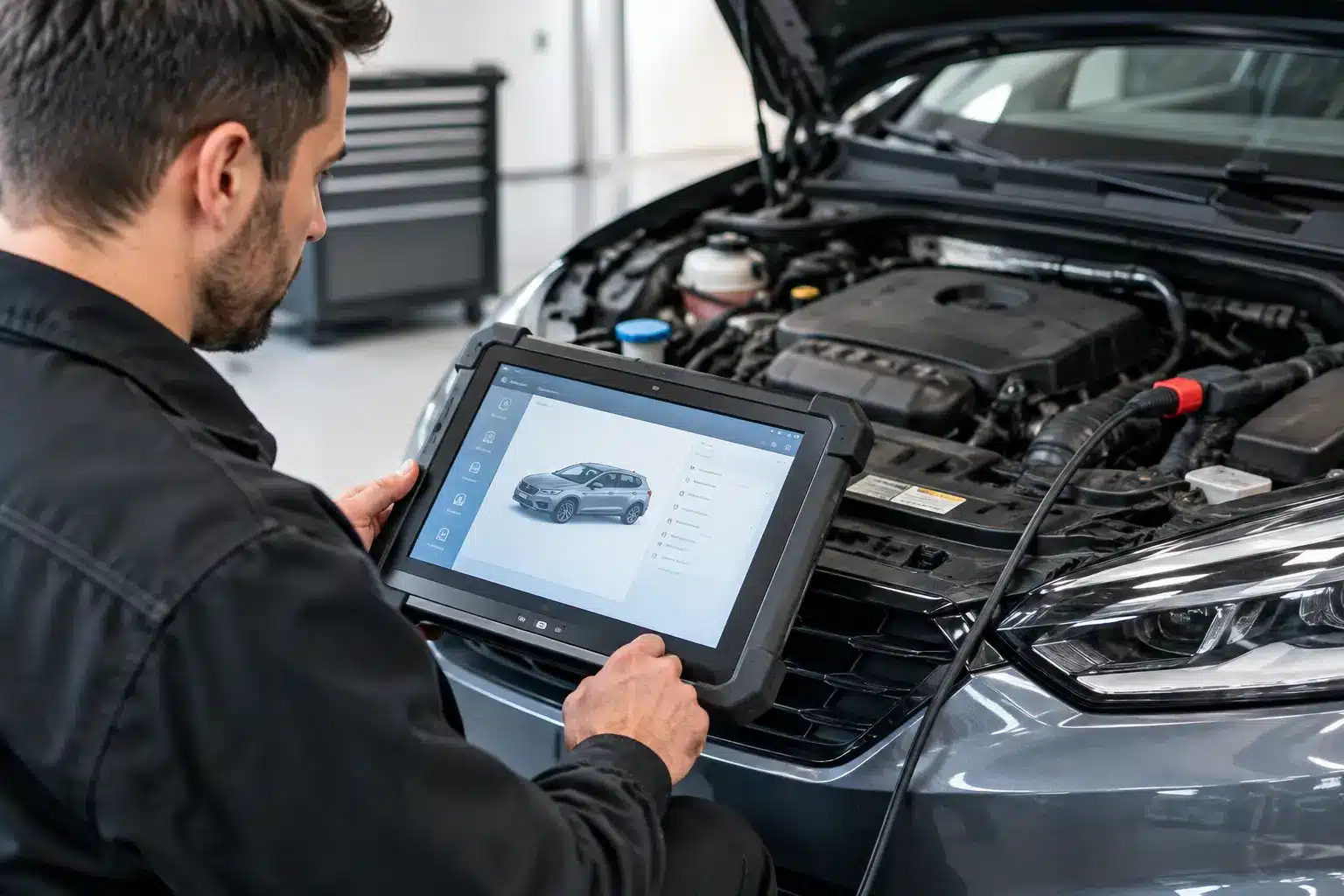
A responsible performance service starts with the car as it arrives, not with a file being loaded straight away. Modern diagnostics can reveal faults that have not yet triggered a dashboard warning light. Live data can also indicate whether requested boost, airflow, fuelling and temperatures are behaving as expected.
Before ECU remapping, it is sensible to consider:
- service history, including oil specifications and cambelt or water pump due dates;
- fault-code scanning and live diagnostic data;
- turbo, intake and emissions-system condition;
- clutch or DSG operation, plus Haldex and drivetrain health on four-wheel-drive models;
- tyres, brakes and suspension, because extra performance must remain controllable.
This approach helps distinguish a good upgrade candidate from a car that first needs repair or maintenance. It also gives the owner an honest answer. Sometimes the best value is a repair, a proper service or carbon cleaning rather than a remap.
Benefits that matter on the road
For most local drivers, the main appeal is not maximum speed. It is torque where it is useful. A carefully calibrated car can feel less hesitant when pulling out of a junction, carrying passengers or overtaking safely on a clear road. On some diesel models, a more efficient torque curve may also help fuel economy during gentle motorway driving.
That said, economy is not guaranteed. Use the additional performance often and fuel consumption will rise. The same applies to tyres, brakes and other wear items: more frequent hard acceleration can increase running costs. The aim should be better use of the engine’s available potential, not an excuse to overlook routine maintenance.
Owners should also tell their insurer about any ECU remapping. Failing to declare it can affect cover, regardless of how modest the changes feel. The vehicle must remain road legal, retain its emissions equipment and continue to meet MOT requirements. Any request to remove or defeat emissions controls should be treated as a clear warning sign.
Why a generic file is a risk
Not all remaps are developed or applied to the same standard. Generic software can overlook differences in engine condition, gearbox type, factory revisions and prior modifications. A calibration that feels aggressive on a short test drive may deliver uneven torque, excessive smoke on a diesel, unwanted heat or poor refinement over time.
Quality ECU remapping should prioritise sensible torque delivery, safe operating parameters and thorough checks. It should also be matched to the fuel the car will actually use. If a performance level depends on premium petrol, that needs to be understood before the work is carried out, not discovered after a tank of regular fuel.
For owners travelling from Reading, Newbury, Basingstoke or Tadley, Aldermaston is a convenient location for combining performance work with specialist VAG maintenance. It can make more sense to inspect servicing requirements, diagnostic health and drivetrain condition in one visit than to treat tuning as a separate, isolated job.
Choosing a VAG specialist for ECU remapping
The right workshop will ask questions about how you use the vehicle, what maintenance has been completed and what you expect from the result. A commuter covering daily miles may value progressive torque and reliability. An enthusiast with a modified Audi may need a broader plan that considers cooling, brakes, intake hardware and transmission capability.
Look for technicians with VAG experience, current diagnostic equipment and a willingness to say when a car needs attention before tuning. Main-dealer-level knowledge should not mean main-dealer pricing, but neither should performance work be judged on the lowest quote alone. The cost of correcting poor software or neglected mechanical issues can quickly outweigh any initial saving.
If you are considering ECU remapping, start with the condition of the car and the outcome you genuinely want. A healthy, well-maintained Audi, Volkswagen, Škoda or SEAT can be more responsive and enjoyable without compromising the dependable daily use you rely on.