That yellow engine symbol rarely appears at a convenient moment. It comes on during the school run, the commute into Reading, or just before a longer trip on the M4, and the first question is always the same – is it safe to keep driving? If you are wondering how to diagnose engine management light warnings properly, the short answer is this: start with a few sensible checks, but do not guess at the fault.
On modern Audi, Volkswagen, Škoda and SEAT models, the engine management light is linked to a wide network of sensors, control units and emissions systems. The warning lamp can mean something minor, such as an intermittent sensor reading, or something that will quickly become expensive if ignored. The skill is not simply reading a code. It is understanding what the code means in the context of the vehicle, its symptoms and its known VAG weak points.
What the engine management light is actually telling you
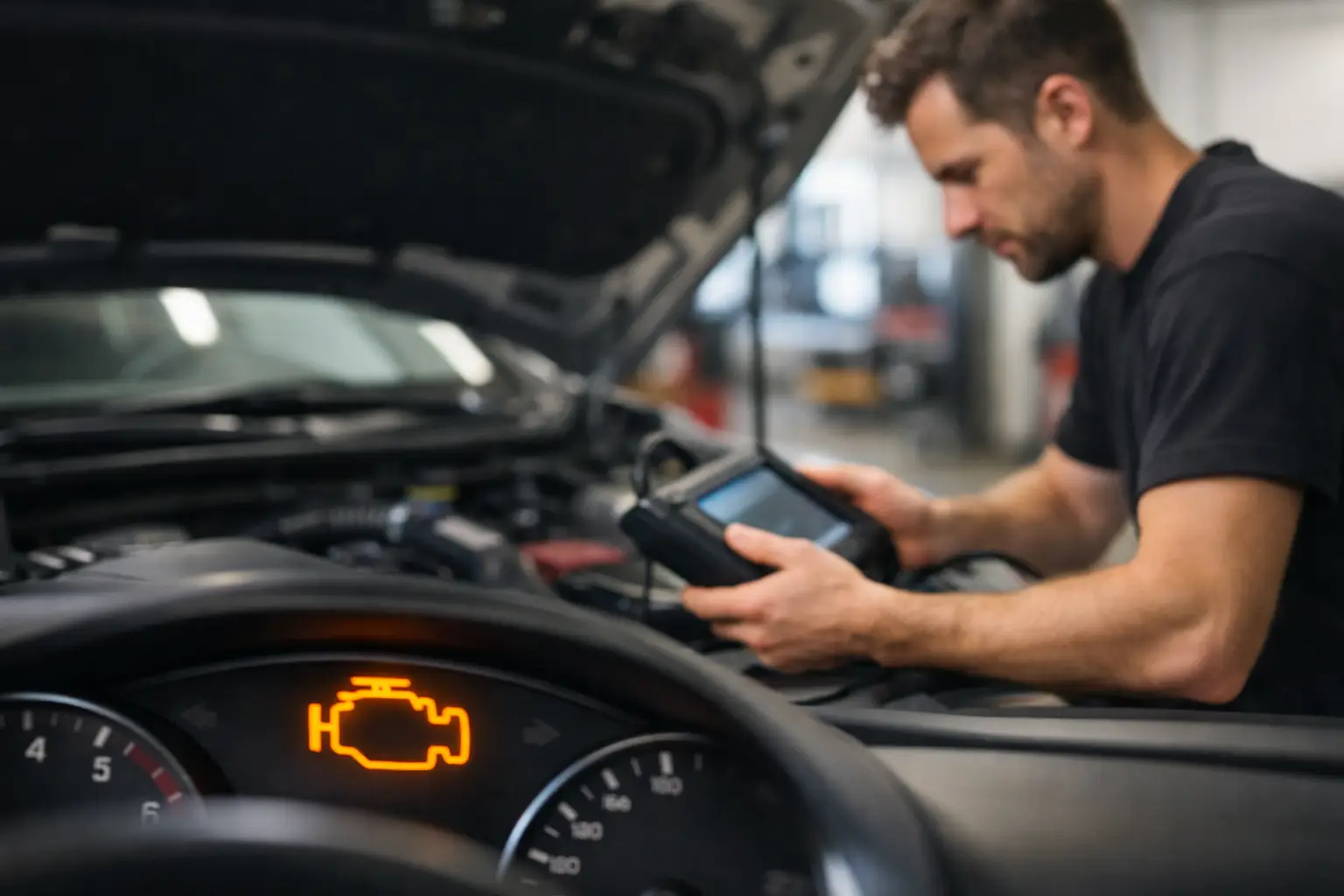
The engine management light, sometimes called the check engine light, is the car’s way of telling you that the engine control unit has detected something outside expected limits. That might relate to air intake, fuelling, ignition, emissions, turbo boost, exhaust gas readings or electrical communication.
A steady light usually suggests the fault is present but not yet considered immediately severe. A flashing light is more urgent and often points to a misfire serious enough to risk catalytic converter damage. In that case, continued driving is a bad idea.
The warning itself does not diagnose the problem. It only tells you that the system has logged one or more faults. That is why two cars with the same light on can need completely different repairs.
How to diagnose engine management light issues sensibly
Before plugging in any diagnostic equipment, pay attention to what the car is doing. Is it driving normally, or has it lost power? Is the idle rough? Has fuel economy dropped? Is there smoke from the exhaust? Did the warning appear after refuelling, after a cold start, or only under acceleration? Those details matter.
If the car feels normal and the light is steady, check the obvious basics first. Make sure the fuel cap is fitted correctly if your model uses one, note whether the car is overdue a service, and listen for anything unusual. If the engine is running poorly, struggling to start, juddering or going into limp mode, stop using it until it is checked properly.
With VAG vehicles in particular, a proper scan with manufacturer-level diagnostic equipment is the next step. Generic code readers can be useful, but they often only tell part of the story. They may show a broad fault code without the deeper live data, freeze-frame information or module-specific detail needed to identify the root cause.
Common causes on Audi, VW, Škoda and SEAT models
There is no single list that covers every fault, but some causes appear again and again across VAG petrol and diesel engines.
Ignition faults are common on petrol models. Coil packs and spark plugs can cause misfires, hesitation and a flashing engine management light. On turbocharged engines, boost leaks, diverter valve issues and air leaks can also trigger faults while reducing performance.
Sensors are another frequent cause. A faulty mass airflow sensor, lambda sensor or coolant temperature sensor can send implausible readings to the engine control unit. The result may be poor running, excess fuel use or emissions faults, even if the car still feels mostly usable.
On diesel models, EGR valve issues, DPF-related faults and boost control problems often sit behind the warning light. Sometimes the engine management light appears alongside a glow plug light or other warning, which gives a stronger clue that the fault is more specific to diesel control systems.
Timing, fuelling and carbon build-up can also play a role. Direct injection petrol engines are particularly vulnerable to intake carbon deposits over time. That can affect airflow and combustion quality, sometimes creating symptoms that are misdiagnosed unless the vehicle is assessed properly.
Why fault codes are only the start
This is where many people go wrong. They plug in a budget scanner, see a code for a sensor, replace the sensor, and find the light comes straight back. That is because fault codes often describe the symptom, not the failed part.
For example, a lean mixture code might suggest a fuelling issue, but the real cause could be an air leak. A boost pressure fault might point towards a turbo problem, but it could just as easily be a split hose, sticky actuator or control issue. A misfire code may lead someone to change plugs and coils when the real issue is compression, injector performance or wiring.
Good diagnosis means checking live data, test results and pattern failures together. It also means knowing how the system should behave on that exact engine and platform. That is particularly important on newer VAG cars, where one fault can influence several systems at once.
Can you keep driving with the light on?
It depends on the symptoms. If the light is steady and the car is driving normally, you may be able to continue for a short period, but it should still be booked in soon. Leaving it too long can turn a manageable repair into a larger bill.
If the light is flashing, the engine is misfiring, the car has very little power, or there are additional warnings on the dash, stop driving and get advice. Continuing to use the vehicle in that state can damage the catalytic converter, DPF or turbo, depending on the fault.
For drivers around Aldermaston, Tadley, Basingstoke, Reading and Newbury, that local convenience matters. A nearby specialist workshop is often the difference between getting the issue dealt with quickly and putting it off for another week while the fault worsens.
How a workshop should diagnose the problem
A proper diagnostic process should be structured, not speculative. First, the technician confirms the fault codes present in all relevant control units, not just the engine ECU. Then they review live data and freeze-frame information to see when the fault occurred and under what conditions.
From there, they test rather than guess. That may include smoke testing for intake leaks, checking fuel pressure, inspecting ignition components, testing sensor outputs, examining boost control operation or assessing emissions system performance. If the problem is intermittent, road testing and repeat monitoring may be needed.
This approach takes a little longer than simply clearing codes or fitting parts on a hunch, but it usually saves money overall. Accurate diagnosis avoids the common cycle of replacing good components while the warning light keeps returning.
How to diagnose engine management light faults without wasting money
If you want to avoid paying twice, the key is to separate code reading from fault diagnosis. Code reading tells you where the system noticed a problem. Diagnosis tells you why that problem happened.
That distinction is especially important on specialist vehicles and higher-spec VAG models, where engine management faults can involve interactions between software logic, emissions equipment, intake systems and drivetrain behaviour. The cheapest first step is not always the cheapest outcome.
A workshop with current diagnostic equipment and experience across Audi, Volkswagen, Škoda and SEAT platforms can usually narrow things down far faster than a generalist approach. That matters if you rely on the car every day and do not want repeated visits for the same unresolved issue.
When specialist VAG knowledge makes the difference
Not every engine management fault needs brand-specific expertise, but many benefit from it. VAG cars have recurring platform trends, known component failures and model-specific behaviours that experienced technicians recognise quickly. That can shorten diagnosis time and improve repair accuracy.
For local owners who want main dealer standards without main dealer pricing, an independent specialist is often the sensible middle ground. You get modern diagnostic equipment, OEM or equivalent parts standards and technicians who understand the systems they are testing, without the less personal feel that can come with larger dealer environments.
That is particularly useful if the warning light appears alongside issues with DSG behaviour, Haldex operation, reduced turbo performance or running problems on tuned vehicles. Those cases need context, not just a basic scan.
What to do next if your light has come on
If the car is running badly, do not keep pushing on and hope it clears itself. If it feels normal, make a note of any symptoms, when the light came on and whether it happened during a particular type of driving. That information helps speed up diagnosis.
Then get it checked properly before a small issue becomes a larger one. For drivers across Aldermaston, Tadley, Basingstoke, Reading and Newbury, having a trusted local workshop nearby means less disruption and a better chance of fixing it right first time.
A warning light is frustrating, but it does not have to become a guessing game. The sooner the fault is diagnosed properly, the sooner you can get back to using the car with confidence.