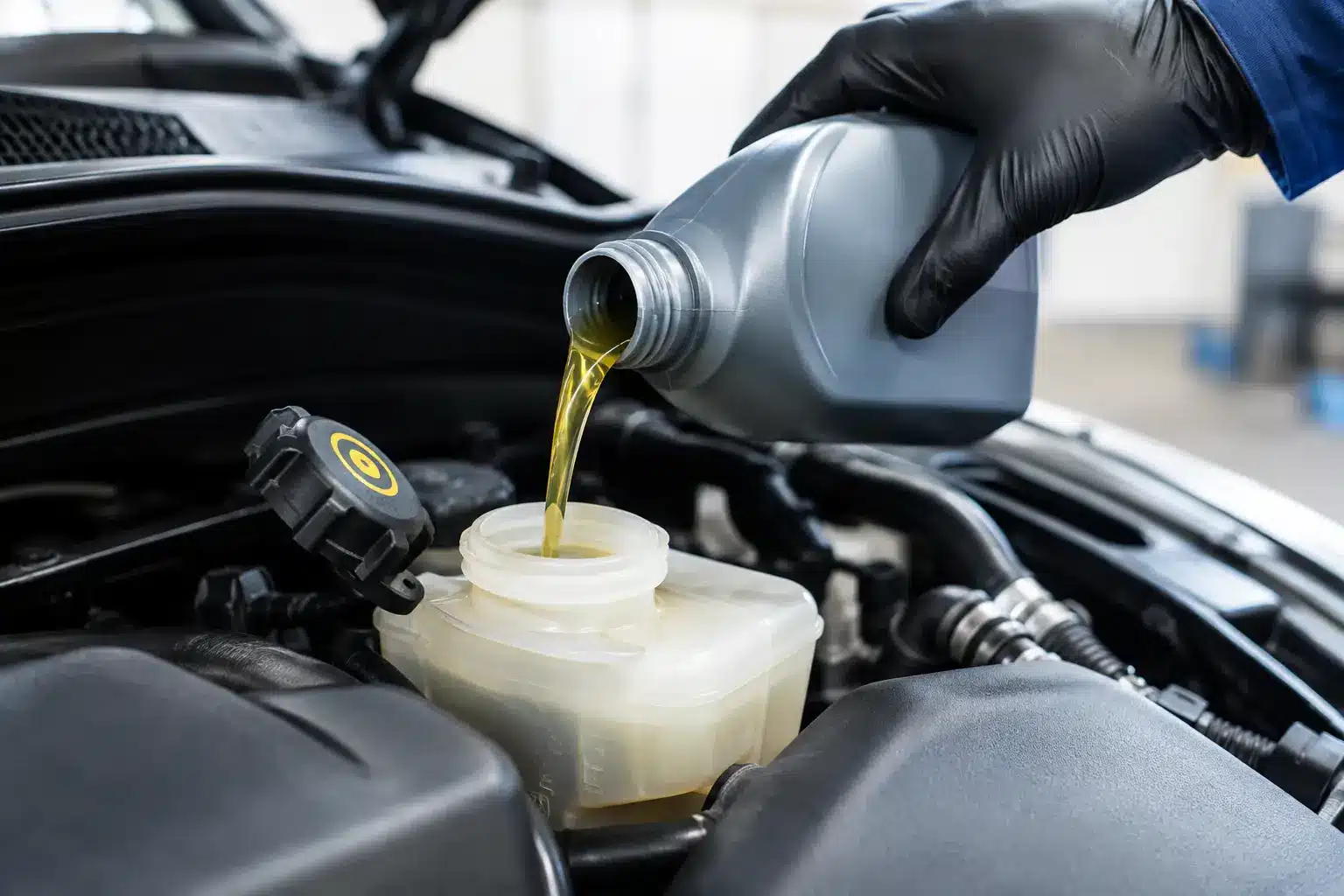
A missed brake fluid interval rarely announces itself with a warning light. Your Audi, Volkswagen, Škoda or SEAT may still stop normally on the school run, commute or motorway journey. The issue is that brake fluid gradually absorbs moisture, reducing its performance and increasing the risk of corrosion inside a system you rely on every time you drive.
For most VAG vehicles, the usual recommendation is a brake fluid change every two years. However, the correct timing for your car should always be checked against its service schedule, especially if it has unusual use, a performance modification or a history that is not fully documented.
What is the usual brake fluid interval for VAG cars?
For many Audi, VW, Škoda and SEAT models, the brake fluid interval is every 24 months, regardless of mileage. That makes it different from engine oil servicing, where how far you drive can have a major effect on timing.
Brake fluid is hygroscopic, meaning it draws moisture from the air over time. It can do this through flexible hoses, seals and the reservoir, even in a car that covers modest annual mileage. Water contamination lowers the fluid’s boiling point. Under repeated heavy braking, such as a long downhill section, towing, spirited driving or stop-start traffic, old fluid can become hot enough to form vapour. Vapour compresses more readily than fluid, which can leave the pedal feeling soft and braking less consistent.
The two-year recommendation is not simply a workshop upsell. It is preventative maintenance for the master cylinder, brake pipes, calipers and ABS or ESC hydraulic components. These systems are expensive and safety-critical, and corrosion caused by neglected fluid can create problems well beyond the cost of a routine fluid change.
Why old brake fluid can cause expensive faults
A brake fluid change does more than refresh what is in the reservoir. The system needs to be bled properly so that old fluid is displaced at each wheel and fresh, correct-specification fluid reaches the hydraulic circuits.
Moisture-contaminated fluid can contribute to internal corrosion. On modern VAG cars, the braking system is closely integrated with electronic safety systems, including ABS, stability control and, on some models, advanced driver-assistance functions. A fault in the hydraulic side can therefore be more involved to diagnose and repair than on an older car.
Fluid colour alone is not a reliable test. Brake fluid can darken with age, but fluid that looks reasonably clean may still contain enough moisture to be outside its ideal condition. Equally, a digital tester can be a useful indicator, but it should support proper service scheduling rather than replace it.
If you have just bought a used vehicle and there is no invoice confirming when the brake fluid was last changed, it is sensible to have it renewed. A stamped service book is useful, but dated workshop paperwork is better evidence that the job was completed.
Symptoms that should not wait for the next service
Do not rely on symptoms alone, but arrange an inspection promptly if the brake pedal feels unusually spongy, travels farther than normal, pulls under braking or needs pumping. A brake warning light, falling fluid level or visible leak needs more urgent attention.
These signs do not automatically mean old fluid is the cause. Worn components, air in the system, a seized caliper or a hydraulic leak may be involved. The key point is that braking concerns need diagnosis, not guesswork or a quick top-up.
Does driving style change the brake fluid interval?
The handbook interval remains the baseline, but the way a car is used can influence the condition of the fluid and the value of changing it on time. A low-mileage family car is not exempt simply because it spends much of the week on the driveway. Time, rather than mileage, is the main factor.
Drivers who regularly tow, travel through hilly areas, carry heavy loads or use their car enthusiastically place more heat into the braking system. For performance-focused VAG owners, particularly those with upgraded power or regular track use, a specialist may recommend a suitable higher-performance fluid and a more frequent replacement schedule. That decision should be based on the vehicle, its braking hardware and how it is genuinely used – not a one-size-fits-all upgrade.
Using the right fluid specification matters. Brake fluid types are not interchangeable just because they are all sold as brake fluid. The required specification is set by the manufacturer and should be followed to protect seals, hydraulic components and braking performance. Mixing unsuitable products or using fluid from an opened bottle that has been stored for a long time is false economy.
What happens during a professional brake fluid change?
A proper service starts by confirming the vehicle specification and inspecting the visible braking system for concerns such as leaks, damaged hoses or heavily worn components. The technician then replaces the old fluid throughout the hydraulic system using the correct equipment and procedure.
On some modern vehicles, diagnostic equipment may be needed to operate or cycle elements of the ABS system correctly, particularly where a repair has introduced air into the system. That is one reason a brake fluid service on an Audi, VW, Škoda or SEAT is best handled by a workshop familiar with VAG procedures rather than treated as a generic task.
The pedal feel and fluid level should be checked before the vehicle is returned. If an underlying fault is found, it should be explained separately, with clear advice on what is necessary now and what can be planned. Replacing fluid cannot cure worn pads, damaged discs, sticking calipers or a leaking wheel cylinder, but it is an ideal opportunity to identify them.
Is brake fluid included in a normal service?
Not always. Some fixed-price servicing plans include it only when the two-year interval falls due, while others list it as a separate additional operation. This can be confusing when a dashboard service reminder has been reset but the brake fluid date has not been addressed.
When booking a service, ask when the fluid was last changed and whether it is due this year. It is also worth checking the difference between an inspection and a replacement. A visual check of the reservoir is not the same as flushing and bleeding the full system.
For drivers around Aldermaston, Tadley, Basingstoke, Reading and Newbury, combining brake fluid replacement with an annual service, MOT preparation or other planned work can reduce disruption. It gives the workshop time to inspect the car properly, rather than trying to fit a safety-critical job into a rushed visit. Courtesy-car availability can also make routine maintenance easier to manage around work and family commitments.
Choosing the right workshop for a brake fluid service
Brake fluid is a relatively straightforward maintenance item, but the standard of the work still matters. A workshop should use the correct fluid, follow the manufacturer procedure, protect painted surfaces from spills and inspect the braking system rather than merely connect a machine and send the car out.
Mechalex provides VAG-focused servicing and diagnostics for Audi, Volkswagen, Škoda and SEAT owners, with more than 30 years of experience and modern diagnostic equipment. That specialist knowledge is particularly useful when a brake concern is accompanied by warning lights, an ABS or ESC fault, or an unclear service history. The aim is main-dealer standard maintenance without the main-dealer cost, backed by a friendly and reliable local service.
Brake fluid interval questions
Can I just top up brake fluid?
Only if the level is low and the reason has been investigated. Brake fluid does not normally disappear without a cause. Low level can be linked to worn brake pads as caliper pistons extend, but it can also indicate a leak. Topping up without checking may hide a problem and, if pads are later replaced, an overfilled reservoir can cause issues.
Can brake fluid be changed at the same time as an MOT?
Yes, and it is often convenient to do so. An MOT checks key safety items, but it is not a substitute for the manufacturer’s maintenance schedule. A vehicle can pass its MOT while the brake fluid is still overdue for replacement.
Is two years always correct?
It is common for VAG models, but not universal. Check the handbook, digital service record or advice for your exact registration. If records are missing, changing the fluid now creates a clear date from which to plan the next service.
A brake fluid change is small, planned maintenance that helps protect the car’s most important safety system. If your two-year date is approaching, booking it before the next busy month keeps the job simple and gives you confidence every time you press the pedal.