
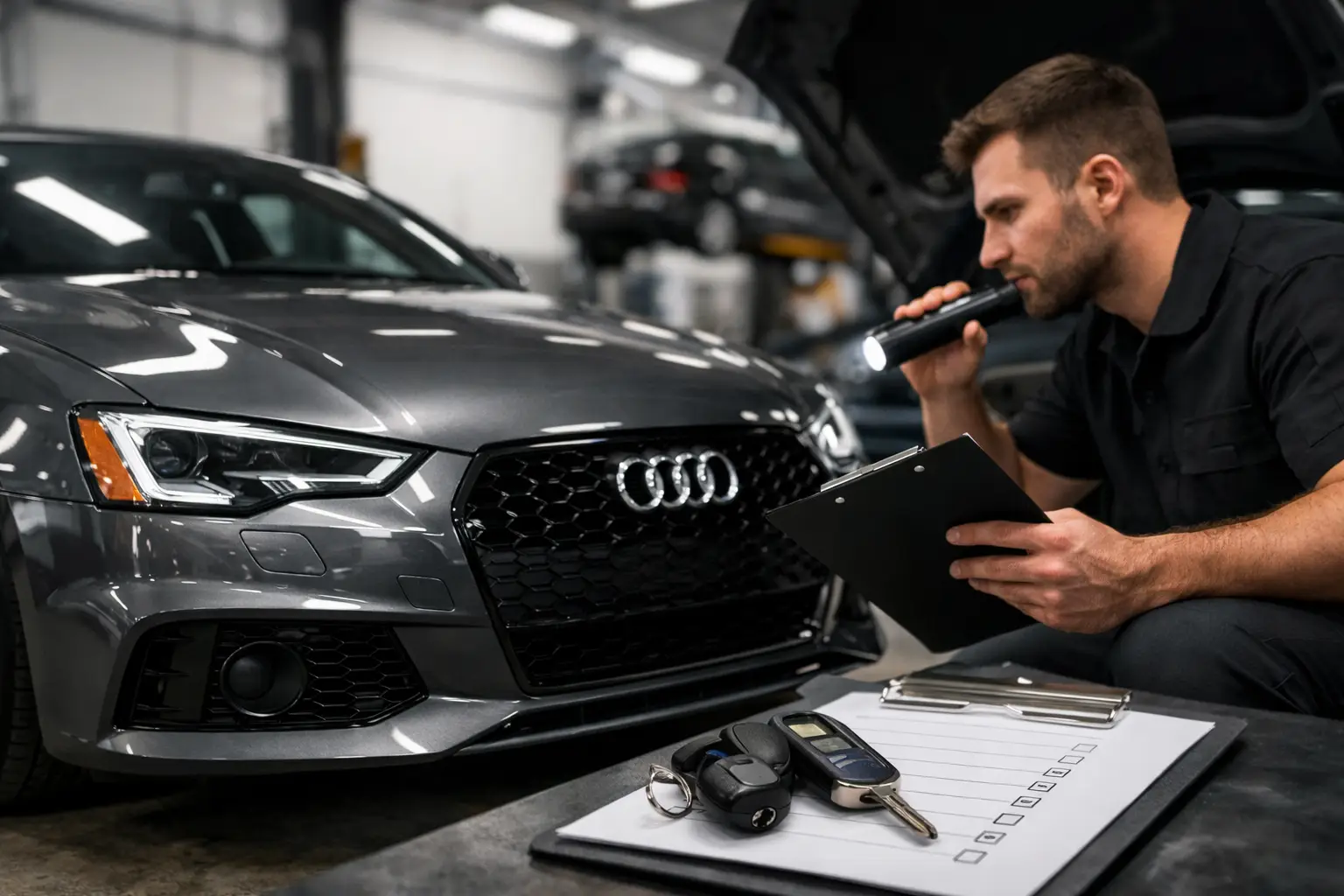
That Audi looks perfect in the advert until you are the one paying for a gearbox repair, Haldex fault or timing-related work a few weeks later. A proper Audi pre purchase inspection checklist helps you slow down, look past the shiny paint and decide whether the car is genuinely well cared for or simply well presented.
Audi models are often excellent cars to own, but they are also complex. Modern engines, DSG gearboxes, quattro systems, driver assistance features and electronic convenience systems all add to the appeal, but they also add cost when neglected. That does not mean you should avoid buying used. It means you should inspect with care and know which faults are cosmetic, which are bargaining points and which are strong reasons to walk away.
Why an Audi needs a more careful inspection
A used Audi can feel solid and refined even when expensive issues are developing underneath. That is one reason buyers get caught out. A tidy interior, a smooth test drive and a stamped service book do not always tell the full story.
What matters is whether the car has been maintained to the standard its engineering requires. On many Audi models, delayed oil changes, missed DSG servicing, ignored Haldex maintenance or poor-quality repairs can create costs that quickly wipe out any saving made at purchase. The older and more performance-focused the car, the more this applies.
There is also a difference between a car that has age-related wear and one that has been neglected. Worn tyres or tired brakes might be expected and manageable. Evidence of coolant loss, transmission hesitation, misfires, warning lights or inconsistent servicing is a different conversation.
Audi pre purchase inspection checklist: what to check first
Before you even start the engine, check the paperwork. Service history matters on any used car, but on an Audi it is often the difference between a safe buy and a risky one. Look for invoices, not just stamps. A stamp says a service happened. An invoice usually shows what was actually done.
Confirm whether major maintenance has been carried out at the correct intervals. Depending on model and engine, that may include cambelt and water pump replacement, DSG gearbox servicing, Haldex servicing, spark plugs, brake fluid and regular oil changes. If the seller cannot prove key work, assume you may need to pay for it.
Then compare the car in front of you with the history. If the mileage is modest but the steering wheel, seat bolsters and pedals look heavily worn, ask why. If the car has low mileage but has spent long periods standing, that can bring its own issues such as battery problems, tyre ageing and seized components.
Outside the car, inspect the bodywork in good light. Panel gaps should be consistent. Paint colour should match across panels. Overspray on trims or uneven finishes may suggest previous repair work. Repair itself is not always a problem if done properly, but poor accident repair is.
Check the tyres closely. Uneven tyre wear can point to suspension wear, poor alignment or previous impact damage. Cheap mismatched tyres on a premium car can also tell you something about how the owner approached maintenance.
Mechanical checks that matter most
Once under the bonnet, look for signs of leaks, low fluid levels and rushed repairs. Coolant should be clean and at the proper level. Oil should not look sludgy, and there should not be obvious signs of contamination. A very clean engine bay is not always reassuring either. Sometimes it has been cleaned to hide leaks.
Listen carefully on startup, especially from cold. Rattles for a second or two may be minor on some engines, but persistent chain noise, rough idle or obvious misfires deserve attention. If the seller has warmed the car before you arrive, ask for honesty. A cold start tells you more.
On petrol engines, check for smooth idle, clean pickup and no hesitation under load. On diesel models, watch for excessive smoke, poor starting or flat performance. If the car feels sluggish compared with what it should be, there may be an issue with boost, EGR-related systems, sensors or carbon build-up.
If the Audi has a DSG gearbox, the shift quality matters. It should be smooth, decisive and consistent. Jerky take-up, delayed engagement, shuddering or warning messages are not things to ignore. Some issues are service-related, others are more serious. Either way, you need to know before buying.
On quattro models, ask whether the four-wheel-drive system has been serviced correctly. Haldex-equipped cars in particular need proper maintenance. If that service has been skipped, you may end up with poor engagement, pump issues or drivetrain faults.
The road test: what your Audi pre purchase inspection checklist should include
The test drive is where many hidden faults start to show. Do not keep it short. You want town driving, faster roads, braking, reversing and parking manoeuvres if possible.
Start by checking steering feel and straight-line stability. The car should not pull excessively, vibrate through the wheel or feel vague. Knocks over bumps can indicate worn suspension arms, drop links or top mounts. On some Audi platforms, front suspension wear is not unusual, but costs can add up if several components are due.
Brake performance should be strong and progressive. Pulsation through the pedal may suggest warped discs or uneven braking effort. A car that wanders under braking could indicate suspension or brake issues.
Pay attention to drivetrain behaviour. Manual gear changes should be clean, clutch bite should feel sensible and there should be no slipping under load. On DSG cars, low-speed manoeuvring can reveal problems quickly. If it clunks, hesitates or feels inconsistent when moving off, do not brush it aside as normal.
Also test every electrical feature you can without turning the inspection into theatre. Windows, mirrors, climate control, parking sensors, infotainment, heated seats, lights and central locking should all work. Electrical faults can be minor, but diagnostic time and module replacement on modern Audis can become expensive.
Common Audi trouble spots buyers should watch for
Not every Audi suffers the same faults, so model and engine matter. Still, a few areas come up repeatedly enough to deserve special attention.
Timing-related issues are one. Some engines are known for chain or tensioner wear, while others rely on cambelt intervals being followed properly. If there is uncertainty, factor that into the price or keep looking.
Oil consumption can be another concern on certain petrol engines. The seller may describe it as normal, but there is a difference between occasional top-ups and a car with a deeper issue. Ask directly how much oil it uses between services.
Cooling system issues are also worth checking. Water pumps, thermostats and coolant leaks can all appear on various VAG engines. If the heater output is inconsistent, the coolant level is low or there is evidence of dried coolant residue, investigate further.
Carbon build-up on direct injection petrol engines can affect performance and drivability over time. It is not always obvious on a short drive, but rough idle, hesitation or weaker-than-expected response can be clues.
Finally, do not ignore warning lights simply because the car seems to drive well. Some faults are intermittent, some have been cleared temporarily, and some are stored without an obvious symptom. A proper diagnostic scan is often what separates a sensible buy from an expensive guess.
When to get a professional inspection
If the car is relatively new, high value, performance-oriented or fitted with a DSG or quattro system, a specialist inspection is money well spent. The same applies if the history is incomplete or something feels slightly off but you cannot prove why.
A VAG specialist will usually spot problems a general buyer misses, especially where fault codes, service gaps and common model-specific issues are concerned. That can include checking live diagnostic data, looking for signs of previous repair work, assessing drivetrain behaviour properly and identifying maintenance that is due soon.
For buyers around Aldermaston, Tadley, Basingstoke, Reading and Newbury, using an independent specialist can make a lot of sense. You get a more informed view of the car without paying main dealer rates, and that knowledge can either save you from a poor purchase or give you confidence to buy the right one.
A final word before you hand over any money
A good used Audi should not need to be perfect. It needs to be honest, correctly maintained and priced with its condition in mind. If the seller is vague, the history is thin and the car raises more questions than it answers, there will always be another one. The right car usually stands up well to careful scrutiny, and that is exactly what you want before committing.