If your Audi, Volkswagen, Škoda or SEAT used to feel sharper off the line and now seems hesitant, uneven at idle or flat through the mid-range, carbon build-up may be part of the problem. Carbon cleaning for TFSI engines is one of the most worthwhile maintenance jobs on direct-injection VAG petrol engines because it targets a fault that normal servicing does not remove.
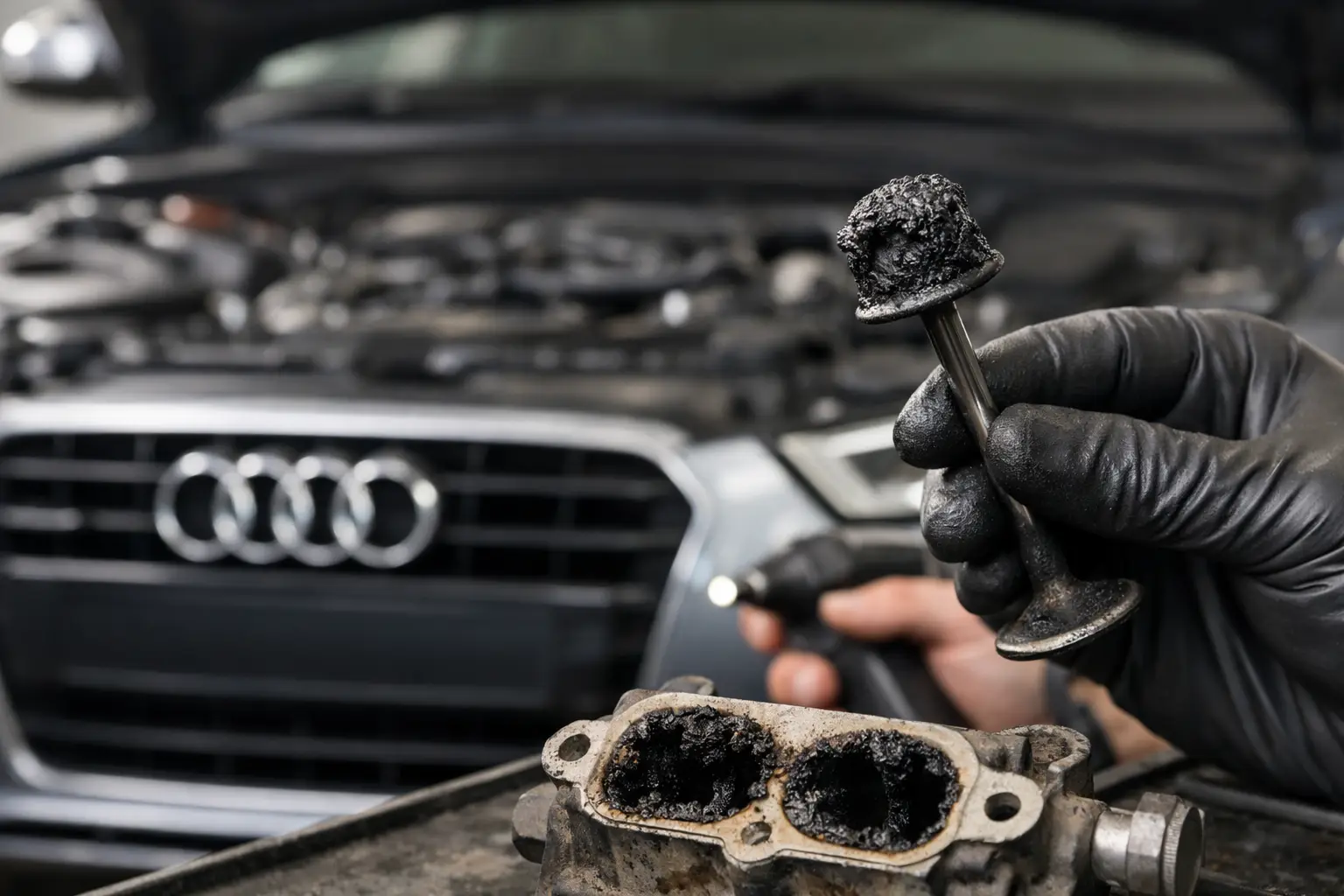
TFSI engines are strong, efficient units, but many of them share the same weakness. Over time, carbon deposits form on the inlet valves and in the intake ports. Because the fuel is injected directly into the combustion chamber rather than over the back of the valves, there is no petrol wash to keep those surfaces clean. Add crankcase vapours and heat cycles, and the deposits gradually harden.
The result is not always dramatic at first. More often, the car simply stops feeling as smooth or responsive as it should. Owners often put it down to age, mileage or fuel quality, when in reality the engine may just be struggling to breathe properly.
Why carbon builds up in TFSI engines
Direct injection is the main reason. On older port-injected engines, fuel passes over the inlet valves and helps prevent heavy deposit build-up. On a TFSI engine, that cleaning effect is largely absent. Oil vapour from the breather system and soot from the combustion process can then stick to the valves, especially on engines used for short trips, stop-start driving or long service intervals.
This is why carbon build-up is common across a wide range of VAG petrol models, from sensible daily drivers through to performance models. It is not always a sign that something has failed. Often, it is simply a by-product of the engine design.
That said, some cars accumulate deposits faster than others. Driving style matters. Frequent cold starts and short runs usually make things worse, while regular longer journeys can help reduce the rate of build-up. Oil quality, maintenance history and overall engine condition also play a part.
Symptoms that point to carbon cleaning for TFSI engines
A carboned-up intake system can show itself in several ways, and not every car will have the same symptoms. Some arrive with an obvious misfire or rough idle. Others still drive reasonably well but feel noticeably less eager than they should.
Common signs include hesitant acceleration, uneven idle, reduced fuel economy, poor throttle response and a general sense that the engine is working harder than before. On some vehicles, the engine management light may appear if the deposits are severe enough to affect airflow or combustion quality.
It is also worth saying that these symptoms can overlap with ignition faults, injector issues, vacuum leaks and other problems. That is why proper diagnosis matters. Carbon cleaning is very effective when it is the right fix, but it should not be treated as a guess.
What the cleaning process actually involves
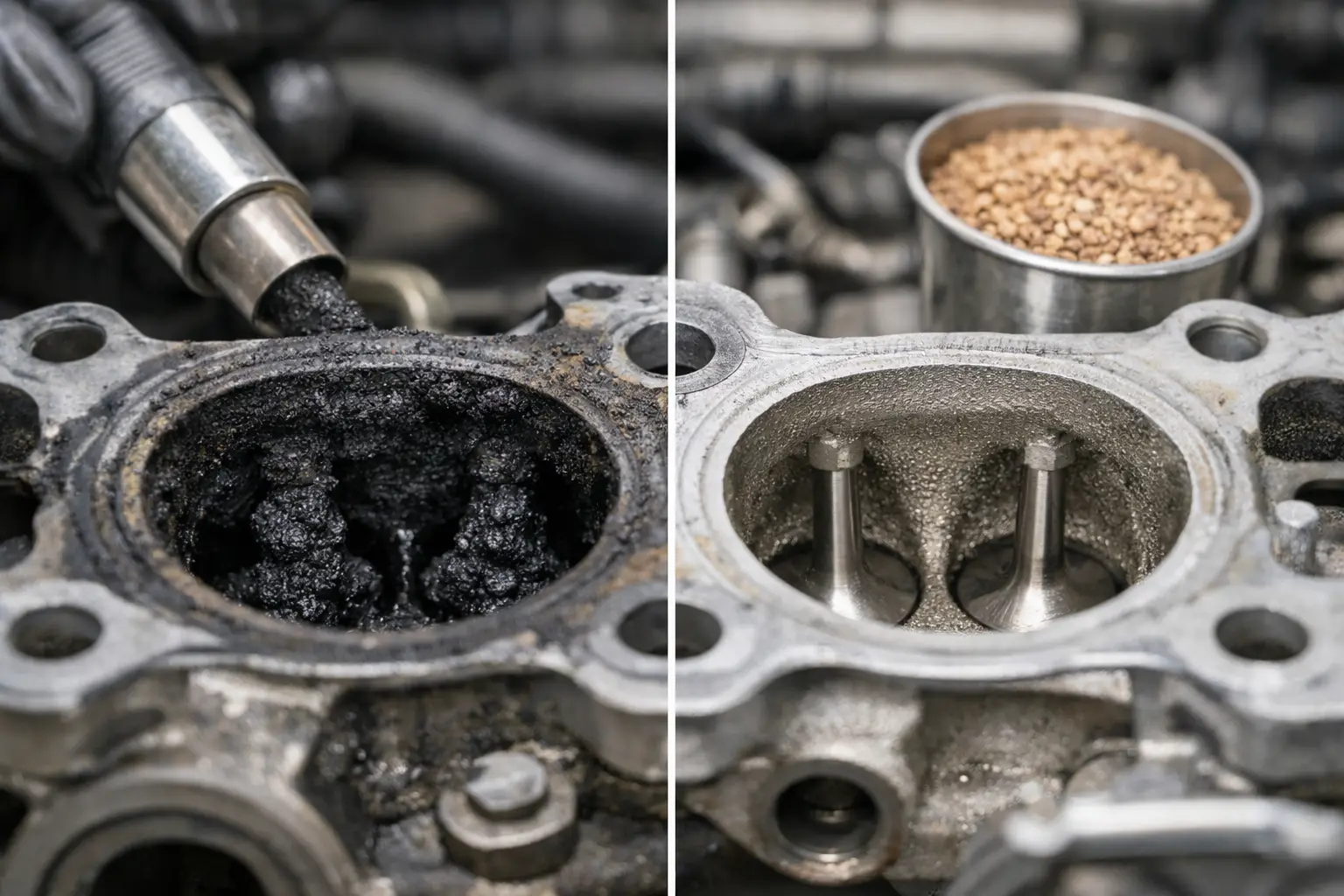
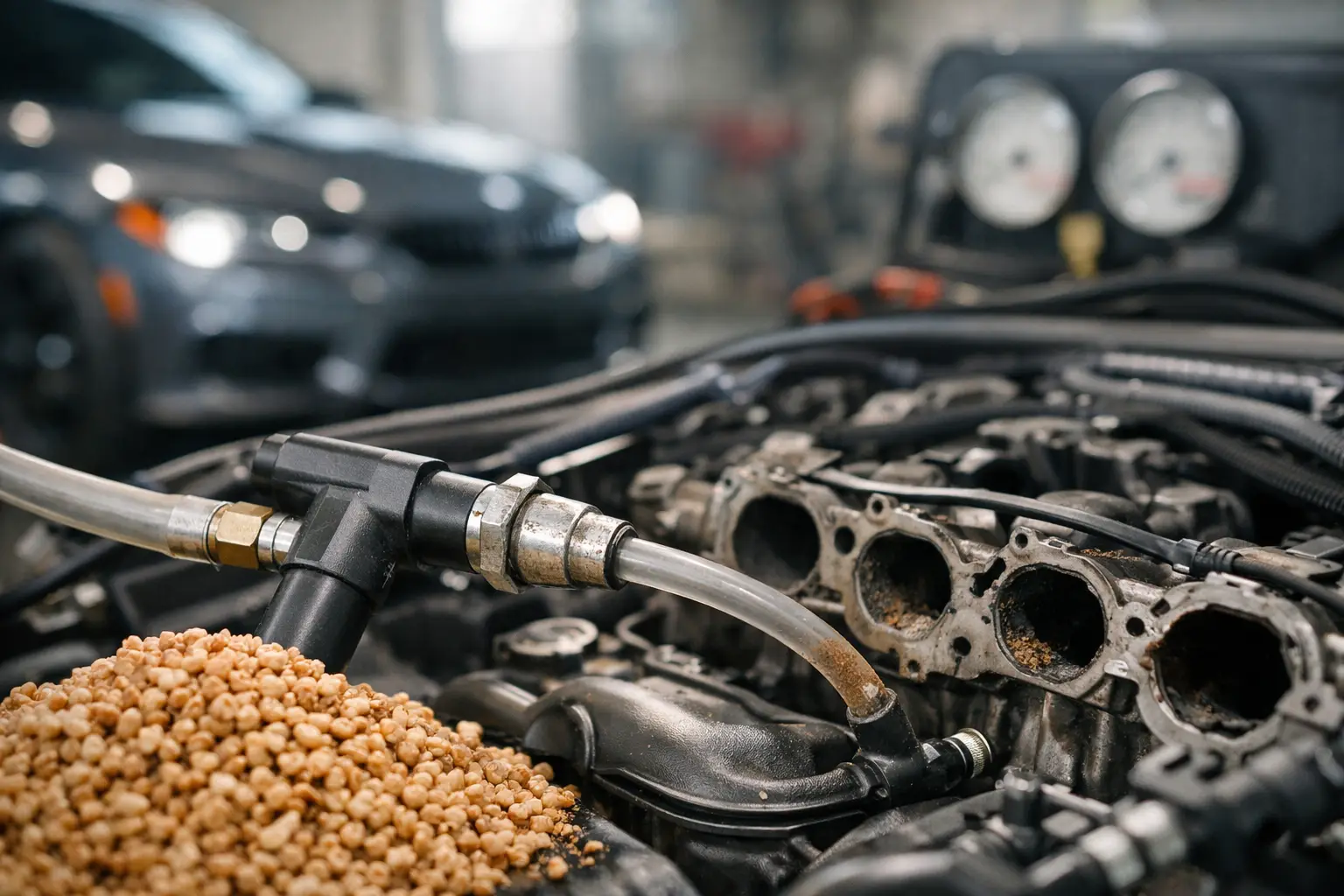
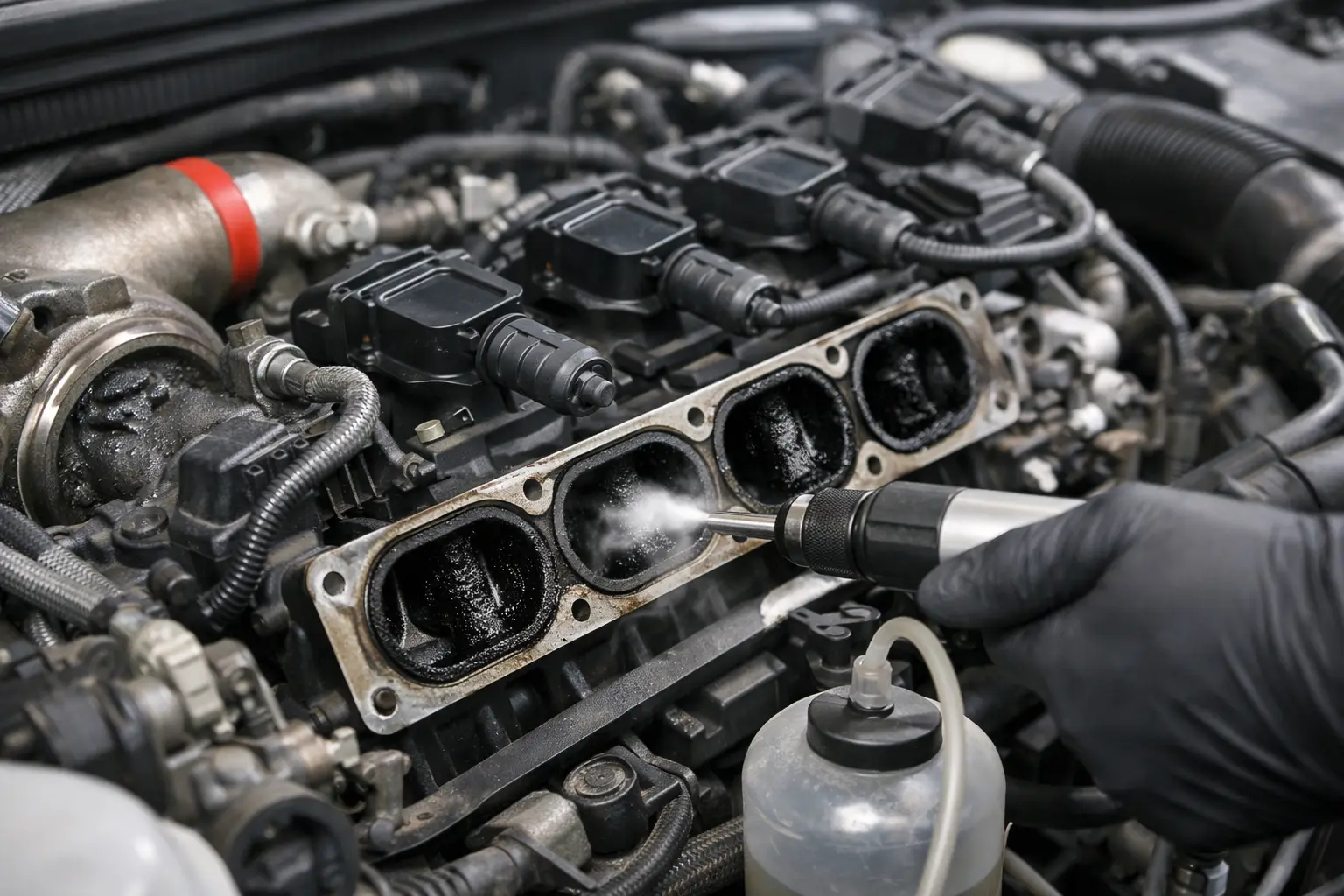
The most effective method for this type of work is walnut blasting. This is the process many specialists use for carbon cleaning for TFSI engines because it removes stubborn deposits thoroughly without damaging the underlying metal surfaces when carried out correctly.
The intake manifold is removed to access the inlet ports and valves. Each cylinder is positioned so the valves are closed, then crushed walnut shell media is blasted at the carbon deposits and vacuumed away. It is a controlled process rather than a quick spray treatment.
That distinction matters. Fuel additives and intake cleaners have their place in general maintenance, but they do not usually remove baked-on carbon from the backs of inlet valves on direct-injection engines. If deposits are significant, physical cleaning is normally the proper answer.
A thorough job also gives the workshop a chance to inspect related components while access is available. Depending on the engine and mileage, that might include checking the intake manifold, breather system and surrounding hoses and fittings.
What improves after a proper clean
The biggest change is usually drivability. Once airflow is restored and the valves are no longer choked with deposits, the engine can idle more smoothly, pick up more cleanly and deliver power in a more consistent way.
Some owners notice stronger acceleration straight away. Others comment that the car simply feels right again – smoother in traffic, more settled at idle and less strained under load. Fuel consumption can improve too, although the amount varies depending on how restricted the engine was beforehand and how the car is driven afterwards.
There is a performance angle here as well. If you own a tuned or performance-focused TFSI model, carbon build-up can get in the way of the results you expect. An engine cannot make the most of good calibration and supporting hardware if airflow is compromised at the valves.
When should you have it done?
There is no single mileage that suits every TFSI engine. Some need attention earlier, some later. As a rough guide, many direct-injection petrol engines start to show meaningful deposit build-up somewhere between 40,000 and 80,000 miles, but usage pattern is just as important as mileage.
If your car is showing symptoms, that matters more than the number on the odometer. A lower-mileage vehicle used mainly for short local runs around places like Tadley or Basingstoke may build deposits faster than a higher-mileage motorway car travelling regularly between Reading and Newbury.
For owners who plan to keep their vehicle long term, carbon cleaning can be a sensible preventative job as part of wider specialist maintenance. For others, it becomes worthwhile once drivability starts to drop off or diagnostic work points towards airflow restriction.
Why specialist diagnosis matters on VAG petrol engines
Not every rough-running TFSI engine needs carbon cleaning, and not every carbon cleaning job should be rushed into without checking the basics. Ignition coils, spark plugs, PCV faults, injectors and sensor issues can all create similar complaints.
That is where VAG-specific experience counts. A workshop familiar with Audi, Volkswagen, Škoda and SEAT platforms will know the common engine variants, the known symptoms and the most sensible diagnostic route before stripping parts off the car. That saves time, avoids unnecessary work and gives you a clearer answer on what the engine actually needs.
For local drivers around Aldermaston, this is one reason a specialist workshop can be more convenient than heading straight to a main dealer. You want dealer-level equipment and know-how, but you also want practical advice, sensible pricing and a team that is used to these engines day in, day out.
Is carbon cleaning always worth it?
Usually, yes – if the deposits are there and they are affecting performance or refinement. It is one of those jobs where the value depends on the condition of the engine before the work. On a heavily built-up engine, the improvement can be very noticeable. On a lightly affected one, the gains may be more subtle.
It also depends on your plans for the car. If you intend to keep it, maintain it properly and avoid the gradual decline that many owners simply tolerate, it makes sense. If the vehicle has multiple unrelated faults or very high wear elsewhere, the decision needs a bit more context.
The right approach is straightforward: diagnose the issue properly, inspect the level of build-up, then decide based on evidence rather than assumption.
Choosing the right workshop for carbon cleaning for TFSI engines
This is not a generic service job. Access varies by engine, and doing it properly takes care, cleanliness and the right equipment. You want technicians who understand VAG petrol engines, not a workshop trying the process for the first time.
Look for experience with Volkswagen Audi Group vehicles, proper diagnostic capability and a clear explanation of what is included. If a workshop talks only about a chemical treatment without discussing walnut blasting or inspection, ask more questions.
For owners in Aldermaston, Tadley, Reading, Basingstoke and Newbury, using a local VAG specialist makes life easier as well as protecting the car. You get a workshop that understands the platform, can spot related faults while the job is underway and can advise on the next sensible steps, whether that is routine servicing, ignition work or further diagnostic checks.
At Mechalex, this type of work fits naturally with the broader VAG specialist approach – proper diagnosis, quality parts, modern equipment and the aim of giving customers main dealer service without the main dealer cost.
If your TFSI engine feels less responsive than it used to, do not assume that is just age. Sometimes the fix is not a major repair at all, but giving the engine back the airflow it has gradually lost.
Need help with your Audi, VW, Škoda, SEAT or Cupra? Mechalex is an independent VAG specialist in Aldermaston, serving Reading, Newbury, Basingstoke and Tadley.
See our walnut blasting service, try our free VAG AI diagnosis, or book online. Call 0118 380 1003.