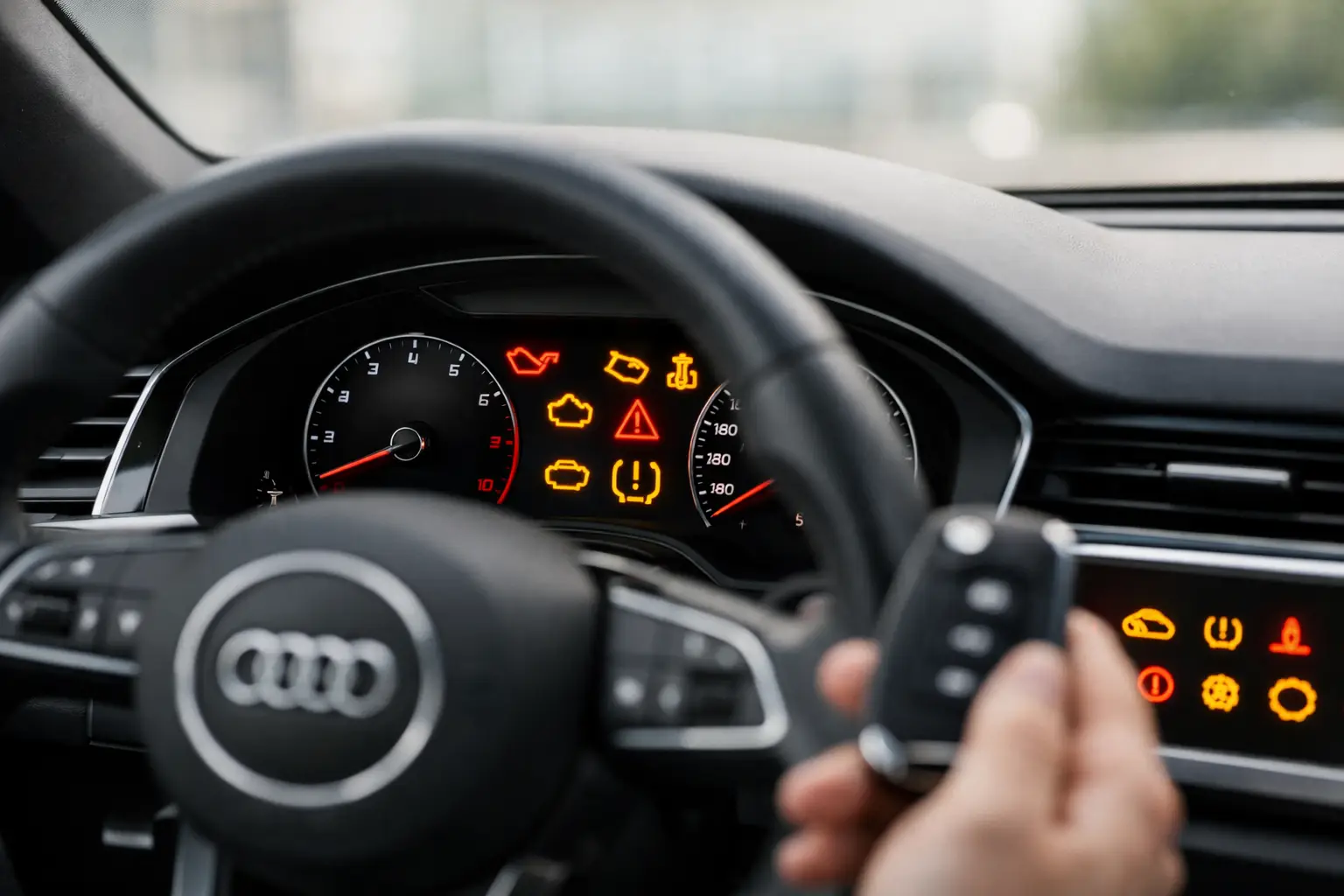
That moment an unexpected symbol appears on the dash usually happens at the worst time – on the school run, in traffic, or halfway to work. This Audi warning lights guide is here to help you work out what needs immediate action, what can wait briefly, and when it makes sense to get the car checked properly before a small fault becomes an expensive one.
Audi dashboards are generally clear, but the meaning of a warning light is not always as simple as it looks. Some lights point to a genuine stop-now issue. Others mean the car is still driveable, but only if you avoid guessing and get the fault diagnosed quickly. On modern Audis, especially those with more advanced driver aids, DSG gearboxes, quattro systems and emissions equipment, one warning light can also be linked to a wider fault in the background.
How to read Audi warning lights
The first rule is simple. Red warning lights usually mean stop as soon as it is safe and assess the situation. Amber warning lights usually mean caution – the car may still drive, but it needs attention. Green, blue and white lights are normally information rather than faults, such as main beam, indicators or active systems.
That colour rule helps, but it is not perfect. A flashing amber light can be more urgent than a steady one, and a red light tied to a sensor issue can occasionally be less serious than it first appears. That is why the message in the driver information display matters as much as the symbol itself.
If your Audi shows one warning light and then starts showing several at once, avoid assuming they are all separate problems. Low battery voltage, charging faults and control module communication issues can trigger multiple warnings together.
Audi warning lights guide: the red lights
A red oil pressure warning is one of the most serious. If this comes on while driving, stop the engine as soon as it is safe. This is not the same as being slightly low on oil. Low oil pressure can mean the engine is not being lubricated properly, and continuing to drive can cause major internal damage in a very short distance.
A red coolant temperature warning also deserves immediate attention. If the temperature is too high, pull over safely and switch the engine off. Do not remove the coolant cap while the system is hot. Overheating may come from low coolant, a thermostat issue, water pump failure, radiator fan problems or a leak. On some VAG engines, cooling system faults are best dealt with quickly because heat-related damage gets expensive fast.
The brake system warning light is another one to take seriously. If it appears with a message about brake fluid, or if the pedal feels unusual, do not carry on as normal. It could be low brake fluid, worn components or a hydraulic issue. If the red brake warning appears with the ABS or stability control lights, the car may still stop, but braking performance or control under heavy braking may be reduced.
A battery or charging system warning in red means the battery may no longer be charging while the engine is running. The car might continue for a short time, but once battery voltage drops too far it can shut down systems or fail to restart. The cause could be the alternator, battery, wiring or belt-driven components.
The amber lights that should not be ignored
The engine management light is one of the most common. If it is steady, the car may still drive normally, but it needs diagnostic checks. The fault could range from a minor sensor issue to something affecting fuelling, ignition, boost pressure or emissions systems. If the light is flashing, reduce load immediately and avoid driving further if possible, as this can indicate a misfire severe enough to damage the catalytic converter.
The glow plug light on a diesel Audi can also mean more than just pre-heating. If it flashes while driving, it often points to an engine management or diesel control fault. Performance may drop, the car may go into limp mode, and proper diagnostics are the right next step.
A DPF warning needs sensible handling. If it comes on amber, the diesel particulate filter may be struggling to complete regeneration. Sometimes a sustained drive at the correct operating temperature can help, but not always. If the light stays on, returns quickly, or is joined by the engine management light, the car should be checked before the blockage worsens.
ABS, traction control or ESC warnings usually mean the car can still be driven, but with reduced safety assistance. In dry, gentle driving you may notice little difference, but in poor weather or an emergency stop the missing systems matter. Wheel speed sensors are common causes, though faults in wiring, hubs, steering angle sensors or control units can also be involved.
An amber steering warning, especially on cars with electric power steering, can vary from a minor fault to heavy steering assistance loss. If the steering suddenly feels different, do not keep driving on assumption alone.
Common Audi symbols owners ask about
The AdBlue warning on later diesel models often starts as a range countdown rather than an immediate breakdown risk. Ignore it for too long, though, and the car may refuse to restart once switched off. The fault may simply be low AdBlue, but system issues with heaters, pumps or level sensors are not unusual either.
A tyre pressure monitoring light can be caused by an actual puncture, gradual pressure loss, seasonal temperature changes or a reset issue after tyre work. If the car feels unstable or one tyre looks low, check pressures straight away rather than relying on guesswork.
The EPC light is a familiar concern on many Audi petrol models. EPC stands for Electronic Power Control and often relates to throttle, engine management or sensor faults. It may appear with reduced power, poor throttle response or limp mode. Because EPC can overlap with several systems, fault-code reading is far more useful than replacing parts based on internet forum guesses.
An airbag or SRS warning means the supplementary restraint system may not work as intended in an accident. The car may drive perfectly normally, which is why some owners put it off. It is still worth sorting promptly.
When you can keep driving – and when you should not
This is the part many drivers want a straight answer on, but the honest answer is that it depends on the light, how the car feels, and whether there are other symptoms. If you have a red oil pressure warning, overheating warning, or severe brake warning, stop driving. If you have an amber engine light but the car feels normal, it may be safe to drive carefully for a short period while arranging inspection.
If the car is misfiring, smoking, struggling to change gear, losing power sharply, overheating, or making unusual mechanical noises, the warning light is only part of the story. Continuing to drive in those conditions can turn a manageable repair into a much larger one.
For local drivers around Aldermaston, Tadley, Basingstoke, Reading and Newbury, that often means making a practical call – do you risk the commute, or get it checked before relying on the car again tomorrow? In most cases, early diagnostics are cheaper than waiting for the fault to become more obvious.
Why Audi warning lights need proper diagnostics
Modern Audis are heavily networked. A warning light on the dash is often just the end result of a fault logged elsewhere in the vehicle. Reading generic fault codes can give a clue, but it does not always tell the full story, especially on VAG-specific systems such as DSG, Haldex, electronic parking brakes, battery management and manufacturer-specific control modules.
That is where experience matters. The same dashboard light can have several possible causes, and replacing the obvious part first is not always the correct route. A coolant light could mean a leak, yes, but it could also point to an electrical issue, a failing pump, or a fault that only appears under certain operating conditions. A gearbox warning may be fluid-related, software-related, sensor-related or mechanical.
A proper diagnostic process looks at fault memory, live data, wiring integrity, service history and the pattern of symptoms. It saves time and often saves money because the fix is based on evidence rather than trial and error.
A sensible first response from the driver’s seat
If a warning light appears, do not panic, but do pay attention. Check the message on the dash, note whether the light is red or amber, and think about any change in the way the car drives. If there is a clear safety risk or signs of overheating, stop as soon as it is safe.
If the car seems driveable, avoid long journeys or heavy use until the fault is checked. Topping up fluids without understanding why they are low can sometimes help briefly, but it should not replace diagnosis. Resetting a light without finding the cause is even less useful, because the fault usually returns and may get worse in the meantime.
For Audi owners, especially those keeping cars long term, warning lights are best treated as early warnings rather than annoyances to clear. Catching a charging issue before the car fails, a DPF problem before forced regeneration is needed, or a cooling fault before overheating starts is usually the difference between a planned repair and a recovery lorry.
If your Audi is talking to you through the dashboard, the best response is simple: listen early, act sensibly, and get the right fault-finding done before the car decides for you.