A Golf GTI can feel brilliant on a good road and oddly disappointing with the wrong modifications. We see it regularly – owners spend serious money chasing power, only to end up with a car that is less usable, less reliable, or simply no quicker where it counts. If you are weighing up the best VW Golf GTI upgrades, the right approach is to build around how you actually drive the car, not just what looks good on a parts list.
For most GTI owners, that means balancing performance with reliability, comfort and proper supporting maintenance. A daily-driven Mk5, Mk6, Mk7 or Mk7.5 GTI used for commuting around Aldermaston, Tadley, Basingstoke, Reading or Newbury needs a different plan from a weekend car that only comes out for B-road blasts. The good news is that the worthwhile upgrades are usually the ones that improve the whole car, not just the headline bhp figure.
The best VW Golf GTI upgrades start with a health check
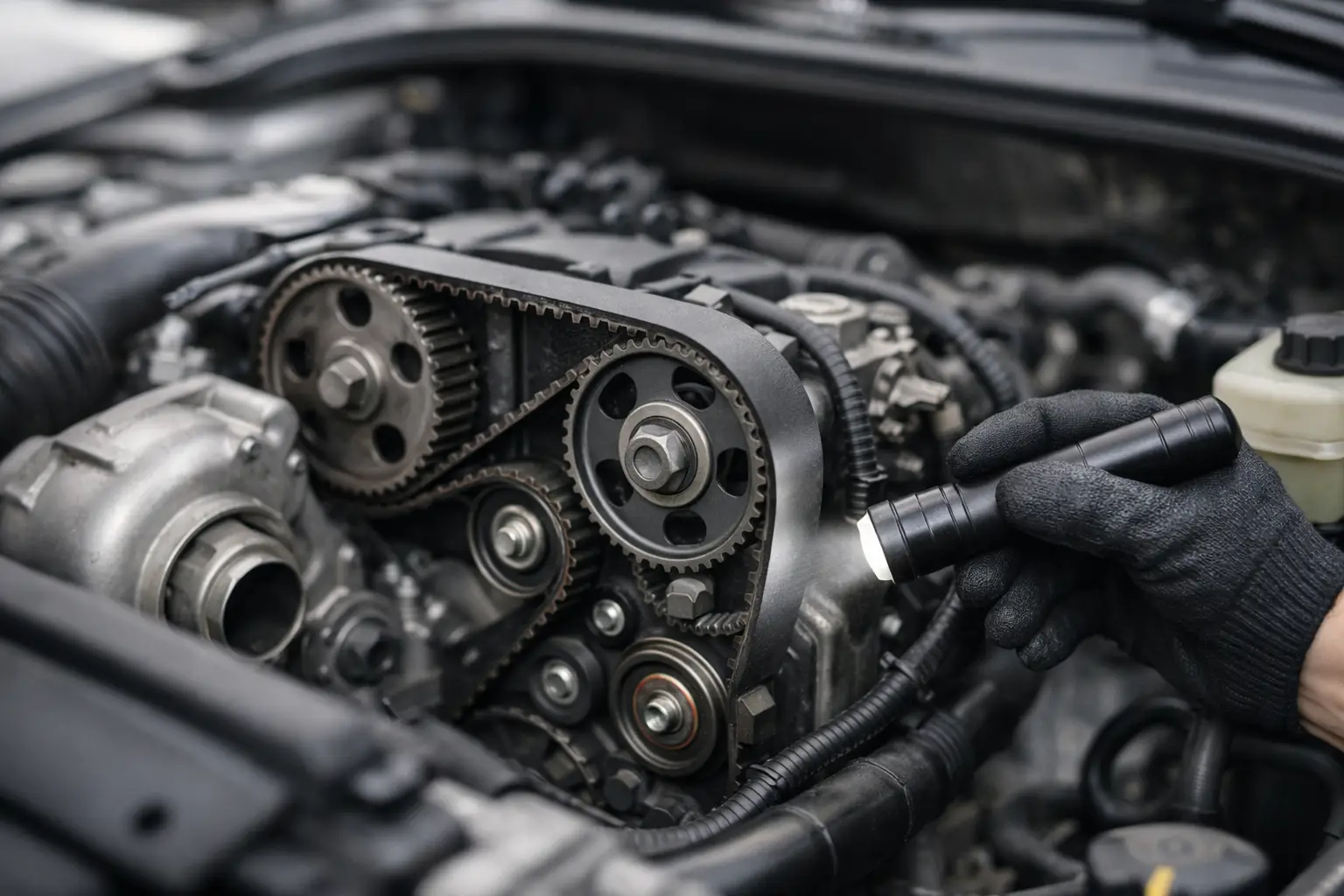
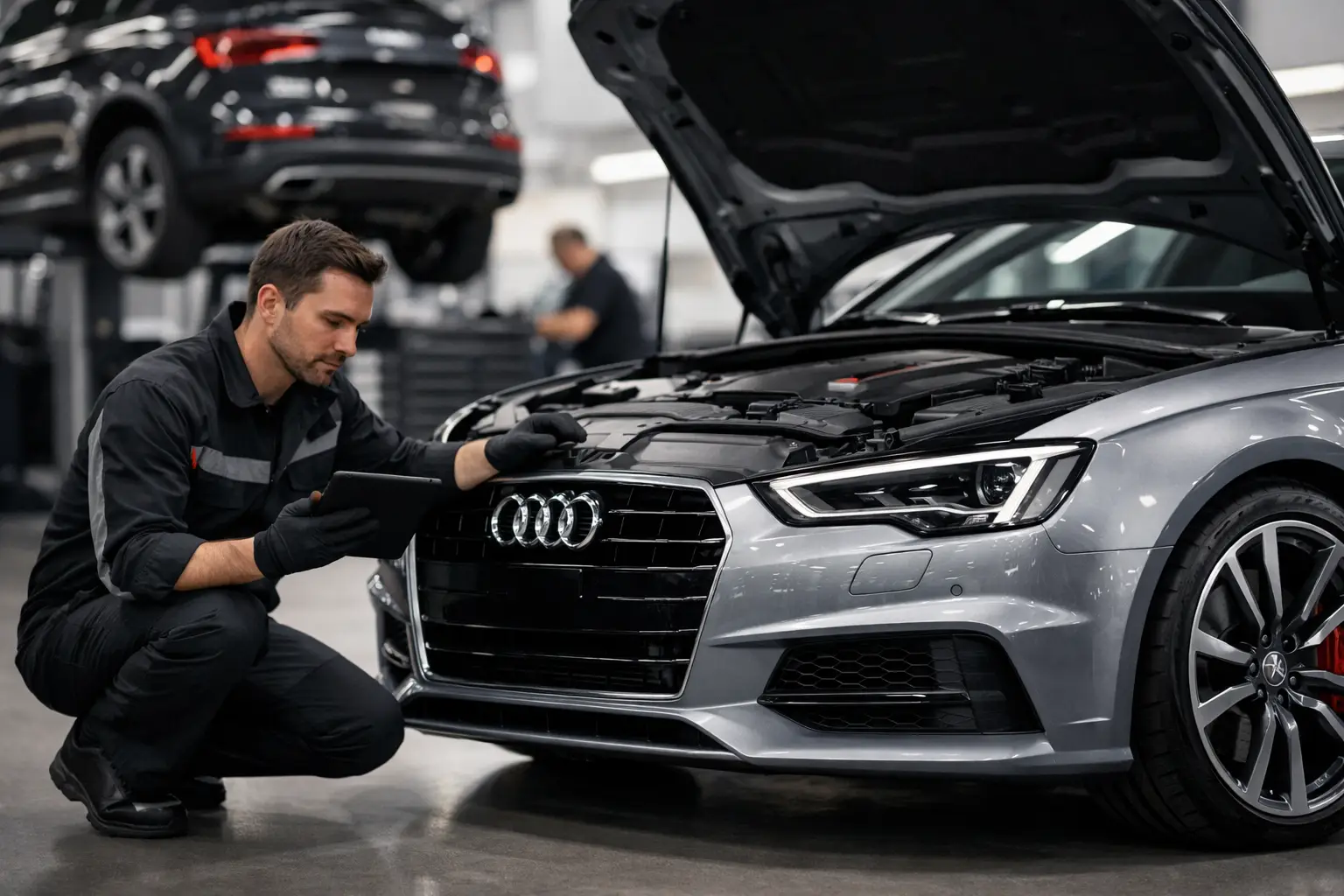
Before fitting anything performance-related, make sure the car is mechanically sound. This is the part people like to skip, but it matters more than any bolt-on part. If the ignition system is tired, the intake valves are coked up, the suspension bushes are worn, or the DSG service is overdue, modifications can amplify existing faults rather than improve the car.
A proper diagnostic check, service history review and inspection of common wear points gives you a much better base. On direct-injection GTIs, carbon build-up can noticeably dull throttle response and power delivery, so walnut blasting can restore performance before any tuning starts. If you have a DSG car, servicing it on time is not optional if you want clean shifts and long-term gearbox health.
ECU remapping is still one of the best-value GTI upgrades
If the car is healthy, an ECU remap is often the first upgrade that genuinely transforms a GTI. Done properly, it improves torque delivery, drivability and in-gear pace far more than many owners expect. On turbocharged GTI models, the gains can be substantial without changing hardware.
That said, a remap should suit the car and its condition. A generic file on a poorly maintained engine is asking for trouble. Fuel quality, mileage, clutch condition on manual cars, and gearbox servicing on DSG models all matter. For many owners, a sensible stage 1 calibration gives the best return because it keeps the car civilised in traffic and strong on faster roads without creating unnecessary stress elsewhere.
When a remap makes the most sense
A remap is ideal if you want noticeably more performance without changing the character of the car. It is especially worthwhile for drivers who spend time on A-roads and motorways and want stronger mid-range pull rather than a peaky top-end setup. If the car is your daily transport, this is usually the point where gains and usability meet.
Tyres are an upgrade, not just a consumable
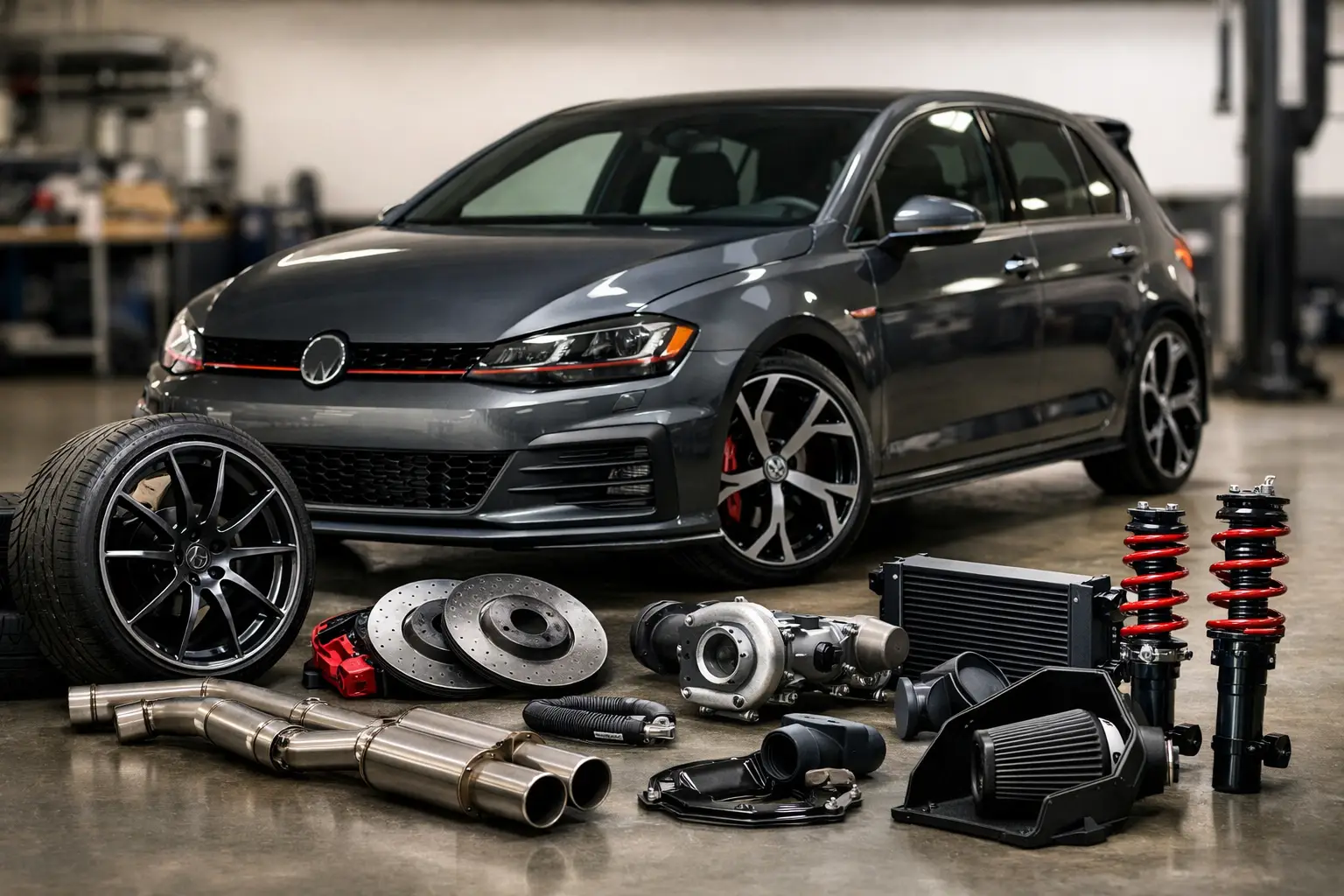
Few GTI upgrades are as underestimated as a proper set of tyres. More power is pointless if the front axle cannot put it down cleanly, particularly in typical British weather. Quality tyres improve traction, braking and steering feel in ways you notice every day.
This matters even more on tuned cars. A GTI with average tyres can feel nervous under load and scrabble for grip out of tighter junctions. Fit the right premium tyre in the correct size, and the whole car feels calmer and more capable. It is not the glamorous choice, but it is one of the smartest.
Suspension upgrades can improve the car – or ruin it
Suspension is one area where the best VW Golf GTI upgrades depend heavily on what you want from the car. Many owners assume lower is automatically better. In reality, some aftermarket setups look right on the driveway but ride poorly, crash over broken surfaces and upset the balance that made the GTI good in the first place.
For a road car, quality springs and dampers or a well-matched coilover kit can sharpen turn-in and reduce body roll without making the car tiring to live with. Cheap kits usually do the opposite. Worn top mounts, bushes and alignment issues also need addressing at the same time, otherwise even expensive suspension parts will not perform properly.
Alignment matters more than many owners realise
After any suspension work, a correct geometry setup is essential. If the alignment is out, the steering can feel vague, tyre wear increases and the car never feels settled. This is one of those jobs that turns a pile of parts into a proper result.
Uprated brakes are worthwhile once pace increases
A standard GTI braking system is often decent for normal road use, but once power goes up or the car is driven harder, better braking performance becomes more relevant. That does not always mean huge discs and expensive callipers. In many cases, quality discs and pads, fresh fluid and a sound braking system are enough to make a noticeable difference.
This is a sensible upgrade for enthusiastic drivers because it adds confidence rather than just speed. If the car covers a lot of miles around Basingstoke, Reading or Newbury with occasional faster road use at weekends, a well-judged brake setup can be a better investment than chasing another small power gain.
Intake and exhaust upgrades need realistic expectations
Intake kits and exhaust systems are popular because they change the way a GTI sounds and feels. That alone can be worthwhile if you enjoy the car more as a result. But from a pure performance perspective, gains vary and are often modest unless they are part of a matched package.
A poorly chosen intake can introduce heat soak or unwanted noise. An exhaust that is too loud may seem entertaining for a week and become tiring on every longer journey after that. The right setup depends on whether you want sharper response, a better soundtrack, or support for further tuning. For a daily GTI, restraint usually pays off.
Intercooler upgrades make sense on tuned cars
Once a GTI is remapped, intake temperatures become more important, especially in warmer conditions or repeated hard use. An uprated intercooler helps the car maintain consistent performance rather than feeling strong once and then going soft with heat.
This is not always the first modification to buy, but it is often one of the most sensible supporting upgrades for a tuned turbo car. If you want reliable repeatable performance rather than a single impressive pull, cooling matters. It is a practical upgrade, not a showpiece.
DSG and drivetrain upgrades should never be an afterthought
If you have a DSG-equipped GTI, gearbox behaviour is a major part of how the car feels. Software calibration, service condition and clutch health all affect shift quality and long-term reliability. On higher-torque builds, supporting transmission work may be needed rather than simply asking the gearbox to cope.
The same applies to engine mounts, bushes and other drivetrain components. Added torque can expose weaknesses quickly. A GTI that feels sharp and well sorted is usually the result of attention to these supporting areas, not just a tune file and a noisy intake.
Carbon cleaning can restore what the engine has already lost
On many direct-injection VW petrol engines, carbon build-up is not theory – it is a real cause of reduced performance, uneven idle and dulled throttle response over time. Owners sometimes start shopping for upgrades when the engine is actually delivering less than standard because of intake valve deposits.
Walnut blasting is one of those services that does not sound exciting, but the results can be impressive on the right car. If your GTI feels flat, especially at higher mileage, restoring lost performance may be a better first move than fitting extra parts.
Choosing the best VW Golf GTI upgrades for your car
The best upgrade path depends on the car’s age, mileage and role. If it is your only car, keep the focus on reliable gains – health check, servicing, tyres, a sensible remap and any overdue maintenance. If it is more of a project, you can justify going further with cooling, suspension and braking support.
For local owners around Aldermaston and the wider Tadley, Basingstoke, Reading and Newbury area, convenience matters too. A GTI that is off the road for repeated trial-and-error modifications soon becomes frustrating, especially if you rely on it daily. Working with a VAG specialist who understands the platform, uses proper diagnostic equipment and fits OEM or equivalent-quality parts helps avoid that cycle of guesswork.
With 30+ years of VAG experience, the real aim is not to make a GTI louder or harsher for the sake of it. It is to make the car better where you actually use it – cleaner response, stronger performance, sharper handling and dependable reliability. The right upgrades should leave you looking for excuses to drive it, not reasons to book it back in.