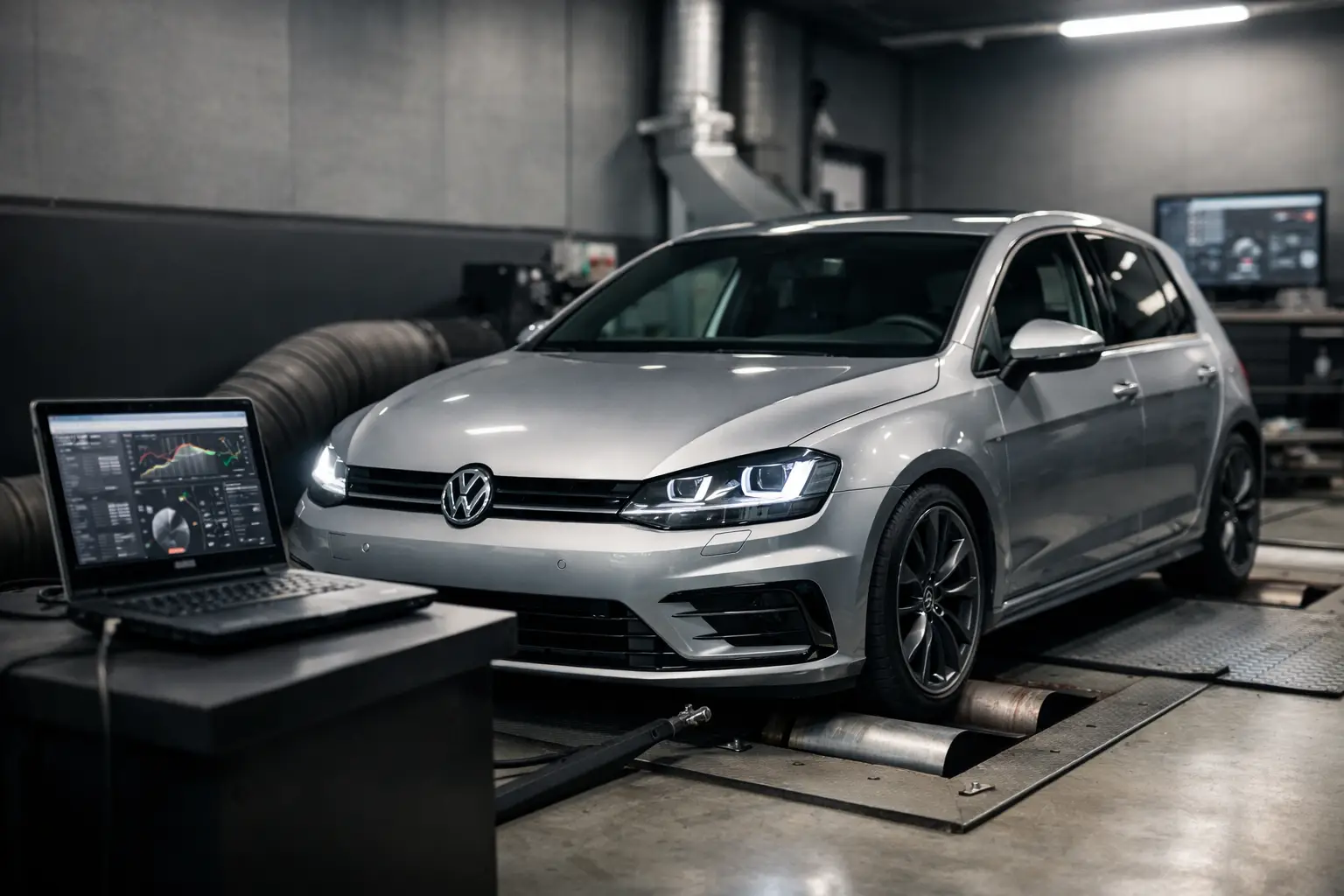
A Stage 1 remap on a Volkswagen usually sounds great on paper. More torque, sharper response, stronger mid-range pull. The real question is whether it still feels like a sensible road car on Monday morning, in traffic, with a cold engine and a full boot. That is where a proper review matters.
For most owners, a Stage 1 map is not about building a track car. It is about making the car feel more like it should have from the factory. On the right engine, that is exactly what happens. On the wrong car, or with the wrong preparation, it can highlight existing faults, exaggerate weak points and leave you paying for repairs you were already close to needing.
Volkswagen ECU remap stage 1 review – what changes in the real world?
A Stage 1 remap is a software calibration change for a standard or near-standard vehicle. No major hardware upgrades are normally required. On many Volkswagen petrol and diesel turbo engines, the gains are noticeable because the factory calibration often leaves a margin for emissions targets, broad-market fuel quality, model hierarchy and drivetrain protection.
The first thing most drivers notice is torque rather than outright power. The car tends to pull harder from lower down the rev range, and there is less need to work through the gears to make steady progress. In daily driving that can make a 2.0 TDI or 2.0 TSI feel more relaxed rather than more aggressive.
Throttle response also usually improves, although this depends on how the map has been written. A good calibration feels progressive and natural. A poor one can feel jumpy at low speed and tiring in town. That difference is why remapping should never be treated as just a numbers exercise.
Petrol Volkswagens
On turbo petrol models such as the 1.4 TSI, 1.5 TSI and 2.0 TSI, Stage 1 tuning can transform the middle of the rev range. Overtaking is easier, motorway joining is more effortless and the car generally feels keener without becoming difficult to live with.
The best Stage 1 petrol maps keep the power delivery smooth and predictable. If the map is too aggressive, you can end up with traction issues in lower gears, especially in front-wheel-drive cars, and that extra urgency can start to feel untidy on wet British roads.
Diesel Volkswagens
Diesel Volkswagens often show the biggest seat-of-the-pants improvement because of the extra torque. A 2.0 TDI can feel substantially stronger from low revs, which suits commuting and longer journeys very well. You need fewer downshifts, and the car feels less strained when loaded up or carrying passengers.
That said, diesel tuning needs to be approached sensibly. If the DPF, EGR system or boost control already has a fault developing, a remap will not fix it. It may simply make the problem appear faster.
Is a Volkswagen Stage 1 remap worth it?
In many cases, yes. If your Volkswagen is healthy, properly maintained and you want better drivability rather than something extreme, Stage 1 is often the sweet spot. It offers the biggest real-world improvement for the least disruption.
The reason it works so well is simple. Most drivers use the middle of the rev range far more than the top end. A remap that strengthens that area changes how the car feels every day. You notice it leaving roundabouts, climbing hills, joining dual carriageways and carrying speed smoothly without needing to push the car hard.
Where it becomes less worthwhile is when the car is already overdue maintenance, has gearbox issues, or is a model with known weak points that have not been checked. Spending money on software before dealing with servicing, ignition components, intake carbon build-up or transmission maintenance is often the wrong order.
Volkswagen ECU remap stage 1 review – the trade-offs owners should know
A lot of remap articles focus only on the upside. That is not how workshop reality works.
The biggest trade-off is that extra performance adds extra load. That does not mean a healthy engine will immediately have problems, but it does mean worn spark plugs, tired coils, ageing diverter valves, weak PCV systems, boost leaks or marginal clutches are more likely to show themselves. The remap did not necessarily create the fault. It simply removed the cushion that was hiding it.
Manual cars with a high-mileage original clutch are a common example. More torque can expose clutch slip, especially in taller gears under load. DSG-equipped cars often cope well when maintained properly, but service history matters. The same goes for Haldex-equipped models where applicable. Performance should not be looked at in isolation from the rest of the drivetrain.
Insurance is another practical point. A remap is a modification and needs to be declared. Some owners overlook this because the car looks standard. That can become expensive if there is ever a claim.
Fuel economy is more nuanced than adverts suggest. Driven gently, some cars can return similar or slightly better economy because the extra torque means less effort is needed. Driven with enthusiasm, fuel consumption will usually get worse. There is no clever way around that.
What makes a good Stage 1 remap?
The best Stage 1 maps feel factory-like, just stronger. They start cleanly, idle properly, behave well in traffic and deliver power consistently across conditions. They should suit the car, the engine code and the hardware condition, not just the badge on the boot.
Good tuning also starts with checks. Fault codes, live data, boost behaviour, fuel trims and service condition all matter. If a vehicle already has underlying issues, loading more demand into the calibration is poor practice. On direct-injection petrol Volkswagens, carbon build-up can also affect performance and consistency, so that should be kept in mind when assessing whether the gains are likely to be worthwhile.
At Mechalex, the sensible approach is the same as with any other performance work on a VAG vehicle – make sure the car is healthy first, then improve it properly. That matters far more than chasing the biggest quoted figure.
Which Volkswagen models suit Stage 1 best?
Turbocharged engines are the natural candidates. The 2.0 TSI and 2.0 TDI ranges usually respond very well, and many 1.4 TSI and 1.5 TSI cars also benefit noticeably. The appeal is strongest on cars that feel slightly restrained in standard form but are otherwise mechanically sound.
Naturally aspirated engines are a different story. The gains are generally much smaller, so expectations need to be realistic. If someone is expecting a dramatic transformation from software alone on a non-turbo model, disappointment is likely.
Mileage on its own is not a reason to avoid tuning, but condition matters more than age. A well-maintained higher-mileage Volkswagen can be a better candidate than a lower-mileage example with poor servicing and unresolved faults.
What about older Volkswagens?
Older turbo Volkswagens can still respond very well to a Stage 1 remap, but they need a more careful health check. Vacuum leaks, tired sensors, worn mounts and old ignition components are more common as cars age. If those are addressed first, the result can still be very worthwhile.
Should you remap a daily driver?
For a daily driver, Stage 1 is usually the most sensible limit. It gives you a stronger, more flexible car without pushing too far into compromise. That is especially true for owners who want a little more from their Volkswagen but still need it to be reliable for work, school runs and long-distance use.
The key is restraint. A daily driver should not feel peaky, awkward in traffic or overly dependent on premium fuel unless that has been clearly factored into the decision. The best remapped road cars feel better integrated, not more dramatic for the sake of it.
That is also why proper maintenance has to stay part of the plan. Oil quality, spark plugs, filters, DSG servicing where required, Haldex servicing where fitted, and accurate diagnostics all matter more once you ask the car to do more.
Final verdict
A Volkswagen Stage 1 remap is often one of the most effective upgrades you can make, provided the car is a good candidate and the work is done with care. The improvement is usually felt in torque, drivability and everyday flexibility rather than headline speed alone. For many owners, that is exactly the point.
If you are considering it, think beyond the advertised power figure. Ask whether the engine, gearbox and supporting systems are healthy enough to benefit from it. When the car is prepared properly and tuned sensibly, Stage 1 can make a Volkswagen feel sharper, stronger and more enjoyable without losing the everyday manners that made you buy it in the first place.