A DSG that hesitates at a roundabout, bangs into gear, or suddenly drops into limp mode usually does not need guesswork – it needs the right diagnosis. This guide to mechatronic unit repair is written for Audi, Volkswagen, Škoda and SEAT owners who want to understand what is actually failing, what can be repaired, and when replacement is the better call.
The mechatronic unit is the control centre of many DSG gearboxes. It combines hydraulic control, electronic control and a set of sensors and solenoids that manage gear selection and clutch operation. When it starts to go wrong, the symptoms can feel dramatic, but the fix is not always as simple as fitting a new gearbox – or as cheap as an internet forum might suggest.
What the mechatronic unit actually does
In simple terms, the mechatronic unit tells the gearbox what to do and then carries out those commands hydraulically. It reads inputs such as road speed, engine load, throttle position and temperature, then controls shift timing and clutch engagement.
That matters because many complaints that drivers describe as a gearbox problem are actually a mechatronic control problem. If the unit cannot regulate hydraulic pressure properly, or if an internal sensor gives bad data, the gearbox can behave unpredictably even when the mechanical side is still sound.
On VAG vehicles, this is especially relevant because DSG systems are excellent when working properly, but they are not tolerant of poor diagnosis. Replacing parts on assumption can get expensive very quickly.
Common symptoms in a guide to mechatronic unit repair
Most drivers notice the problem before any warning light tells the full story. The gearbox may become jerky when moving off, hesitate between gears, slam into gear, refuse to select a gear cleanly, or flash a transmission warning on the dash. Some cars will drive normally from cold and then play up once warm. Others fail intermittently, which is often the most frustrating scenario.
You might also notice delayed engagement when shifting from park to drive, a harsh shift into reverse, or the car entering limp mode and staying in one gear. In some cases, fault codes point clearly to pressure regulation or solenoid issues. In others, the symptoms overlap with clutch wear, low fluid quality, wiring faults or software-related issues.
That overlap is where proper fault-finding matters. A mechatronic unit can be at fault, but so can the components around it.
Why mechatronic units fail
There is no single reason, and anyone promising one universal answer is oversimplifying it. Some failures are electrical – internal circuit board faults, failed sensors, poor signal quality or solenoid problems. Others are hydraulic, where pressure control is compromised by internal wear, contamination or failed seals.
Heat and fluid condition also play a part. DSG systems rely on precise hydraulic operation, so dirty or degraded fluid can contribute to poor performance over time. On higher-mileage cars, age-related wear becomes a factor too. And if a vehicle has been driven for a long period with developing faults, a repair that might once have been limited to the mechatronic unit can turn into a broader gearbox job.
It also depends on the specific DSG variant fitted to the car. Different units have different known weak points, so the repair approach on one Audi or Volkswagen may not be identical to another.
Proper diagnosis comes before repair
A good workshop does not start by quoting a mechatronic replacement based on symptoms alone. It should begin with a full scan for gearbox fault codes, live data checks, adaptation readings where relevant, and a road test that confirms when and how the fault appears.
Fluid condition and level may need checking. Wiring and connector integrity matter. In some cases, software updates or adaptation procedures are relevant, but they are not a cure-all. If the mechanical clutches are worn or the gearbox has internal damage, fitting or repairing the mechatronic unit on its own will not solve the underlying issue.
This is one reason VAG specialists tend to be the safer option for this kind of work. The system is too specific for trial-and-error diagnostics.
Guide to mechatronic unit repair options
Repair is often possible, but not always sensible. The right option depends on the confirmed fault, the gearbox type, mileage, overall condition of the transmission and how long the issue has been present.
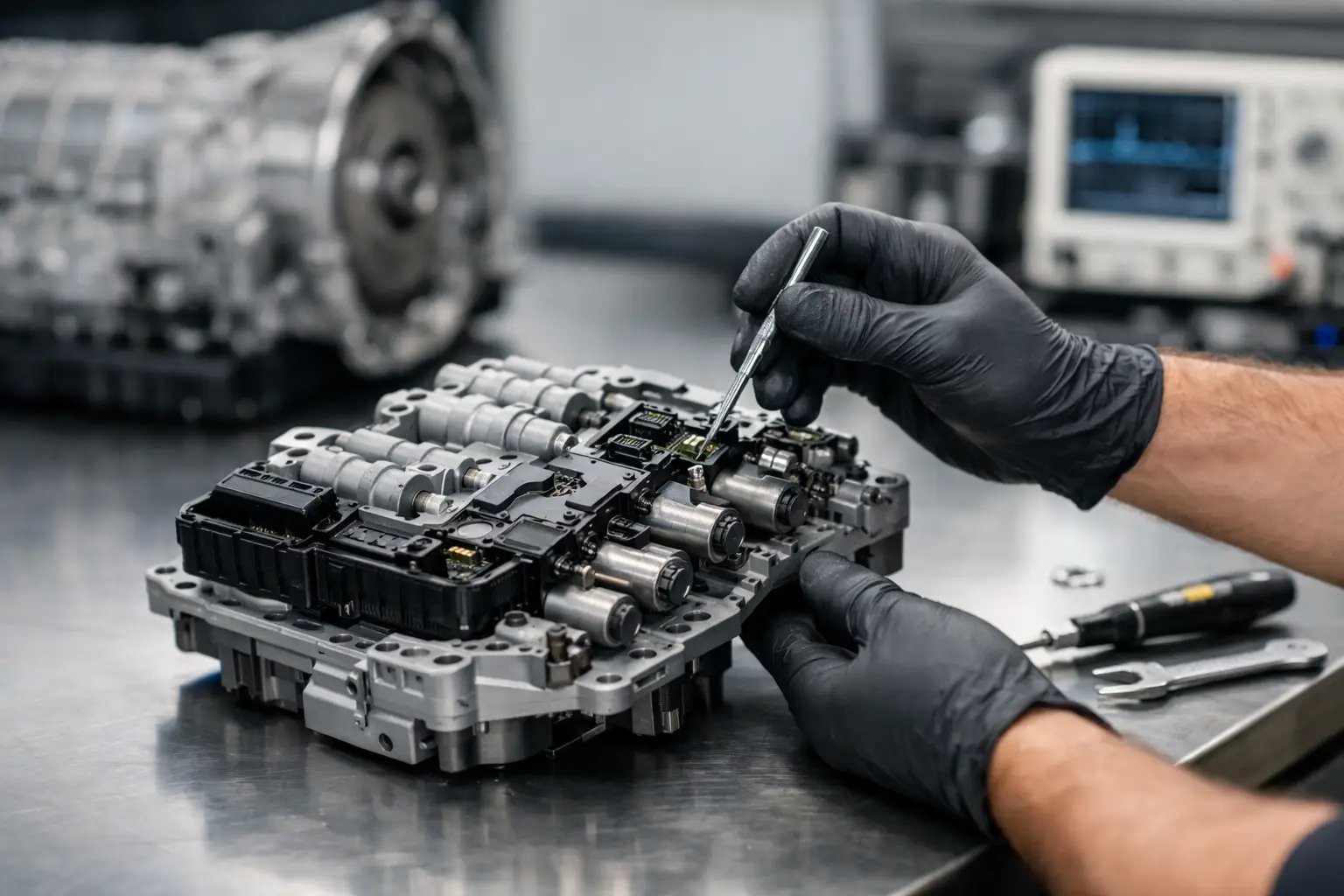
Where the problem is isolated to the mechatronic unit itself, a repair may involve removing the unit, inspecting it, replacing failed internal components, dealing with known weak points, refitting it with the correct procedure, and then carrying out coding, adaptation and testing. If done properly, this can be a cost-effective alternative to complete replacement.
In other cases, a replacement mechatronic unit is the better route. That tends to be the case where damage is extensive, reliability after repair would be questionable, or parts availability makes repair uneconomical. There are also situations where the mechatronic issue is only part of the story and the gearbox needs additional work at the same time.
The trade-off is straightforward. Repair can offer better value, but only when the unit and surrounding gearbox condition make it worthwhile. Replacement may cost more up front, but can be the more dependable answer in the right case.
Why DIY and generic garages can struggle
Mechatronic faults sit at the point where electronics, hydraulics and transmission behaviour all meet. That makes them difficult to diagnose with generic equipment or broad assumptions. A code reader that tells you there is a pressure fault is only the start. It does not tell you whether the issue is inside the mechatronic unit, caused by contamination, linked to a failing component elsewhere, or the result of previous poor-quality work.
DIY repair is usually not realistic unless you already have specialist knowledge, proper diagnostic equipment and the ability to carry out the required setup procedures afterwards. Even physically fitting the unit is only part of the job. If coding, basic settings or fluid procedures are wrong, the gearbox can perform badly or be damaged.
For local VAG owners around Aldermaston, Tadley, Basingstoke, Reading and Newbury, that usually means the best value comes from getting it diagnosed correctly once, rather than paying twice after a guessed repair.
What a proper repair process should include
A workshop handling this job properly should be looking at the whole transmission system, not just one suspect component. That means confirming the fault, checking whether repair is viable, using OEM or equivalent quality parts where appropriate, and carrying out the correct post-repair procedures.
Road testing matters just as much as the workshop side. A gearbox can look acceptable on static checks but still show poor shift quality once driven through the full operating range. The final result should be a transmission that engages gears cleanly, shifts consistently and does not return with the same symptoms a week later.
That is particularly important for drivers who rely on their car every day. Whether it is a family Škoda, a commuting Volkswagen, a SEAT used for mixed town and motorway driving, or a higher-performance Audi, the repair needs to restore confidence as much as function.
When to stop driving and get it checked
If the gearbox is slipping badly, refusing gears, flashing warnings or dropping into limp mode repeatedly, it is sensible to get it looked at sooner rather than later. Continuing to drive with a control fault can increase wear elsewhere, especially if shifts are harsh or clutch engagement is poor.
A small hesitation today can turn into a larger bill if the transmission is forced to operate with incorrect pressure control for too long. That does not mean every warning is catastrophic, but delaying diagnosis rarely saves money.
Cost, value and realistic expectations
Owners often ask the same fair question – is mechatronic unit repair worth it? Usually, yes, if the rest of the gearbox is fundamentally healthy and the diagnosis is clear. It can restore proper drivability without the cost of unnecessary major transmission replacement.
But it is not a one-price-fits-all job. Cost depends on the gearbox type, the exact failure, whether the unit can be repaired, what additional parts or fluid are needed, and whether related gearbox faults are present. Anyone giving a firm figure before proper inspection is usually guessing.
What matters more is value. A well-diagnosed, correctly repaired DSG issue is almost always better value than repeated visits for partial fixes that never quite solve the fault.
For VAG owners, the best starting point is simple: treat transmission symptoms early, get the car assessed by people who know these gearboxes properly, and ask for a diagnosis before a parts list. A mechatronic problem can be serious, but with the right approach, it is often very manageable.