
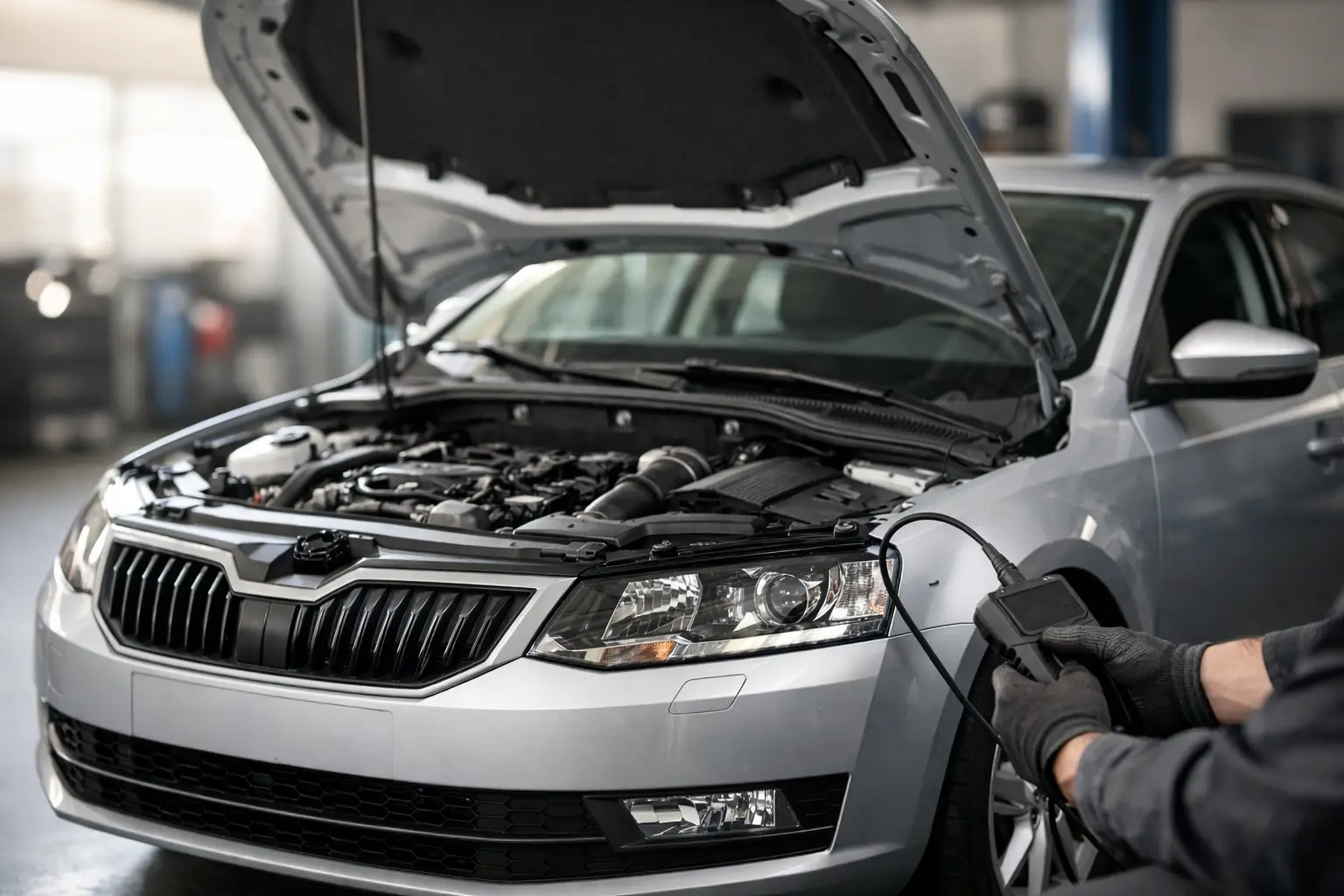
When a Skoda Octavia starts idling unevenly at the lights, shaking through the seat or dipping in revs when cold, it is rarely a fault worth ignoring. Skoda Octavia rough idle causes can be simple, but they can also point to deeper issues in the ignition, fuelling or air intake systems. The key is not guessing, because the same symptom can come from several very different faults.
For Octavia owners, that matters because these cars cover a wide mix of engines and generations. A 1.4 TSI, 1.5 TSI, 1.8 TSI, 2.0 TSI or 2.0 TDI can all idle poorly for different reasons, even though the car may feel broadly the same from behind the wheel. On VAG vehicles in particular, proper diagnostics save time, avoid needless parts swapping and usually reduce the final bill.
The most common Skoda Octavia rough idle causes
A rough idle usually means the engine is struggling to maintain stable combustion at low rpm. At higher revs, some faults can hide because the engine has more momentum and airflow. At idle, weaknesses show up quickly.
One of the most common causes is a misfire. On petrol Octavias, worn spark plugs or a weak ignition coil can create an uneven idle, especially when the engine is cold or under light load. If the car also hesitates on acceleration or the engine management light flashes, ignition components move higher up the suspect list.
Air leaks are another regular culprit. If unmetered air enters the engine after the mass airflow or manifold pressure readings have been calculated, the mixture can go lean and unstable. That can come from split breather hoses, intake leaks or faulty seals. Some leaks are obvious, while others only appear once components expand or contract with temperature.
Fuel delivery problems can produce a similar symptom. A dirty injector, weak fuel pressure or poor injector spray pattern may lead to uneven combustion at idle. Direct injection petrol engines can be especially sensitive here. On diesel models, injector balance issues can create a noticeable idle shake, sometimes with smoke or a harsher engine note.
Then there is carbon build-up. This is a familiar issue on many direct injection VAG petrol engines. Over time, deposits build on the intake valves because fuel no longer washes over them in the way it does on older port injection systems. That can disturb airflow, reduce efficiency and lead to rough running, misfires and sluggish response. If the engine feels lumpy at idle but otherwise drives fairly well, carbon build-up is often worth checking.
Why the fault is not always obvious
Rough idle faults are frustrating because several issues can overlap. A car with ageing plugs may also have carbon deposits. A diesel with injector correction problems may also have an EGR issue. That is why reading a fault code is only part of the job.
A stored code might point towards a misfire on cylinder 2, but that does not automatically mean the coil pack is the cause. It could be compression, fuelling, wiring, vacuum leaks or deposits affecting that cylinder. Proper diagnosis means looking at live data, fuel trims, misfire counters, adaptation values and the engine’s behaviour from cold start through to operating temperature.
For drivers around Aldermaston, Tadley, Basingstoke, Reading and Newbury, this is where using a VAG specialist can make a real difference. Octavias share a lot of platform and engine technology with Volkswagen, Audi and SEAT models, so faults that seem unusual to a general garage may be very familiar to a workshop that sees these engines every week.
Ignition faults on petrol Octavias
Spark plugs and coil packs
If your Octavia is petrol and the idle feels shaky, ignition components are an early check. Spark plugs wear gradually, and once the gap opens beyond spec, the engine can struggle to fire the mixture cleanly at idle. Coil packs can fail more suddenly or weaken intermittently, which makes diagnosis trickier.
Sometimes the rough running is worse in damp weather or after a cold start. Sometimes it improves once the engine is warm. That does not rule out ignition issues. It simply means the fault is affected by conditions.
Timing and combustion quality
On some engines, timing-related issues can also affect idle quality. That might involve camshaft adjustment, stretched timing components on certain units, or sensor readings that throw off the combustion event. These are less common than plugs or coils, but they do happen, and they should not be guessed at.
Air and intake issues
Vacuum leaks and breather problems
A small leak in the intake system can upset idle far more than motorway driving. Breather assemblies, PCV valves and connecting hoses are all worth attention on VAG petrol engines. When these fail, you may notice rough idle, whistling noises, poor fuel economy or fault codes related to fuel trim.
Carbon build-up on intake valves
Among the more overlooked Skoda Octavia rough idle causes is intake valve carbon build-up. This is particularly relevant on direct injection petrol engines that spend much of their life on short runs. The deposits disrupt airflow into the cylinder and can lead to rough cold starts, uneven idle and reduced performance.
In some cases, walnut blasting is the proper fix rather than additive-based workarounds. That depends on how severe the deposits are and what inspection shows. It is a good example of why the right repair matters more than the cheapest first guess.
Fuel system and injector problems
When an injector is not delivering fuel evenly, idle quality suffers first. On a petrol Octavia, a dirty or partially restricted injector can create a misfire that feels minor at first but becomes more noticeable over time. On a diesel, injector imbalance can cause a stronger vibration through the cabin.
Fuel pressure faults can also be involved. A weak low-pressure pump, high-pressure pump issue or pressure regulation problem may not always trigger dramatic symptoms straight away. The car may still start and drive, but the idle can hunt, stumble or feel coarse.
Bad fuel is possible too, though less common than many assume. If the issue appeared suddenly after refuelling, it is worth considering, but it should not become the default explanation without evidence.
Diesel-specific rough idle causes
On diesel Octavias, rough idle often brings the EGR system into the conversation. If the valve sticks or operates outside expected values, it can upset combustion at idle and low speed. You may also notice hesitation, smoke or poor response.
Dual mass flywheel wear can sometimes be mistaken for an engine rough idle as well. If the vibration feels mechanical and changes with clutch input on manual cars, the problem may not be combustion-related at all. That is a good example of why symptom description matters when the car is booked in.
Glow plug issues may affect cold idle on some diesel models, especially in colder weather, though modern systems vary by engine. Again, the engine code and symptom pattern matter.
What to look out for before it gets worse
A rough idle on its own is enough reason to have the car checked, but a few signs make it more urgent. If the engine management light is flashing, if the car smells strongly of fuel, if it struggles to start, or if the vibration is getting noticeably worse, it is best not to keep driving it longer than necessary.
Misfires can damage the catalytic converter on petrol cars. Poor fuelling can wash oil from the cylinder walls. Carbon and intake issues often worsen gradually until they affect drivability more broadly. What begins as a mild wobble at idle can turn into a more expensive repair if left alone.
How a proper diagnosis should work
The best approach is to test, not assume. A good diagnostic process starts with fault memory and live data, but it should also include physical inspection and model-specific knowledge. On an Octavia, that may involve checking ignition performance, fuel trim readings, injector values, intake leaks, throttle behaviour and carbon-related symptoms.
That is particularly useful for local drivers who need the car back quickly and fixed properly the first time. A specialist workshop near Aldermaston is convenient for owners coming from Tadley, Basingstoke, Reading or Newbury who want main dealer service without the main dealer cost, especially when the issue is intermittent and needs experienced fault-finding rather than generic servicing.
If your Octavia is idling roughly, the smartest next step is to treat it as a diagnostic job rather than a parts lottery. The symptom is common, but the cause is not always the one people expect. A careful inspection now usually costs less than correcting a chain of wrong guesses later. And if the car is one you rely on every day, that peace of mind is worth having.