That squeak on cold start. A faint coolant smell after a run. Or a service history that simply says “belt done” with no paperwork.
If you own a Volkswagen and you rely on it every day, the cambelt and water pump job is one of those maintenance items that’s easy to postpone – right up until it isn’t. Done at the right time and to the right standard, it’s routine. Left too long, or done cheaply, it can turn into the kind of failure that takes the car off the road and turns a manageable bill into a painful one.
What the cambelt actually does (and why failure is so serious)
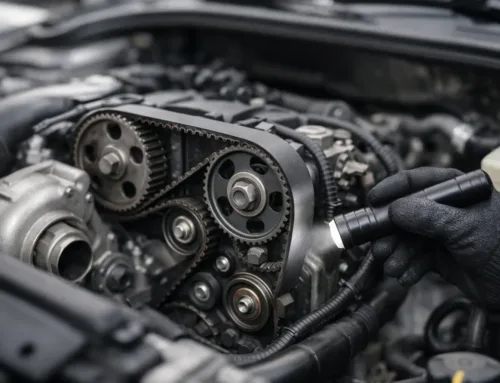
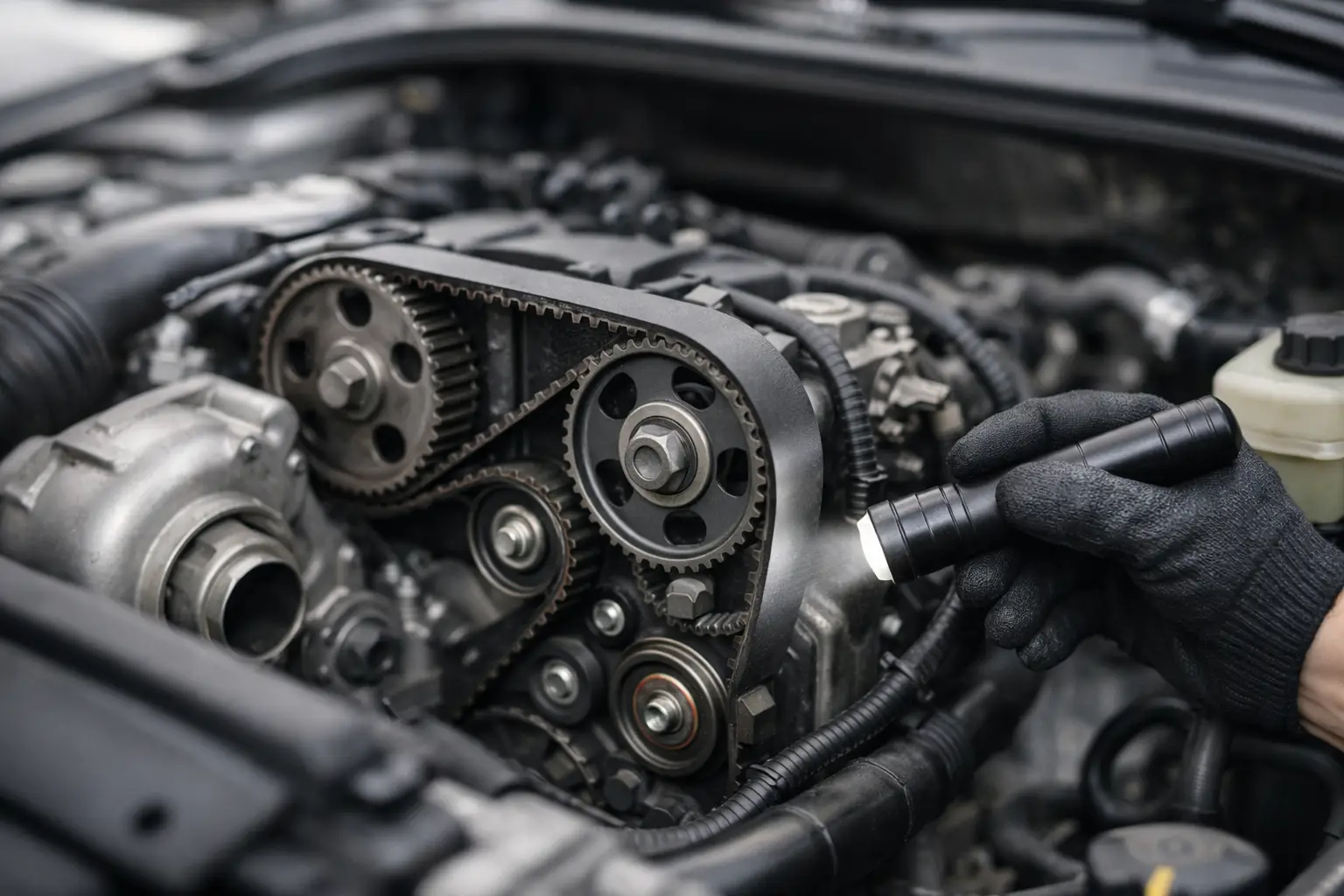
On many VW engines the cambelt (timing belt) synchronises the crankshaft and camshafts so the valves open and close at exactly the right moment. Most of these are interference engines, which means if the belt slips or snaps, pistons and valves can collide.
That’s why cambelt failure is rarely “just a belt”. It can mean bent valves, damaged pistons, marked cylinder heads and, in the worst cases, a replacement engine. Even when the engine can be repaired, the labour involved is substantial because the top end has to come apart.
Why the water pump is normally replaced at the same time
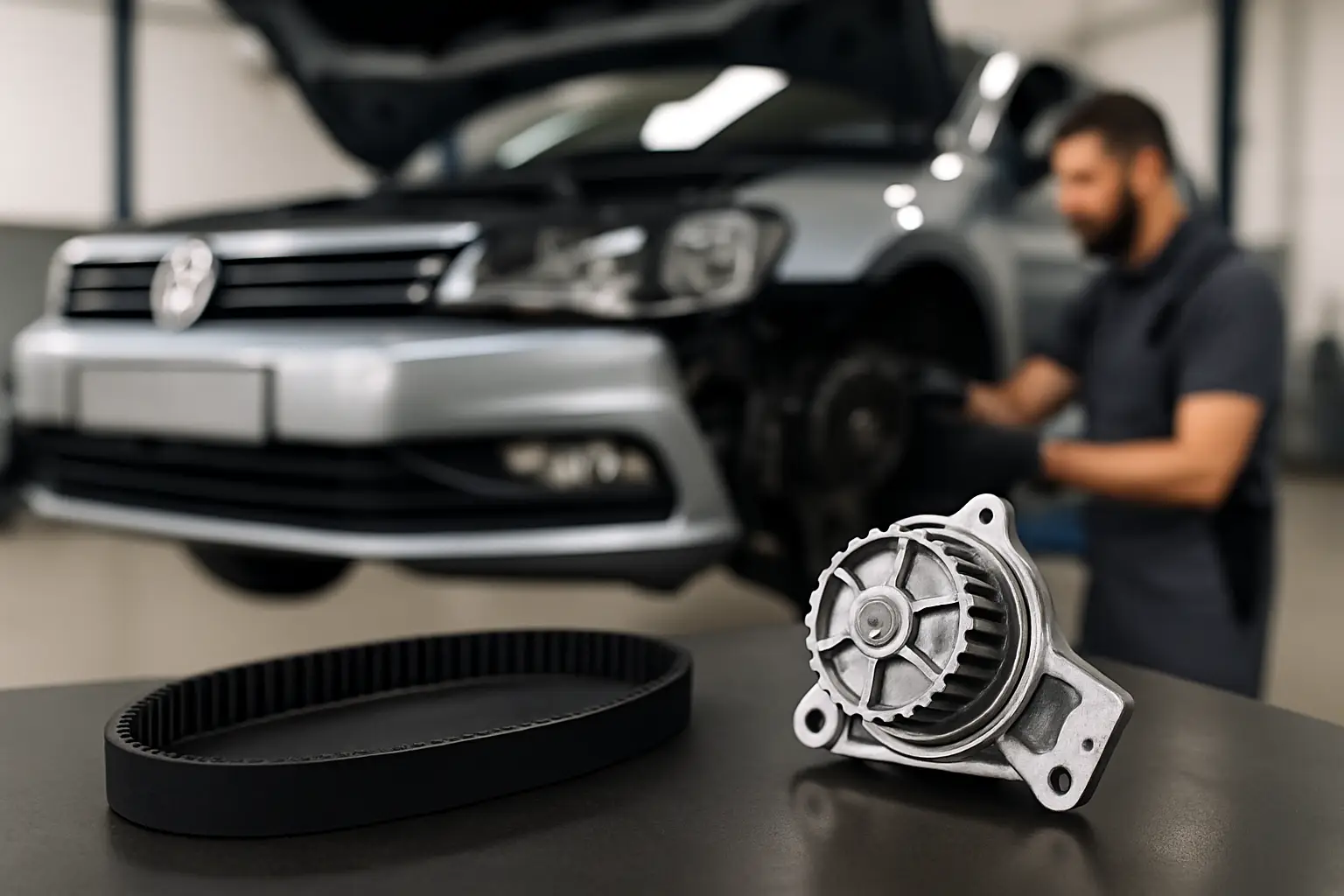
On a lot of VAG engines the water pump is driven by the cambelt. That makes it a natural partner job: access is already there, and you’re relying on the pump to keep doing its job for the full belt interval.
A pump can fail in a few different ways. The bearing can wear and start leaking, it can get noisy, or the impeller can become ineffective, reducing coolant circulation. If the pump fails after a belt-only job, you’re paying for much of the same labour again. Worse, a seizing pump can put extra load on the cambelt system.
So when people ask if a VW cambelt and water pump replacement is “really necessary”, the honest answer is that it depends – but if the pump is belt-driven, replacing both together is usually the most sensible, cost-effective approach.
When is a VW cambelt and water pump replacement due?
There isn’t a single interval that covers every VW engine. The correct schedule depends on engine code, model year and sometimes even the specific belt kit used by the manufacturer. Some are mileage-based, some are time-based, and many are a combination of both.
Time matters because belts age. Heat cycles, oil vapour, and general material degradation all take their toll even if the car does low mileage. That’s why a car that has only done 45,000 miles can still be overdue if it’s on the original belt and it’s a decade old.
If your service book is vague, or you’ve bought the car without proof of the job being done, treat it as unknown. A belt change with proper documentation is an investment in certainty. “The previous owner said it was done” isn’t something you can bank an engine on.
Warning signs – and why you shouldn’t wait for them
The awkward truth is that cambelts don’t always give helpful warnings before they fail. You might get noise from a tensioner bearing or an idler pulley, but plenty of belts look passable right up until a component in the system gives up.
Water pumps are more likely to hint at trouble. Coolant staining around the pump area, a slow coolant loss with no obvious external leak, or a rumbling/whirring noise can all point towards a failing pump or bearing.
If you notice overheating, repeated low coolant warnings, or the cabin heater going cold intermittently, don’t assume it’s just a sensor. Get it checked quickly. Overheating can do major damage long before the belt interval is up.
What should be included in the job (and what gets missed)
A proper cambelt job is a system overhaul, not just a new belt. The belt runs on pulleys, tensioners and idlers, and those bearings are under constant load.
For most VW applications, a thorough job includes the belt, tensioner, idler(s) and the water pump, plus the correct coolant refill and bleeding procedure. Depending on the engine, it may also involve one-time-use bolts and ancillary drive belt replacement.
Where jobs go wrong is usually in one of two places: corners cut on parts, or corners cut on process. A cheap kit with poor bearing quality can come back as noise or premature failure. And if the timing isn’t set precisely using the correct locking tools and procedure, you can end up with running issues, fault codes, reduced performance, or in extreme cases, engine damage.
Why VAG engines are fussy about procedure
Volkswagen Audi Group engines often have tight packaging and very specific timing requirements. Some require specialist locking tools, and some need adaptation or checks with diagnostic equipment afterwards.
That’s also why “it’s just a belt” can be misleading. The job might involve moving engine mounts, supporting the engine correctly, and working to a sequence that prevents misalignment.
On certain engines, the thermostat housing, auxiliary brackets or other components are in the same working area, and it’s common to spot early signs of leaks or wear while everything is apart. That’s where specialist eyes pay off: you can deal with a developing issue before it becomes a breakdown.
How much does it cost – and what makes the price vary?
Cambelt and water pump pricing varies because labour time varies massively by engine and model. Parts choice also matters: OEM or equivalent-quality kits cost more than unknown-brand components, but they’re designed to last the full interval.
If you’re comparing quotes, ask what is actually included. A low figure can mean the water pump isn’t included, the kit is basic, coolant isn’t included, or the quote assumes everything comes apart easily with no seized fasteners. None of those are guaranteed on a used car.
There’s also the reality that a careful workshop will clean mating surfaces properly, torque fasteners to spec, and verify timing rather than rushing the car out. You’re not just paying for parts – you’re paying for the difference between “done” and “done properly”.
Common “should I?” questions owners ask
Should I replace the cambelt early if I do lots of short trips?
Short trips mean more heat cycles and more condensation in the oil, which can affect components over time. It doesn’t automatically change the belt interval, but if your car is close to the time limit, it’s a good reason not to stretch it.
Is it worth doing if I’m selling the car soon?
If the belt is due, having it done with paperwork usually makes the car easier to sell and protects you from an awkward negotiation. More importantly, it reduces the risk of the car failing while it’s still your responsibility.
I’ve got a full service history – doesn’t that cover it?
Not necessarily. “Service history” often means oil services and inspections. Cambelt jobs are sometimes skipped, delayed, or recorded without detail. You want an invoice that lists a cambelt kit and water pump, and ideally the mileage and date.
What a good booking experience should look like
A workshop that does these jobs regularly should be able to confirm the correct interval for your engine, explain what will be replaced, and talk you through any sensible add-ons discovered during inspection (not upselling, just honest prevention).
You should also be offered practical support. If your VW is your daily transport, downtime matters, so options like courtesy cars can make the difference between postponing a critical job and getting it done on time.
If you’re local to Aldermaston and the wider Tadley/Basingstoke area and want dealer-grade workmanship without the dealer price structure, Mechalex carries out VW cambelt and water pump replacement work with OEM or equivalent parts, modern diagnostic capability and experienced VAG technicians.
The trade-offs: waiting, going cheap, or doing it once
The most expensive cambelt job is the one you do twice. Waiting until the interval is well past due might save money this month, but it increases the chances of a failure that doesn’t give you notice. Going cheap on parts might reduce the invoice today, but it can bring the car back with noise, leaks or – in the worst case – a repeat teardown.
The sensible middle ground is to do the job when it’s due, using parts that are built for the interval, and with a process that respects how precise these engines are. That’s what turns cambelt maintenance from a worry into something you simply tick off, file the paperwork for, and forget about.
If your VW’s belt history is unclear, don’t wait for a warning light to make the decision for you – certainty is often the best value you can buy for an engine you depend on.