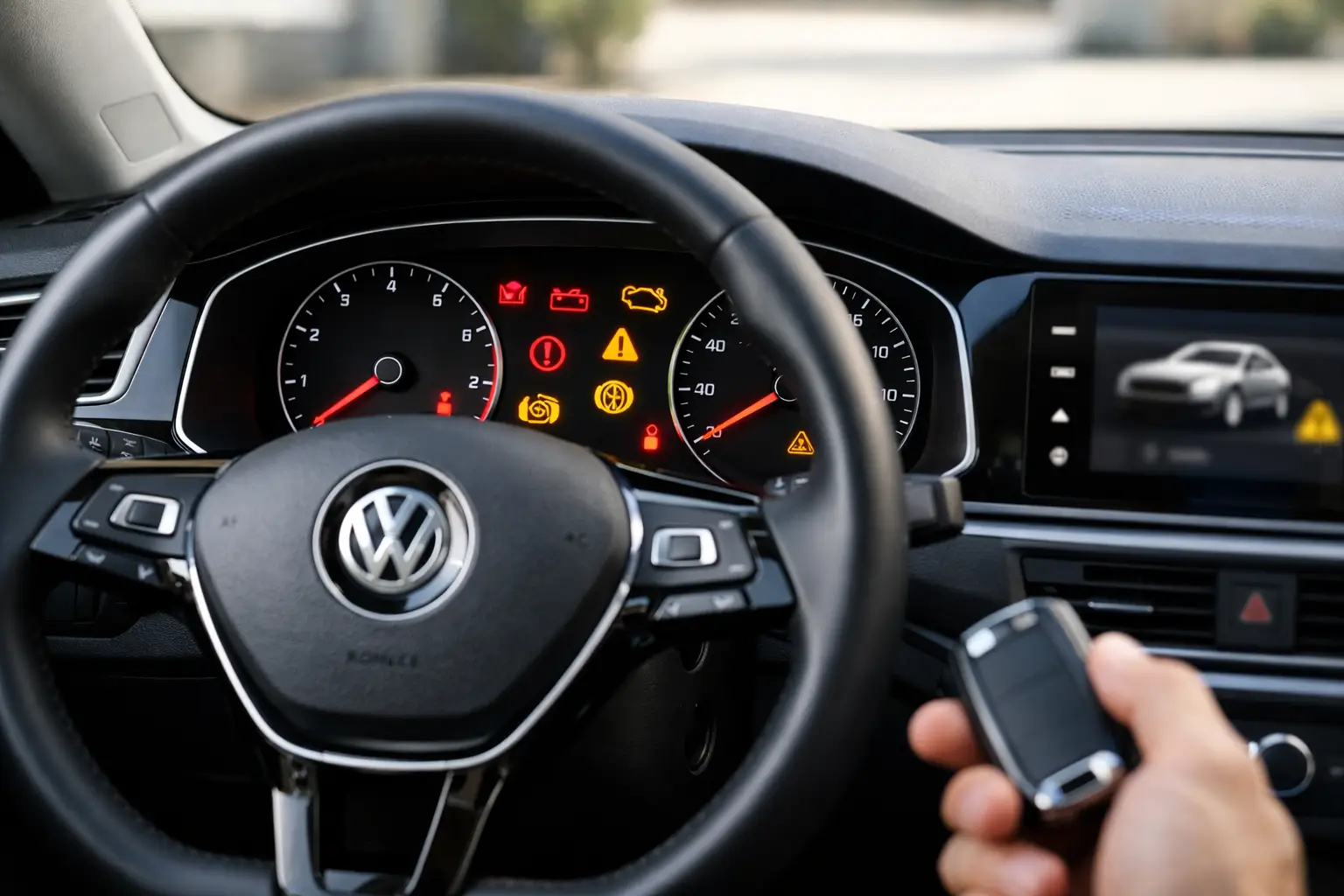
A dashboard light rarely appears at a convenient moment. It tends to happen on the school run, halfway through a commute, or just before a weekend trip. This Volkswagen warning lights guide is here to help you work out what needs immediate action, what can wait briefly, and when it is worth getting the car properly diagnosed before a small fault becomes an expensive one.
Volkswagen dashboards are designed to get your attention quickly, but the symbol alone does not always tell the full story. One warning light can point to several possible causes, especially on newer VWs where multiple systems are linked through control modules and sensors. That is why the right response matters as much as recognising the icon itself.
How to read this Volkswagen warning lights guide
The first rule is simple. Red usually means stop as soon as it is safe and assess the issue. Amber normally means caution – the car may still drive, but it needs checking. Green or blue tends to be informational, such as headlights or cruise functions, rather than a fault.
That said, colour is only part of the picture. A flashing warning light is generally more urgent than one that stays on steadily. You should also pay attention to how the car feels. If the engine is misfiring, the gearbox is not shifting correctly, the brakes feel different, or you notice overheating, smoke or a sudden loss of power, do not keep driving just because the light looks minor.
Red Volkswagen warning lights you should not ignore
A red oil pressure light is one of the most serious warnings you can see. This is not the same as being slightly low on oil. Low oil pressure means the engine may not be lubricating properly, and continuing to drive can cause major internal damage in a very short time. Stop the car safely, switch off the engine and do not restart it until the cause has been checked.
The coolant temperature warning is another one that deserves immediate respect. If the temperature is too high, the engine may be overheating. If the coolant level is low, the system may not be able to control temperature properly. In some cases it is a failed water pump, thermostat, radiator issue or leak. In others, particularly on some VAG engines, the underlying cause can be less obvious. Either way, driving an overheating engine is asking for trouble.
A red brake system warning can mean the handbrake is still on, but not always. It may also indicate low brake fluid or a fault within the braking system. If the pedal feels soft, travel is longer than normal, or braking performance has changed, the car needs immediate attention.
Battery and charging warnings also catch people out. A red battery symbol does not necessarily mean the battery itself has failed. It often points to a charging issue such as the alternator, drive belt or wiring. The car may continue running for a short period on battery power alone, but once voltage drops too far, you can lose essential systems and end up stranded.
Amber warning lights that still need prompt attention
The engine management light is probably the most misunderstood warning on any Volkswagen. If it comes on steadily, the car may still drive normally, but there is a fault stored that needs diagnosing. That fault could be something relatively minor, such as a sensor issue, or something more involved affecting fuelling, ignition, emissions or boost control.
If the engine management light is flashing, treat it far more seriously. A flashing light often suggests an active misfire that can damage the catalytic converter. You may notice rough running, reduced power or hesitation. In that case, it is best not to continue any further than necessary.
An amber glow plug light on a diesel Volkswagen can mean more than just the pre-heating cycle. If it flashes while driving, it often indicates an engine management fault rather than a simple heater plug issue. We see this catch out plenty of diesel owners because the symbol suggests one system, while the actual fault can sit elsewhere.
The EPC light is common on many Volkswagen petrol models. EPC stands for Electronic Power Control, and it usually points to an issue with throttle control, sensors, brake light switch input or related engine management functions. Sometimes the car will drop into reduced power mode. Sometimes it will only show intermittent symptoms. Either way, it needs proper fault-finding rather than guesswork.
ABS and ESC warnings are also worth taking seriously. The car may still stop and drive, but you could lose anti-lock braking, traction control or stability functions. In poor weather, that matters. Wheel speed sensors are a common culprit, but not the only one.
Common Volkswagen dashboard symbols and what they often mean
Tyre pressure monitoring warnings are usually straightforward – one or more tyres may be underinflated. But it is still worth checking for damage rather than simply topping up and carrying on. A puncture, cracked valve or slow leak can trigger the same light.
The DPF warning on a diesel Volkswagen means the diesel particulate filter is not regenerating as it should, or soot load is building too high. Sometimes a sustained motorway run can help complete regeneration, but not always. If the warning is ignored for too long, the problem can move from a serviceable issue to a forced regeneration, sensor diagnosis or even DPF replacement.
An AdBlue warning, where fitted, usually gives you some notice before the vehicle will refuse to restart once the tank is empty. Leaving it too late creates unnecessary hassle. If topping up does not clear the issue, there may be a fault with the level sensor, heater or dosing system.
Airbag and seatbelt system warnings should not be brushed aside just because the car feels normal. These systems are there for the moments you hope never happen. A warning light can indicate anything from a wiring fault under a seat to a more significant issue in the restraint system.
When you can keep driving, and when you really should not
This is where judgement matters. A steady amber tyre pressure light with no change in how the car drives is very different from a red coolant warning with steam coming from the bonnet. Equally, a steady engine management light on a car that feels completely normal is not the same as an EPC warning combined with limp mode and poor throttle response.
If the light is red, if it is flashing, or if the car is clearly running badly, the safest option is to stop using it until it has been checked. If the warning is amber and the car feels normal, you may be able to drive short distances, but it should still be booked in promptly. Waiting often turns a manageable repair into something larger.
Why warning lights need proper diagnostics
Modern Volkswagens do not respond well to parts swapping. The dashboard symbol is only the starting point. Two cars can show the same warning light and have completely different faults. One might need a sensor, while another has wiring damage, a mechanical issue or a control module problem.
This is especially true on VAG vehicles with systems such as DSG gearboxes, Haldex four-wheel drive, direct injection engines and integrated emissions controls. Accurate diagnosis means reading the correct fault data, checking live readings, understanding known platform issues, and testing before replacing parts. That approach saves money and usually gets to the root cause faster.
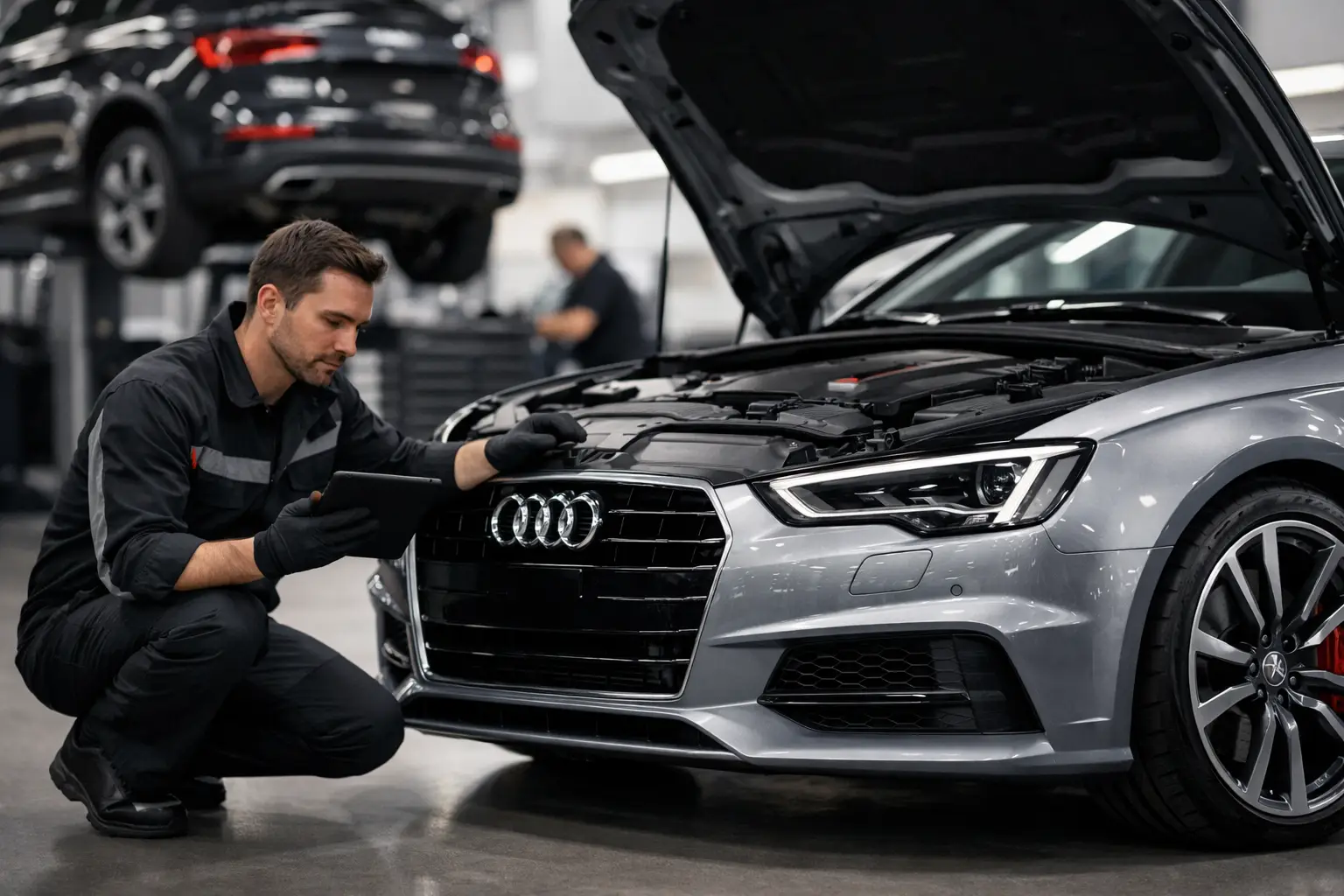
For owners around Aldermaston, Tadley, Basingstoke and the wider area, using a workshop that knows Volkswagen systems well can make a real difference. Specialist knowledge matters when the fault is intermittent, linked across several modules, or not obvious from the warning symbol alone.
A few mistakes that cost owners money
One common mistake is clearing the warning light without fixing the fault. That may hide the symptom temporarily, but it does not solve the underlying issue. Another is assuming an online list of symbols gives a definite answer. It can point you in the right direction, but it cannot test the vehicle.
We also see drivers continue using a car because it still starts and moves. Unfortunately, engines, gearboxes and emissions systems can all suffer secondary damage when an early warning is ignored. The repair bill then reflects not just the original fault, but the extra wear caused by carrying on.
What to do when a warning light appears
Stay calm first. Check whether the light is red or amber, and whether it is steady or flashing. Notice any changes in noise, temperature, power, braking or gear changes. If there is any sign of overheating, severe misfire, low oil pressure or unsafe braking, stop the vehicle safely and switch off.
If the issue appears less urgent, avoid long journeys, heavy acceleration and the temptation to simply hope it clears. Get the vehicle inspected while the fault is current, as intermittent warnings are often easier to diagnose before they disappear.
A warning light is the car asking for attention, not always shouting disaster. The trick is knowing the difference – and acting early enough that the fix stays sensible.