A DSG that suddenly hesitates pulling away from a roundabout, thumps into gear in traffic, or flashes a gearbox warning on the dash is not just being awkward. These are often mechatronic repair warning signs, and catching them early can make the difference between a targeted repair and a far more expensive gearbox problem.
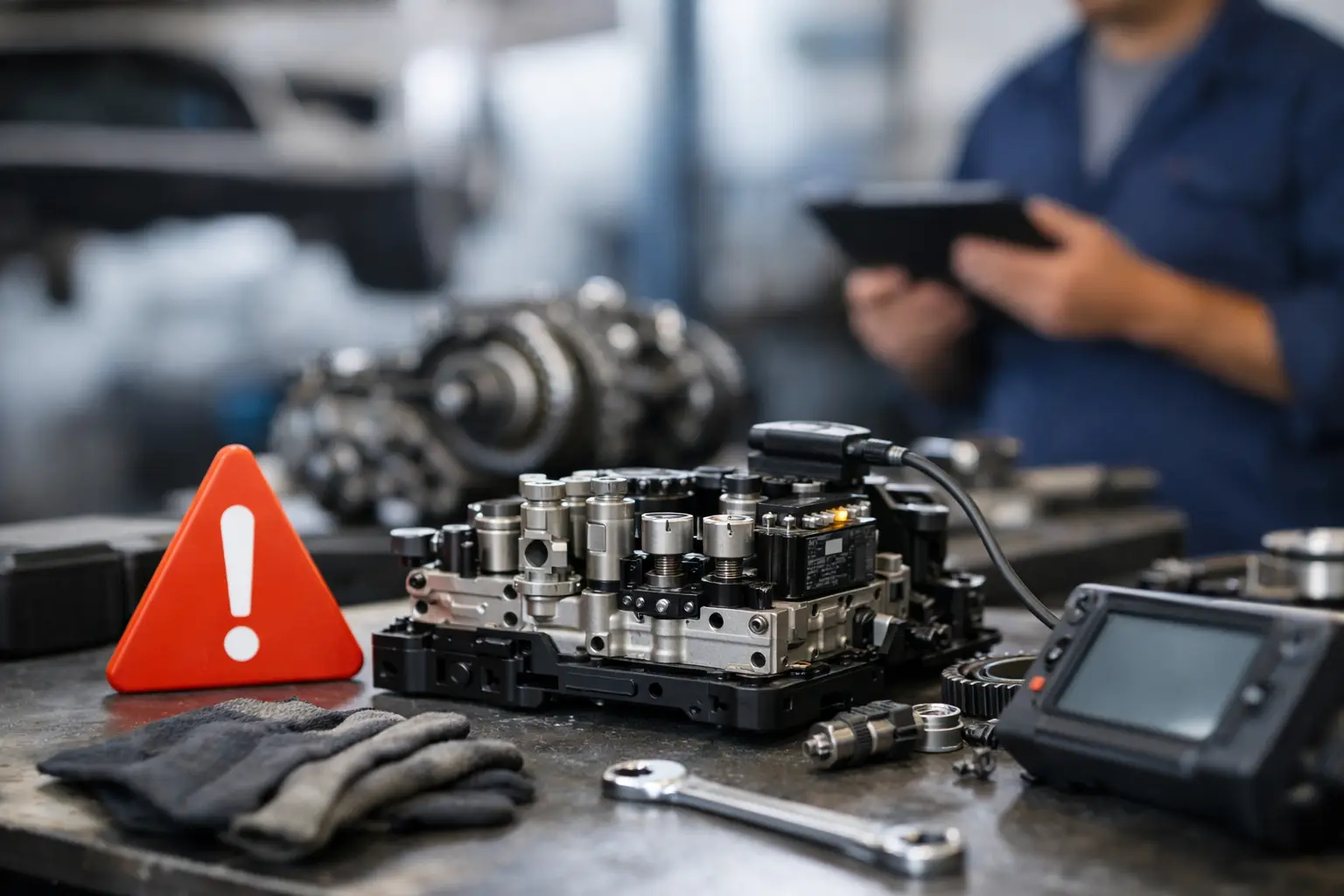
On VAG vehicles, the mechatronic unit is a key part of how the DSG gearbox operates. It combines electronic control and hydraulic actuation, telling the gearbox when and how to shift. When it starts to fail, the symptoms can feel electrical one day and mechanical the next. That is why these faults are often misread until proper diagnostics are carried out.
What the mechatronic unit actually does
In simple terms, the mechatronic unit is the control centre for your DSG transmission. It reads input from sensors, manages hydraulic pressure and commands gear changes. When everything is working properly, shifts should be quick, smooth and predictable.
When it is not, the gearbox can become erratic. You might notice delayed engagement, sudden jolts, limp mode or warning lights that seem to come and go. In some cases the issue is inside the mechatronic itself. In others, it can be linked to fluid condition, electrical faults, wear elsewhere in the transmission, or software and adaptation issues. That is why guessing rarely saves money.
7 mechatronic repair warning signs to watch for
1. Jerky or harsh gear changes
This is one of the most common early signs. If your DSG starts banging into gear, shifting more harshly than usual, or feeling unsettled at low speed, the mechatronic unit may not be controlling clutch engagement or hydraulic pressure properly.
A single rough shift does not automatically mean the unit has failed. Cold operation, adaptation values and general wear can affect shift quality too. But if the problem becomes repeatable, especially in stop-start driving, it needs checking.
2. Delayed drive when selecting D or R
If you select Drive or Reverse and there is a pause before the car moves, pay attention. A healthy DSG should engage decisively. When there is a lag, flare, or sudden thump after the delay, it can point to pressure control or internal mechatronic faults.
Drivers often describe this as the car thinking about it before moving. That sort of hesitation is easy to live with for a while, but it is not something to ignore.
3. Gearbox warning light or flashing gear indicator
Dashboard warnings matter, particularly on DSG-equipped Audi, Volkswagen, Škoda and SEAT models. A gearbox warning light or a flashing PRNDS display can indicate the control system has detected a fault and may be limiting operation to protect the transmission.
Sometimes the car will still drive more or less normally. Sometimes it will drop into a reduced-function mode. Either way, warning lights should be read with proper diagnostic equipment rather than cleared and forgotten.
4. Stuck in one gear or limp mode
If the gearbox suddenly refuses to shift properly and the car feels restricted, the system may have gone into limp mode. This is the vehicle protecting itself after detecting a serious issue.
That issue is not always the mechatronic unit alone, but it is a strong possibility on many DSG faults. Accurate fault-code reading, live data analysis and a proper road test are what separate a correct diagnosis from expensive parts swapping.
5. Juddering at low speeds
A slight hesitation in very slow traffic can have more than one cause, so this is where nuance matters. Juddering can be linked to clutch wear, adaptations, fluid condition or the mechatronic unit not controlling engagement correctly.
The important point is pattern. If the judder is becoming more frequent, feels worse when warm, or is paired with warning lights and rough shifts, it should not be dismissed as normal DSG behaviour.
6. Loss of odd or even gears
Because DSG gearboxes split gear operation across different clutches and control paths, a fault can sometimes affect certain gears more than others. If the car struggles to access a particular group of gears, selects them inconsistently, or appears to skip them, that can be a significant warning sign.
This is the stage where proper diagnosis really matters. The symptom may feel like a full gearbox failure, but the underlying issue could still be localised. It could also be the opposite. Without specialist inspection, there is no reliable way to tell.
7. Intermittent faults that come and go
One of the most frustrating mechatronic repair warning signs is inconsistency. The gearbox misbehaves for two days, then drives normally for a week. That does not mean the problem has solved itself.
Intermittent electrical and hydraulic faults are common in complex control units. In fact, an issue that comes and goes can be harder to diagnose if left too long, especially if fault memory is cleared or the car is repeatedly driven until the symptoms worsen.
Why early diagnosis matters
With DSG and mechatronic faults, the cheapest repair is rarely the one where you wait and hope. A car that still drives can tempt owners to put it off, particularly if the issue seems mild. But poor shift control can increase wear, create drivability problems and, in some cases, turn a repairable fault into wider transmission damage.
The other reason to act early is that these gearboxes need the right tools and the right experience. Generic fault reading may point you in the general direction, but VAG-specific diagnostics, adaptation checks and live data interpretation are what help pinpoint whether the fault sits with the mechatronic unit, clutch behaviour, fluid issues or something else in the drivetrain.
What happens during diagnosis
A proper inspection should start with more than a quick code scan. The symptoms need to be matched against fault memory, gearbox behaviour, fluid condition where relevant, and real-world driving behaviour. In some cases, software or adaptation issues can mimic bigger failures. In others, the codes only tell part of the story.
This is where specialist knowledge matters. VAG gearboxes have recurring fault patterns, but no responsible workshop should jump straight to a replacement unit without proving the cause. Sometimes a repair is possible. Sometimes replacement is the better long-term option. It depends on the fault, the condition of the gearbox and how long the symptoms have been present.
Can you keep driving with these symptoms?
Sometimes yes, for a short period. Whether you should is another question. If the car is showing mild shift quality issues but no warning lights, you may still be able to drive it to a workshop without immediate drama. If it is slamming into gear, losing drive, flashing warnings or entering limp mode, continued use risks making things worse.
There is also the practical side. A gearbox fault never arrives at a convenient time. For daily drivers and commuting cars, getting it checked before it becomes a breakdown issue is usually the sensible option.
Mechatronic issues are not always identical across VAG models
Audi, Volkswagen, Škoda and SEAT vehicles share a lot of engineering, but symptoms can still present differently depending on the gearbox code, vehicle age, mileage and use. A car that spends its life on the motorway may show different wear patterns from one used mainly for short trips and town driving.
Servicing history matters too. Correct maintenance, including DSG servicing at the proper intervals where applicable, plays a part in gearbox health. It will not prevent every fault, but neglect tends to make diagnosis and long-term reliability much worse.
When to book the car in
If you have one clear symptom and it is getting worse, book it in. If you have two or three symptoms together – for example rough shifting, delayed engagement and a gearbox warning light – do not leave it. Those combined mechatronic repair warning signs usually justify specialist attention sooner rather than later.
For VAG owners around Aldermaston, Tadley, Basingstoke, Reading or Newbury, choosing a workshop that knows these transmissions well is the key point. Dealer-level capability matters most when the fault is electronic, hydraulic and mechanical all at once.
A gearbox does not have to fail completely to tell you something is wrong. If your DSG no longer feels smooth, predictable and consistent, treat that change as useful information rather than an inconvenience. The earlier the fault is understood, the better your chances of keeping the repair straightforward.