
You can usually tell when an Audi needs more than a quick look. The warning light that comes and goes. The DSG that feels slightly hesitant when hot. A faint clunk on take-up that the car never used to make. Or the classic one – “it’s driving fine, but it doesn’t feel right”.
At that point, the question isn’t whether to get it checked. It’s where. For plenty of owners around Aldermaston, Tadley, Basingstoke, Reading and Newbury, the choice comes down to a main dealer or an independent Audi specialist.
This piece is about what that independent route actually means in real terms – the standards you should expect, where the value comes from, and when a dealer still makes sense. No hype, just the practical reality of keeping modern VAG cars reliable.
What an independent Audi specialist actually is
The phrase gets used loosely. A proper independent Audi specialist isn’t simply a general garage that happens to service Audis. It’s a workshop that works with Audi and the wider Volkswagen Audi Group platforms day in, day out – so the patterns, the known weak points, the service schedules and the diagnostic logic are familiar.
That matters because modern Audis are not “just cars” in the old sense. They’re networks on wheels. Multiple control modules, complex charging systems, smart alternators, adaptive gearboxes, quattro systems with Haldex where fitted, and increasingly tight tolerances around emissions, temperature management and software strategy.
Specialism means two things for you as the owner. First, faults are recognised faster because the technician has likely seen the same symptom on the same platform before. Second, repairs are carried out to the right standard because the workshop knows what tends to go wrong when corners are cut – incorrect fluids, wrong service intervals, or a quick fix that creates a bigger bill later.
Why owners switch from the main dealer
Most people don’t leave the dealer because they suddenly stop caring about quality. They leave because the experience can feel rigid and expensive – and because once your car is out of warranty, the cost-to-benefit calculation changes.
With an independent specialist, you’re usually paying for the work, the expertise and the parts – not the brand overheads. You also tend to get a more personal conversation about options. That’s important because not every repair decision is black and white.
If your Audi needs a cambelt and water pump, for example, there’s very little debate: do it properly, do it on time, use the correct parts, and you buy yourself years of reliability. But with some jobs – a borderline thermostat fault, an intermittent sensor issue, a DPF warning that appears only on short journeys – the right approach depends on how you use the car and what you’re trying to achieve.
A good independent will talk through that “it depends” territory without pushing you into the most expensive outcome by default.
Independent Audi specialist diagnostics: this is where the gap opens up
If you’ve ever had an Audi scanned and been told “it needs a new part” without much explanation, you’ve seen the difference between code-reading and diagnosis.
Code-reading is the easy bit. Diagnosis is understanding why the fault was logged, what conditions trigger it, and whether it’s a cause or a consequence. On VAG cars, a single symptom can throw multiple codes across modules. An underboost code might be a boost leak, a sticking actuator, a tired diverter valve, a sensor drift, a split vacuum line, or a software strategy responding to another issue.
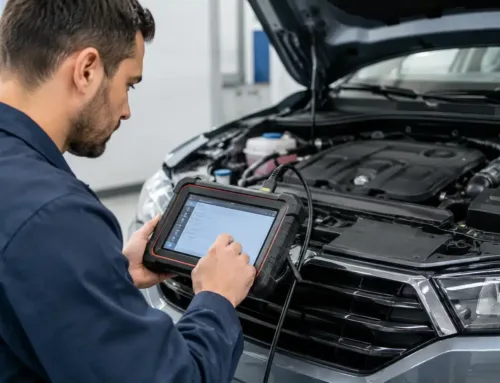
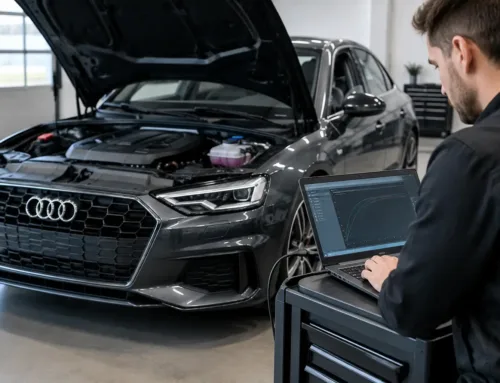
An independent Audi specialist should have modern diagnostic equipment that can interrogate modules properly, read measuring blocks, perform basic settings and adaptations, and carry out actuator tests. Just as importantly, they should be comfortable with methodical fault-finding – smoke testing intake systems, checking live data on a road test, verifying wiring integrity, and avoiding the expensive game of “parts darts”.
That approach tends to save money even when diagnostic time is charged fairly. Paying for proper fault-finding is usually cheaper than fitting the wrong part once.
Servicing done to the right spec (not just the right stamp)
Audi servicing isn’t only about fresh oil and filters. It’s about using the correct specification fluids, the right service intervals for your engine and gearbox, and the checks that pick up wear before it becomes a breakdown.
A specialist workshop should be comfortable servicing to manufacturer schedules while still tailoring advice to real use. A commuter doing lots of short trips, for instance, may need more frequent oil changes than the variable interval suggests. Likewise, a car that tows, or a performance model that’s driven enthusiastically, benefits from preventative maintenance that protects the drivetrain.
Parts quality is a big divider here. OEM or genuine-equivalent parts matter on VAG cars – especially on sensors, ignition components, timing parts and cooling system items. Cheaper pattern parts can work, but when they don’t, they waste your time and add repeat labour.
A straight-talking independent will explain where it’s sensible to choose OEM quality and where a cost-effective alternative is genuinely fine.
The VAG jobs that reward specialism
There are certain jobs that come up again and again on Audi and wider VAG vehicles – and they’re the ones where a genuine specialist pays for itself.
DSG servicing is a good example. Done at the correct interval, with the right fluid, filter and procedure, it’s one of the best-value bits of preventative maintenance you can do. Skip it, or have it done incorrectly, and the gearbox can become unpleasant to drive and expensive to put right.
Haldex servicing (where fitted) is similar. It’s often overlooked because the car feels fine – until the system starts to struggle and you notice traction changes, warning lights, or driveline noises. A specialist knows the correct service approach and what to check for contamination or pump issues.
Mechatronic faults sit in the same category. They can present as harsh shifting, limp mode, PRNDS flashing, or intermittent loss of drive. The right fix depends on the exact symptoms and data, and it’s rarely improved by guesswork.
Then there’s the big-ticket reliability work: cambelt and water pump replacements, thermostat housings, coolant leaks, PCV issues, intake carbon build-up on certain direct injection engines, and drivetrain concerns like differentials or 4WD system problems. These are not jobs you want done by someone who sees one Audi a month.
Enthusiasts: performance work needs a reliability mindset
If you’re running an S or RS model, or you’re simply trying to get your TFSI or TDI feeling sharp again, you already know that performance gains are only enjoyable when the car is healthy.
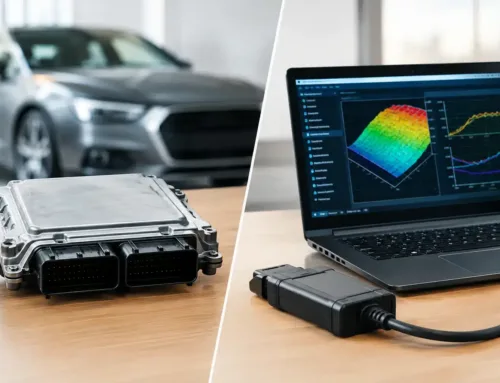
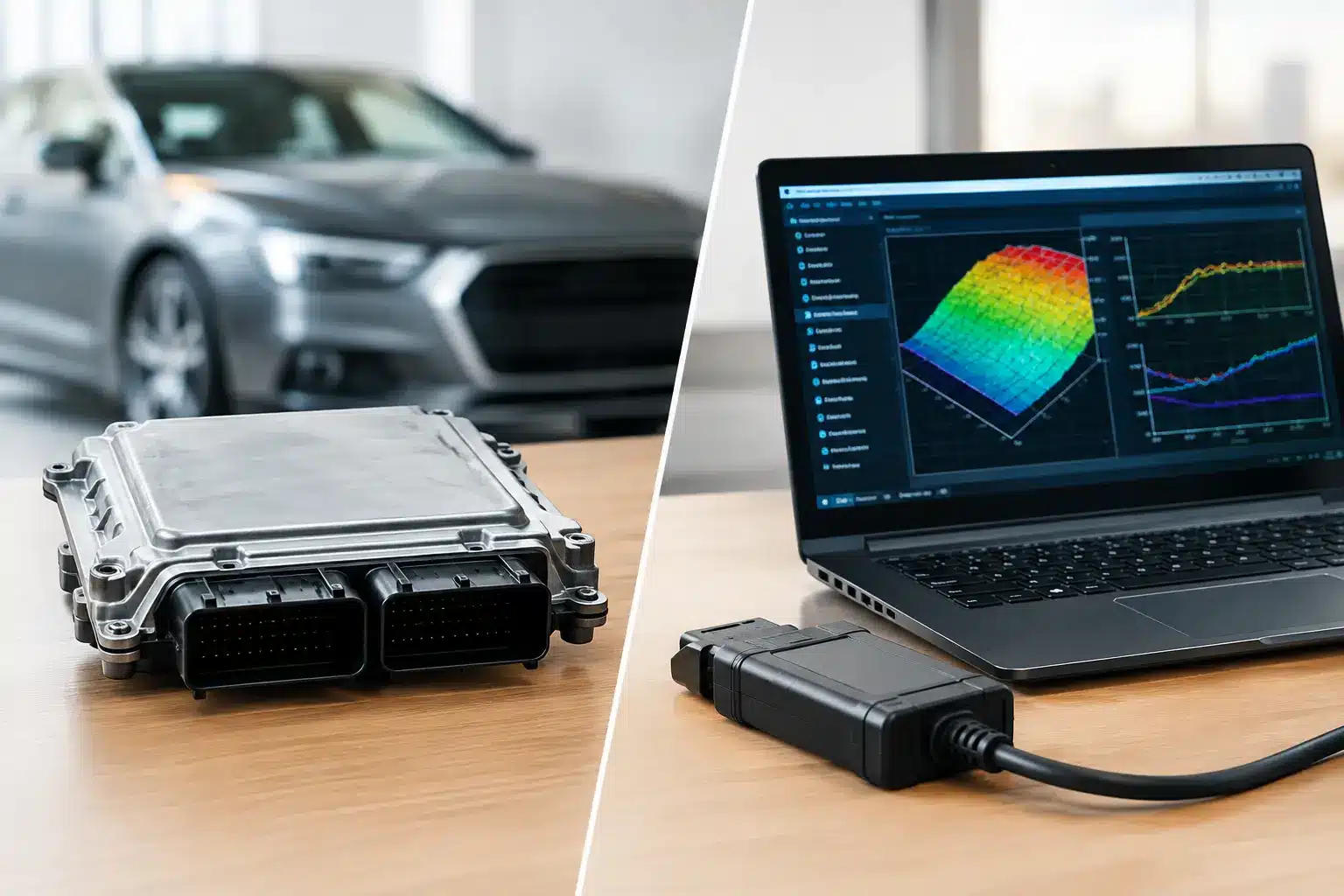
ECU remapping or tuning should never be treated as a quick power grab. The right approach starts with an honest assessment: is the engine in good shape, are the coils and plugs up to it, is the cooling system stable, is the intake system tight, and is the DSG or clutch capable of handling the torque?
Walnut blasting (carbon cleaning) is another example. When carbon build-up is affecting idle quality, throttle response or performance, cleaning can restore how the car should feel. But it’s not magic – and it won’t fix unrelated faults like boost leaks or failing sensors. A specialist will set expectations properly and recommend it when it’s likely to deliver real benefits.
When a main dealer still makes sense
There are times when the dealer is the right call, and it’s worth being clear about that.
If your Audi is under manufacturer warranty, you may prefer the dealer route for warranty protection and any manufacturer goodwill claims. Likewise, if there’s an outstanding recall or software campaign, the dealer can be the most direct route.
That said, many owners move to an independent once the car is out of warranty, or when they want more flexibility and a more transparent conversation about repair options.
How to choose the right independent Audi specialist
The workshop’s website and reviews will tell you some things, but the best indicators usually come from one conversation and one visit.
You want a place that talks in specifics: the service interval that applies to your engine code, the fluid spec required, the diagnostic steps they’ll take, and the likely causes based on experience. You also want a workshop that’s comfortable saying, “we need to test it properly first”.
Look for signs of professional standards: clear estimates, sensible explanations, proper parts sourcing, and a workshop that values repeat custom because the work is done right. Practical conveniences matter too – if you rely on your car daily, a courtesy car or sensible scheduling can be the difference between dealing with a fault and putting it off.
If you’re local to Aldermaston and you want that kind of specialist support for Audi, Volkswagen, Škoda or SEAT, Mechalex is set up specifically for VAG servicing, repairs, diagnostics and performance work, with the equipment and experience to handle the jobs that general garages often don’t.
The real value: fewer repeat visits, more confidence
The biggest benefit of a good independent Audi specialist isn’t a single cheap invoice. It’s the overall ownership experience. Problems get identified properly, maintenance is done to the right spec, and you spend less time chasing the same issue through multiple visits.
Modern Audis are excellent cars when they’re looked after correctly. If you find a specialist you trust, you stop reacting to warning lights and start staying ahead of them – and that’s when the car becomes what it should be: dependable, enjoyable, and ready for whatever your week throws at it.