A modern Audi, Volkswagen, Škoda or SEAT can feel noticeably different after a software change, but ECU remapping versus factory software is not simply a choice between “slow” and “fast”. The right decision depends on how you use the car, its condition, its drivetrain and how much certainty you need from warranty, servicing and daily reliability.
For a commuter covering the A4 into Reading, a family car used around Tadley and Basingstoke, or an enthusiast enjoying the roads towards Newbury, the best answer may be different. A sensible performance upgrade starts with an honest assessment of the vehicle, not a generic promise of extra power.
What factory software is designed to do
Factory ECU software is the calibration installed by the manufacturer. It controls fuelling, boost pressure, ignition timing, throttle response, torque delivery and many protection strategies. On VAG vehicles, it also communicates with other control units, including the DSG gearbox, Haldex four-wheel-drive system and emissions equipment.
Manufacturers create this software to work across a very wide range of conditions. The same engine may be sold in different countries, driven in extreme heat and cold, run on varying fuel quality, serviced to different standards and owned by drivers with very different habits. The calibration therefore includes generous safety margins.
That does not mean factory software is poor. For many owners, it is exactly right. It is developed for predictable cold starts, smooth urban driving, emissions compliance, component durability and dealer support. If your car is still under manufacturer warranty, is used mainly for short trips, or you simply want the least complicated ownership experience, keeping the original calibration is often the sensible option.
Factory updates can also be valuable. A software campaign or update may address a known drivability issue, improve fault monitoring or correct a control-unit problem. When a car has an intermittent warning light, rough running or gearbox concern, diagnosis should come before tuning. More power will not cure an underlying fault.
ECU remapping versus factory software: the practical difference
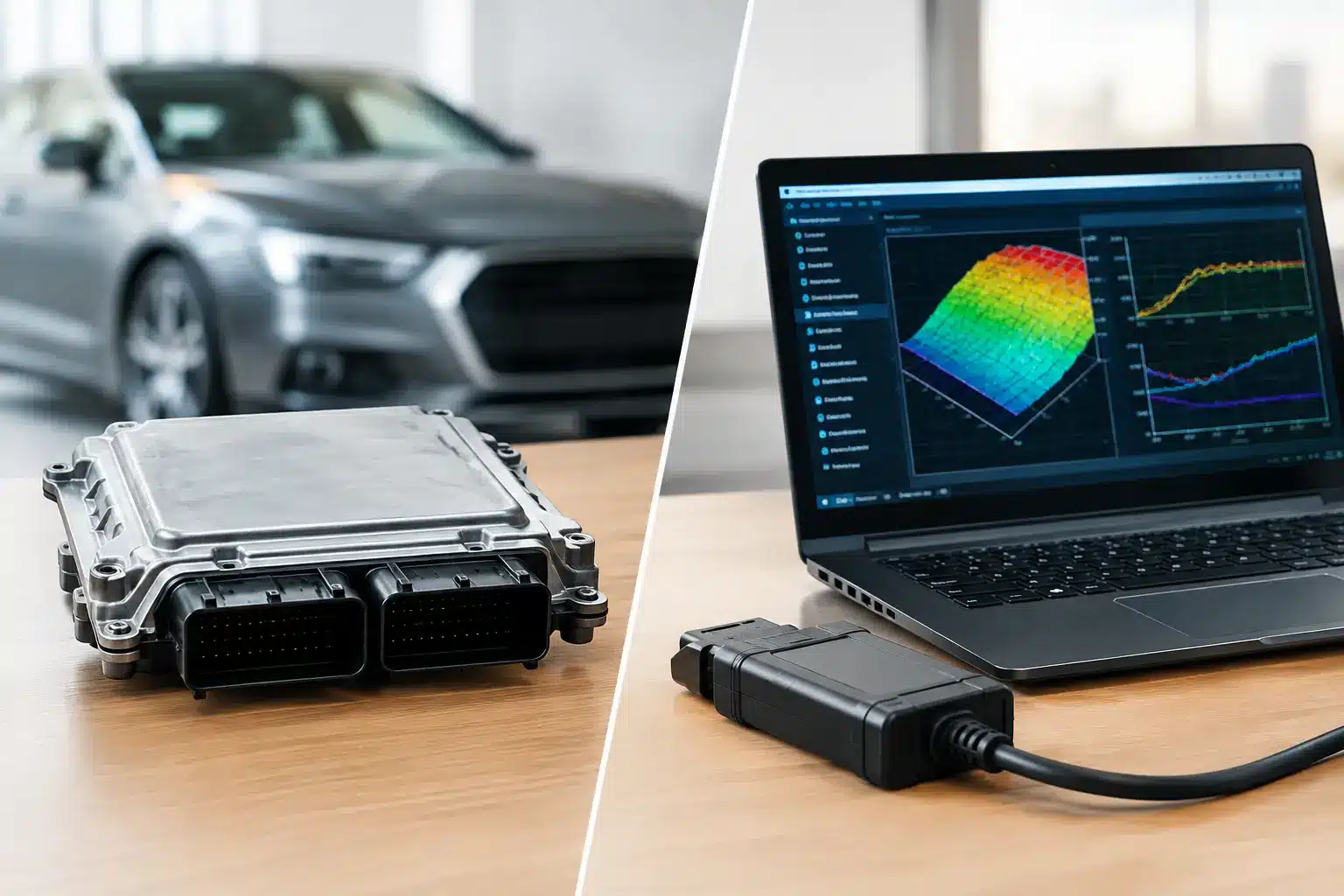
An ECU remap changes selected calibration values within the engine management system. On a healthy turbocharged VAG petrol or diesel engine, a well-developed remap can increase torque and power, sharpen mid-range response and make overtaking feel less laboured.
The most noticeable change is frequently torque rather than peak horsepower. A 2.0 TDI or 2.0 TSI may pull more confidently from lower revs, reducing the need to work through the gears. For drivers covering regular motorway miles from Aldermaston to Reading or Basingstoke, that stronger in-gear performance can be more useful than chasing an impressive headline figure.
However, a remap reduces some of the margins built into factory software. The quality of the calibration matters, but so does the vehicle’s starting point. A car with a tired clutch, a neglected DSG service, boost leaks, injector issues, carbon build-up or unresolved fault codes should not be remapped until those issues are addressed.
This is particularly relevant to older or higher-mileage cars. A calibration may expose a weakness that was already present but less obvious with standard torque. That is why a proper health check and diagnostics are part of responsible tuning, rather than an optional extra.
More power can affect more than the engine
The engine is only one part of the system. Manual clutches, DSG gearboxes, driveshafts, Haldex couplings and differential components all handle the torque sent through the vehicle.
On DSG-equipped VAG models, the gearbox software uses torque information to manage clutch pressure, shift timing and protection limits. Depending on the engine, gearbox and intended output, a DSG software calibration may be worth discussing alongside an engine remap. It is not automatically necessary, and it should never be used as an excuse to ignore gearbox maintenance.
If you are asking where to get an Audi DSG service near Tadley, Basingstoke, Reading or Newbury, choose a workshop that understands the correct VAG service procedure, fluid specification and diagnostic checks for your exact gearbox. A DSG service is not a generic oil change, and it becomes even more important when a vehicle is producing more torque than standard.
The same principle applies to Haldex-equipped four-wheel-drive models. Regular Haldex servicing helps maintain proper rear-axle engagement and protects the system from contamination or neglected fluid. Performance is only useful when the drivetrain can deliver it reliably.
When a remap makes sense
A remap can be a good choice when the vehicle is mechanically sound, regularly maintained and being modified for a clear reason. Some drivers want stronger motorway overtaking; others want a more responsive weekend car. In either case, the goal should be usable performance that suits the car and driver.
A good calibration should feel integrated. It should not make the throttle difficult to modulate in traffic, create excessive wheelspin in normal conditions or produce a sudden surge that unsettles the car. The best road cars remain civilised when collecting the shopping or sitting in queues around Basingstoke, then respond cleanly when the road opens up.
Fuel economy is often part of the conversation, especially for diesel owners. Extra torque can allow lighter throttle inputs during steady cruising, so some drivers see an improvement. It is not guaranteed. If the new response encourages harder acceleration, fuel use will rise. A remap should not be sold as a promised fuel-saving measure without considering the way the car is actually driven.
When factory software is the better choice
There is no shame in leaving a car standard. Factory software is usually the better route if manufacturer warranty is a priority, if the car has unresolved mechanical concerns, or if reliability and predictable running costs are more important than extra performance.
It may also be preferable for vehicles used largely on short trips. Repeated cold running and interrupted regeneration can already place pressure on diesel emissions systems. Adding performance software does not automatically cause a problem, but it does not solve the usage pattern either.
Owners planning to sell soon may also prefer the original calibration. While some buyers welcome a properly modified car with supporting maintenance records, others see any tune as an unknown. Returning to factory software can be possible in many cases, but it should be discussed before work begins rather than assumed.
A manufacturer software update can sometimes overwrite a remap. This is another reason to keep clear records of what has been fitted and to use a specialist who can explain the options if the vehicle later needs dealer programming or module replacement.
Warranty, insurance and legal responsibilities
A remap can affect a manufacturer or extended warranty, particularly where a claim relates to the engine, turbocharger, gearbox or drivetrain. A remap is not necessarily visible from a quick visual inspection, but modern vehicles retain programming and operating data. It is unwise to assume it will go unnoticed.
You should also tell your insurer about any performance modification. Failing to declare it can put cover at risk, even if the modification was professionally installed. Premium changes vary widely by insurer and vehicle, so it is worth checking before booking work.
For road use, emissions-control equipment must remain in place and functioning correctly. Any proposal to remove, bypass or disable DPF, EGR, catalytic converter or AdBlue-related systems for a road car should be treated as a red flag. It can make the vehicle illegal for road use, create MOT problems and cause expensive consequences later.
A sensible route for VAG owners
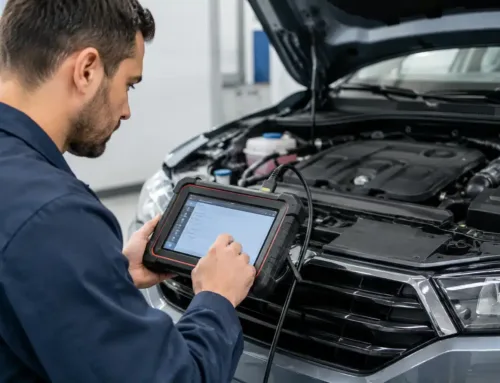
Before changing software, establish the car’s condition. Check for stored faults, assess service history and make sure the correct maintenance is up to date. On relevant models, that may include DSG and Haldex servicing, spark plugs, filters, oil servicing, intake cleaning or attention to known VAG platform issues.
At Mechalex, VAG-focused diagnostics and more than 30 years of experience help separate a genuine tuning opportunity from a vehicle that first needs repairs or maintenance. That approach matters because a warning light or hesitant gearbox is not a performance feature waiting to be mapped out.
For drivers in Aldermaston, Tadley, Basingstoke, Reading and Newbury, an independent specialist can offer a practical alternative to a main dealer: the equipment and knowledge needed to assess the car properly, with a more personal conversation about how it is used. Courtesy-car availability can also make planned servicing or diagnostic work easier to fit around work and family commitments.
The best next step is not to choose a remap from an advertised power figure. Book a vehicle assessment, explain what you want from the car and let its condition, service needs and drivetrain limits guide the decision. A healthy standard car is always a better starting point than a fast car with problems waiting underneath.