
If your Volkswagen is your daily workhorse – the school run, the commute, the weekend miles – the cost of a missed service is rarely just the service. It is the breakdown you did not plan for, the warning light that turns into a limp-home mode at the worst time, or a small leak that becomes a bigger bill. The good news is that VWs respond very well to correct maintenance. The not-so-good news is that “correct” can be more specific than many owners realise.
What good Volkswagen servicing really means
Volkswagen servicing is not simply an oil change on a calendar reminder. VW engines, gearboxes and drivetrains often have known wear patterns and service-critical items that depend on your exact model, engine code, mileage and how the car is used.
A proper service starts with the right specification oil (not just the right viscosity), the correct filters, and a methodical inspection that looks for the early signs of common issues. It also means the service record matches what has actually been done – including the parts standard and the quantities used – so you are not chasing mystery work later.
There is also a trade-off owners should be aware of. Many modern VWs are on long-life servicing schedules in certain conditions. That can work if your car genuinely does long, steady runs and the oil is correct. If your driving is mostly short trips, stop-start traffic or lots of cold starts, fixed intervals are often kinder to the engine. The right schedule is the one that fits how you use the car.
Volkswagen servicing and repairs: what should be checked every visit
A service should combine scheduled maintenance with targeted checks that catch problems early. On VWs, a few areas deserve consistent attention.
Oil leaks and coolant leaks are a classic example. Small seepage from a thermostat housing, water pump area, rocker cover, or PCV-related pressure issues can be easy to miss if the inspection is rushed. Spotting the pattern early can mean a planned repair rather than a recovery lorry.
Brakes and tyres are obvious, but the detail matters. Uneven tyre wear can point to suspension bush wear, alignment issues or a sticking caliper. A quick look is not enough – you want someone who will tell you why the inside edge is disappearing and what that suggests on your platform.
Battery health and charging performance also matter more than they used to. Start-stop systems, modern modules and low-voltage behaviour can trigger misleading fault codes. If your VW is behaving oddly after a flat battery or repeated short journeys, it is often worth testing properly rather than guessing.
Diagnostics: why the right equipment and experience saves money
Volkswagen fault-finding is rarely about a single generic code reader. VAG systems can store detailed manufacturer-specific faults, measured values and adaptation data. Proper diagnostics is the difference between “it might be this part” and knowing what the car is actually reporting, what is out of range, and what test confirms it.
This matters because modern VW repairs can be expensive when approached by trial and error. Misdiagnosed sensors, repeated parts swapping, and unresolved intermittent faults can quickly cost more than doing it correctly once.
It also depends on the symptoms. A simple warning light with clear supporting data can be straightforward. Intermittent faults – the ones that only happen on wet mornings, or only under load on the motorway – need a workshop that will take a structured approach, road test when necessary, and use live data to narrow the cause.
DSG servicing: the job owners should not put off
If your Volkswagen has a DSG gearbox, servicing it on time is one of the best things you can do for long-term reliability. The service typically includes the correct fluid and filter (where applicable) and must be done to the right process and temperature checks.
What you gain is smoother shifting, better protection for internal components, and less chance of expensive problems building unnoticed. What you avoid is the “it was fine until it wasn’t” moment – harsh shifts, hesitation, clutch judder, or gearbox warnings.
There is nuance here. Different DSG types have different requirements, and some are more sensitive to driving style and maintenance history. That is why it is worth confirming exactly what your model has, and servicing it to the correct specification rather than relying on assumptions.
Haldex servicing for 4Motion models
If you run a VW with 4Motion (or a related VAG system), Haldex servicing is often missed – and it should not be. Fresh fluid and the correct cleaning process help keep the pump and system operating properly, maintaining traction when you need it and protecting expensive components.
When Haldex servicing is neglected, you can see poor engagement, fault codes, or a system that is effectively not delivering the all-wheel-drive support you think you have. Because the car may still drive normally in everyday conditions, this can go unnoticed for a long time.
Cambelt and water pump: timing matters
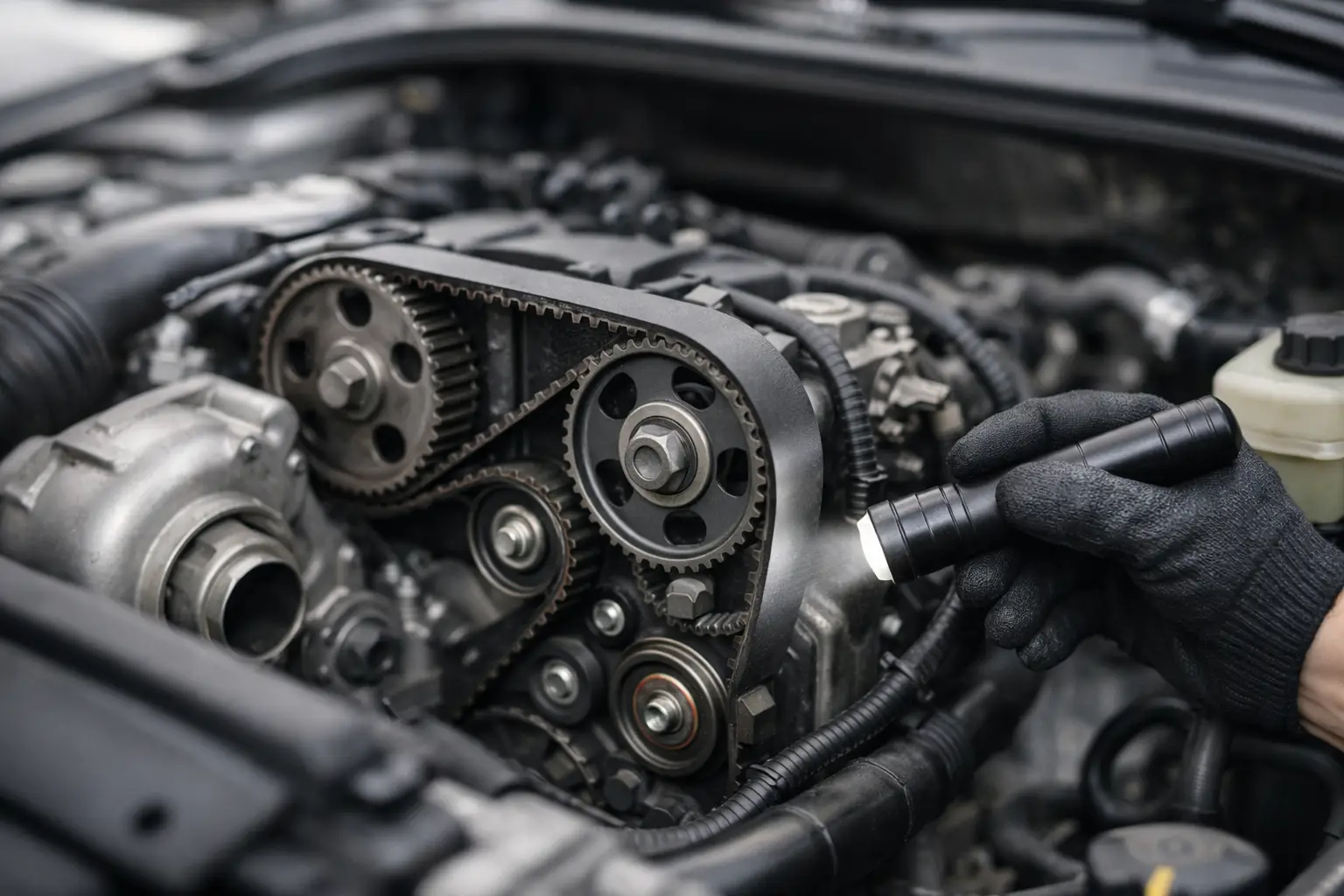
Cambelt intervals are not a suggestion. If your VW uses a belt, the belt, tensioners and related components are a service-critical system. Many owners also choose to replace the water pump at the same time where it is driven or closely integrated, because the labour overlap makes sense and it reduces the chance of paying twice.
The risk is not just inconvenience. A belt failure can lead to serious engine damage on many engines. Even when the belt looks “fine”, age and mileage do their work, and the costs of pushing your luck are rarely worth it.
If your VW has a timing chain, that does not automatically mean you can forget about it. Some engines have known chain and tensioner wear patterns, and symptoms can be subtle at first. Rattles on start-up, timing-related faults or performance changes should be investigated early.
Carbon build-up and walnut blasting: when it is worth doing
Many direct injection petrol VWs can suffer from carbon build-up on the intake valves. Over time this can affect airflow and combustion efficiency, leading to rough idle, hesitation, reduced performance and in some cases misfires.
Walnut blasting (a controlled method of cleaning the intake valves) can restore drivability and response when carbon build-up is the cause. It is not a magic fix for every running issue, and it should follow proper diagnosis. If the real issue is ignition, fuel pressure, boost control or a vacuum leak, cleaning alone will not solve it. When it is the right job, though, the difference can be very noticeable.
Common Volkswagen repair areas that benefit from a specialist eye
Volkswagens are generally well engineered, but they have patterns that experienced VAG technicians recognise quickly. Cooling system components, PCV and breather issues, boost leaks on turbo models, suspension bush wear, and sensor-related drivability problems all show up regularly across the range.
The benefit of a VAG-specialist approach is not just speed. It is knowing which checks to do first, which updated parts or revised solutions exist, and which “obvious fix” is a red herring. That is how you keep repairs proportionate and reduce repeat visits.
Main dealer vs independent: what you should compare
Many owners assume the choice is “dealer for quality, independent for cheap”. In reality, the comparison should be about standards and capability.
Ask what parts quality is used (OEM or equivalent matters), what diagnostic equipment is in place for VAG systems, and whether the workshop has real experience with DSG, Haldex and the common platform issues on your generation of VW. Also consider the practicalities: clear communication, accurate estimates, and whether you can get a courtesy car if your vehicle needs to stay in.
If you are local to Aldermaston and the wider Tadley/Basingstoke area, Mechalex is set up specifically for Volkswagen Audi Group servicing, repairs, diagnostics and performance work, with the aim of main-dealer standard results without main-dealer pricing.
How to keep your VW reliable between services
A well-serviced Volkswagen should not demand constant attention, but a little awareness helps. Pay attention to changes – a new noise, a new vibration, a hesitation that was not there last month. Modern cars often give early signals before they give a clear fault.
Check your fluid levels occasionally, particularly coolant. If you need to top up repeatedly, that is not normal and it is worth investigating before it becomes overheating.
Finally, do not ignore the “small” warning lights. A minor fault stored today can become a drivability problem later. Getting it scanned properly while the fault is present can be the quickest, most cost-effective route to a real fix.
A Volkswagen that is maintained with the right schedule, correct parts and proper diagnostics is usually a very dependable car. The aim is not perfection. It is confidence – the kind you get when you know the essentials have been done properly, and any developing issues are being caught early enough to stay straightforward.