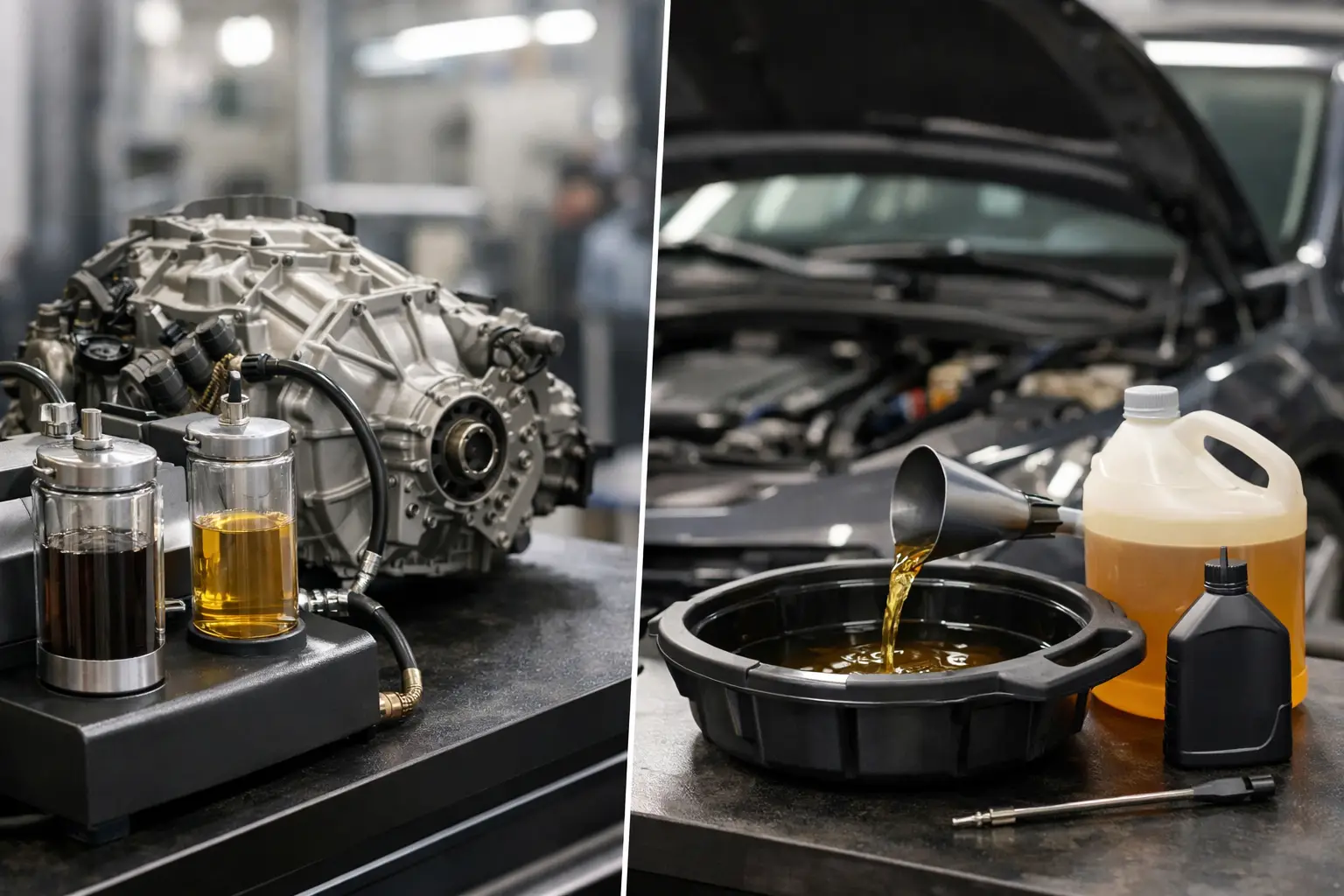
If you have been quoted for a DSG fluid change by one garage and a DSG service by another, the wording can make it sound like the same job with a different price tag. In reality, DSG service vs fluid change is one of those areas where the detail matters. On VAG vehicles in particular, getting the right procedure for the specific gearbox can make the difference between routine maintenance and problems that could have been avoided.
For Audi, Volkswagen, Škoda and SEAT owners, DSG gearboxes are excellent when they are maintained properly. They shift quickly, suit daily driving well and, in many models, cope brilliantly with motorway miles, stop-start traffic and spirited use. But they are not a gearbox to guess with. Different DSG units have different servicing requirements, and the phrase “fluid change” on its own does not always tell you enough.
DSG service vs fluid change – what is the difference?
A DSG fluid change usually means the old transmission oil is drained and replaced with fresh fluid. On some gearboxes, that may be the main task required. On others, that description is incomplete because the job should also include a filter replacement, temperature-controlled level setting and a check for leaks or faults.
A proper DSG service is the wider maintenance procedure. That normally includes replacing the correct DSG fluid, changing the filter where the gearbox design requires it, setting the oil level at the correct temperature, and checking the transmission’s overall condition. Depending on the model, it may also involve diagnostic checks to look for stored faults or signs of mechatronic issues.
That is why the wording matters. If a garage says “fluid change”, ask what is actually included. If they say “DSG service”, ask which gearbox code they are working with and what the manufacturer procedure is for that unit. A six-speed wet clutch DSG does not follow exactly the same service approach as every seven-speed transmission in the range.
Why DSG maintenance is not one-size-fits-all
VAG has used several DSG and S tronic gearbox types across different engines and models. Some are wet clutch systems, where the oil plays a direct role in lubrication and operation of the internal components. Others are dry clutch designs, where the clutch arrangement is different and the service needs may not match what owners expect from a traditional DSG service interval.
This is where specialist knowledge helps. Two cars parked side by side may both be Volkswagens with automatic gearboxes, but the service requirement can still differ by year, engine and transmission code. Relying on generic advice from forums or a quick online search is risky, especially if the gearbox has already started showing symptoms.
For local drivers around Aldermaston, Tadley, Basingstoke, Reading and Newbury, that usually means choosing a workshop that sees these VAG platforms every week rather than one treating it as a general automatic transmission job.
What a proper DSG service usually includes
On many wet clutch DSG units, the service is more than just draining and refilling oil. The filter is a key part of the job because it catches contamination and helps keep the fluid working as intended. Replacing fluid without dealing with a serviceable filter can leave part of the maintenance unfinished.
The refill process is also critical. DSG gearboxes are not filled by guesswork. Fluid level often needs to be set at a specific temperature using the correct procedure and diagnostic equipment. Too little fluid can affect lubrication and operation. Too much can be just as unhelpful.
A thorough service should also include checking for visible leaks, inspecting the fluid condition and being alert to signs that a gearbox issue is developing rather than simply needing maintenance.
When a fluid change might be all that is meant
Sometimes “fluid change” is used as shorthand by garages and customers alike, even when they really mean the full scheduled DSG service. Other times, it genuinely means oil only. That can happen through misunderstanding, or because the person quoting the job is not familiar with the transmission type fitted to the car.
It is not always a red flag, but it should prompt questions. If the price seems unusually low, there is often a reason. Cheap DSG work can mean the wrong fluid, no filter replacement where one is required, or a refill done without the correct temperature monitoring procedure.
Why the correct fluid matters so much
DSG transmissions are sensitive to fluid specification. This is not a case of using a universal automatic gearbox oil and hoping for the best. The correct OEM or equivalent specification matters because the gearbox was designed around that fluid’s properties.
Using the wrong oil can affect shift quality, clutch operation and long-term wear. In the short term, you might notice hesitation, harsher engagement or inconsistent behaviour. In the longer term, it can contribute to expensive mechanical or mechatronic problems.
That is one reason many VAG owners choose a specialist rather than a general garage. Main dealer standards are not only about the sign above the door. They are about using the right parts, the right fluids and the right process.
Signs your DSG may need attention
Not every gearbox problem means the car is overdue a service, but symptoms should not be ignored. Jerky low-speed shifting, hesitation when pulling away, warning lights, unusual noises and a shudder under load all deserve proper diagnosis.
Sometimes the answer is straightforward maintenance. Sometimes it is not. Old fluid can affect how the gearbox behaves, but a service will not fix a failing mechatronic unit, worn internal components or an existing electrical fault. That is an important trade-off to understand. If a garage promises that a fluid change will cure every DSG issue, be cautious.
A good workshop will tell you when the car needs servicing and when it needs diagnosis first.
DSG service vs fluid change on higher-mileage cars
Owners of higher-mileage cars often ask whether servicing a DSG late in life can cause problems. Usually, the bigger risk is leaving contaminated or degraded fluid in place for too long. Fresh fluid and the correct service procedure are part of protecting the gearbox, not harming it.
That said, context matters. If a transmission already has serious shift faults, warning messages or signs of internal wear, the right next step may be diagnosis rather than simply carrying out routine maintenance and hoping for the best. This is where experience counts. Knowing when a gearbox needs a scheduled service and when it needs deeper investigation can save both time and money.
Why specialist VAG knowledge makes a difference
With DSG gearboxes, the paperwork description is only part of the story. The real value is in understanding the specific transmission fitted to the vehicle, following the correct service method and spotting issues before they become bigger repairs.
For owners in this part of Berkshire and north Hampshire, convenience matters too. If you are commuting from Basingstoke, doing school runs around Tadley, travelling in from Reading or Newbury, or based close to Aldermaston, you want the car booked into a workshop that can handle VAG systems properly without turning a routine job into a drawn-out guessing game.
That is where an independent specialist can make sense. You get dealer-level knowledge, modern diagnostic equipment and the right servicing standards, but with a more personal approach and better value.
What to ask before booking a DSG service
Before agreeing to the job, ask which DSG or S tronic gearbox your car has and what the service includes. Confirm whether the filter is being replaced if your transmission requires one. Ask whether the fluid level is set using the correct temperature-based procedure. Also ask if the garage uses OEM or equivalent quality parts and the correct specification fluid.
Those questions are not being awkward. They are sensible. A proper answer should be clear and confident.
If your car is showing symptoms as well as being due maintenance, say so when booking. That gives the workshop a chance to allow time for diagnostics rather than treating it as a straightforward service slot.
The real answer for most owners
In most cases, the debate around DSG service vs fluid change comes down to whether the garage is describing the job accurately and completely. For many VAG gearboxes, a proper DSG service includes a fluid change, but it should not stop there. The filter, fluid specification, fill procedure and gearbox-specific knowledge all matter.
If you own an Audi, VW, Škoda or SEAT and want to keep the gearbox working as it should, routine DSG maintenance is money well spent. The key is making sure the job being sold is the job your transmission actually needs.
A well-serviced DSG should feel smooth, responsive and predictable. If you are not sure what your car is due, the best next step is not to guess from the invoice wording – it is to ask a VAG specialist who will check the gearbox type and advise you properly.