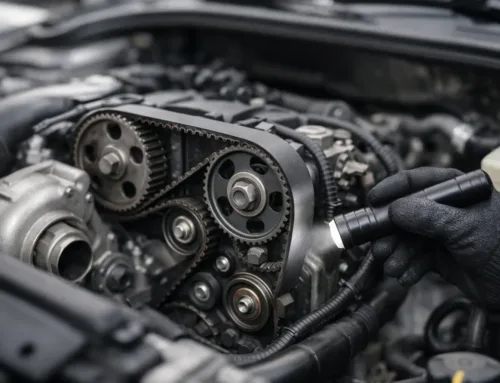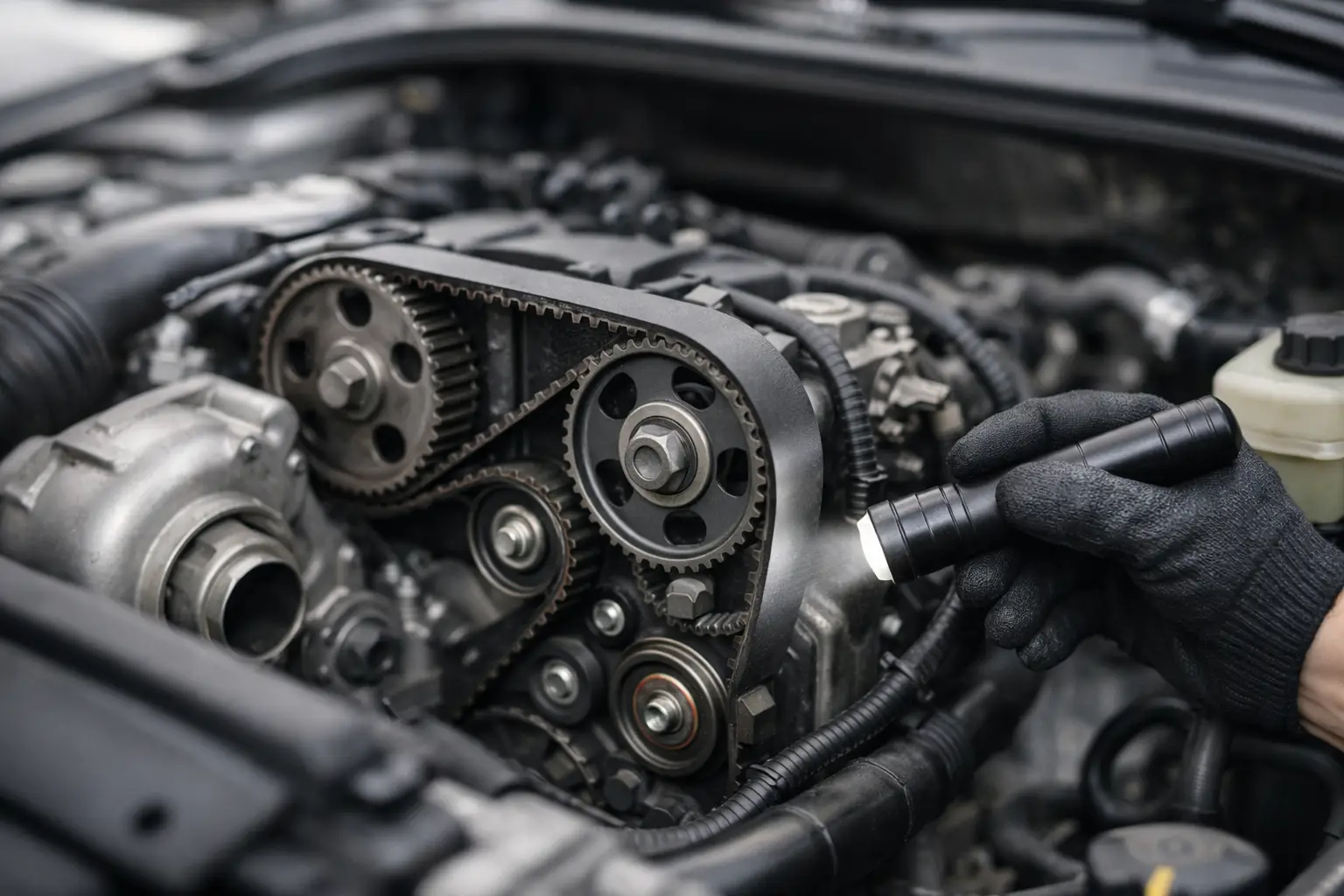
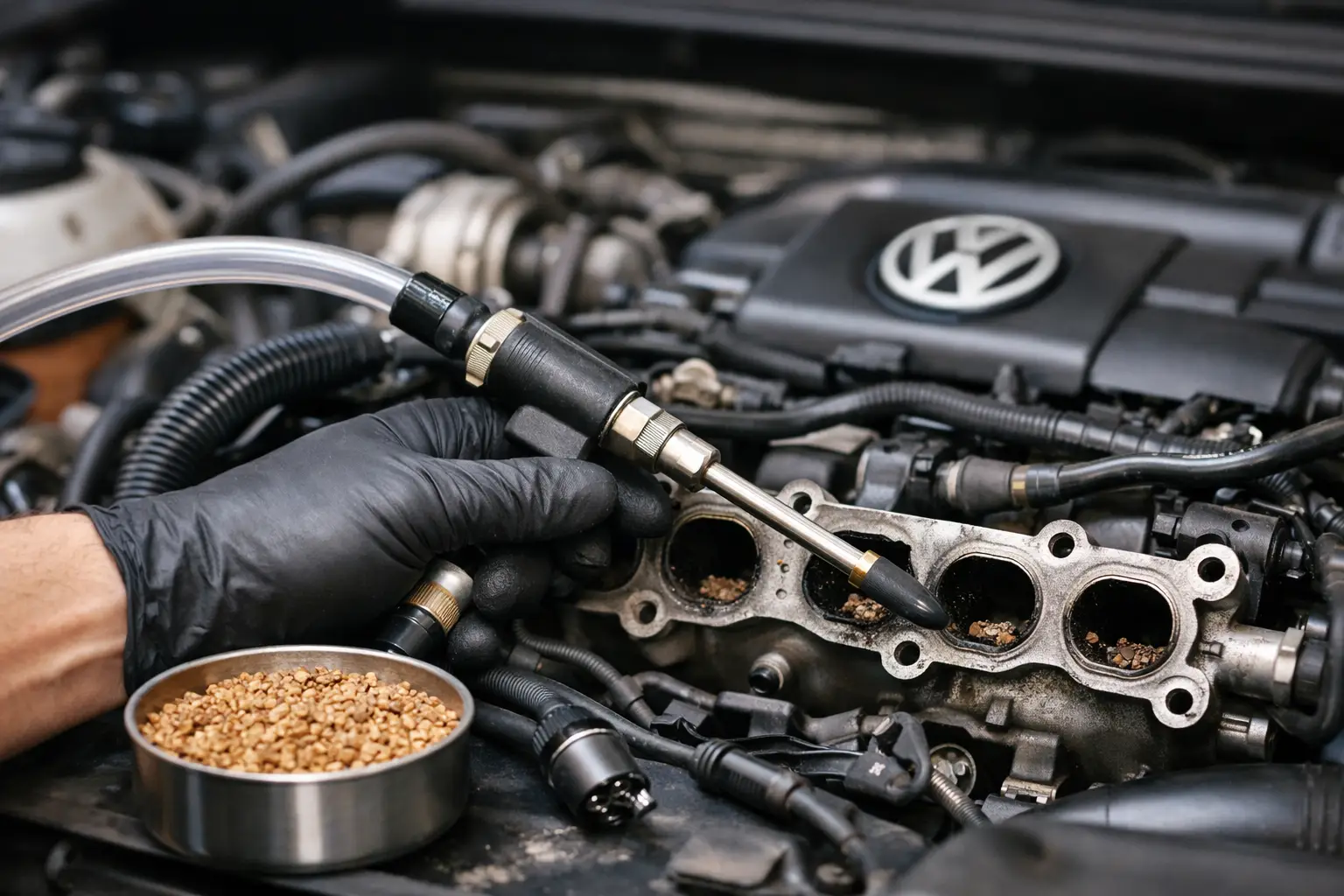
If your VW feels flatter than it used to, hesitates under load or idles with a slight roughness that was not there before, carbon build-up may be part of the problem. Walnut blasting carbon cleaning VW petrol engines is a proven way to remove intake valve deposits that ordinary fuel additives and routine servicing simply cannot reach.
This is a common issue on many direct injection VAG engines. It is not usually dramatic at first. Instead, the car slowly loses the crisp response and smooth running you expect, so it can be easy to miss until the symptoms become more obvious.
Why carbon builds up on VW engines
On a traditional port-injected petrol engine, fuel passes over the intake valves and helps keep them cleaner. On many direct injection VW engines, fuel is injected straight into the combustion chamber instead. That improves efficiency and performance, but it also means the backs of the intake valves do not get that washing effect.
Over time, oil vapour from the crankcase ventilation system and other combustion by-products stick to the intake path and bake onto the valves. Heat cycles then turn those deposits into hard carbon. Once that build-up becomes significant, airflow is disrupted and the engine has to work harder to deliver the same result.
This is why carbon cleaning is often discussed on TSI, TFSI and other direct injection VAG petrol engines. Some engines suffer more than others, and driving style makes a difference too. Cars used mainly for short trips and stop-start driving often show the effects earlier than cars that regularly get a proper run.
What walnut blasting carbon cleaning VW actually involves
Walnut blasting is a workshop process used to clean carbon deposits from the intake valves and ports. The intake manifold is removed, each intake port is accessed carefully, and crushed walnut shell media is blasted at the deposits using specialist equipment. The shells are firm enough to break up the carbon but suitable for the job when used correctly by an experienced technician.
The key point is precision. This is not a quick spray-can treatment and it is not guesswork. The valves must be in the correct position for each cylinder, the debris has to be extracted properly, and the work area needs to be managed carefully throughout the process.
Done properly, the result is a much cleaner intake tract and valve surface, helping restore proper airflow. On badly affected engines, the before-and-after difference can be very noticeable.
Signs your VW may need walnut blasting
Not every running issue is caused by carbon build-up, which is why proper diagnosis matters first. That said, there are some familiar patterns. A lumpy idle, reduced throttle response, poor cold-start behaviour and a general loss of performance are all common complaints.
Some owners also notice worse fuel economy or a slight misfire feel under acceleration. In other cases, the car simply does not pull as cleanly as it once did. If you drive a direct injection VW and the engine feels tired despite being otherwise maintained correctly, intake carbon is worth checking.
It also depends on mileage, engine type and use. Some cars can benefit from inspection and cleaning around the 40,000 to 70,000 mile mark, while others go longer. There is no universal number that fits every VW.
What walnut blasting can fix, and what it cannot
Walnut blasting carbon cleaning VW engines can restore lost performance caused by intake deposits. It can improve idle quality, sharpen response and help the engine breathe more freely again. For many owners, the main benefit is getting the car back to how it should feel rather than chasing extra power.
What it cannot do is solve unrelated faults. If your VW has ignition coil issues, injector faults, boost leaks, timing problems or sensor errors, carbon cleaning is not a cure for those. This is where specialist VAG diagnostics matter. The right approach is to confirm whether carbon is the problem, or part of the problem, before any work is authorised.
That is also why cheap generic advice online can be misleading. Two cars can show similar symptoms for completely different reasons.
Why additives are not the same thing
Owners often ask whether a fuel system cleaner can do the same job for less money. On a direct injection petrol engine, the answer is usually no. Fuel additives move through the fuel system and combustion chamber, but they do not wash over the intake valves in the way they would on older port-injected designs.
That means they may have value elsewhere in the system, but they are not a substitute for physically removing heavy carbon deposits from the intake side. If the valves are caked in baked-on residue, the proper fix is mechanical cleaning.
Is walnut blasting worth it?
For the right engine with the right symptoms, yes. It is one of those jobs that makes sense when there is a clear problem to solve. If your VW has developed intake deposits significant enough to affect running, walnut blasting can be a worthwhile investment in drivability and long-term performance.
If the engine is running perfectly and there is no evidence of carbon-related issues, the decision is more dependent on mileage, usage and ownership plans. Some owners treat it as preventative maintenance once the intake is already apart for related work. Others wait until symptoms justify it. Both approaches can be reasonable.
The trade-off is simple. It is a specialist labour job, so it is not the cheapest service item, but neither is continuing to drive a car that is gradually losing efficiency and refinement because the intake system is restricted.
Why VAG experience matters for this job
Not all garages see the same VW, Audi, Škoda and SEAT issues week in, week out. On VAG petrol engines, carbon cleaning is one of those tasks where brand familiarity helps. Access, engine layout, known problem patterns and the need to spot related faults all matter.
A workshop that understands these engines can tell the difference between a car that genuinely needs walnut blasting and one that needs a different repair first. That avoids wasted money and gets to the real cause of the complaint.
For owners in the Aldermaston, Tadley and wider Basingstoke area, using a VAG specialist also means your car stays with technicians who already work with these platforms daily. That is especially valuable when carbon build-up is only one part of a broader drivability issue.
What to expect after carbon cleaning
When walnut blasting is carried out on an engine with meaningful deposit build-up, owners often notice a smoother idle, cleaner pick-up and more consistent power delivery. The engine may feel more eager and less strained, especially at lower revs or during part-throttle acceleration.
Results do vary. If the build-up was mild, the difference can be subtle. If the valves were heavily contaminated, the improvement can feel much more obvious. Either way, the goal is not hype. It is restoring normal operation.
Good workshops will also advise you realistically. Carbon can return over time because the underlying engine design has not changed. Cleaning removes the deposits present now. It does not permanently prevent future build-up.
Choosing the right workshop for walnut blasting carbon cleaning VW models
This is not a job to choose on price alone. You want a workshop that is comfortable removing intake components correctly, using proper equipment, inspecting the condition carefully and carrying out diagnostics if symptoms suggest there may be more going on.
That is where specialist capability makes the difference. Experience with VAG engines, the right diagnostic tooling and a straightforward explanation of what your car actually needs are all more valuable than a sales pitch.
At Mechalex, the focus is on doing the job properly with the benefit of 30+ years of VAG experience, dealer-level diagnostic capability and a practical approach to value. If your VW is showing the signs of intake carbon build-up, the sensible next step is to have it assessed properly rather than guessing.
If your car has lost the smoothness and response it used to have, there is no prize for putting up with it – a proper diagnosis can tell you whether walnut blasting is the fix or whether your VW needs something else entirely.