
A brake warning light on the school run, a squeal in Basingstoke traffic or a steering-wheel vibration on the A4 should not be ignored. Knowing how to check brake wear safely can help you spot an issue early, but it should never mean taking risks with a heavy vehicle, hot components or a braking system you are unsure about. For Audi, Volkswagen, Škoda and SEAT owners, a careful visual check is useful. A proper inspection remains the right answer where there is any doubt.
What you can safely check at home
Start with the simplest checks, on level ground with the engine switched off, the gearbox in Park or in gear, and the parking brake applied where appropriate. Do not work underneath a vehicle supported only by a jack. Brakes can be hot after a journey, so let the car cool fully before looking through the wheel spokes.
Many alloy wheels allow a limited view of the outer brake pad and disc. Use a torch rather than putting hands through the wheel. You are looking for the friction material on the brake pad, not the metal backing plate. If the pad material appears very thin, uneven, cracked or close to its backing, arrange an inspection promptly.
A general guide is that pads approaching around 3mm of friction material should be assessed and planned for replacement. However, you cannot judge every brake accurately from the outside. The inner pad can wear faster than the outer one, particularly if a caliper is sticking or slider pins are not moving freely. On some VAG models, the pad wear sensor is fitted on only one wheel, so a dashboard warning does not guarantee that every pad is in similar condition.
Look at the visible disc surface too. Light surface corrosion after rain or an overnight stop is common and usually clears after a few controlled brake applications. Deep grooves, obvious scoring, blue heat marks, a pronounced outer lip or patchy corrosion need closer attention. Discs must be measured against the manufacturer’s minimum thickness, not judged only by appearance.
Dashboard warnings and symptoms that need attention
A brake-pad warning symbol generally means the sensor has reached its limit and replacement should be booked soon. A red brake warning light is more urgent, especially if it appears alongside a low brake-fluid message. Stop somewhere safe as soon as practical and do not assume it is simply a reminder light.
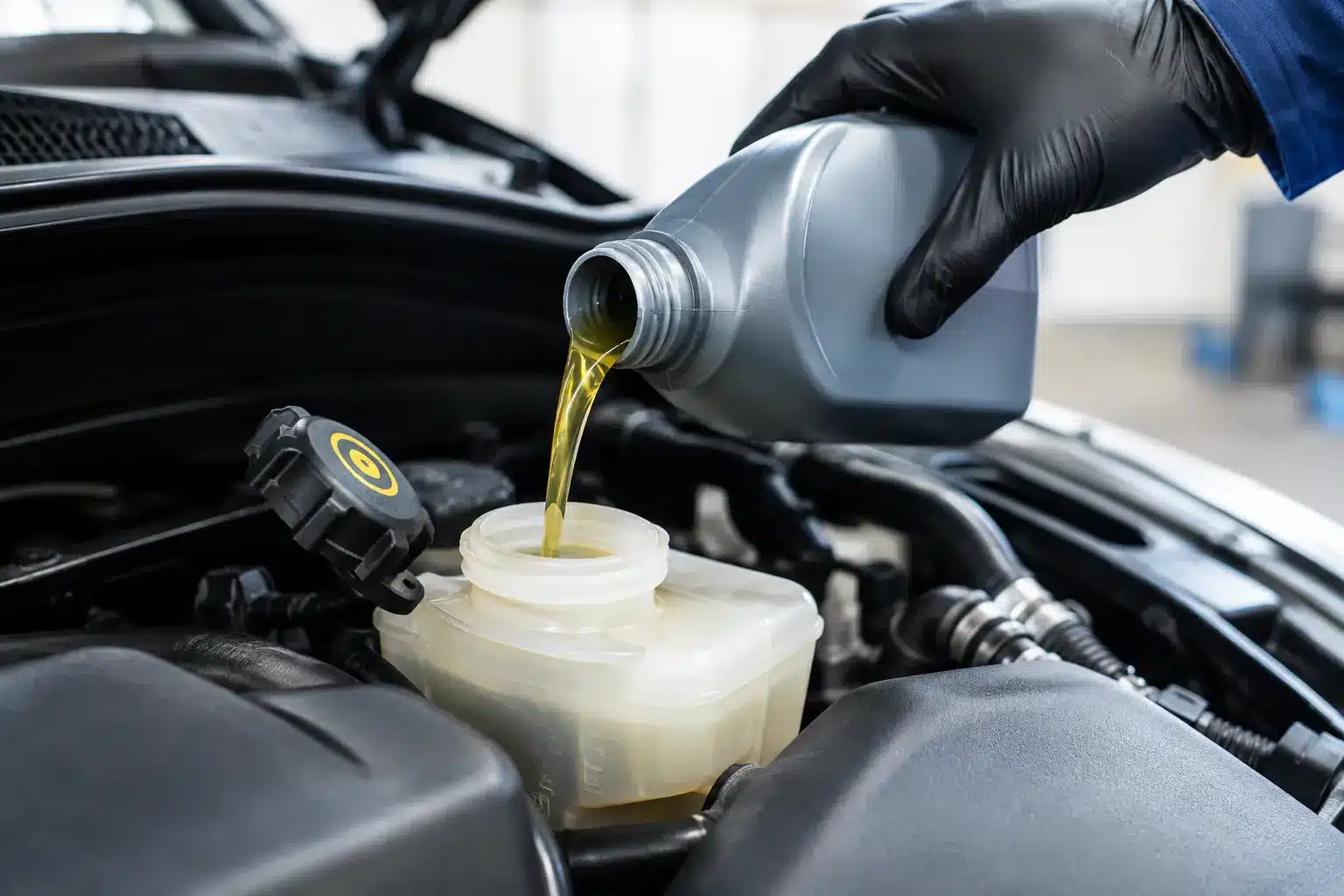
The brake fluid reservoir can be checked under the bonnet if you know its location and can clearly see the marked level. A low level may be caused by normal pad wear, but it can also indicate a fluid leak. Do not top it up simply to make the warning disappear. Adding fluid can mask the reason for the level drop and may leave the reservoir overfilled once new pads are fitted.
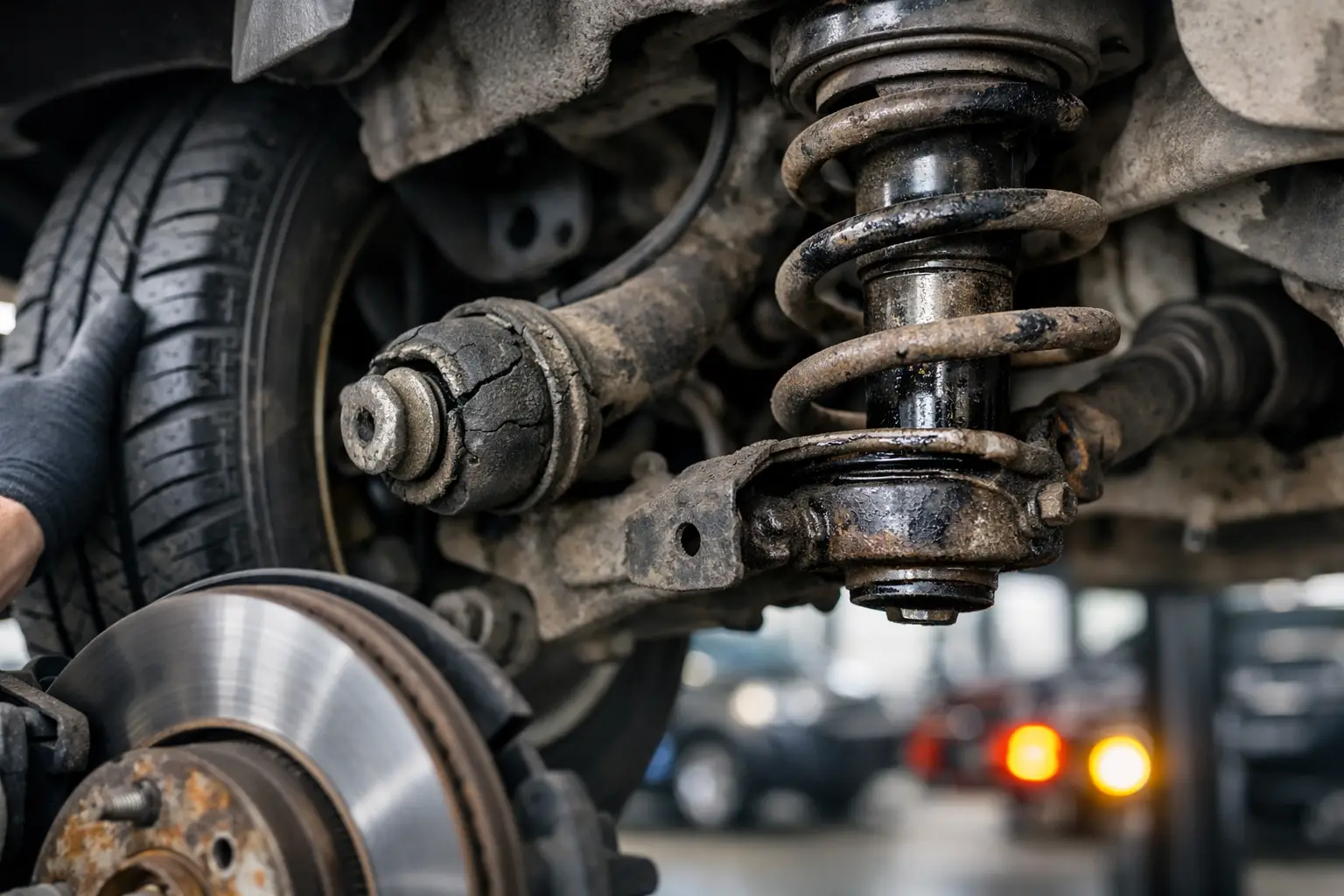
Pay attention to changes in how the car behaves. A soft pedal, a pedal that slowly sinks while held under pressure, pulling to one side, grinding noises or significantly longer stopping distances all require professional attention. Vibration through the brake pedal or steering wheel under braking can point to disc run-out, uneven disc deposits, worn suspension components or another fault. It needs diagnosis rather than an automatic set of discs and pads.
If metal-on-metal grinding is present, the car pulls sharply when braking, brake fluid is visibly leaking, or the pedal feels unsafe, do not continue driving. Recovery is the sensible option. Continuing can turn a routine brake job into damaged discs, calipers, wheel bearings or a more serious safety issue.
Why wheel-off inspections give a clearer answer
Removing wheels gives access to both pads, the caliper, carriers, brake hoses and the full disc face. It also allows a technician to check that the pads slide correctly, the caliper moves as intended and wear is even across the axle. This is where problems hidden behind a wheel can be found before they become expensive.
Attempting this yourself is only sensible if you have the correct equipment, safe axle stands, locking-wheel bolt key and the knowledge to refit wheels to the correct torque. A jack supplied for roadside tyre changes is not workshop support equipment. Incorrect wheel bolt torque can create its own safety problem.
Electronic parking brakes add another consideration. Many newer Audi, VW, Škoda and SEAT models need the rear calipers placed into a service position using suitable diagnostic equipment before rear pads are replaced. Forcing a rear piston back without following the correct process can damage the actuator or trigger faults. This is one reason why a brake inspection and repair should be tailored to the vehicle, rather than treated as the same job on every car.
How to check brake wear safely before an MOT
An MOT assesses brake performance and visible condition, but it is not a substitute for preventative maintenance. Leaving a pad warning, noisy brakes or a vibration until test day risks a failed test and may leave little time to arrange repairs around work and family commitments.
Book an inspection ahead of the MOT if you have noticed a warning light, an advisory from last year, squealing or a change in braking feel. A technician can measure pad material and disc thickness, inspect brake lines and hoses, assess caliper operation and identify whether the vehicle needs parts now or can safely continue for a reasonable period. That gives you a clear basis for planning work rather than reacting to a failure.
For drivers covering regular miles between Tadley, Aldermaston, Reading, Newbury and Basingstoke, this matters particularly in winter and during commuter traffic. Short journeys can leave discs rusty, while repeated stop-start driving can reveal sticking calipers and uneven wear sooner. Motorway mileage may wear pads more slowly, but higher speeds make a stable, confident brake pedal even more important.
What a proper VAG brake inspection should include
A good inspection goes beyond stating that pads are ‘low’. The useful question is how much material remains, whether both sides of each axle are wearing evenly, and whether the discs are still within specification. The answer determines whether pads alone are suitable, or whether discs and pads should be replaced together.
It also depends on the car and how it is used. A family Škoda with standard brakes, a diesel Volkswagen commuter car, an Audi with larger S line brakes and a tuned SEAT may all have different part specifications and wear patterns. Quality OEM or equivalent components matter, but fitting them correctly matters just as much.
At Mechalex, brake checks are carried out with the same practical approach used across VAG servicing, diagnostics and repair work: inspect properly, explain what has been found and recommend only the work that is justified. With more than 30 years of VAG experience and current diagnostic equipment, the workshop can deal with electronic parking brake procedures, warning lights and faults that may sit behind what first appears to be ordinary pad wear.
When to book a brake check
Arrange a booking soon if a pad warning appears, your brakes begin squealing consistently, the vehicle has an MOT brake advisory, or you can see noticeably low pad material through the wheel. There is no benefit in waiting for grinding or a red warning light.
If you are unsure whether a sound is brake-related, make a note of when it happens. Does it occur only on the first stop of the day, only under firm braking, while turning, or after driving in rain? That detail helps a technician narrow down the cause and avoids replacing parts based on guesswork.
Brakes do not need dramatic symptoms to deserve attention. A short, planned inspection can protect your discs, preserve reliable stopping performance and keep your Audi, Volkswagen, Škoda or SEAT ready for the journeys you depend on every day.
Need help with your Audi, VW, Škoda, SEAT or Cupra? Mechalex is an independent VAG specialist in Aldermaston, serving Reading, Newbury, Basingstoke and Tadley.
See our brake repair service, try our free VAG AI diagnosis, or book online. Call 0118 380 1003.