You notice it first when joining a dual carriageway or pulling up a hill – the engine revs rise, but the car does not pick up speed the way it should. If you have been asking, why is my clutch slipping, that change in feel is usually your first proper warning that something is wrong in the drivetrain.
A slipping clutch is not just an annoyance. Left too long, it can turn a manageable repair into a more expensive job, especially if excess heat starts affecting related components. For Audi, Volkswagen, Škoda and SEAT owners around Aldermaston, Tadley, Basingstoke, Reading and Newbury, catching it early usually means a clearer diagnosis, less inconvenience and less risk of being stranded.
Why is my clutch slipping in the first place?
In simple terms, the clutch is there to connect engine power to the gearbox smoothly. When you press the clutch pedal, the connection is temporarily released so you can change gear. When you lift the pedal, the clutch should grip firmly and transfer power cleanly.
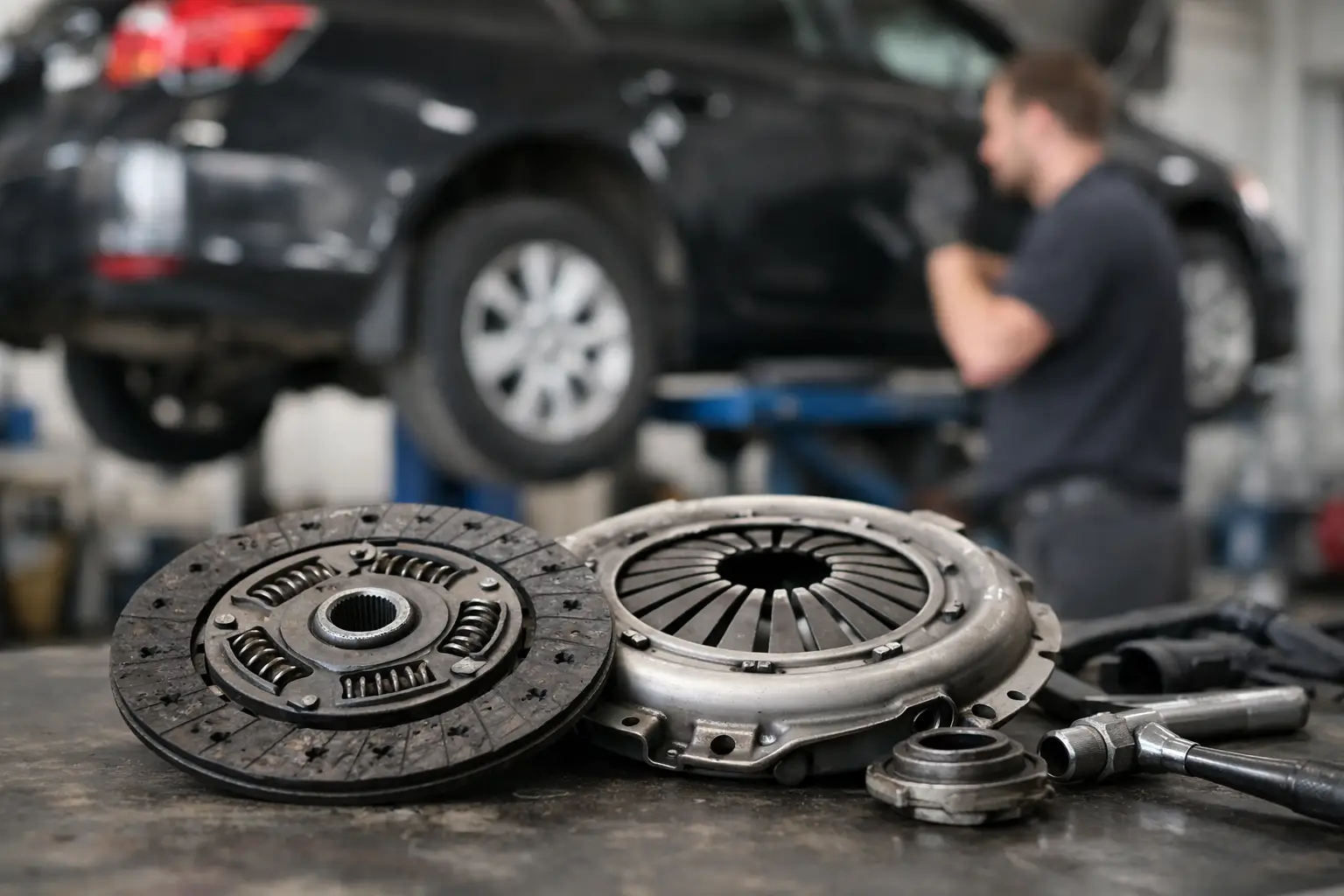
A slipping clutch happens when that grip is no longer strong enough. Instead of fully engaging, the clutch friction plate slides against the flywheel or pressure plate. That creates heat, wastes power and gives you the familiar symptoms – rising revs, weak acceleration and sometimes a burning smell.
The most common cause is wear. Clutch friction material does not last forever, and mileage, traffic conditions and driving style all play a part. A car used for stop-start commuting through Reading or Basingstoke will often wear a clutch more quickly than one that spends most of its life on easier motorway runs.
But wear is not the only reason. Contamination from an oil leak, a weak pressure plate, problems with the hydraulic system or a poorly matched replacement part can all produce similar symptoms. That is why proper diagnosis matters.
Common signs your clutch is slipping
Most drivers notice the issue under load rather than at idle. You might press the accelerator in a higher gear and see the rev counter climb faster than the road speed. On hills, the car may feel flat even though the engine sounds busy.
Another common sign is a bite point that has changed. If the clutch starts engaging very high on the pedal travel, that can suggest wear. Some drivers also notice difficulty when towing away, carrying passengers or pulling out at roundabouts because the car feels less willing to move off cleanly.
If the clutch has been slipping badly, you may smell something acrid after a manoeuvre that puts the system under strain. People often describe it as a hot, burnt smell. That smell is friction material overheating, and it is a sign not to keep pushing the car.
The usual causes of clutch slip
Normal clutch wear
This is still the big one. Over time, the friction plate becomes too thin to hold properly. Once that material is worn down, the clutch can no longer transmit full engine torque, especially under acceleration.
This is common on older vehicles and on cars used heavily in town traffic. It can also show up sooner on tuned or remapped cars if the clutch is already marginal for the extra torque.
Heat damage from riding the clutch
If a driver regularly holds the car on the clutch rather than using the brake, or slips it excessively in traffic, the friction material can overheat. Heat hardens and damages the surfaces, which reduces grip even further.
That does not mean one awkward hill start has ruined it. Usually this is wear caused by habits repeated over time.
Oil contamination
A leaking crankshaft seal or gearbox input shaft seal can allow oil onto the clutch surfaces. Even a good clutch will struggle to grip if it is contaminated.
This is one reason a workshop should not just fit parts on assumption. If the underlying leak is missed, the replacement clutch can be compromised as well.
Pressure plate or release system faults
The pressure plate provides the clamping force that keeps the clutch engaged. If it weakens or becomes damaged, the clutch may slip even if the friction plate is not completely worn out.
Hydraulic issues can also hold the clutch partially disengaged. A sticking slave cylinder or master cylinder fault can sometimes mimic clutch wear, so the pedal feel and release action need checking carefully.
Incorrect or poor-quality parts
Not every clutch kit is equal. Lower-grade parts or incorrectly specified components can cause poor engagement, judder or early slip. On VAG vehicles in particular, it pays to fit the right quality parts for the exact engine and gearbox combination.
It depends on the car – and whether it is manual or DSG
When drivers say the clutch is slipping, they are usually talking about a manual gearbox. On a manual Audi, Volkswagen, Škoda or SEAT, the likely causes are the traditional ones – wear, contamination or a mechanical fault in the clutch assembly.
With DSG models, the conversation is slightly different. A DSG transmission uses clutch packs and electronic control, and symptoms that feel like clutch slip can also be caused by worn clutch packs, adaptation issues, fluid condition problems or mechatronic faults. In other words, what feels like a slipping clutch is not always a simple clutch job.
That matters because misdiagnosis gets expensive. If you have a DSG car and it is flaring between gears, hesitating or struggling under load, it needs proper VAG-specific diagnostic work rather than guesswork.
Can you keep driving with a slipping clutch?
Sometimes, briefly, yes. Sensibly, not for long.
A mildly slipping clutch may still let you get home or make it to a booked inspection, but it is not something to ignore for weeks. The more it slips, the more heat it creates. That extra heat can damage the flywheel surface and increase the parts bill.
You also risk the clutch failing at the least convenient moment. Overtaking, joining fast traffic or climbing a hill are exactly the situations where a weak clutch becomes a safety issue rather than just a repair issue.
If the slip is obvious, avoid hard acceleration, towing and unnecessary journeys until the car is checked.
How a proper workshop diagnoses clutch slip
A good diagnosis starts with confirming the symptom on the road, then separating clutch wear from hydraulic, gearbox or engine-related faults. That sounds obvious, but it is where rushed repairs go wrong.
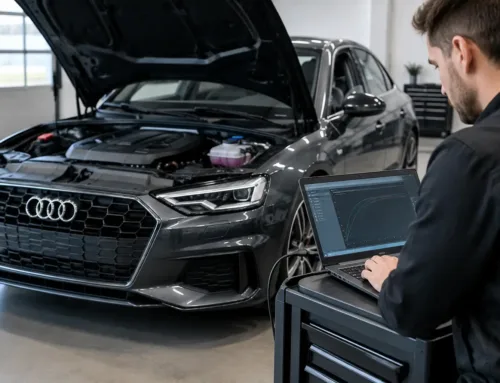
On VAG vehicles, technicians should consider the wider system, not just the pedal and friction plate. Engine torque delivery, flywheel condition, fluid leaks and gearbox behaviour all matter. If the vehicle is a DSG model, diagnostic equipment is essential because software data and fault codes can point you towards clutch pack or mechatronic issues that would otherwise be missed.
For local drivers in Aldermaston, Tadley, Basingstoke, Reading and Newbury, using a workshop that knows the common Audi, VW, Škoda and SEAT driveline faults can save time. These cars are well engineered, but they do have platform-specific patterns, and experience helps.
What the repair usually involves
On a manual car, the fix is often a clutch replacement kit, and in many cases it also makes sense to inspect or replace the flywheel at the same time if there is wear, heat spotting or excess movement. It is one of those jobs where doing it properly the first time matters, because the labour involved in getting back in there is significant.
If there is an oil leak, that needs addressing too. If not, the new clutch may not last.
On DSG vehicles, the answer might be a clutch pack replacement, a service, adaptation work or a mechatronic-related repair depending on what testing shows. That is exactly why the car should be assessed before anyone starts promising a fixed price over the phone.
When to book it in
If the revs rise without matching acceleration, the bite point has become noticeably high, or you can smell the clutch after ordinary driving, book it in sooner rather than later. The same applies if your VAG car has been remapped and the clutch has only recently started struggling under load. Extra torque often exposes a clutch that was already nearing the end of its life.
For drivers around the wider Aldermaston area, convenience matters as much as technical ability. If you rely on the car for commuting into Reading, school runs around Tadley, or regular miles between Basingstoke and Newbury, you want the problem identified quickly and repaired properly, without main dealer pricing or vague answers.
A slipping clutch rarely fixes itself. It usually gets worse, and it nearly always costs less to deal with before the heat and wear spread further through the drivetrain.
If you have started asking why is my clutch slipping, trust that change in feel. Cars usually give you a warning before they let you down, and this is one worth listening to.