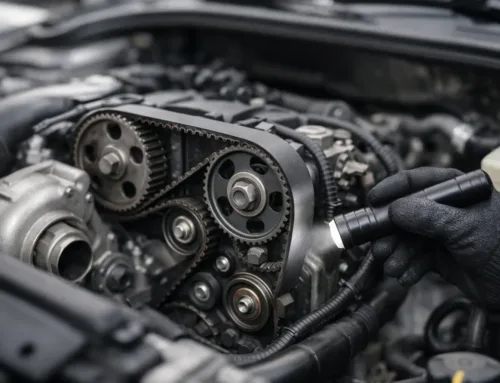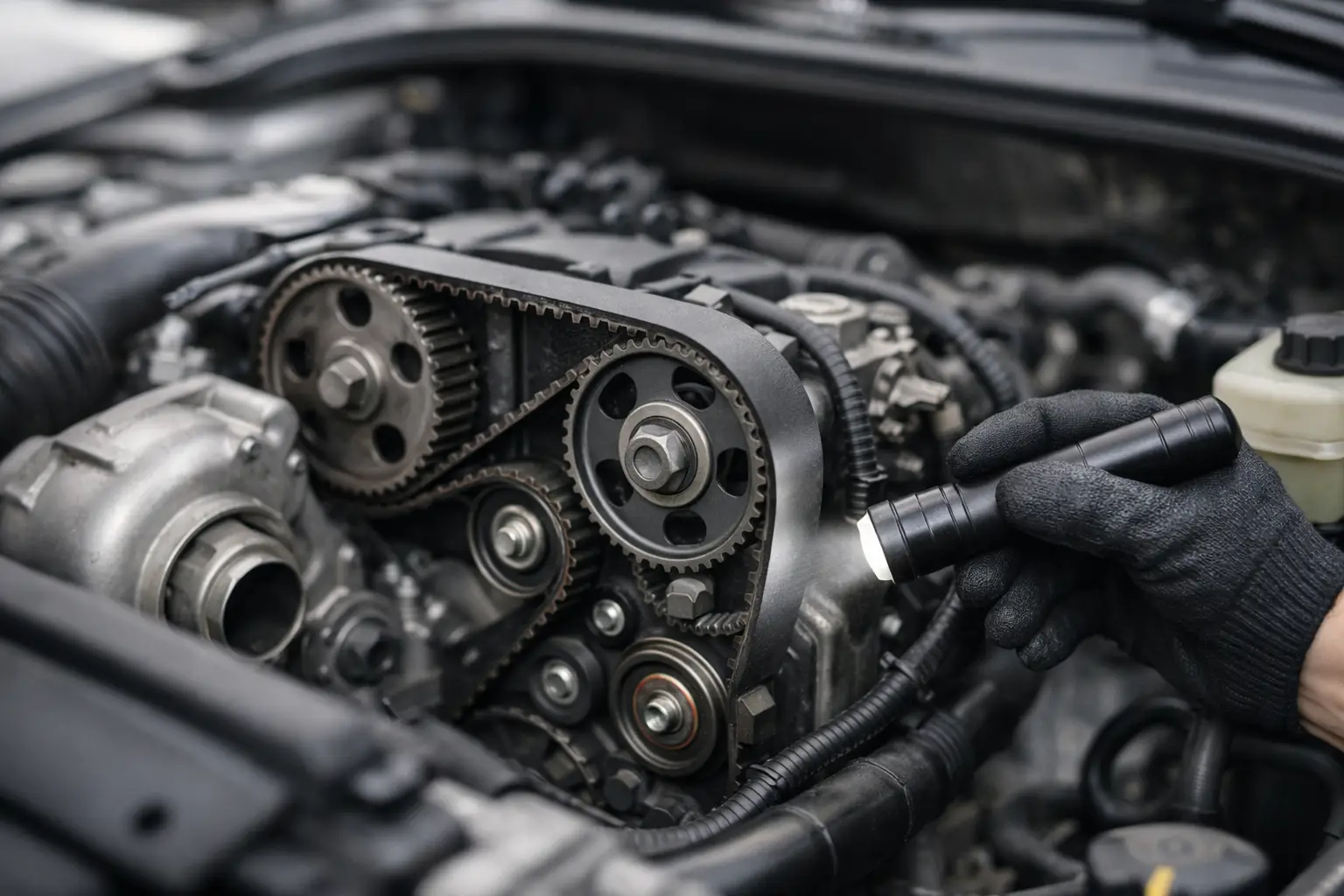
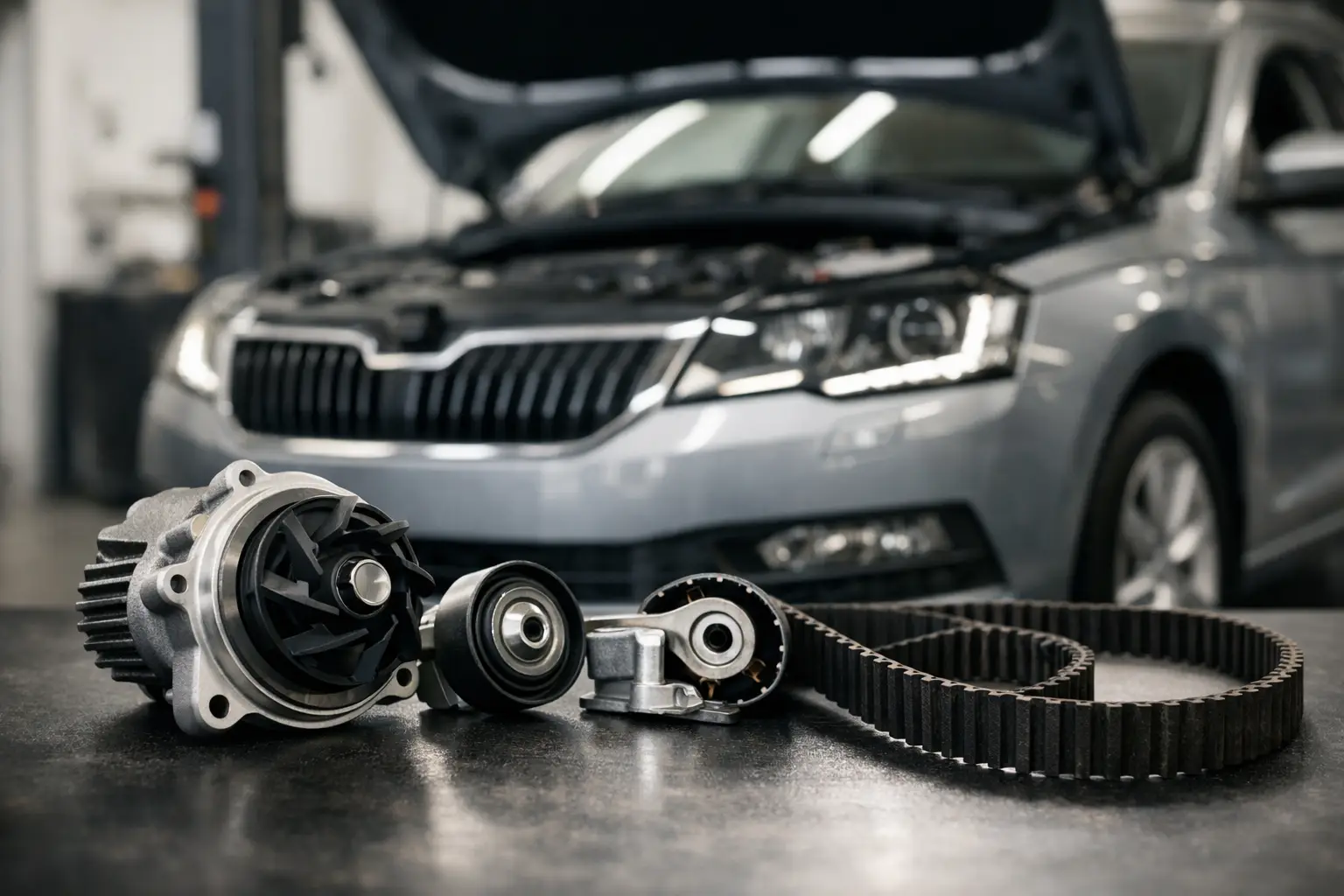
A skipped cambelt interval is one of those jobs that can look harmless right up until it becomes very expensive. On many Škoda engines, the cambelt and water pump sit in the same service conversation for a good reason – if one is due, the other usually needs serious consideration at the same time.
For owners who rely on their car every day, a proper Skoda cambelt water pump replacement is about avoiding breakdowns, overheating and major engine damage. It is not a cosmetic service item. It is preventative maintenance that protects the engine and usually saves money compared with splitting the work into separate visits.
Why Skoda cambelt water pump replacement matters
The cambelt keeps the engine’s internal timing in sync. If it fails, valves and pistons can collide, which often means extensive engine repair or replacement. The water pump circulates coolant through the engine and helps control temperature. When the pump wears out, leaks, or starts to fail internally, overheating can follow.
On many Škoda models, these components are closely linked in terms of labour access. That is why replacing the water pump during cambelt work is often the sensible route. You are already paying for much of the dismantling and reassembly. Leaving an ageing pump in place can mean paying much of that labour cost again later.
This is also where VAG experience matters. Škoda shares platforms and engine families with Volkswagen, Audi and SEAT, but that does not mean every engine has the same interval, layout or parts requirements. Getting the right schedule and the correct fitting procedure is just as important as fitting the parts themselves.
When is a Skoda cambelt water pump replacement due?
This depends on the model, engine code, age and service history. Some Škoda engines have fixed mileage and time-based intervals, while others are affected just as much by age as distance covered. A lower-mileage car that has spent years doing school runs and short journeys is not automatically low risk.
As a rule, owners should not guess. The correct approach is to check the exact engine and the manufacturer guidance, then consider real-world factors such as age, previous maintenance and any cooling system concerns. If the service history is incomplete and there is no solid proof the cambelt has been changed, it is usually safer to treat it as due.
That is especially true with used cars. We regularly see vehicles sold with vague wording such as “belt done at some point” or invoices that only show parts without enough detail to confirm what was actually replaced. A cambelt change is not the place for assumptions.
Signs you should not ignore
A cambelt often gives little or no warning before failure, which is exactly why scheduled replacement matters. The water pump, however, may show symptoms as it starts to deteriorate.
Coolant loss, staining around the pump area, overheating, noisy bearings or inconsistent cabin heating can all point towards pump trouble. On some engines, a failing tensioner or auxiliary component can also create noises that need proper inspection. The difficulty is that none of these signs tell the full story on their own. A visual check and model-specific knowledge are usually needed to judge what is happening.
If your Škoda is approaching its interval and has any cooling system symptom at all, that strengthens the case for doing the cambelt and pump together rather than trying to stagger the work.
Why replace the water pump at the same time?
This is the question many owners ask, especially if the pump is not leaking yet. The simple answer is value and risk.
Once the front end of the engine is stripped to access the cambelt, the extra cost of replacing the pump is generally far lower than coming back months later for another major strip-down. A water pump can fail before it starts leaking badly enough to leave obvious puddles, and some internal impeller issues are not always visible from the outside.
There is also a parts-quality point here. A proper job is not just a belt thrown on quickly. It should include the correct kit, tensioners, idlers where required, fresh coolant and careful setup. On the right engine, replacing related components at the same time is part of doing the job properly rather than cheaply.
What is included in a proper cambelt and pump job?
A quality Skoda cambelt water pump replacement should start with confirming the exact engine code and service requirement. From there, the work usually includes removal of the relevant covers and ancillaries, replacement of the cambelt, tensioners and guide rollers as required, replacement of the water pump, refilling with the correct coolant and accurately setting the engine timing.
On modern VAG vehicles, this is not guesswork. Correct locking tools, workshop procedures and diagnostic checks all matter. Some engines are straightforward. Others are less forgiving, and poor fitting can lead to timing issues, coolant leaks or premature component wear.
This is one reason many owners choose a VAG specialist rather than a general garage doing the occasional belt job. Experience with common Škoda engine variants reduces the chances of parts mismatch, incorrect procedures or missed related faults.
Cost versus value
Price matters, but cheapest and best value are not the same thing.
The final cost depends on the engine, the parts brand, how accessible the belt is and whether any extra items are sensible while everything is apart. Some jobs are relatively straightforward. Others involve more labour and more expensive kits. If coolant contamination, thermostat issues or previous poor-quality repairs are found, that can affect the bill too.
What you are really paying for is not just parts and time. You are paying for the job to be carried out with the correct procedure, quality components and proper checks. That usually costs less than main dealer pricing when handled by a specialist, but it should still be done to the right standard. OEM or equivalent parts are worth insisting on for this type of work.
Why service history and engine type make a difference
Two Škodas of the same age can need completely different advice. A petrol engine in a Fabia and a diesel engine in an Octavia may have different intervals, different failure risks and different labour requirements. Some drivers do huge motorway mileage. Others barely cover any distance but still rack up years on the belt.
That is why blanket internet advice can be misleading. “Every five years” or “every 80,000 miles” might be right for one car and wrong for another. The better approach is to have the vehicle checked against its exact specification and history.
If there is any uncertainty about whether the previous work was done correctly, that should be factored into the decision. A poorly fitted cambelt can be just as risky as an overdue one.
Choosing the right garage for a Skoda cambelt water pump replacement
This is a job where process matters. A garage should be able to explain what parts are being replaced, whether coolant is included, how the timing is set and why the recommendation suits your exact engine. If the answer is vague, that is not reassuring.
For local owners around Aldermaston, Tadley, Basingstoke, Reading and Newbury, using a VAG specialist can make a real difference. The benefit is not branding. It is familiarity with the engine families, access to the right tooling and diagnostics, and technicians who see these cars regularly rather than occasionally.
At Mechalex, the focus is on dealer-level capability without main dealer pricing, using OEM or equivalent parts and the right equipment to carry out the work properly. For a job this important, that standard matters.
Should you wait if the car seems fine?
Usually, no. A cambelt does not earn extra value by staying on the car beyond its due date. If anything, the risk grows while the benefit does not. The same applies to an ageing water pump sitting behind fresh belt components.
There are times when the decision depends on evidence. If a car has very recent documented belt and pump replacement from a reputable workshop, then there may be no reason to do it again early. But if the paperwork is unclear, the interval is approaching or the cooling system is showing warning signs, waiting can be a false economy.
A sensible approach is to treat cambelt and water pump work as planned maintenance, not emergency repair. It is far easier to book the job at a convenient time than deal with the consequences of failure on a cold morning when you need the car most.
If you are unsure when your Škoda is due, the best next step is a proper check against the vehicle’s engine code and history. A clear answer now is a lot cheaper than an avoidable engine repair later.