You usually notice brake wear at the worst possible moment – in slow traffic on the A4, pulling up at a roundabout near Basingstoke, or creeping through town with the family in the car. If you are wondering how to tell brakes need replacing, the key is to pay attention to changes in sound, feel and stopping performance before a minor wear issue turns into a bigger repair.
Brakes rarely fail without warning. In most cases, your car gives you several signs first. Some are obvious, like grinding or a dashboard warning light. Others are more subtle, such as a longer brake pedal, a slight vibration through the steering wheel, or the car taking a little more effort to stop than it used to. Catching those signs early can help you avoid damage to discs, calipers and tyres, and it keeps the car safer for everyday driving.
How to tell brakes need replacing before they get worse
The most common clue is noise. A high-pitched squeal when braking often points to worn brake pads. Many pads are designed with a wear indicator that makes that sound to let you know there is very little friction material left. That does not always mean the brakes are dangerous that same day, but it does mean they need checking soon.
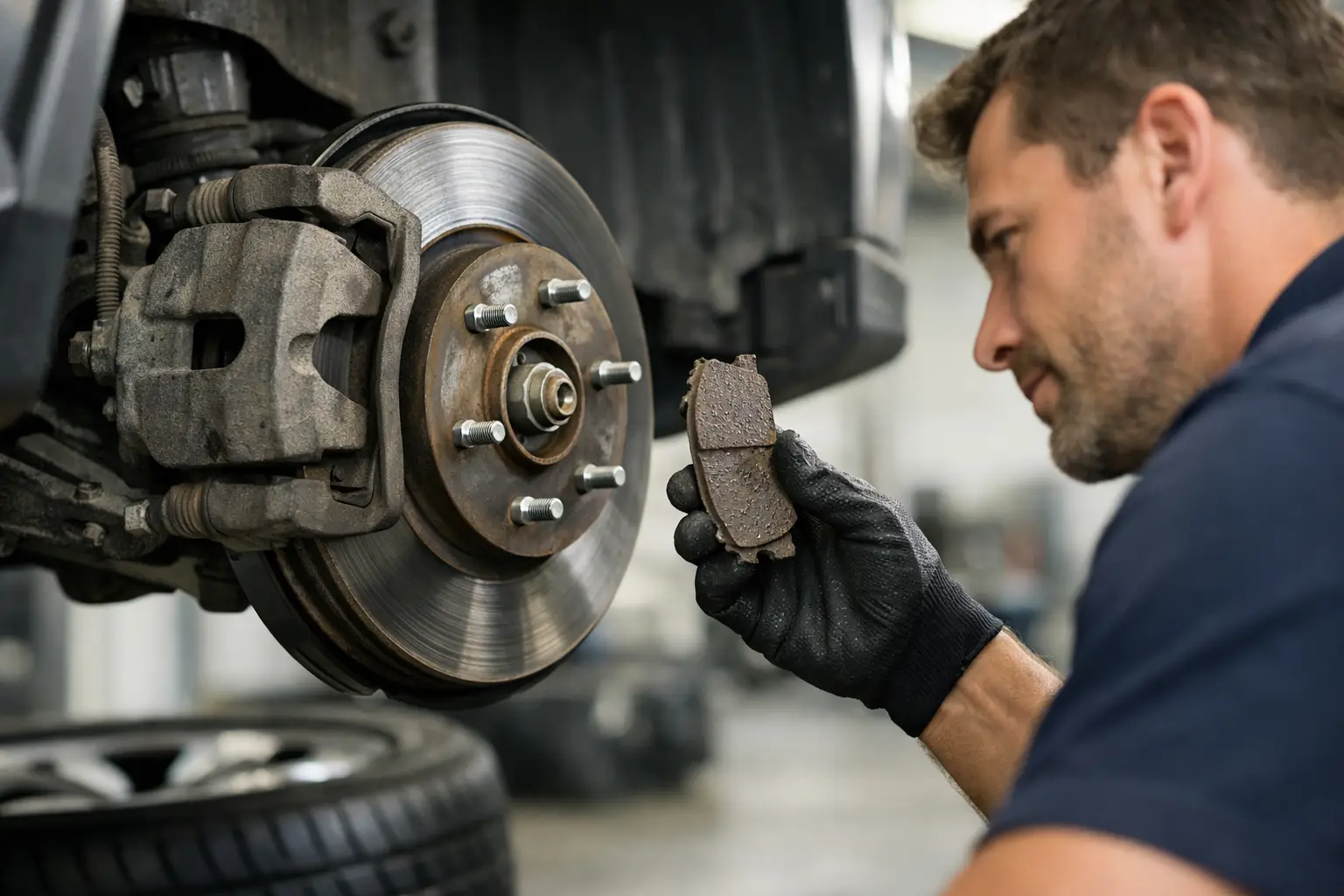
A grinding noise is more serious. That can mean the pad material has worn away so far that metal is contacting the disc. Once that happens, what could have been a straightforward pad replacement can become a pad-and-disc job, and sometimes more if the extra heat has affected other components.
The feel of the brake pedal also matters. If the pedal feels softer than usual, sinks lower, or needs more pressure to stop the car, there may be excessive wear, fluid issues or another fault in the braking system. If the pedal feels very hard, that points in a different direction, but it still needs proper diagnosis.
Stopping performance is another clear sign. If the car no longer feels as sharp or controlled when slowing down, do not ignore it. Brake wear can happen gradually, which means many drivers adjust without realising it. Then one day they drive a properly braked car again and notice the difference straight away.
Common signs your brakes need replacing
Worn brakes do not always present in the same way. It depends on the type of wear, your driving style, the quality of the parts fitted previously and whether the car does mostly motorway miles, short local trips or stop-start commuting.
If your Audi, Volkswagen, Škoda or SEAT squeals during light braking but seems quiet under heavier braking, worn pads are a likely cause. If there is a pulsing sensation through the pedal, the discs may be uneven or heat-affected. If the steering wheel shakes while braking at speed, front brake issues are more likely, although suspension components can sometimes feel similar.
You may also notice the car pulling slightly to one side under braking. That can happen if one side is not working as effectively as the other, whether due to uneven pad wear, sticking components or contamination. It is not something to leave and see if it improves.
Dashboard warnings should also be taken seriously. Some VAG models have brake pad wear sensors, while others may trigger warning messages linked to braking or stability systems. A warning light does not always mean the pads are finished, but it does mean the system has detected something worth investigating.
Then there is the visual check. If you can see through the wheel, the brake disc should look reasonably smooth. Heavy scoring, a pronounced lip around the edge, blue heat marks or obvious corrosion can all point to wear or overheating. Pad thickness matters too, but it is not always easy to judge accurately without removing the wheel and inspecting properly.
What wears out first – pads or discs?
Brake pads usually wear faster than discs, so they are often replaced more frequently. That said, discs are wear items too. They become thinner over time and can also suffer from corrosion, cracking, heat spots and uneven wear.
The right answer is not always to replace pads alone. If new pads are fitted to heavily worn or damaged discs, braking performance can suffer and the new pads may wear badly. On the other hand, not every brake job needs discs. It depends on measurements, condition and how the parts have worn together.
That is why a proper inspection matters. Guesswork often leads to false economy.
Why brake wear can feel different on VAG cars
Volkswagen Audi Group vehicles often have strong, well-balanced braking systems, but that also means changes in performance can stand out once wear starts to creep in. On some models, especially heavier diesels, DSG-equipped cars and performance variants, brakes work hard in daily use. The combination of weight, wheel size and driving style can affect wear rates more than owners expect.
Rear brakes can also catch people out. Some drivers assume the fronts do all the work and the rears will last indefinitely. In reality, rear pads can wear faster than expected on certain models, especially where electronic parking brake systems and brake balance strategies are involved.
If you drive mainly around Tadley, Aldermaston or into Reading traffic each day, your brakes are likely seeing far more stop-start use than a car doing steady longer runs. That does not automatically mean a problem, but it does mean regular checks are sensible.
When it is safe to wait – and when it is not
There is a difference between planning a brake job and risking a breakdown or unsafe drive. If you have a mild squeal with no warning lights and normal stopping performance, you may still have a little time to arrange an inspection. You should not leave it for weeks on end, but it is not always an emergency.
If you have grinding, poor braking, pulling under braking, strong vibration, or a warning light combined with obvious symptoms, it needs prompt attention. The same applies if the car has been parked for a while and the brakes feel rough, binding or inconsistent once back on the road.
A lot depends on what the actual cause is. Surface rust after rain can sound alarming but often clears quickly. Metal-to-metal pad wear will not. That is why the safest approach is to have the brakes checked properly rather than trying to diagnose purely from noise alone.
What happens during a proper brake inspection
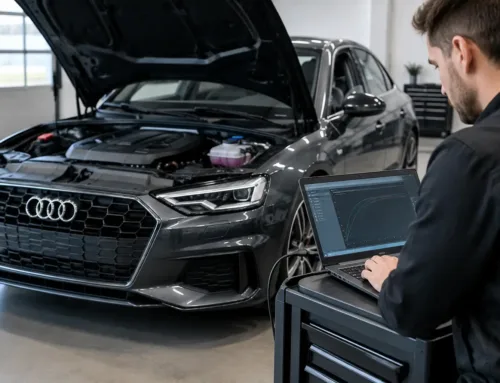
A proper check should go beyond a quick glance through the wheel. The technician should assess pad thickness, disc condition and wear limits, caliper operation, brake fluid condition where relevant, and whether wear is even across the axle. On modern vehicles, it may also involve checking electronic wear indicators and scanning for fault codes if warnings are present.
For Audi, VW, Škoda and SEAT drivers, model-specific knowledge helps. Different platforms have different common patterns of wear, and electronic parking brake systems can require the right diagnostic equipment for safe, correct rear brake work. That is one reason many owners prefer a VAG specialist rather than a one-size-fits-all approach.
For drivers around Aldermaston, Newbury, Basingstoke and the wider area, having that checked locally by a workshop that understands these cars can save time and avoid unnecessary replacement of parts that are still serviceable.
How to make brakes last longer
You cannot stop brake wear, but you can influence how quickly it happens. Smooth driving helps. So does leaving more space, avoiding heavy last-second braking and not carrying unnecessary weight in the car for months at a time.
Part quality matters as well. Cheap pads can wear quickly, create more dust and noise, and sometimes deliver poorer feel. OEM or equivalent quality parts usually cost more upfront but often give better performance and value over time.
It is also worth remembering that low mileage does not always equal low wear. Cars that sit around can suffer corrosion on the discs, and short journeys can be harder on brakes than regular longer drives.
If your braking feels different, sounds different or simply does not inspire the confidence it used to, trust that instinct and get it checked. A brake issue is often easier and cheaper to sort when caught early, and peace of mind on the road is worth having.