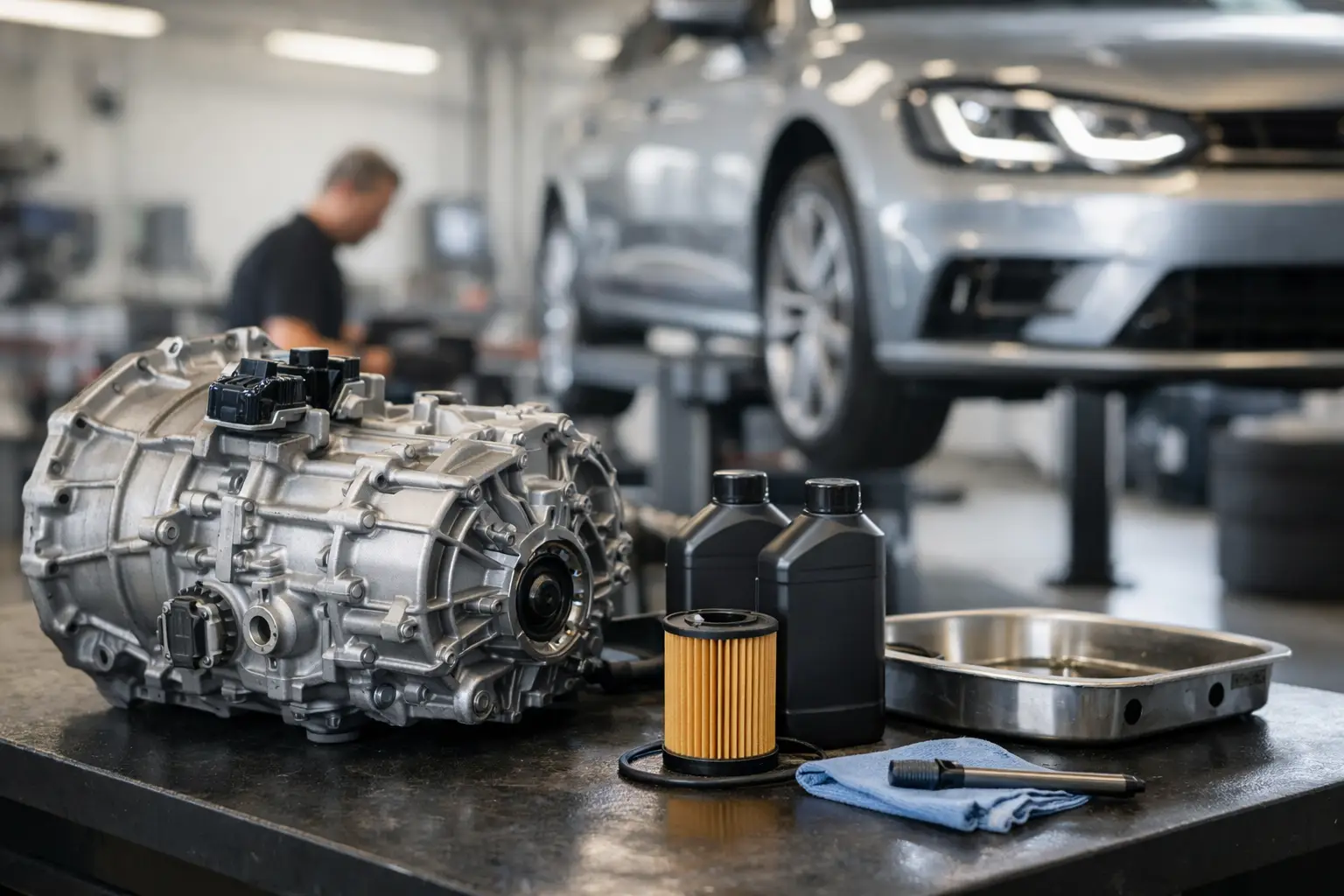
A cheap DSG service can become an expensive gearbox problem surprisingly quickly. If you drive an Audi, Volkswagen, Škoda or SEAT with a DSG transmission, understanding what you are actually paying for matters just as much as the final number on the invoice. This DSG service cost guide is here to explain where the money goes, why prices vary, and how to tell the difference between fair value and a false economy.
For most VAG owners, the question is not simply, “How much is a DSG service?” It is, “What should be included, and is the job being done properly?” That is where a lot of the confusion starts.
What affects DSG service cost?
The cost of a DSG service depends on the gearbox type, the parts and fluid required, the service interval, and the standard of workshop carrying out the work. Not all DSG gearboxes are the same, and neither are the servicing requirements.
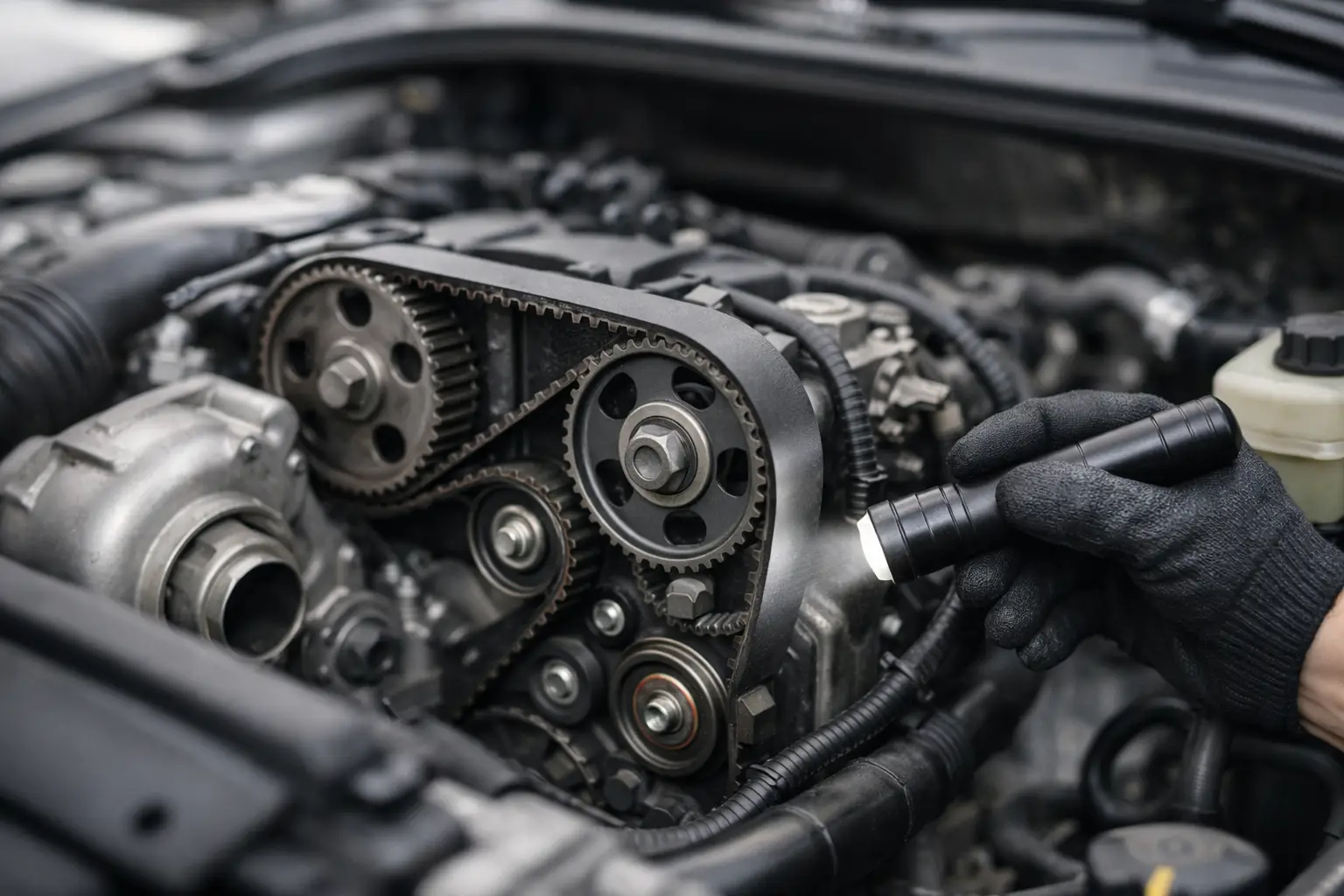
Some units require an oil and filter service at set intervals, while others have different fluid specifications, capacities and procedures. On certain VAG models, the gearbox service is relatively straightforward. On others, access, temperature-controlled filling procedures and adaptation checks make the job more involved. If a quote seems much lower than expected, it is worth asking exactly what is included.
Labour rates also make a difference, but labour alone is not the whole story. The correct DSG oil is not cheap, and it should not be. These gearboxes rely on precise hydraulic control and clutch operation, so using the right fluid matters. Quality filters, seals and workshop processes matter too.
DSG service cost guide – what should be included?
A proper DSG service is more than draining oil and refilling it. On the relevant gearbox types, you should expect the correct transmission fluid, filter replacement where applicable, new sealing components as required, and the gearbox fluid level set using the proper procedure.
That last point is easy to overlook. DSG gearboxes are sensitive to fluid level and temperature. Setting the level incorrectly can affect shift quality, clutch operation and long-term reliability. This is one reason VAG specialists with the right diagnostic equipment are often the sensible middle ground between a main dealer and a general garage.
A thorough service may also include checking for fault codes, inspecting for leaks, and assessing how the gearbox is behaving before and after the work. If there are early warning signs of mechatronic or clutch-related issues, it is far better to spot them during service than after a breakdown.
Why quotes can vary so much
If you ring around, you will probably hear very different prices for what sounds like the same job. Usually, one of three things is happening.
First, the gearbox may not actually be the same. Different DSG units across the VAG range have different servicing requirements. A Golf, Octavia, A3 and Leon might share plenty under the skin, but exact gearbox code, engine pairing and year still matter.
Second, the quote may leave something out. That could be the filter, the correct amount of fluid, sealing parts, diagnostic checks or VAT. A low headline figure is not much use if the final invoice grows once the car is on the ramp.
Third, the workshop may be pricing on the basis of generic transmission service experience rather than VAG-specific knowledge. DSG gearboxes are common enough to sound familiar, but proper servicing still benefits from technicians who know the platform, the common faults and the correct procedures.
Dealer, specialist or general garage?
This is where cost and value part company a little. A main dealer will often have the brand systems and official process, but that usually comes with the highest labour rate. A general garage may be cheaper, but if they do not work on VAG vehicles regularly, you are relying on them to get a specialist job right first time.
An independent VAG specialist often gives the best balance. You want the right fluids, the right tools and people who understand how these gearboxes behave in the real world, not just on a checklist. That is particularly useful if your car has a minor hesitation, a shift quality complaint or a stored fault code that needs interpreting rather than ignoring.
For drivers around Aldermaston, Tadley, Reading, Basingstoke or Newbury, using a local specialist can also make ownership easier in practical terms. If follow-up checks are needed, or if another VAG-specific issue appears during inspection, you are dealing with a workshop that already understands the car.
When should a DSG service be done?
This depends on the specific gearbox and manufacturer schedule, but many VAG owners will know the common interval of around 40,000 miles on serviceable DSG units. The key point is not to guess. If you are unsure whether your gearbox needs servicing, the safest route is to confirm the exact transmission fitted to your car and check the correct interval for that unit.
Leaving it too long can be costly. DSG gearboxes are engineered for fast, efficient shifting, but they are not forgiving of poor maintenance. Old fluid loses effectiveness, contamination builds up, and the gearbox has to work harder to manage heat, pressure and clutch engagement.
That does not mean every missed interval leads to major failure. It does mean the risk increases, and the cost of putting things right is far higher than the cost of routine service.
The expensive part is usually not the service
Owners sometimes hesitate at the price of gearbox maintenance, especially if the car seems to be driving normally. The problem is that gearbox repairs are rarely minor once a fault develops.
A neglected DSG can end up with harsh shifting, delayed engagement, warning lights or mechatronic issues. At that point, you are no longer comparing one service quote against another. You are looking at diagnosis, repair labour, specialist parts and time off the road.
Routine servicing is usually the cheapest point in the whole lifespan of the gearbox. It is predictable, planned and much easier on the wallet than reactive repair.
What to ask before you book
If you want a clear idea of value, ask a few direct questions. Is the quote for your exact gearbox? Does it include the correct OEM or equivalent fluid and filter where applicable? Is the fluid level set with the proper temperature-controlled procedure? Are diagnostic checks included if required?
You do not need a workshop to give you a lecture. You do need them to answer confidently and clearly. A good specialist should be able to explain what your car needs without wrapping it in jargon.
It is also worth mentioning any symptoms, even if they seem small. A shudder when moving off, a hesitation in traffic or a slight thump on shift may not always mean a major issue, but they are relevant. Servicing is the right time to catch those clues early.
DSG service cost guide – the real measure of value
A useful DSG service cost guide should leave you with more than a rough number. It should help you judge whether the work protects the gearbox properly. The cheapest quote is only good value if the correct service is being carried out with the right parts, fluid and procedure.
For VAG owners, specialist knowledge counts. These gearboxes are excellent when maintained properly, but they reward accuracy. That means understanding the specific transmission, following the correct process and using quality parts and fluids rather than cutting corners.
If your Audi, VW, Škoda or SEAT is due a DSG service, think beyond the initial price. Ask what is included, who is carrying out the work and whether the workshop genuinely knows these vehicles. Done properly, it is one of the smartest maintenance jobs you can book – not because it is cheap, but because it helps you avoid costs that are far worse later on.
A well-serviced DSG should feel like one less thing to worry about, and that is usually worth more than the smallest number on a quote.