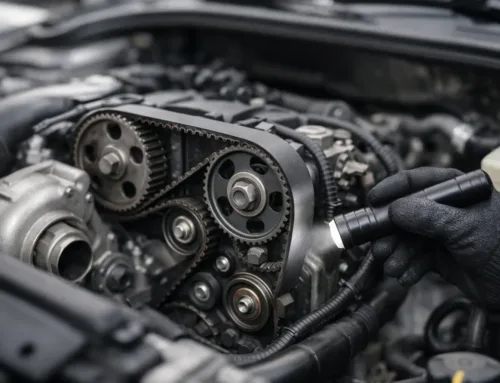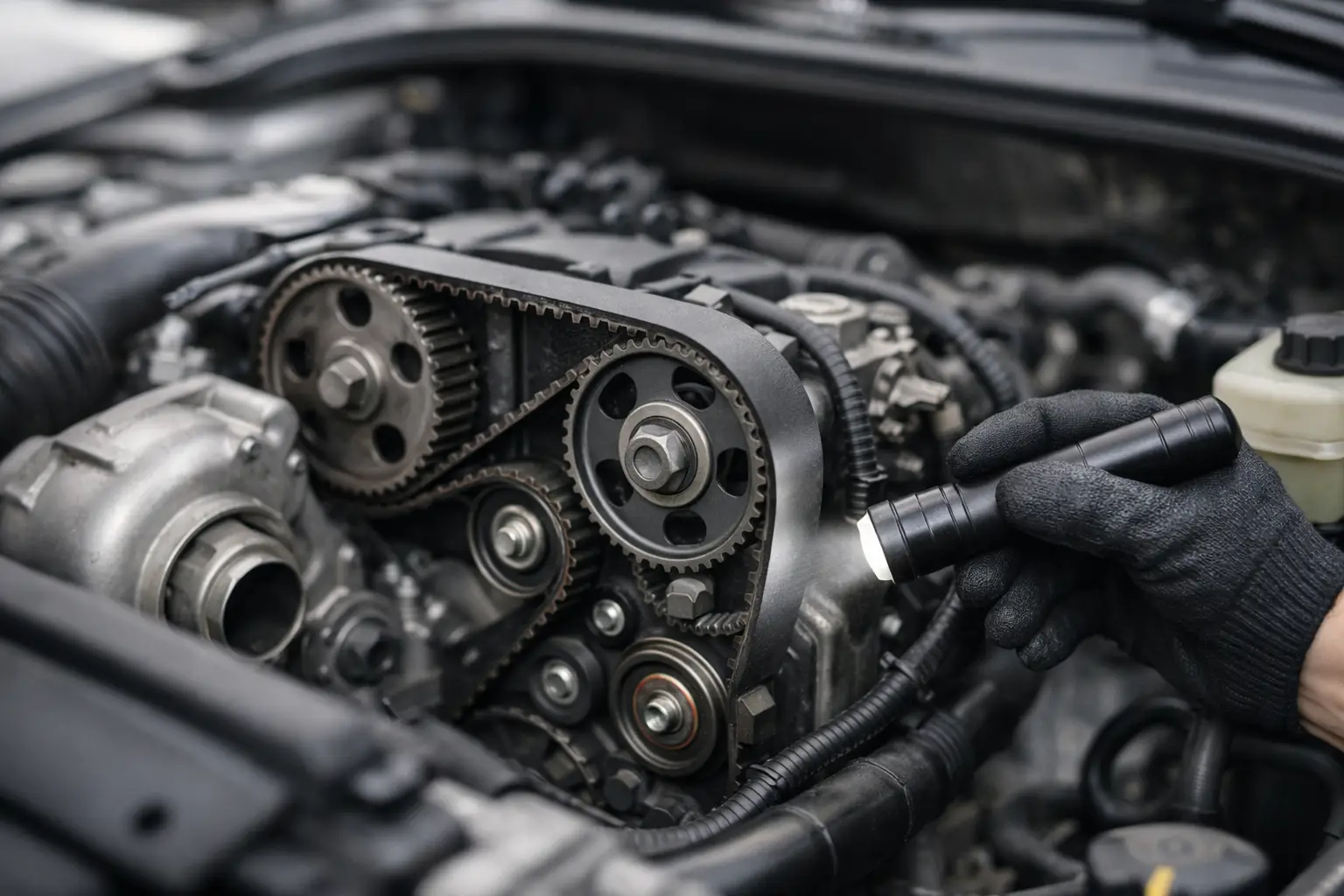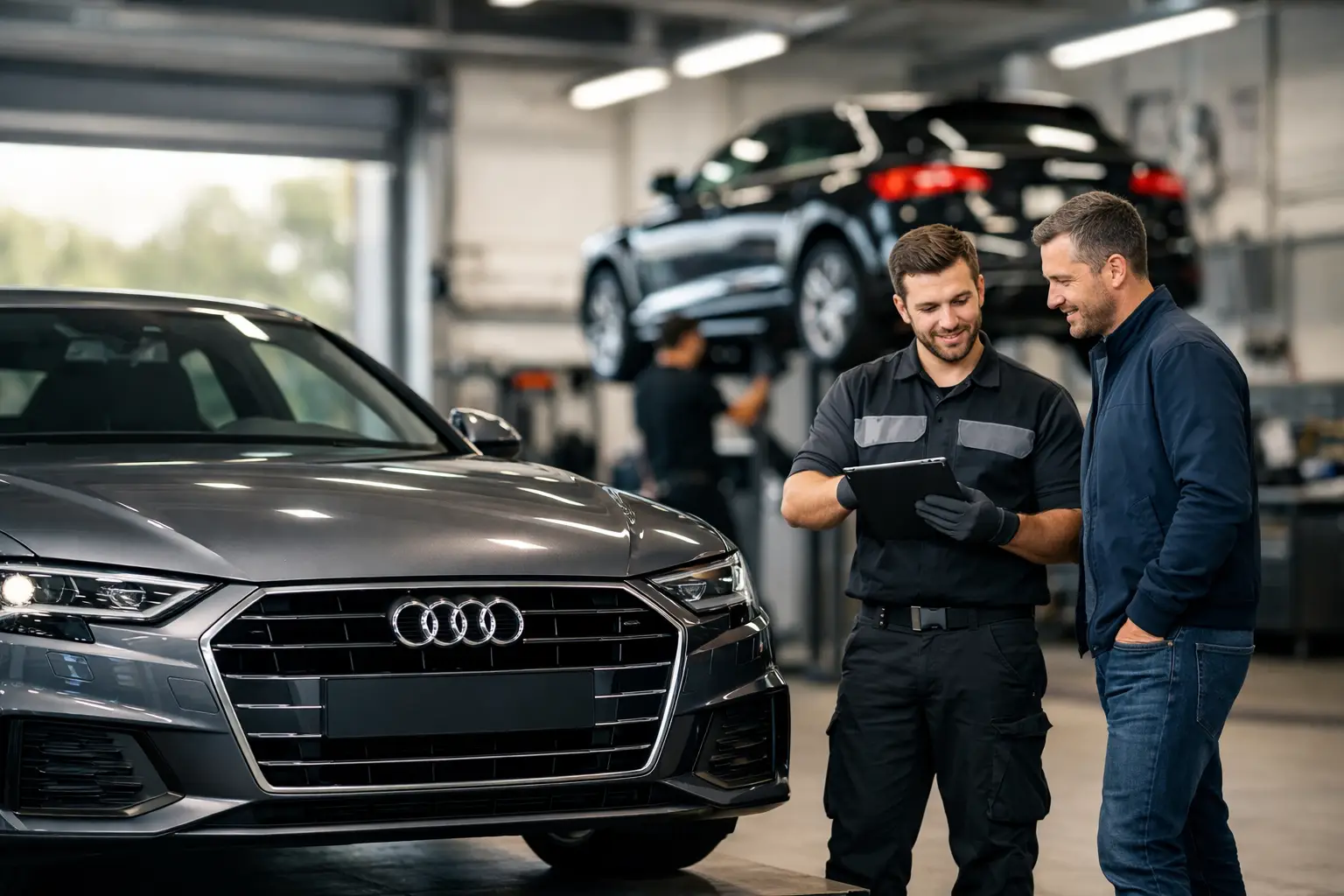
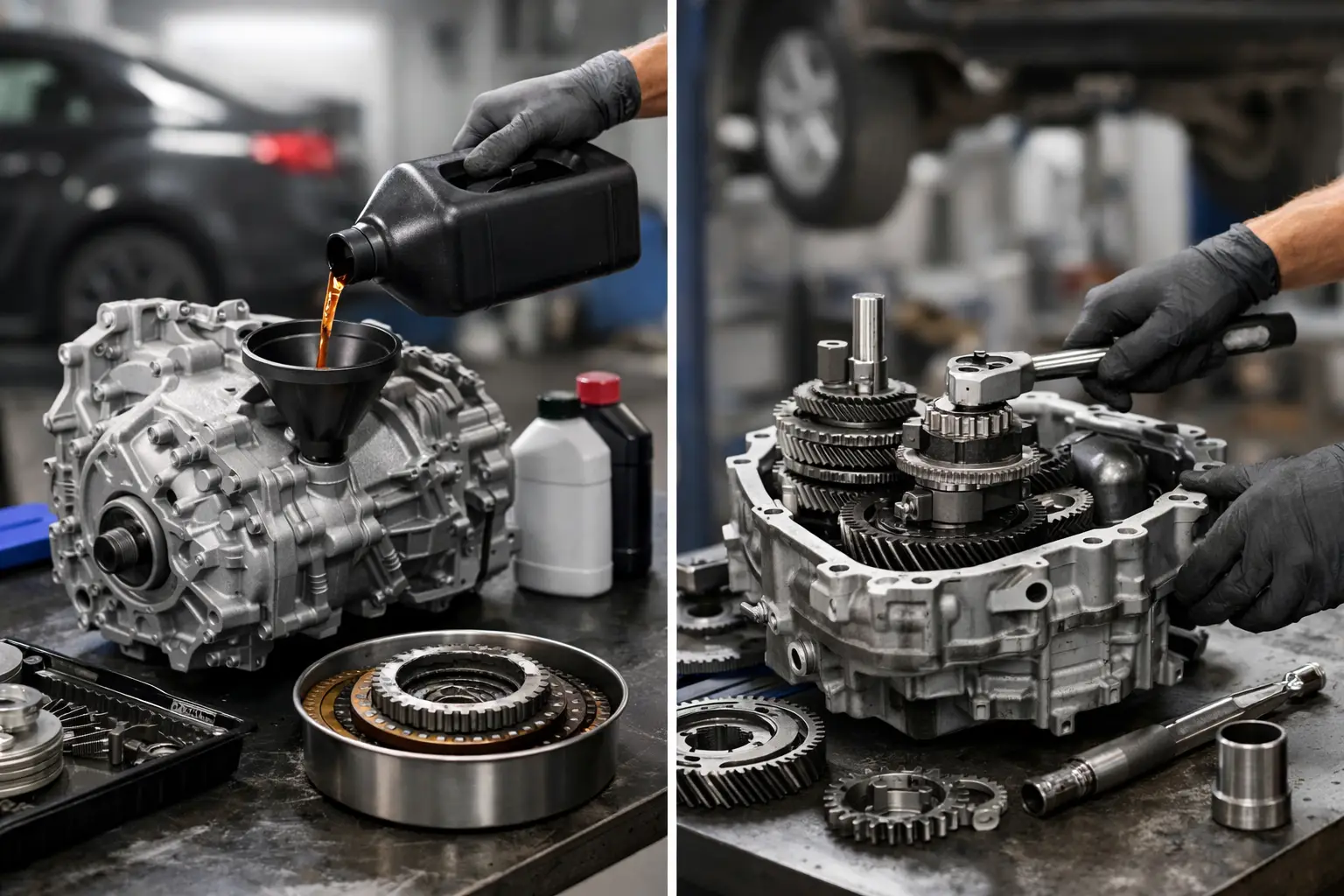
A DSG that hesitates pulling away at a roundabout, jolts on an upshift, or flashes up a gearbox warning is not something to ignore and hope for the best. When owners start comparing DSG service vs gearbox repair, they are usually trying to answer one practical question: is this routine maintenance, or is something already going wrong?
For Audi, Volkswagen, Škoda and SEAT owners, that distinction matters because the cost, urgency and outcome can be very different. In some cases, a timely DSG service is exactly what the gearbox needs to keep working properly. In others, a repair is needed because wear, contamination, electrical faults or internal damage have already developed.
DSG service vs gearbox repair – what is the difference?
A DSG service is planned maintenance. Its job is to protect the gearbox by replacing the transmission fluid and, where applicable, the filter, then checking that the system is operating as it should. On many VAG models, this is due at fixed intervals and should be treated in the same way as engine servicing – not optional, and not something to push back indefinitely.
Gearbox repair is different. It is fault-led work carried out because something has failed, worn out or started behaving outside normal limits. That could mean mechatronic problems, clutch wear, oil contamination, sensor issues, leaks, bearing noise or internal mechanical damage. Repair work starts with diagnosis, not with a service schedule.
The simplest way to think about it is this: a service is there to reduce the chance of problems, while a repair deals with problems that are already present.
Why DSG servicing matters on VAG cars
DSG gearboxes are excellent when they are maintained properly. They deliver quick shifts, good efficiency and a refined driving experience, but they are also complex units with tight tolerances and electronic control systems that depend on clean fluid and correct operating conditions.
Over time, gearbox oil degrades. It can collect contaminants, lose some of its protective qualities and affect how smoothly the transmission operates. In wet-clutch DSG systems especially, fresh fluid is a key part of keeping the gearbox healthy. Skipping service intervals may not cause an immediate failure, but it can increase wear and create conditions where bigger faults become more likely.
This is one reason VAG specialist knowledge matters. Not every garage sees these systems day in, day out. A workshop used to Audi, VW, Škoda and SEAT platforms is more likely to know the correct service requirements for the specific gearbox fitted to your car, and more likely to spot early signs of trouble before they turn into a much larger job.
When a DSG service may be enough
If the gearbox is fundamentally healthy and the issue is mild, servicing may restore shift quality or prevent deterioration. Owners sometimes report slightly rough changes, less smooth low-speed manoeuvring or delayed engagement around the point a service is overdue. In that situation, replacing old fluid and carrying out the correct checks can be worthwhile.
That said, a service is not a cure-all. If a gearbox has a genuine fault, servicing alone will not fix worn clutches, a failing mechatronic unit or damaged internal components. Honest advice matters here. Recommending a service when a repair is clearly needed only delays the real work and often increases the eventual bill.
A proper inspection should consider service history, mileage, fault symptoms and diagnostic results before deciding the next step.
Signs you may need gearbox repair instead
Some symptoms point more strongly towards repair than routine maintenance. If your DSG is slipping, banging into gear, selecting gears unpredictably, going into limp mode or bringing up a gearbox warning light, that usually needs diagnostic work rather than just a scheduled service.
The same applies if there is a clear fluid leak, repeated loss of drive, harsh engagement when cold and hot, or fault codes linked to pressure control, sensors or mechatronic operation. A burning smell or metallic contamination in the oil can also suggest wear that goes beyond normal servicing.
In practice, there is a grey area. A customer may book in expecting a service and only discover during checks that the gearbox has a deeper issue. Equally, what feels like a serious fault can sometimes turn out to be a more contained problem. That is why guessing from symptoms alone is rarely the best route.
Common DSG faults on Audi, VW, Škoda and SEAT models
VAG drivers tend to see a familiar set of DSG-related issues across different models and engine combinations. Mechatronic faults are one of the better-known problems, affecting gear selection, shift quality and overall transmission behaviour. Clutch wear is another, particularly on higher-mileage cars or vehicles used heavily in stop-start traffic.
Fluid-related problems can also play a part, whether through overdue servicing, incorrect previous work or leaks. Then there are sensor and electrical faults, which can trigger warning lights and erratic behaviour without obvious mechanical noise. In some cases, software adaptation or calibration issues may be involved, but that should never be assumed until the gearbox has been assessed properly.
For owners in places such as Reading, Basingstoke or Newbury who rely on the car for commuting, school runs or regular motorway miles, these faults are more than an inconvenience. They affect reliability, drivability and confidence in the vehicle.
DSG service vs gearbox repair – which costs more?
Repair costs are usually higher than service costs, but the exact difference depends on what has gone wrong. A routine DSG service is a predictable maintenance item. It involves the correct fluid, filter where required, and labour carried out to the proper procedure.
A gearbox repair can vary from a relatively focused fix to major transmission work. If diagnosis identifies a specific component problem, the repair may be manageable. If the gearbox has suffered prolonged wear, contamination or internal damage, the work can become much more involved.
This is where delayed maintenance often becomes expensive. Missing a service does not automatically mean a repair will follow, but it does remove one of the main opportunities to protect the gearbox. Once a transmission starts operating with degraded fluid or hidden faults, wear can spread to other components.
The cheaper option is usually the one done early and done properly.
The value of proper diagnosis
With DSG issues, diagnosis is not just plugging in a scanner and reading out a code. Fault codes are part of the picture, but they need to be interpreted alongside road test behaviour, service history, fluid condition and model-specific knowledge.
A VAG specialist with the latest diagnostic equipment and real experience of these gearboxes can often narrow down the problem more accurately and avoid unnecessary parts replacement. That matters because gearbox work can become costly if approached by trial and error.
It also helps separate what is urgent from what can be planned. Some faults mean the car should be parked up until repaired. Others may allow for a controlled booking schedule, provided the issue is understood and monitored. Clear advice is worth a lot when you depend on the vehicle every day.
Why specialist servicing beats generic gearbox work
Not every transmission garage specialises in VAG vehicles, and not every general workshop is comfortable with DSG systems. The right fluids, procedures, fill levels, adaptations and diagnostic routines all matter. So does knowing the common patterns across Volkswagen Audi Group vehicles.
That is one reason many local owners choose an independent specialist rather than a main dealer or a generalist garage. The sweet spot is dealer-level capability without paying dealer prices, paired with a more personal service experience. For drivers around Aldermaston and the wider area, that can mean getting honest advice on whether the gearbox needs a service, a repair, or further investigation before either is recommended.
At Mechalex, that VAG-specific approach is central to the job. With 30+ years of experience, modern diagnostic equipment and OEM or equivalent parts standards, the focus is on fixing the actual problem rather than selling unnecessary work.
What should you do if your DSG feels wrong?
If your service interval is due and the gearbox feels normal, book the service and keep the history up to date. That is the straightforward part.
If the gearbox is showing symptoms, do not assume a service will sort it and do not keep driving indefinitely in the hope it clears up. The sensible next step is to have it assessed properly. Catching a developing fault early may keep the job smaller, protect other gearbox components and reduce the time your car is off the road.
The most useful approach is not to think of service and repair as competing options. They are different stages of looking after the same system. A DSG service helps prevent trouble. A gearbox repair puts right what maintenance alone cannot.
If your Audi, Volkswagen, Škoda or SEAT is starting to shift differently, that small change is usually the right time to act – not when the dashboard finally makes the decision for you.