If your Audi, Volkswagen, Škoda or SEAT uses a Haldex-equipped four-wheel drive system, skipping the oil service is a good way to turn a clever drivetrain into an expensive fault. This Haldex oil change service guide is here to make the job clearer – what it does, when it should be serviced, what can go wrong, and why the right approach matters.
On many VAG models, Haldex is what brings the rear axle in when extra traction is needed. It helps in wet weather, improves stability under load, and gives that sure-footed feel owners expect from 4WD variants. But unlike a part you can forget about for years, the Haldex unit relies on clean oil and, on some generations, a clean filter or pump screen to work properly.
What the Haldex system actually does
Haldex is not a conventional permanent four-wheel drive setup in the old-school sense. In most VAG applications, the car is primarily driven by the front wheels and the Haldex coupling controls how and when drive is sent to the rear axle. It reacts to conditions and demand, using hydraulic pressure and electronic control to engage the rear wheels when needed.
That design is effective and efficient, but it does mean the system depends on fluid quality more than many owners realise. The oil is not just a lubricant. It also supports the operation of the coupling and the pump. As the oil ages, it picks up contamination and loses its ability to protect and perform as intended.
Haldex oil change service guide – when should it be done?
Service intervals can vary depending on model, generation and use, so there is no one-size-fits-all answer. As a general rule, many VAG vehicles benefit from Haldex servicing around every 3 years or 20,000 to 40,000 miles. If the car tows, sees a lot of stop-start use, or is driven enthusiastically, earlier servicing is often the sensible option.
The problem is that some owners assume 4WD is maintenance-free because the system is out of sight. Others follow incomplete service histories and simply never see it listed. By the time symptoms show up, the oil may be heavily degraded and the pump may already be struggling.
If you have bought a used Audi S3, Golf R, TT, Tiguan 4Motion, Octavia 4×4, Leon 4Drive or similar and there is no clear record of Haldex servicing, it is usually wise to get it checked rather than guessing.
Why service intervals matter so much
A neglected Haldex unit can move from routine maintenance to repair work quite quickly. Dirty oil can restrict flow, clog the pump screen on later generations, and reduce the system’s ability to build pressure correctly. That can lead to poor rear axle engagement, warning lights, fault codes, uneven traction response or complete loss of Haldex function.
In practical terms, that means a smaller service bill now can prevent a much larger diagnostic and repair bill later. It is the same logic as DSG servicing – leave it too long and the risks rise.
Common signs your Haldex may need attention
Not every failing Haldex unit announces itself dramatically. Sometimes the only clue is that the car no longer feels as composed as it used to in poor conditions. In other cases, the issue is picked up during diagnostics before the driver has noticed a major change.
Typical warning signs include traction that feels inconsistent, drivetrain fault messages, stored AWD or ABS-related codes, or a noticeable delay in rear drive engagement. Some vehicles show no obvious symptoms at all until tested properly, which is why service history matters so much.
It is also worth saying that not every four-wheel drive fault is a Haldex oil issue. Tyre circumference differences, control faults, pump failure, wiring issues and rear differential problems can all affect how the system behaves. That is why proper diagnosis matters just as much as routine servicing.
What is involved in a proper Haldex service?
A correct Haldex service is more than simply draining and refilling fluid as quickly as possible. The exact process depends on the generation fitted to the vehicle, because not all Haldex systems are serviced in exactly the same way.
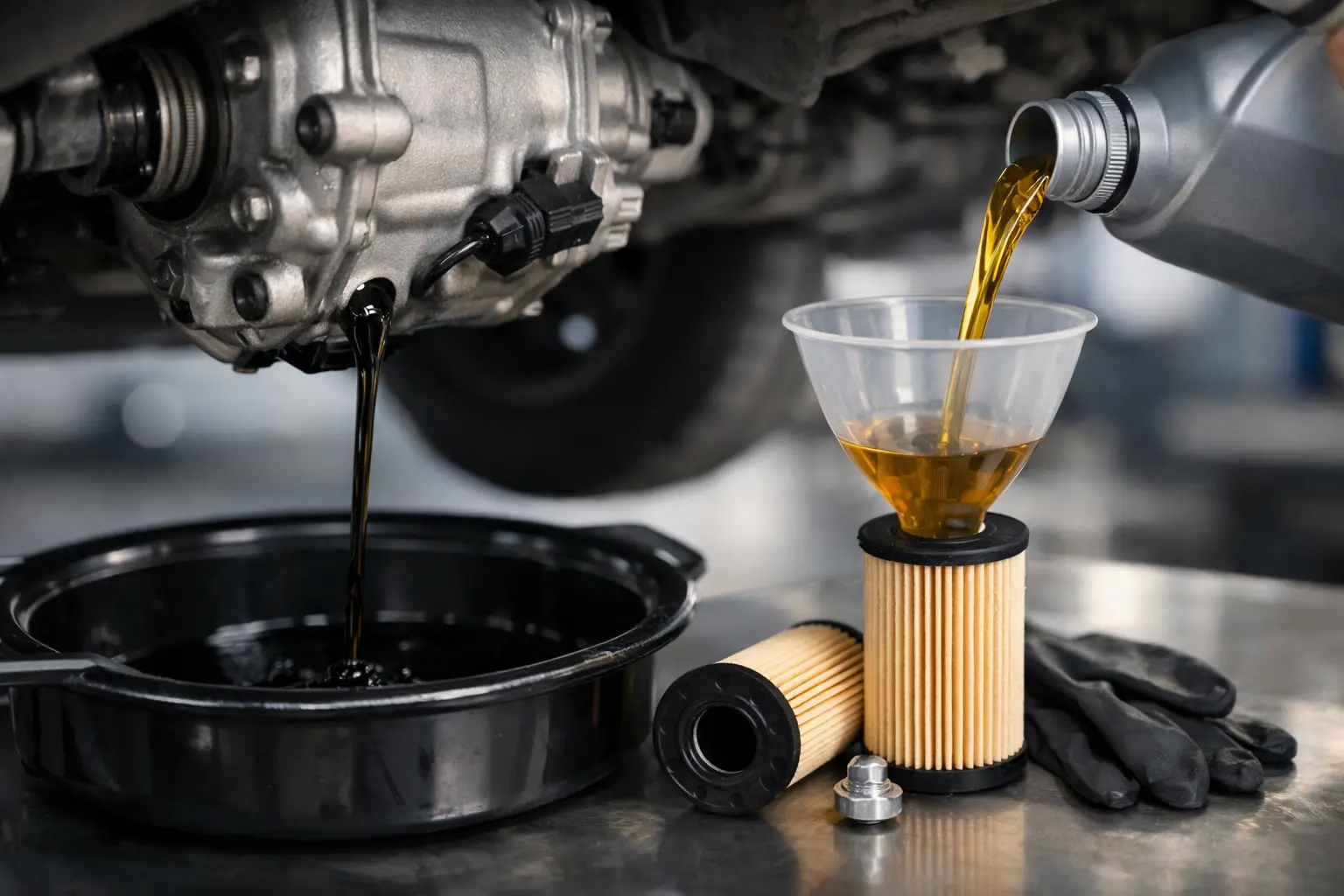
On many VAG applications, the old oil is drained, the unit is refilled with the correct specification fluid, and the system is checked for leaks, contamination and related faults. On certain generations, the pump is removed so the pickup screen can be inspected and cleaned. On others, there may also be a serviceable filter. This is one of those jobs where platform knowledge matters, because using the wrong fluid, missing a blocked screen or following the wrong procedure can leave the system underperforming even after the service.
Why the pump screen matters
Later Haldex generations commonly suffer from debris collecting around the pump screen. When that happens, oil flow is restricted and the pump cannot do its job properly. The fluid may have been changed, but the underlying restriction remains.
That is why a thorough service looks beyond the oil alone. If the screen is blocked, simply refilling with fresh fluid is only part of the answer.
DIY or specialist workshop?
If you are mechanically confident, you may be tempted to tackle a Haldex service yourself. On paper, it can look straightforward. In reality, it depends on the car, the Haldex generation, access, tooling and whether diagnostics are needed before or after the work.
The risk with DIY is rarely just the fluid change itself. It is using the wrong oil, underfilling or overfilling, missing contamination issues, overlooking a blocked pump screen, or assuming a traction complaint will be fixed by service alone. If the vehicle already has stored faults or poor AWD performance, the job should be treated as diagnosis as well as maintenance.
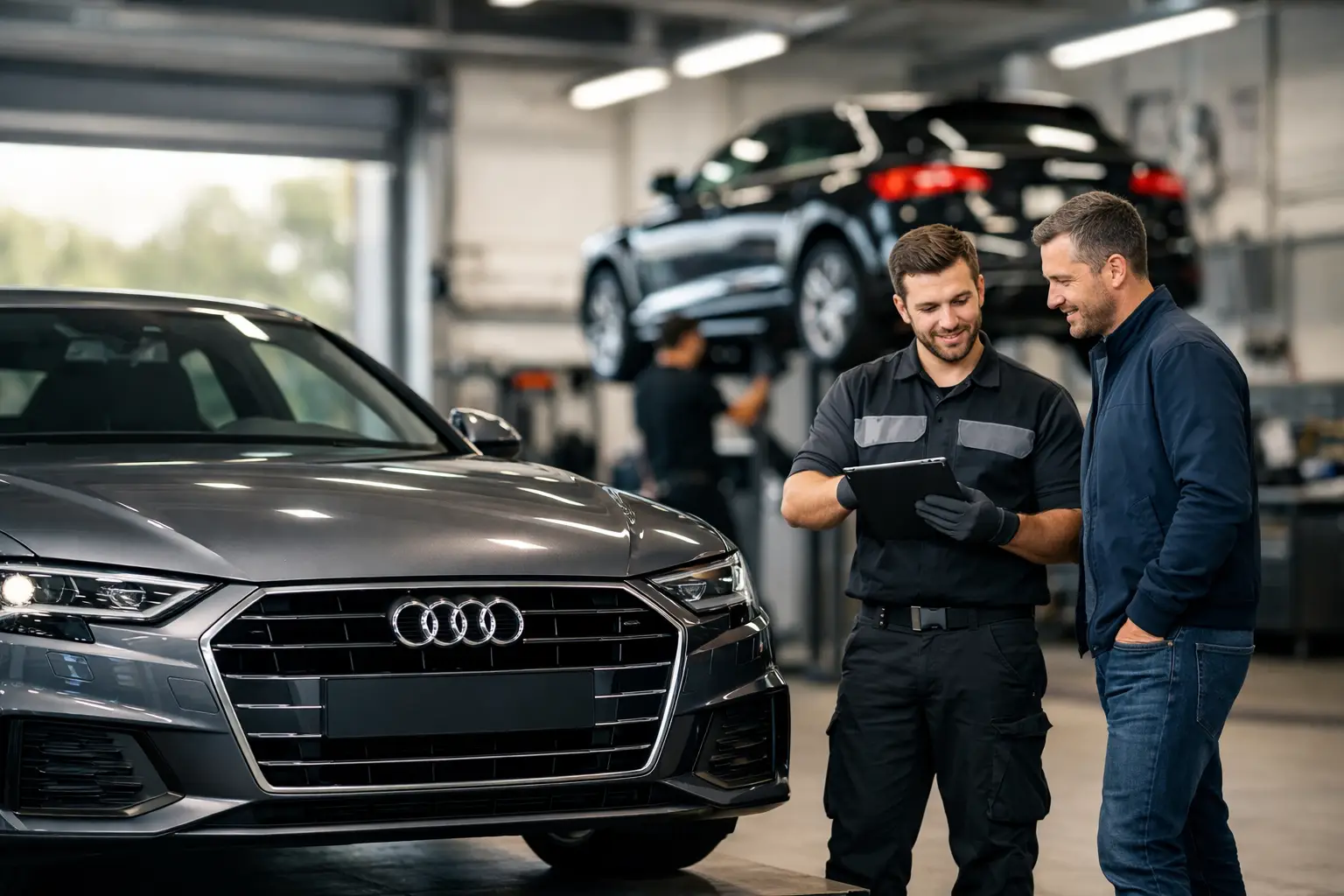
For owners who rely on their car every day, it usually makes sense to have the system checked by a workshop that regularly works on VAG drivetrains. That way, if the issue is not just overdue fluid, you find out before more damage is done.
Haldex oil change service guide for used VAG cars
Used performance and 4WD VAG models are especially worth watching here. Cars such as the Golf R, S3, TTS and Cupra variants often live harder lives than standard family hatchbacks. That does not mean they are fragile. It simply means their service history needs to be taken seriously.
If you are buying one, ask specifically whether the Haldex has been serviced and when. Do not settle for vague answers about it having had a general service. If there is no proof, budget for the work. It is a sensible step, particularly on cars where owners value grip and performance but previous maintenance may have been inconsistent.
For family SUVs and estates, the same principle applies. Tiguans, Kodiaqs, Octavia 4x4s and similar vehicles may spend more time towing, carrying passengers or handling poor weather. Their Haldex systems still need the same attention, even if the car is used more for school runs than B-road blasts.
Choosing the right workshop for Haldex servicing
This is a specialist job, but it should not require main dealer prices to be done properly. What matters is that the workshop understands VAG platforms, uses the correct fluid and service procedure for the Haldex generation fitted, and has the diagnostic equipment to check system operation if there are faults present.
That combination is especially useful if your car also has related drivetrain concerns, such as differential noise, warning lights or previous 4WD issues. In those cases, a service may be the fix, but it may also uncover a failing pump or another underlying fault that needs dealing with properly.
At Mechalex, this kind of work sits alongside DSG servicing, diagnostics and VAG drivetrain repairs, so owners are not left guessing whether the problem is routine maintenance or something more involved.
What happens if you leave it too long?
Sometimes nothing obvious happens straight away, and that is why the service gets postponed. The car still drives, there are no warning lights, and the Haldex unit is forgotten about for another year. Then the pump clogs, the rear axle stops engaging as it should, or the car comes in with stored faults and reduced AWD function.
By that point, what should have been preventative maintenance can turn into diagnosis, pump work or further drivetrain investigation. It is not always catastrophic, but it is rarely cheaper than servicing it on time.
If your VAG 4WD model is due, overdue, or has no clear record of Haldex maintenance, treat that as a service item worth doing rather than an optional extra. A well-maintained Haldex system is one of those things you barely notice when it is healthy – and that is exactly the point.