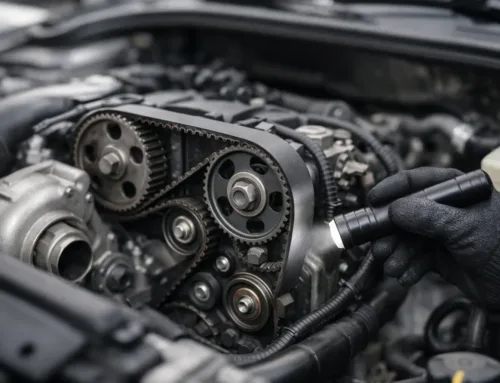

If your Audi suddenly shows an EPC warning on the dash, the first thing you want to know is simple: what causes Audi EPC light faults, and is it safe to keep driving? The short answer is that EPC usually points to an issue affecting the engine management or throttle control system. Sometimes it is a minor sensor fault. Sometimes it is the car protecting itself because a more serious problem has been detected.
On Audi models, EPC stands for Electronic Power Control. It is used across many VAG vehicles and is tied in with the systems that manage throttle input, engine performance and, in some cases, brake or stability-related signals that affect engine control. Because Audi systems are closely integrated, the warning light does not always mean one single failed part. It means the control unit has seen something outside expected values and has logged a fault.
What causes Audi EPC light warnings?
In practical terms, the most common causes are throttle body faults, brake light switch issues, accelerator pedal sensor faults, wiring problems, ignition coil misfires and sensor readings that no longer make sense to the engine control unit. On some cars, a weak battery or voltage irregularity can also trigger warning lights that appear unrelated at first glance.
That is why guessing can get expensive. Replacing parts based on internet advice often misses the real cause, especially on VAG cars where one fault can create symptoms elsewhere. Proper diagnosis matters more than the warning light itself.
What the EPC light actually means on an Audi
The EPC system monitors and controls electronic throttle operation. Older cars relied more heavily on cable linkages, but modern Audi models use electronic inputs and control modules to manage power delivery. If the car detects a problem with that control chain, it may switch on the EPC light and reduce engine power.
You might notice the car feels flat, slow to respond or stuck in a limited performance mode. That is not random. The car may be entering a protective strategy, often called limp mode, to prevent further damage or unsafe operation.
In some cases, the EPC light appears on its own. In others, it comes on with the engine management light, traction control warning or a rough idle. The combination matters, because it helps point the diagnostic process in the right direction.
Common faults behind an Audi EPC light
Throttle body problems
A sticking, dirty or failing throttle body is a regular cause. If the throttle plate cannot move as expected, or the control module sees a mismatch between commanded and actual position, the EPC light may appear. Carbon build-up can contribute, but so can internal electrical failure.
Some throttle bodies can be cleaned and adapted if contamination is the issue. Others need replacement and coding. It depends on the fault codes and live data, not guesswork.
Brake light switch failure
This catches people out because it does not sound like an engine fault. But on many VAG vehicles, the brake light switch signal is part of the wider control logic used by the ECU. If the switch gives inconsistent readings, the car may trigger the EPC warning.
You may also notice brake lights staying on, not working properly or cruise control behaving oddly. It is often a relatively straightforward fix, but it still needs confirming properly.
Accelerator pedal sensor faults
Your accelerator pedal is effectively an input device with position sensors. If those readings become erratic or disagree with each other, the control unit may log a fault and illuminate the EPC light. The car may respond poorly to throttle input or limit revs.
This can be caused by the pedal assembly itself, wiring issues or connector problems.
Ignition coil or spark plug issues
Misfires are another common trigger, especially on petrol Audi models. A failing ignition coil or worn spark plug can cause rough running, hesitation and flashing or steady warning lights. If the misfire is severe enough to affect engine performance data, the EPC light may come on alongside the engine management light.
This is a good example of why the light does not always point directly to the failed component. The EPC warning may be the result of an engine running fault rather than a dedicated throttle fault.
Sensor and wiring faults
Modern Audis depend on accurate signals from multiple sensors. Problems with the mass airflow sensor, crankshaft sensor, brake pressure signal or throttle position signal can all contribute. Wiring faults are also common enough to take seriously, particularly where heat, vibration or moisture have caused damage over time.
Intermittent electrical faults are often the most frustrating because they can disappear during a basic inspection. This is where proper VAG-capable diagnostic equipment and experience make a real difference.
Battery voltage and control module issues
Low system voltage can cause strange behaviour across multiple modules. If the battery is weak or charging voltage is unstable, warning lights may appear with no obvious pattern. This does not mean every EPC light is caused by the battery, but it is one of the first basics worth checking.
Control module faults are less common than sensor or wiring issues, but they do happen. They should be confirmed carefully before any expensive replacement is considered.
Can you keep driving with the EPC light on?
Sometimes yes, sometimes no. If the car is driving normally and the warning appears without any obvious loss of power, you may be able to drive it a short distance for diagnosis. But if the car is misfiring, shaking, lacking power or showing multiple warning lights, continuing to drive can make things worse.
A flashing engine management light with EPC is more urgent, particularly if the engine is misfiring. Unburnt fuel can damage the catalytic converter, and that turns a smaller repair into a bigger one very quickly.
The safest approach is simple. If performance has changed, stop using the car unless you need to move it somewhere safe. If it feels normal, book it in promptly rather than waiting for the fault to become less intermittent and more expensive.
Why fault codes alone are not enough
A code reader might tell you there is a throttle correlation fault or a brake switch plausibility issue. Useful, yes. Final answer, not always. Fault codes point you towards a system. They do not automatically prove which part has failed.
A proper diagnostic process should include fault code scans, live data analysis, checks of wiring and connectors, and where needed, basic mechanical inspection. On VAG vehicles, adaptation values and control module behaviour also matter. That is why two cars with the same warning light can need completely different repairs.
This is also where cheap parts can become false economy. If an aftermarket sensor gives unstable readings, you can end up back where you started. Using OEM or equivalent quality parts matters on these systems.
How Audi EPC light faults are usually diagnosed
The first step is to scan all relevant modules, not just the engine ECU. Then the fault memory is read alongside freeze-frame data, which shows the conditions present when the fault was logged. After that, live values are checked while the car is idling, being revved or road tested if appropriate.
If the suspected issue is with the throttle body, the technician may inspect for contamination, verify movement and carry out any required adaptation procedure. If the issue points towards a brake switch, pedal sensor or ignition fault, those circuits and components are tested rather than assumed.
At a VAG specialist workshop, this tends to be quicker and more accurate because the common platform faults are already familiar. That saves time and avoids the parts-darts approach.
When the EPC light comes back after repair
If an EPC light returns, it usually means one of three things. The original fault was misdiagnosed, there is more than one issue present, or a secondary problem only became obvious after the first repair. On higher mileage cars, this is not unusual.
For example, replacing a failed coil pack may cure the misfire, but if there is also a throttle adaptation issue or wiring fault, the light may return later. Good diagnosis is about finding the whole fault picture, not just the most obvious symptom.
When to get it checked
If your Audi has an EPC warning, rough running, reduced power or inconsistent throttle response, get it looked at properly. Waiting rarely improves anything, and on some faults it increases the final bill. For drivers around Aldermaston, Tadley, Basingstoke, Reading and Newbury, a VAG specialist such as Mechalex can usually identify the real cause far more efficiently than a generic code scan.
The useful thing about the EPC light is that it gives you an early warning. Treat it as the car asking for proper diagnosis, not as a dashboard nuisance to ignore. The sooner the fault is understood, the better your chances of keeping the repair straightforward and the car dependable.