A timing belt can look perfectly ordinary until it fails, but the consequences are rarely ordinary. On many Audi, Volkswagen, Škoda and SEAT engines, a snapped or slipped cambelt can allow pistons and valves to collide, turning a planned maintenance job into a major engine repair. Knowing how to prevent timing belt failure means following the right schedule for your exact engine, not simply waiting for a warning sign that may never come.
For drivers around Aldermaston, Tadley, Basingstoke, Reading and Newbury, this is particularly relevant if your car covers regular commuter mileage. Short journeys, stop-start traffic and years of use all affect the practical condition of the belt system, even where the mileage still seems modest.
Why timing belts fail
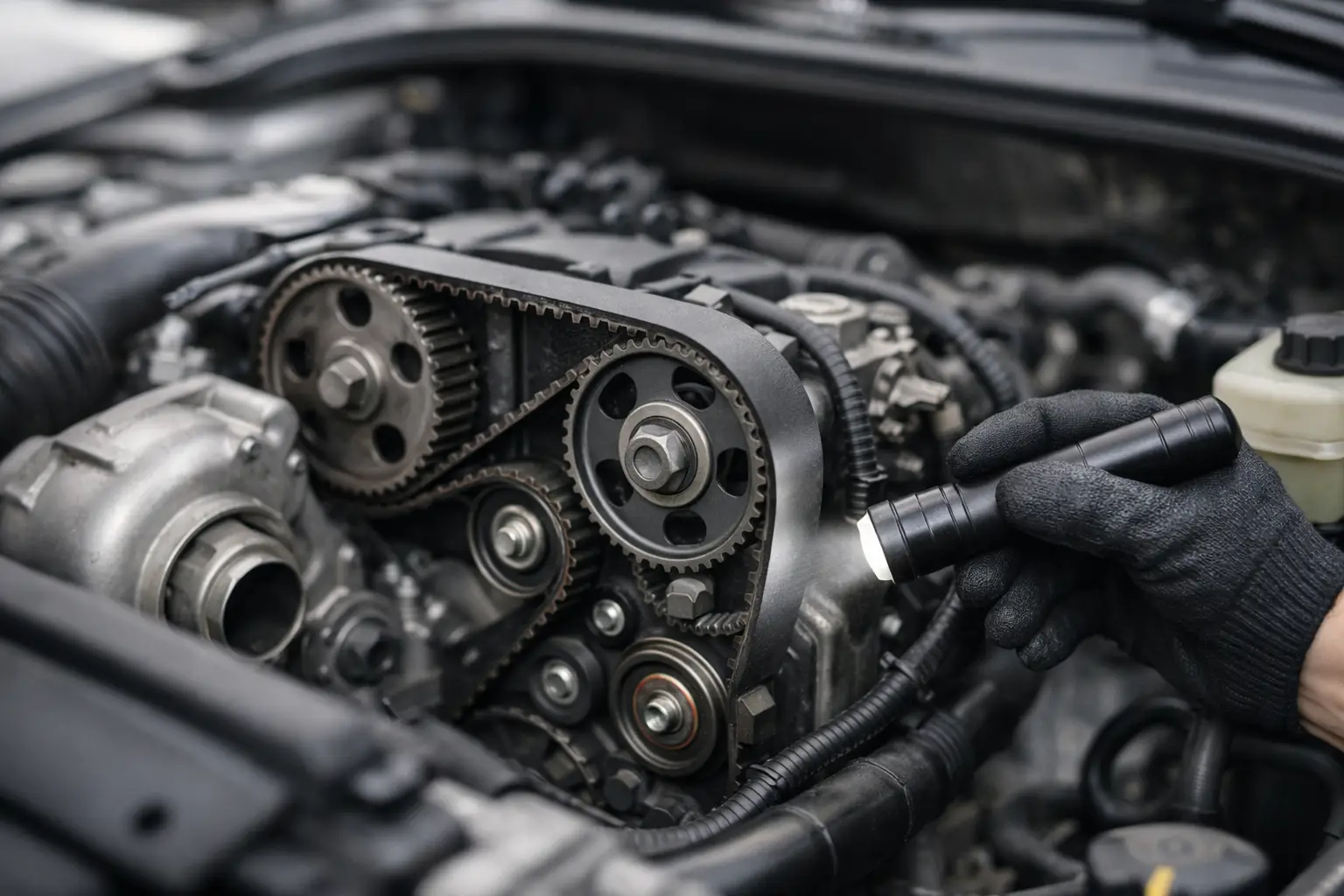
The timing belt keeps the crankshaft and camshaft(s) working in precise synchronisation. It is a reinforced rubber belt with teeth, designed to operate under tension and at high speed. It does not last indefinitely.
Age is one of the biggest risks. Rubber hardens and weakens over time, so a low-mileage car can still be overdue a cambelt replacement. This catches out owners of second cars, low-use family cars and vehicles that spent periods off the road.
The belt itself is not always the only problem. A seized tensioner, worn idler pulley or failing water pump can cause the belt to jump teeth, fray or break. Oil or coolant contamination can also damage belt material. That is why a proper cambelt job is a system replacement, not simply fitting a new belt and hoping the surrounding components carry on as before.
How to prevent timing belt failure: start with the correct interval
There is no one cambelt interval for every VAG vehicle. The required replacement mileage and age limit depend on the engine code, model year and engine design. Two cars that look almost identical can have different schedules, and online advice can easily be wrong for your vehicle.
Check the vehicle handbook, service record and manufacturer maintenance information for the exact engine. If the history is incomplete, treat the cambelt as an unknown rather than assuming it was done because the car is within a familiar mileage range. A stamped service book is useful, but an invoice that states the date, mileage and work completed gives far stronger evidence.
When buying a used Audi, Volkswagen, Škoda or SEAT, ask specifically whether the timing belt, tensioners and water pump were replaced together. If the seller cannot confirm it, budget for the work. It is usually far cheaper than accepting the risk of engine damage.
A timing belt replacement due by age should not be deferred because the car has only covered a few thousand miles. The calendar matters as much as the odometer.
Replace the complete belt drive system
A low quote can be tempting, but cambelt work should never be judged by the belt alone. The sensible approach is to replace the timing belt kit, including tensioners and guide pulleys, and assess or replace the water pump where it is driven by the belt.
Water pumps deserve particular attention. Their bearings and seals wear with use, and a pump that leaks or seizes after a belt-only replacement can force much of the same labour to be carried out again. On suitable applications, fitting a quality water pump at the same time is practical preventative maintenance.
Parts quality matters too. A timing system is not the place for unknown, bargain components. OEM or equivalent-quality parts are designed to meet the required fit, tension and durability standards. The saving from poor-quality parts is small compared with the potential cost of a damaged cylinder head or engine.
At Mechalex, cambelt and water pump replacements are carried out with the same care expected of a main dealer service, without the main dealer cost. Correct locking tools, accurate timing procedures and experienced VAG technicians are essential because a belt fitted one tooth out can cause poor running, warning lights or serious mechanical damage.
Do not ignore leaks, noises or cooling problems
A timing belt often gives no reliable advance warning, which is why planned replacement is so important. However, some related faults should be investigated promptly rather than monitored for weeks.
Oil leaks around the front of the engine can contaminate the belt. Coolant loss may point to a water pump leak. Whining, chirping or rumbling noises from the belt end of the engine can indicate worn pulleys, tensioners or bearings. These symptoms do not prove that the cambelt is at fault, but they do justify a professional inspection.
If a dashboard warning light appears alongside rough running, a misfire or an unusual engine noise, avoid repeated attempts to start the car. A timing issue can become worse with every crank of the engine. Arrange diagnosis before continuing to drive it.
It is also worth remembering that an overheating engine is not simply an inconvenience. If the water pump is part of the timing belt system, a cooling-system fault needs prompt attention to protect both the engine and the belt drive components.
Keep servicing consistent, even between cambelt changes
Routine servicing will not make an old timing belt new, but it helps identify the conditions that shorten its life. Technicians can spot fluid leaks, poor cooling-system condition, damaged covers and signs of previous low-quality repairs before they lead to a more expensive problem.
Use the correct engine oil and have leaks repaired rather than continually topping up. Oil can attack rubber belt material, while neglected leaks can hide a developing fault around crankshaft or camshaft seals. Equally, use the correct coolant specification and maintain the cooling system so the water pump and engine are not subjected to unnecessary stress.
For drivers who use their car mainly on short trips, annual servicing is particularly sensible. Condensation, reduced operating time and long periods standing still are not ideal conditions for any engine bay component. A car that only travels locally around Tadley or Basingstoke may need just as much attention to service dates as a high-mileage motorway commuter.
Be careful after engine repairs and modifications
If work is carried out at the timing-belt end of the engine, ask what has been disturbed and whether the belt system needs to be renewed. Reusing an older belt after certain repairs may be false economy, especially if its age or history is uncertain.
Performance-focused owners should be equally disciplined. A carefully calibrated ECU remap does not automatically cause cambelt failure, but added torque and more enthusiastic driving make sound maintenance even more valuable. Before tuning a higher-mileage vehicle, make sure its scheduled servicing, cooling system and timing-belt replacement are up to date.
The same principle applies after buying a modified car. Do not assume that visible upgrades mean routine maintenance has been handled properly. Verify it with documents.
Choose a workshop that checks the details
Cambelt replacement is not a job to leave to guesswork. VAG engines have specific procedures, timing marks, locking requirements and torque settings. The workshop should identify the engine correctly, fit appropriate parts, renew single-use fixings where required and confirm the engine runs properly once the work is complete.
For Audi, Volkswagen, Škoda and SEAT owners near Reading, Newbury and the surrounding area, a VAG specialist offers a useful middle ground: brand-specific knowledge and current diagnostic equipment, with a more personal service than a main dealer. It can also be easier to plan the work around daily life when practical support, such as a courtesy car where available, reduces disruption.
If you are unsure when your cambelt was last changed, do not wait for it to make a noise or trigger a warning light. Gather the service paperwork, confirm the engine details and arrange an expert check. A planned cambelt and water pump replacement is one of the clearest ways to protect the engine your car relies on every day.