If your Audi, Volkswagen, Škoda or SEAT feels a bit flat off the mark, idles unevenly or seems less eager than it used to, carbon build-up may be part of the story. When people ask what is walnut blasting car owners should know it is a specialist intake valve cleaning process used mainly on direct injection petrol engines, where carbon deposits can build up over time and affect performance.
It is not a gimmick and it is not a general service item for every car. Done properly, walnut blasting is a targeted workshop procedure that removes stubborn carbon from the intake valves and ports without damaging the metal underneath. For many VAG engines, it can make a noticeable difference to drivability, throttle response and smoothness.
What is walnut blasting car owners are hearing about?
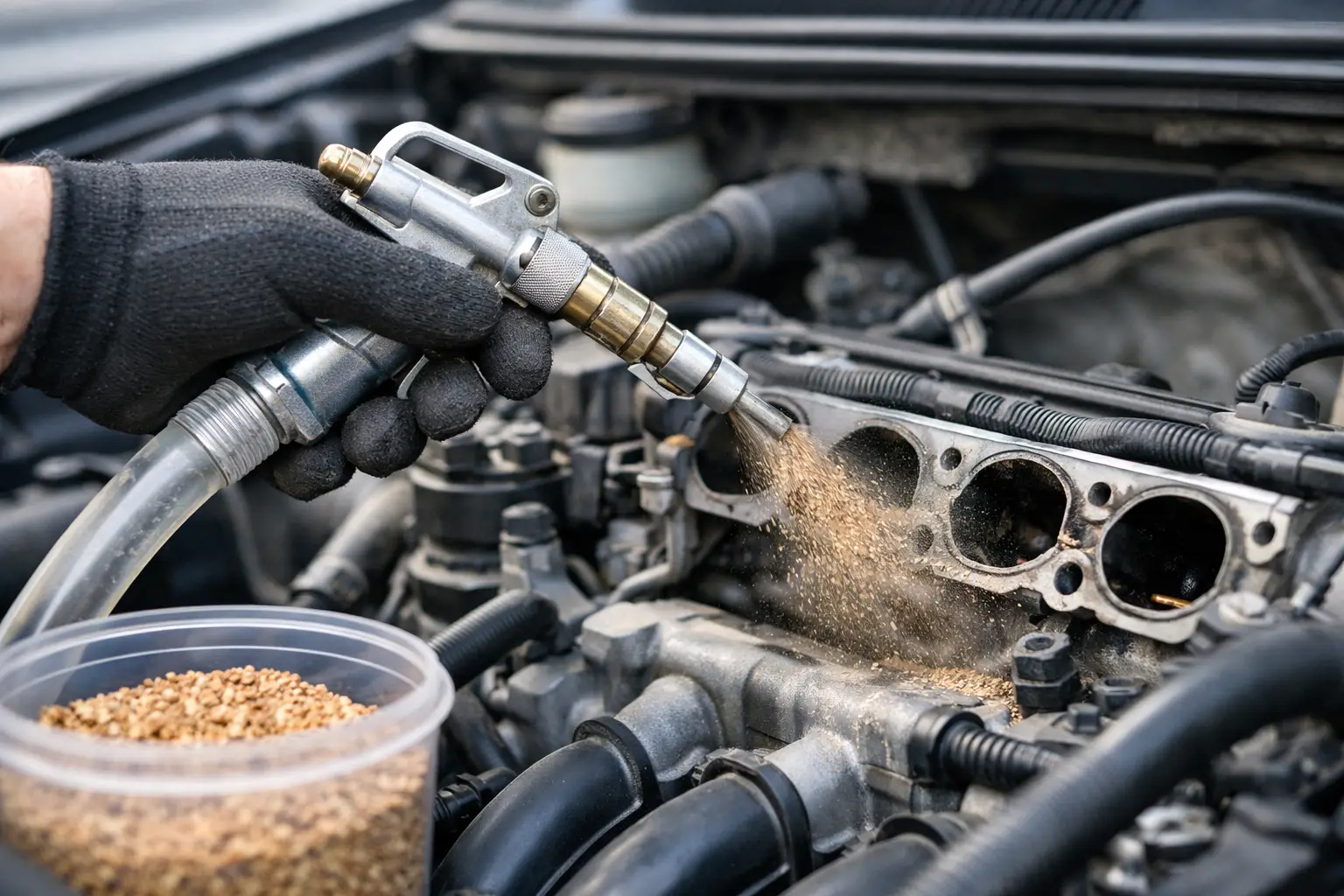
Walnut blasting is a cleaning method that uses finely crushed walnut shell media, blasted with compressed air, to strip carbon deposits from intake valves and intake ports. The shell is hard enough to remove the baked-on carbon but soft enough that, when used correctly, it will not harm the valve surfaces.
The reason this job exists comes down to how many modern petrol engines are designed. On older port-injected engines, fuel passed over the back of the intake valves, which helped keep them cleaner. On direct injection engines, the fuel is injected straight into the combustion chamber instead, so the backs of the intake valves do not get that same washing effect. Over time, oil vapour and combustion residues can stick to the valves and harden into thick carbon deposits.
That build-up can restrict airflow and upset how evenly the engine breathes. The result is often gradual rather than dramatic, which is why some owners get used to it without realising the car has lost some of its original sharpness.
Why direct injection engines get carbon build-up
This issue is especially common on turbocharged direct injection petrol engines, including many found across the Volkswagen Audi Group range. It does not mean the engine is poor or badly maintained. It is simply one of the trade-offs of modern engine design, where efficiency and performance gains come with a few extra maintenance considerations.
Crankcase ventilation systems, short journeys, stop-start use and general age can all contribute. Some engines are more prone than others, and driving style matters too. A car used mainly for local trips may build deposits differently from one regularly driven on longer motorway runs, but neither is completely immune.
That is also why additives poured into the fuel tank usually do very little for this specific problem. If the fuel never passes over the back of the intake valves, it cannot clean those surfaces in the way many people assume.
How the walnut blasting process works
The job starts with removing the intake manifold to gain access to the intake ports and valves. Once exposed, each cylinder is worked on carefully, usually with the valves in the correct closed position so the media does not enter the combustion chamber.
A specialist blasting tool is then used to fire crushed walnut shell at the carbon deposits while a vacuum system removes the loosened material. The technician works methodically, port by port, until the heavy build-up is cleared away. It is a workshop job that depends on proper access, the right equipment and experience with the engine in question.
This is not the same as spraying a cleaner into the intake and hoping for the best. Proper walnut blasting is far more thorough because it physically removes the deposits rather than trying to soften them from a distance.
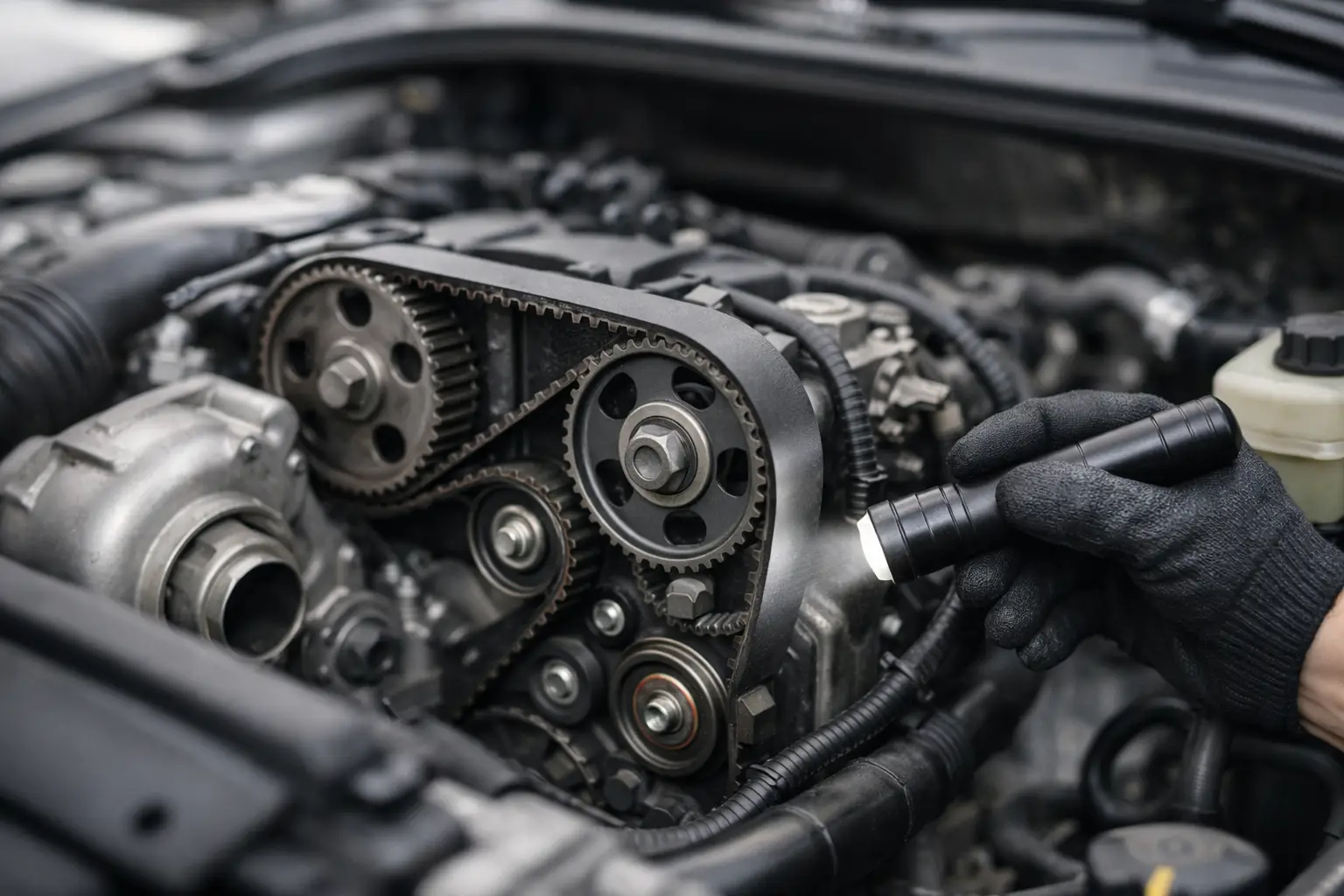
On many VAG engines, this is also a good opportunity to inspect related components and gaskets during reassembly. A careful job matters because access can be tight and modern engines do not reward shortcuts.
What symptoms can carbon build-up cause?
Not every car with carbon build-up will show obvious signs, but there are some common patterns. Owners often report rough or slightly lumpy idle, hesitation under acceleration, reduced throttle response and weaker fuel economy than expected. In some cases the engine may feel strangled at higher revs, or simply less smooth than it used to.
Sometimes there will be fault codes or misfires, but not always. Carbon build-up can be a hidden issue that only becomes clear when the inlet system is inspected. That is why proper diagnosis matters. A lack of performance can also come from ignition faults, boost leaks, worn components or sensor issues, so it is worth confirming the cause rather than jumping straight to a cleaning procedure.
When is walnut blasting worth doing?
It depends on the engine, mileage, symptoms and how the car is used. Some owners book walnut blasting because there is a clear drivability issue. Others choose it as preventative maintenance once mileage builds and intake deposits are likely.
As a rough guide, many direct injection petrol engines start to show meaningful carbon accumulation somewhere between 40,000 and 80,000 miles, though there is no single rule. One car may need it sooner, another later. Service history, journey type and engine family all make a difference.
If your car is running well and there is no evidence of heavy build-up, there may be no immediate reason to do it. If there are symptoms, though, especially on a known direct injection VAG engine, walnut blasting can be a sensible next step once other faults have been ruled out.
What is walnut blasting car cleaning not able to fix?
This is where a bit of honesty matters. Walnut blasting is very effective at removing intake valve carbon, but it is not a cure-all. It will not fix worn spark plugs, failing coil packs, injector faults, timing issues, turbocharger problems or DSG concerns. It also will not repair mechanical wear elsewhere in the engine.
If a workshop sells it as the answer to every rough-running petrol car, be cautious. The right approach is diagnosis first, then cleaning when it is genuinely relevant.
It is also worth saying that results vary. On a heavily carboned engine with noticeable restriction, the improvement can feel substantial. On a car with only moderate build-up, the gain may be more subtle – smoother idle, cleaner pickup, better consistency rather than a dramatic transformation.
Is walnut blasting safe for your engine?
When carried out properly, yes. The walnut shell media is chosen because it is abrasive enough to remove carbon but far less aggressive than the metal components being cleaned. The key phrase is when carried out properly.
The technician needs to control access, valve position, vacuum extraction and clean-up carefully. This is not a job for guesswork. On specialist VAG engines, experience counts because layout, access and common fault patterns differ across models.
That is one reason many owners prefer an independent workshop with genuine brand familiarity rather than a one-size-fits-all approach. If your car is your daily transport, you want the cause identified properly and the work completed without creating fresh problems.
How long does walnut blasting take?
It varies by engine and access, but it is usually not a quick while-you-wait treatment. Intake removal, careful blasting, reassembly and checks all take time. Some engines are straightforward enough; others are far more involved because of packaging and component layout.
For owners around Aldermaston, Tadley, Basingstoke, Reading and Newbury, that practical side matters as much as the technical side. If your car is needed for commuting or family use, it helps to book with a workshop that plans the job properly rather than squeezing it in around easier service work.
Is it worth it on a higher-mileage VAG car?
In many cases, yes, especially if you plan to keep the car and want it running as it should. A well-maintained higher-mileage Audi, Volkswagen, Škoda or SEAT can still be an excellent car to own, but direct injection carbon build-up is one of those issues that tends to creep in quietly.
For enthusiasts, the appeal is obvious – restoring lost response and airflow. For everyday drivers, the benefit is usually more about smoothness, consistency and getting the engine back to the condition it should be in. Neither reason is wrong. It just depends what you want from the car.
At Mechalex, this is the sort of work that sits neatly between diagnostics and proper specialist maintenance. It is not flashy. It is simply one of those jobs that can make a modern VAG petrol engine feel healthier again when carbon deposits are holding it back.
If you have been wondering what is walnut blasting car forums keep mentioning, the simple answer is this: it is a specialist way to remove intake carbon that direct injection engines often cannot avoid. The useful question is not whether the term sounds impressive, but whether your engine is showing the signs that make it worth doing.