
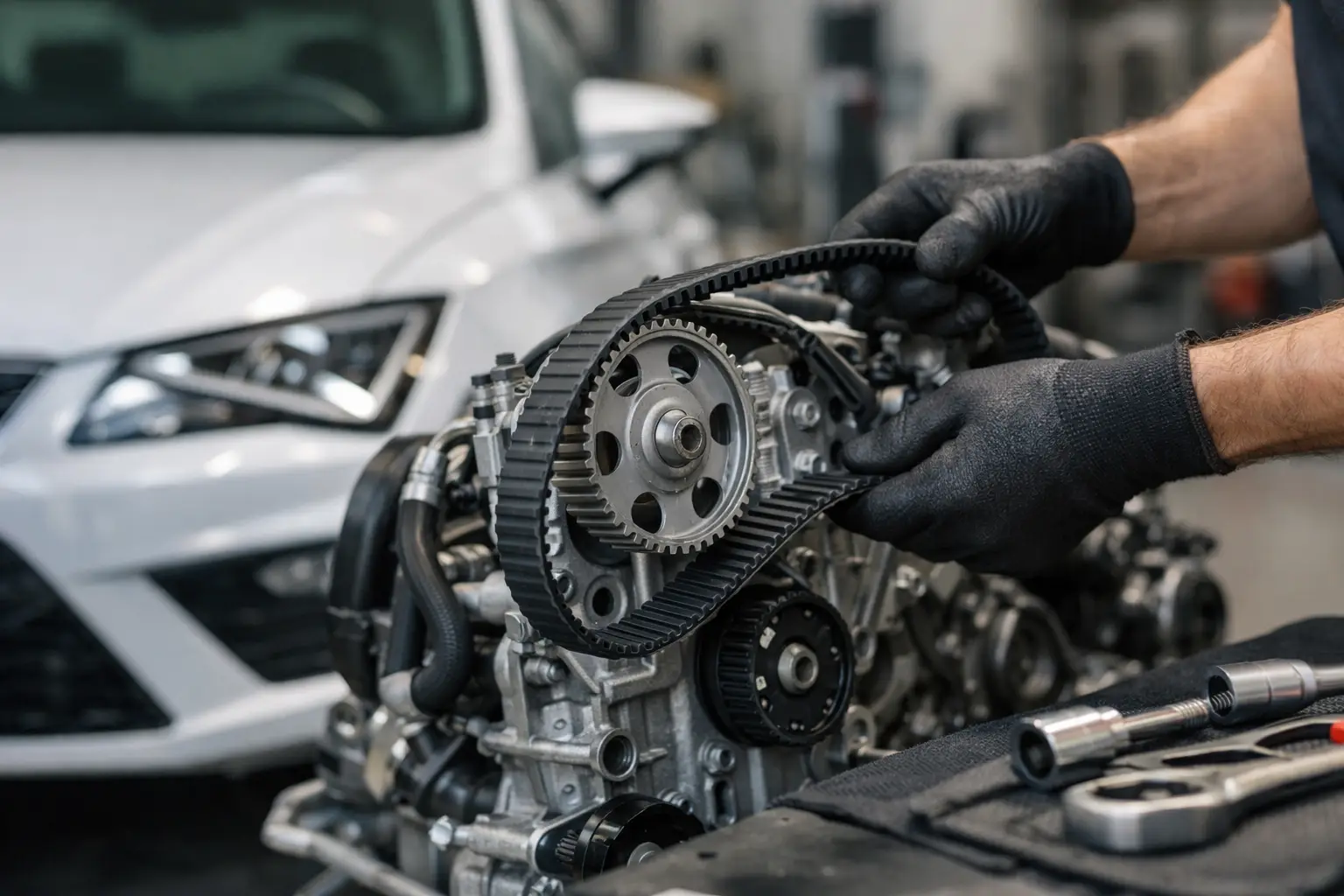
A timing belt is one of those jobs that is easy to put off – right up until it becomes the most expensive thing about the car. If you are looking for SEAT timing belt replacement advice, the key point is simple: treat the belt interval seriously, because on many SEAT engines a failed belt can cause major internal engine damage in seconds.
For most owners, this is not really about belts in isolation. It is about protecting a daily driver that needs to start every morning, handle the school run, the commute and the weekend miles without drama. Get the timing belt done at the right time, with the right parts, and it is preventative maintenance. Leave it too long and it can quickly turn into valves, cylinder head work and a bill far beyond the cost of scheduled replacement.
SEAT timing belt replacement advice – start with the engine, not the badge
One of the biggest mistakes owners make is assuming every SEAT model follows the same rule. It does not. The correct timing belt interval depends on the exact engine fitted, the model year and in some cases the service history already carried out on the car.
A SEAT Ibiza, Leon, Altea or Ateca may share engines and platform parts with Volkswagen, Audi and Škoda models, which is why VAG specialist knowledge matters. Some engines use timing chains, some use belts, and belt intervals can vary even within the same model range. The registration alone is not always enough to make the right call without checking the engine code and manufacturer schedule.
That is why good SEAT timing belt replacement advice always starts with proper identification of the vehicle. Guesswork is where expensive mistakes begin.
When should a SEAT timing belt be replaced?
The honest answer is that it depends on the engine. There is no single mileage or age figure that covers every SEAT on the road. Some belts are replaced primarily on mileage, others on time, and for many cars both matter.
Age is often overlooked. A car that has covered low miles can still need a timing belt because the belt material, tensioners and related components all age. A ten-year-old car that has done modest mileage is not automatically safe. In fact, low-mileage cars can be the ones that catch owners out because the odometer looks reassuring while the belt is simply old.
Driving style and use also make a difference. Frequent short trips, repeated heat cycles and stop-start use are not ideal conditions for long-term belt life. If the car is a commuter vehicle doing regular local runs around Basingstoke, Reading or Newbury rather than steady motorway miles, age-based replacement becomes even more relevant.
If you have recently bought a used SEAT and there is no clear proof the timing belt has been done, assume nothing. A seller saying it was replaced is not the same as an invoice showing when, by whom and what parts were fitted.
Do timing belts give warning signs before they fail?
Sometimes owners ask if they can wait until there is a noise, a fault light or some obvious symptom. The problem is that timing belts often do not give much warning at all.
You might see signs such as cracking, contamination, unusual noises from tensioners or pulleys, or coolant issues linked to a failing water pump. But many belts fail without an obvious clue to the driver. That is what makes them so different from wear items like brakes or tyres, where the car usually gives more gradual feedback.
If a belt does begin to deteriorate visibly, that is already a concern. A timing belt is not something to run close to failure in the hope of getting a few more months from it.
Why the water pump matters at the same time
On many SEAT engines, timing belt replacement should not be viewed as just a belt-only job. The belt system usually includes tensioners, idlers and, on many applications, the water pump.
This matters because the labour overlap is significant. If the front of the engine has to be stripped to access the timing belt, it rarely makes sense to leave an older water pump in place just to save a smaller amount now. If the pump fails later, much of the same labour has to be paid for again.
There is also the reliability side. A worn or leaking water pump can affect the belt system itself, and coolant leaks where they should not be can create bigger problems. Replacing the belt kit and water pump together is usually the sensible route, especially if you plan to keep the car.
Cheap timing belt jobs usually cost more later
Not all timing belt replacements are equal. This is where owners can get caught between a tempting low quote and the job the car actually needs.
A proper timing belt replacement is about more than fitting a belt and sending the vehicle out the door. Correct locking tools, correct timing procedure, quality OEM or equivalent parts, replacement of the right supporting components and proper checks afterwards all matter. On VAG engines, accuracy matters. A small error in timing is not a small issue.
The same goes for parts quality. Very cheap kits may look like a saving, but if a tensioner, idler or water pump is poor quality, the belt job is only as good as the weakest component installed with it. Saving money on a critical engine maintenance job can be a false economy.
What affects the cost?
Owners often want a single figure, but timing belt replacement costs vary for sensible reasons. Engine layout, access, the exact parts required and whether the water pump is driven by the timing belt all influence the price. Some engines are straightforward by comparison, while others take more labour and more components.
What matters more than chasing the lowest number is understanding what the quote includes. Ask whether the tensioners and idlers are included, whether the water pump is being replaced where appropriate, and whether the workshop is using OEM or equivalent quality parts. A proper quote should make this clear.
If a quote seems much lower than others, the question is not just why it is cheaper. The better question is what has been left out.
SEAT timing belt replacement advice for used car buyers
If you have just bought a SEAT, or are about to, the timing belt should be near the top of your checklist. This is especially true if the car is around the age or mileage where replacement is commonly due.
A stamped service book is useful, but it is not always enough. Look for itemised invoices. You want evidence of the date, mileage and the parts replaced. Ideally, that record should show a timing belt kit rather than a vague note saying “belt checked” or similar wording.
If the history is incomplete, budget for the work. It is far better to control the timing of the job than wait for the engine to decide for you.
Why VAG specialist experience helps
SEAT owners are often told they need dealer-level knowledge for major engine work, but that does not mean they need main dealer pricing. What matters is whether the workshop understands VAG platforms properly, has the right tooling and follows the correct procedures for the exact engine in question.
That is where a specialist independent can make a real difference. A workshop familiar with Audi, Volkswagen, Škoda and SEAT engines will usually know the common service requirements, the known weak points and the parts standards that protect long-term reliability.
At Mechalex, timing belt and water pump work is part of the day-to-day job on VAG vehicles. That means using proper diagnostic and workshop procedures, fitting OEM or equivalent quality components and carrying out the work with the same care owners expect from a main dealer – without the main dealer cost.
What should you do if you are not sure?
If you do not know whether your SEAT has a belt or chain, if the interval is unclear, or if the service history is patchy, the safest approach is to get the car checked before it becomes urgent. Waiting because “it seems fine” is not really a strategy with timing belts.
A quick check against the registration, engine details and service record can often tell you whether the car is due, overdue or safely within interval. That gives you a proper basis for planning the job rather than guessing and hoping.
The best timing belt advice is rarely dramatic. It is simply to replace it on time, replace the related components properly, and use a workshop that knows your engine. A scheduled belt job is inconvenient for a day. A failed one can take the car off the road for a lot longer.