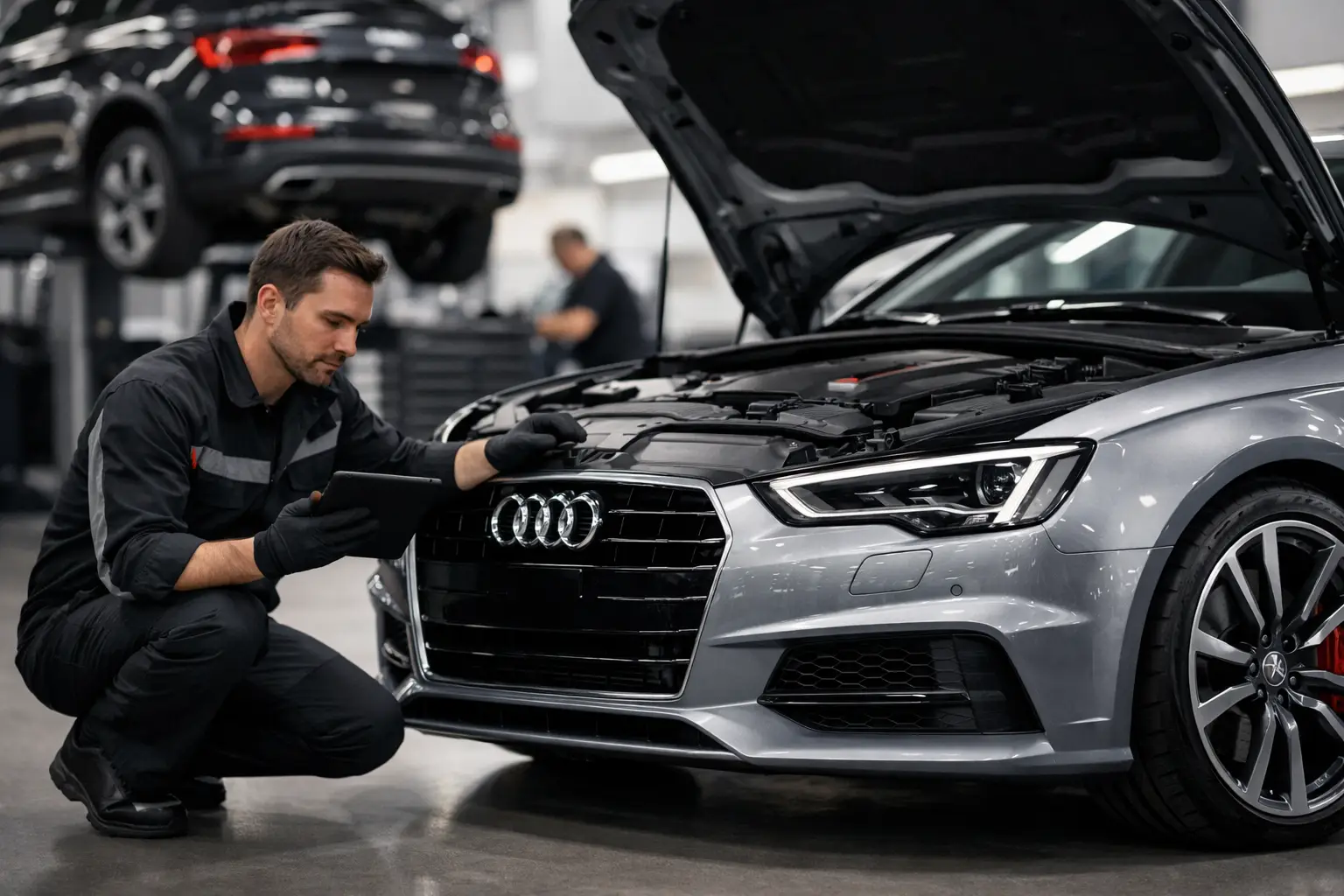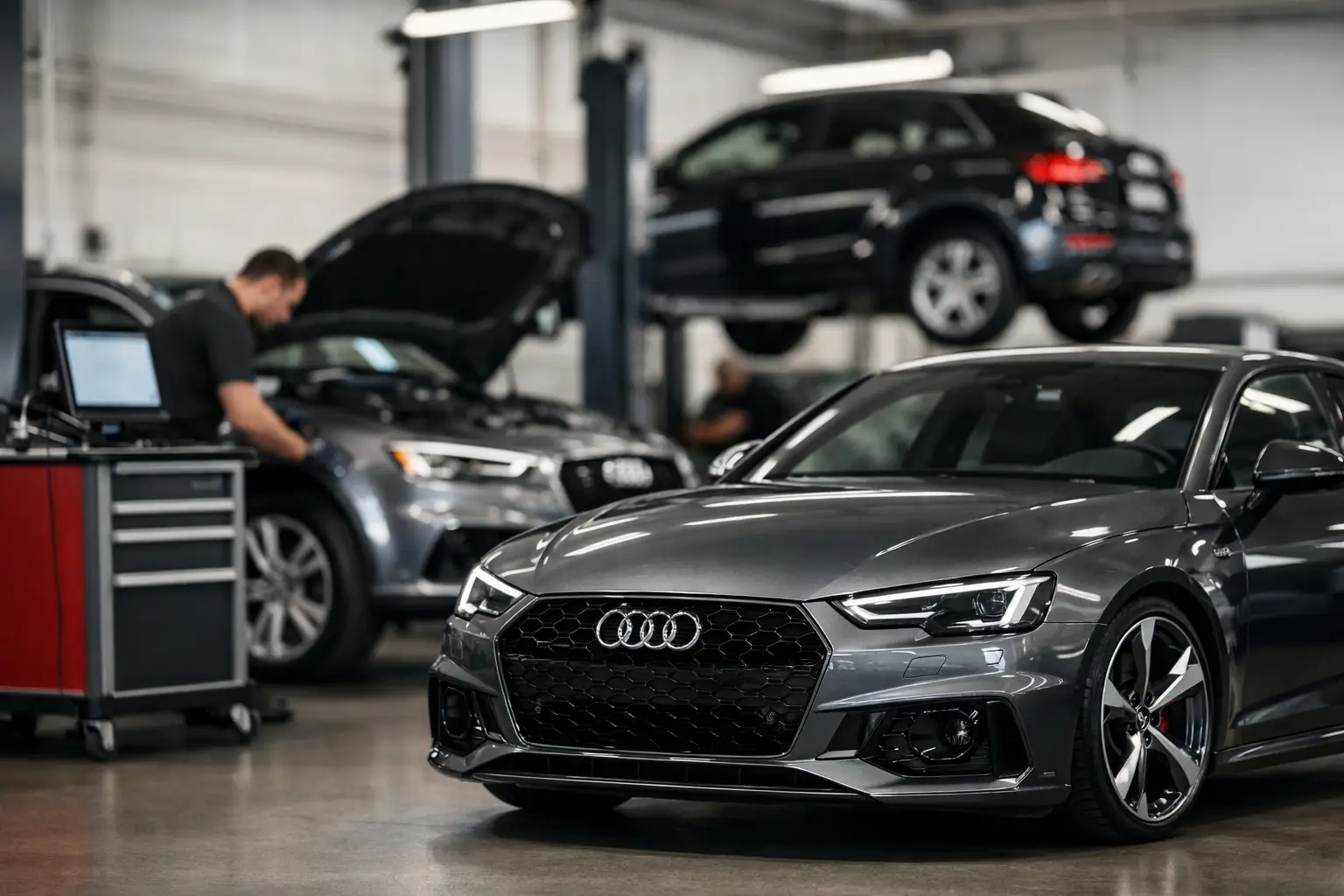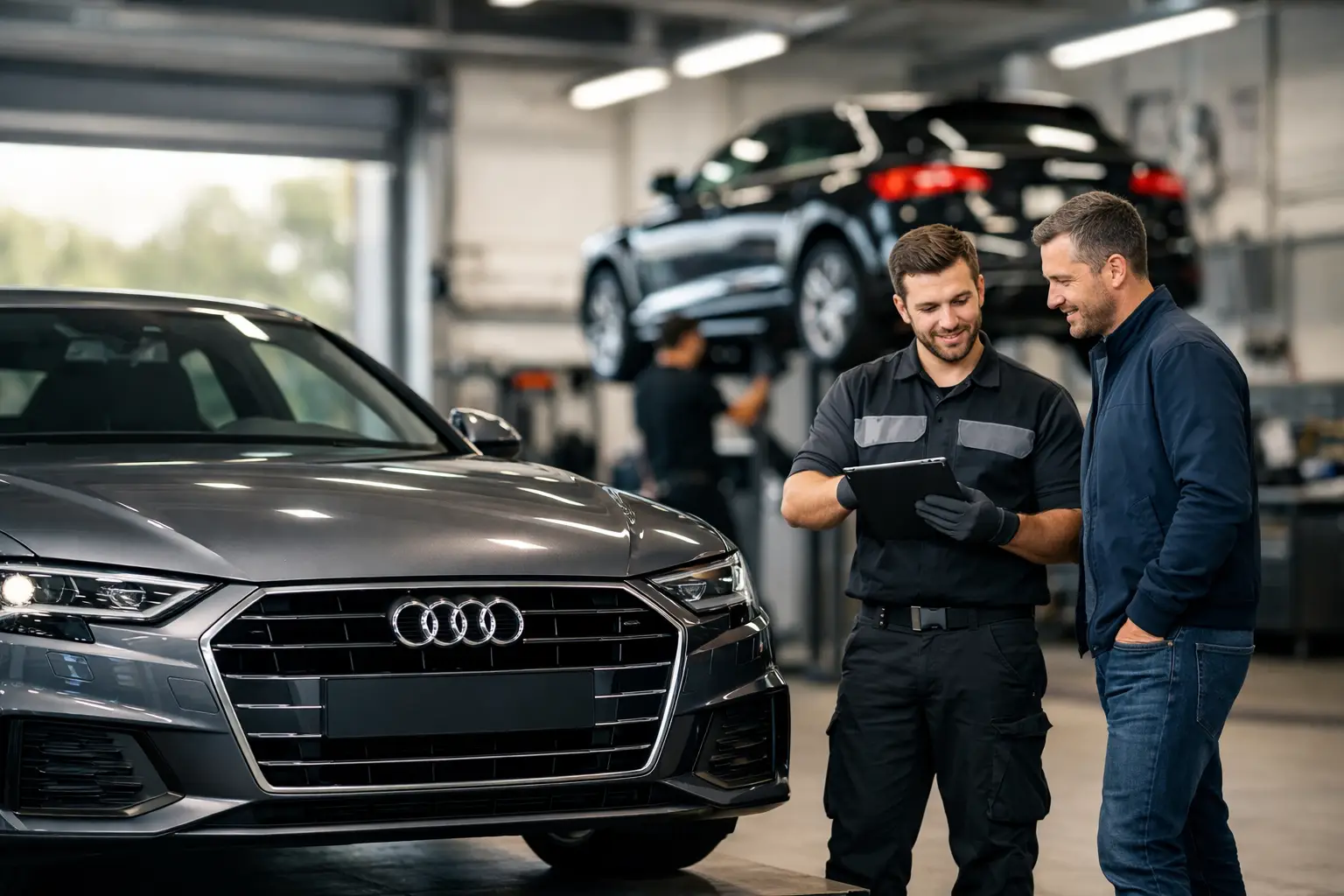

A hesitation when pulling away, a thump into gear at a roundabout, or a flashing PRNDS light on the dash can turn a normal commute into a worry. When DSG repair becomes necessary, acting early usually means a smaller bill, fewer repeat faults and less chance of being left without the car when you need it most.
What DSG repair usually means
DSG stands for Direct Shift Gearbox, used across Audi, Volkswagen, Škoda and SEAT models in several forms. Some units are dry clutch, some are wet clutch, and although they all aim to deliver quick, efficient gear changes, they do not all fail in the same way. That matters, because a proper diagnosis is the difference between fixing the cause and simply changing parts.
In practical terms, DSG repair can cover anything from software adaptation and servicing through to mechatronic work, clutch replacement or internal gearbox repair. A lot of owners hear the word “gearbox” and assume the worst. In reality, some faults sit outside the core mechanical geartrain. Others are service-related and develop because fluid changes have been missed or previous work has not been carried out to the right standard.
Common signs your car may need DSG repair
A DSG fault rarely appears out of nowhere. More often, the car starts dropping hints. You may notice jerky changes at low speed, especially in stop-start traffic. You may feel a delay selecting drive or reverse, or a flare in engine revs between gears. Some cars go into limp mode, some display a gearbox warning message, and some simply feel wrong long before a warning light appears.
Other common symptoms include shuddering when moving off, banging into gear, inconsistent shifting once hot, or the gearbox refusing to select certain gears. On VAG cars, the PRNDS indicator flashing is one of the clearer signs that a fault code needs reading properly rather than guessed at.
The key point is that symptoms overlap. A clutch issue can feel like a mechatronic issue. A fluid problem can mimic a larger gearbox fault. That is why specialist diagnostic work matters so much on these transmissions.
The most common DSG faults on VAG vehicles
Mechatronic unit faults
The mechatronic unit is the control centre of the gearbox, combining electronics, sensors and hydraulic control. When it starts to fail, gear selection can become erratic or disappear altogether. Drivers often report harsh shifting, missed gears, warning lights or the car dropping into neutral unexpectedly.
This is one of the better-known DSG issues, but it is still easy to misdiagnose. Sometimes the unit needs repair, sometimes replacement, and sometimes the underlying cause sits elsewhere in the system. A specialist workshop with current VAG diagnostic equipment can usually narrow that down far more accurately than a generic code read.
Clutch wear and clutch pack problems
Not every DSG uses the same clutch arrangement, so wear patterns differ. In some models, clutch judder or poor take-up develops gradually and becomes worse in traffic or when manoeuvring. In others, excess slip becomes obvious under load.
Clutch wear can be a normal age-and-mileage issue, but driving style, traffic conditions and software history all play a part. Replacing clutches without checking adaptations, fluid condition and related faults is where people often spend money twice.
Fluid and service-related issues
Wet clutch DSG gearboxes need fluid and filter servicing at the correct intervals. Leave it too long and you risk poor shift quality, contamination and accelerated wear. Not every gearbox fault is caused by missed servicing, but enough are made worse by it that service history should always form part of the diagnosis.
Dry clutch units have different maintenance needs, so it is important not to assume one rule applies to every gearbox. This is where VAG-specific knowledge pays off.
Internal mechanical wear
Less commonly, DSG repair involves bearings, gear damage or other internal mechanical faults. These are usually the more expensive outcomes and are the reason early inspection matters. Catching a control or clutch issue before it causes secondary damage can make a significant difference to cost.
Why proper diagnosis matters before any DSG repair
With DSG gearboxes, fault codes tell part of the story, not all of it. A workshop needs to combine code reading with live data, road testing, service history, adaptation values and the way the fault appears in real driving conditions. That is especially true if the issue only shows up hot, under load or during low-speed manoeuvres.
For owners around Aldermaston, Tadley, Basingstoke, Reading and Newbury, using a local VAG specialist is often the sensible middle ground. You get dealer-level understanding of Audi, Volkswagen, Škoda and SEAT systems without the rigidity or cost that can come with the main dealer route. It also makes life easier when the car is used daily for work, school runs or long commutes and downtime needs managing properly.
How much does DSG repair cost?
This depends entirely on the fault. A service and adaptation is a very different job from clutch replacement, and both are very different from a mechatronic repair or full gearbox rebuild. Mileage, model, gearbox type and the amount of secondary wear all affect the final figure.
As a rough guide, the cheapest cases tend to involve servicing, software checks or minor corrective work caught early. Mid-range jobs often involve clutch-related repairs or targeted mechatronic work. The highest bills usually come when the car has been driven with worsening symptoms for too long, allowing one issue to create another.
If you are comparing quotes, make sure they describe the work clearly. A low initial price can look attractive until it turns out the diagnosis was incomplete, fluid specifications were wrong, or essential adaptation procedures were skipped. On DSG systems, doing the job properly matters more than chasing the cheapest line on paper.
Where to get an Audi DSG service or repair
This is one of the most common questions owners ask, especially once a gearbox starts acting up outside warranty. If you are wondering where to get an Audi DSG service, the same logic applies to Volkswagen, Škoda and SEAT models as well. You want a workshop that understands VAG platforms specifically, uses the correct diagnostic tools, follows the proper service process and works to OEM or equivalent parts standards.
That is particularly relevant for drivers in this part of Berkshire and North Hampshire. A specialist base in Aldermaston is convenient for motorists coming from Tadley, Basingstoke, Reading and Newbury, without needing a long detour to a main dealer. For many owners, that means less disruption, clearer communication and a more practical route to getting the car assessed quickly.
When a DSG service can prevent a DSG repair
Not every fault is preventable, but many expensive DSG problems start with neglected maintenance or symptoms that were ignored too long. Routine gearbox servicing, especially on wet clutch units, is one of the simplest ways to protect shift quality and gearbox life.
If your car is already showing signs of trouble, servicing alone may not fix it. But regular servicing can reduce wear, improve operation and help spot issues before they become a major repair. That is why specialist workshops often recommend inspection as soon as the gearbox feels different, even if the car still drives.
Why VAG owners often choose a specialist over a main dealer
There is a straightforward reason. These gearboxes are complex enough to need model-specific knowledge, but common enough that an experienced independent VAG specialist sees the same patterns repeatedly across different cars. That gives owners a good balance of capability, value and practical service.
For local drivers, convenience matters too. Courtesy cars, realistic booking times and direct conversations with people who know the platform can make a real difference when the vehicle is central to daily life. For a family car, commuter car or enthusiast-owned VAG model, that kind of support is often as important as the technical repair itself.
A workshop with more than 30 years of VAG experience, current diagnostic equipment and a reputation for friendly, reliable service is usually better placed to advise honestly on whether your gearbox needs a service, a targeted repair or something more extensive.
What to do if you suspect a DSG fault
If the gearbox is hesitant, noisy, jerky or showing warning lights, the safest move is to stop guessing and get it checked. Continuing to drive may be fine for a short period in some cases, but in others it can turn a manageable repair into a far bigger one. It depends on the symptom, the gearbox type and whether the fault is electronic, hydraulic or mechanical.
If you are local to Aldermaston, Tadley, Basingstoke, Reading or Newbury, having the car inspected by a VAG specialist nearby is often the fastest route to a sensible answer. Not every DSG issue is catastrophic, but very few improve by themselves. Catch it early, diagnose it properly and you give yourself the best chance of a reliable fix that lasts.
If your car has started to feel different through the gears, trust that instinct – a timely check now is usually easier than a major gearbox job later.