
If you have ever booked your Audi, Volkswagen, Škoda or SEAT into a general garage and come away with a vague answer, an expensive estimate, or a fault that returns a week later, you already know why people ask how to choose a VAG specialist. These cars are not unusual in the UK, but they do have their own systems, common faults and service requirements. The right workshop can save you time, money and repeat visits. The wrong one can turn a straightforward job into a frustrating one.
Why choosing a VAG specialist matters
VAG vehicles share platforms, engines, gearboxes and electronic systems across the range, but that does not mean every garage understands them properly. A technician who works on these cars every day will usually recognise familiar patterns faster. That matters when you are dealing with intermittent warning lights, DSG behaviour, Haldex servicing, oil consumption concerns, timing belt intervals or driveline faults that need more than a generic code read.
There is also a difference between being able to service a VAG car and being set up to diagnose one properly. Modern Audi, VW, Škoda and SEAT models rely on complex control modules and brand-specific procedures. If a garage lacks the right equipment or experience, it may end up guessing. Guesswork is expensive.
How to choose a VAG specialist without relying on guesswork
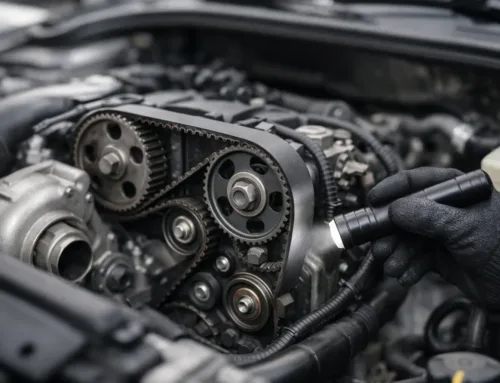
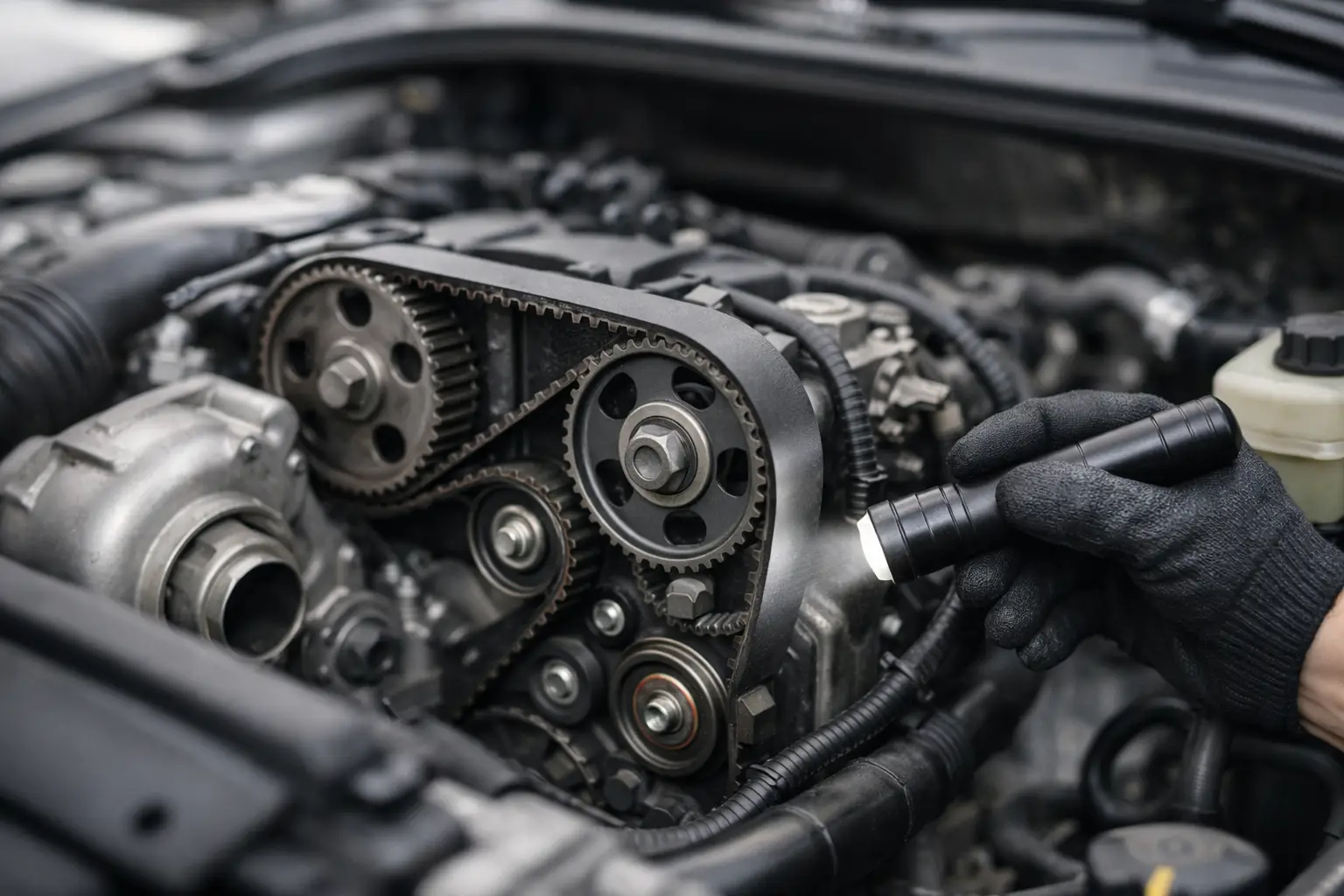
Start with the workshop’s day-to-day focus. A genuine specialist should be comfortable talking about VAG brands in practical terms, not just broad claims about “all makes and models”. If they regularly handle common jobs such as DSG servicing, cambelt and water pump replacement, mechatronic faults, Haldex servicing and advanced diagnostics, that is a good sign. It suggests they are not learning on your car.
Experience matters, but only if it is relevant. Thirty years in the motor trade sounds impressive, yet what you really want to know is how much of that time has been spent working on Volkswagen Audi Group vehicles. A specialist should understand the differences between routine maintenance and model-specific problem solving. For example, a rough-running direct injection petrol engine may need carbon cleaning rather than a basic tune-up approach. A gearbox issue may be software, adaptation-related or mechanical. The right workshop will not jump straight to the most expensive answer.
Look at diagnostics, not just servicing
A lot of garages can carry out an oil service. Fewer are equipped for proper fault-finding.
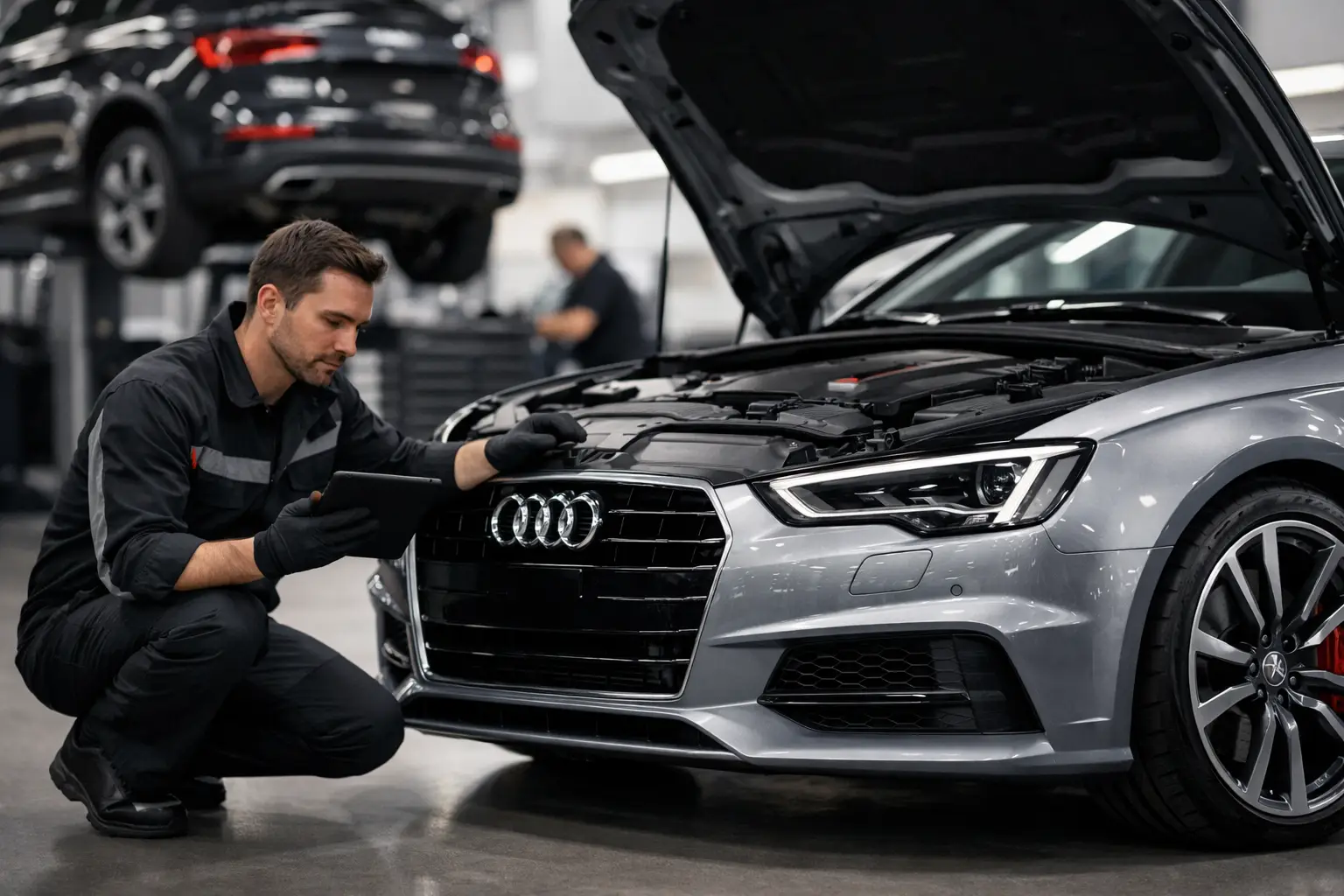
That distinction becomes important when your car has an engine management light, intermittent electrical issue, poor performance, gearbox hesitation or a driveline vibration that no one has pinned down. A proper VAG specialist should use modern diagnostic equipment suited to these vehicles and know how to interpret the results. Reading a fault code is only the start. The real value is knowing whether that code points to the failed part, a wiring issue, a software problem or a symptom caused by something else.
If a garage talks clearly about diagnosis as a process rather than promising an instant answer over the phone, that is usually reassuring. Good fault-finding is methodical. It may not always be quick, but it is usually cheaper than replacing parts on a hunch.
Ask how they approach parts and repair standards
One of the simplest ways to judge a workshop is by asking what quality of parts they use. For VAG servicing and repairs, OEM or equivalent quality parts are the sensible benchmark. That does not always mean the most expensive option, but it does mean parts chosen to meet the standard the car was built around.
This is especially important for items such as filters, ignition components, timing parts, water pumps, suspension arms and drivetrain components. Cheap parts can create new faults, shorten service life or undermine the value of a proper repair. A good specialist should be comfortable explaining what they fit and why.
It is also worth asking whether they follow the correct service schedule for your exact model, engine and usage. A local school-run car, a motorway commuter and a tuned performance model may all need slightly different advice. A specialist who understands VAG ownership in the real world will take that into account.
A main dealer is not your only benchmark
Many owners assume the choice is between the main dealer and a general independent. In reality, the better comparison is often between the main dealer and a true marque specialist.
A good independent VAG workshop can offer dealer-level capability in many areas while being more flexible, more personal and often better value. That may mean more direct communication with the technician, clearer advice on what is urgent and what can wait, and a more practical approach to keeping costs sensible. For owners around Aldermaston, Tadley, Basingstoke, Reading and Newbury, that local specialist route often makes more sense than defaulting to a dealer for every issue.
That said, it depends on the job. Some manufacturer goodwill cases, recalls or very new-car warranty matters may still need the main dealer route. A trustworthy specialist will tell you that rather than trying to force every job through their workshop.
Signs a VAG specialist is worth trusting
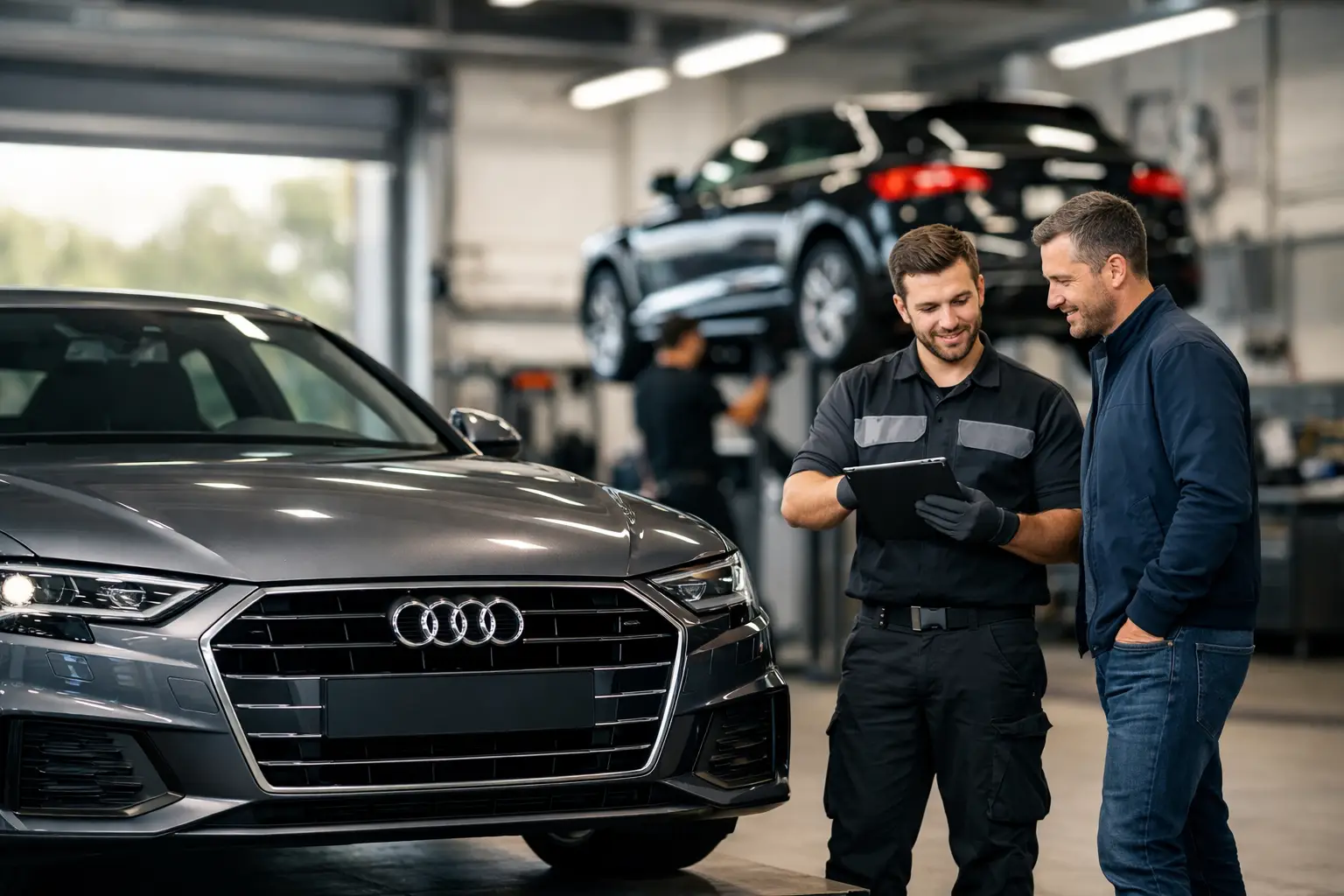
The strongest workshops tend to communicate in a straightforward way. They do not hide behind jargon, but they also do not oversimplify technical work. If you ask about a DSG service, they should be able to explain what is included and why the interval matters. If you ask about a recurring fault, they should explain what testing is needed before quoting for parts.
A few practical signs are worth paying attention to:
- Clear experience with Audi, Volkswagen, Škoda and SEAT
- Up-to-date diagnostic equipment for VAG systems
- OEM or equivalent parts standards
- Confidence with specialist jobs, not just basic servicing
- Honest conversations about cost, timescale and likely outcomes
- Workshop support that fits real life, such as courtesy car availability
None of these on their own proves quality, but together they paint a useful picture.
Reviews help, but specifics matter more than star ratings
Online reviews are useful, but read them carefully. A long list of five-star ratings means less if they only mention friendly staff and quick booking. What you really want is evidence that the garage solved problems properly, communicated well and understood the vehicle.
Look for comments about diagnostics, tricky repairs, dealer alternatives and repeat use. If VAG owners mention returning for servicing, fault-finding and specialist work over several years, that usually says more than a generic “great garage” review.
It is also sensible to notice how a business describes itself. If a workshop claims to specialise in everything from city cars to prestige performance brands to vans to hybrid systems, the word specialist starts to lose meaning. A narrower focus often leads to better results.
Cost matters, but value matters more
Everyone wants fair pricing. Very few people want the cheapest possible repair if it means doing the same job twice.
When deciding how to choose a VAG specialist, focus on value rather than headline labour rate alone. A garage with the right experience may charge a little more per hour than a general repairer, but still cost less overall because diagnosis is faster, the repair is correct first time and the parts fitted are suitable for the car. That is especially true with electrical faults, DSG and Haldex systems, mechatronic work and driveline issues.
You should also expect transparency. A good specialist will normally explain what the inspection or diagnostic stage covers, what they know, what they still need to confirm and where costs may change if more faults are uncovered. Cars do sometimes reveal extra work once dismantled. The key is whether the garage handles that honestly.
Enthusiast work needs the same care as reliability work
If your car is modified or you are considering tuning, choose even more carefully. Performance work on VAG vehicles can be excellent when it is based on a sound car and realistic goals. It can also expose weak components or highlight maintenance that was overdue anyway.
A proper specialist should talk about the condition of the vehicle before recommending ECU remapping, carbon cleaning or drivetrain-related upgrades. If the workshop only wants to sell more power and shows little interest in the car’s health, be cautious. Reliable performance starts with correct servicing, accurate diagnostics and a workshop that understands the whole vehicle.
For local owners looking for that balance, a specialist such as Mechalex is often the right fit because the focus is not just on one type of customer. Daily drivers, family cars, commuter vehicles and enthusiast builds all need the same core thing – competent VAG-specific workmanship.
The best choice usually feels straightforward
When you find the right workshop, the difference is obvious. They ask the right questions, understand the model, explain the work clearly and treat your car like a vehicle they know rather than a problem they hope to figure out. That matters whether you need a routine service or a fault that has already beaten somebody else.
Choose the garage that gives you confidence for the long term, not just the next booking. A specialist relationship is worth more than a one-off cheap quote, especially when your car is the thing that gets you to work, school, appointments and everywhere else life expects you to be.