A slight hesitation pulling away at a roundabout, a thump during an upshift, or a gearbox warning light that appears and then disappears – these are often how Audi S tronic gearbox issues begin. They do not always mean the transmission is about to fail, but they do mean the car needs proper diagnosis. With S tronic gearboxes, guessing is expensive. The right answer depends on the exact fault code, gearbox type, service history and how the symptoms appear when the car is hot, cold or under load.
What is the Audi S tronic gearbox?
S tronic is Audi’s name for its dual-clutch automatic gearbox. In VAG terms, it shares a lot of its design principles with DSG systems used across Audi, Volkswagen, Škoda and SEAT models. Instead of one clutch and a torque converter like a traditional automatic, it uses two clutches to pre-select gears and deliver very fast shifts.
When everything is working as it should, the result is smooth, efficient and responsive. That is why so many Audi drivers like them. The downside is complexity. S tronic gearboxes rely on hydraulic pressure, electronics, clutch operation and software all working together. A fault in one area can feel like a much bigger mechanical failure than it actually is.
Common Audi S tronic gearbox issues
Some faults show up regularly across different Audi models, although the exact pattern varies by engine, gearbox code and age of vehicle.
Jerky take-off and hesitation
One of the most common complaints is a jerky or delayed pull-away, especially in traffic or when manoeuvring. In some cases this comes from clutch wear or clutch adaptation being out of range. In others, the issue may sit within the mechatronic unit, which controls hydraulic functions and gear selection.
Drivers often describe this as the car feeling unsure of itself. It may creep awkwardly, snatch in first gear or hesitate before engaging drive. Sometimes it is worse when the gearbox is hot. Sometimes it is more noticeable first thing in the morning.
Harsh shifting between gears
If the car bangs into gear, shifts too firmly, or feels unsettled on part-throttle changes, there may be a problem with clutch control, gearbox oil condition, software calibration or internal wear. Not every harsh shift means major rebuild territory, but it should not be ignored.
This is where proper fault-finding matters. A worn mount, an engine running issue or an adaptation problem can mimic transmission faults. Replacing gearbox parts without testing the system properly is how owners end up spending money twice.
Warning lights and gearbox in limp mode
When the gearbox warning appears and the car limits itself to certain gears, the transmission control system has detected something outside normal operating limits. That could be pressure loss, sensor failure, electrical faults, clutch regulation issues or mechatronic problems.
Limp mode is the car protecting itself. It is not a fault to clear and forget. If it has happened once, even if the car then drives normally, the stored fault codes and live data need checking before the problem becomes more serious.
Juddering at low speed
Juddering through slow traffic or when reversing can point to clutch wear, contamination or adaptation issues. Some drivers notice it mostly on inclines or when parking. Others feel vibration through the car at low speed but little trouble once moving.
That difference matters. A judder only when cold suggests one line of diagnosis. A judder once the gearbox is fully warm may point elsewhere. S tronic faults are rarely diagnosed well from symptoms alone.
Why these faults happen
Causes behind Audi S tronic gearbox issues
There is no single answer because S tronic gearboxes have been fitted in different forms across the Audi range. Some are wet-clutch units that depend heavily on clean oil and regular servicing. Others have their own known weak points around control systems, clutch wear or internal sensors.
Poor maintenance is one factor. If the gearbox is due an oil and filter service and that is missed, fluid quality deteriorates and wear accelerates. That does not mean every unserviced gearbox will fail immediately, but it does mean the margin for error gets smaller.
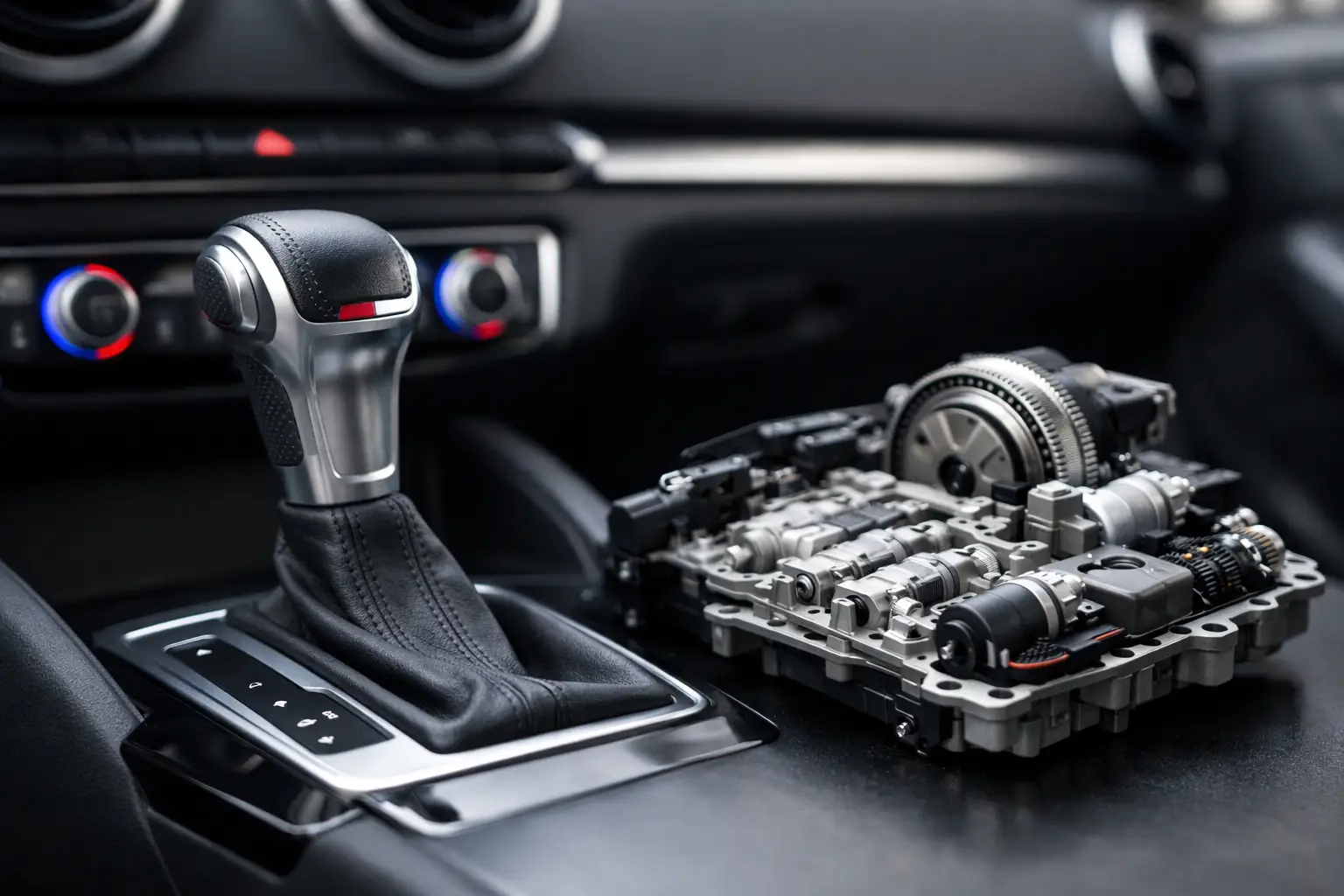
Mechatronic problems are another common cause. The mechatronic unit is effectively the brain and hydraulic controller of the gearbox. When it starts to fail, the symptoms can be inconsistent – odd shifts one day, warning lights the next, and then apparently normal behaviour for a while.
Clutch wear is also common on higher mileage cars or vehicles used heavily in stop-start driving. A motorway commuter and a car used daily for school runs and town traffic can age the same gearbox very differently.
Then there is software and adaptation. Sometimes the hardware is not yet beyond use, but the gearbox needs measured diagnostic work, resets or recalibration after repairs. Other times, adaptation values show that a component is already outside acceptable limits and no amount of resetting will fix it for long.
Can you keep driving with S tronic problems?
Sometimes you can. That does not mean you should.
If the only symptom is a slight hesitation once a week, the car may continue to drive for months. Equally, a gearbox that seems only mildly rough can suddenly drop into limp mode or become unsafe in traffic. It depends on what is causing the fault. An early electrical issue might be manageable if caught quickly. A pressure-related fault or failing clutch pack can deteriorate much faster.
The real risk is secondary damage. Continuing to drive with poor clutch control, contaminated fluid or a mechatronic fault can turn a repairable issue into a more expensive one. That is why early diagnosis usually saves money.
How Audi S tronic gearbox issues should be diagnosed
This is not a job for generic code reading alone. S tronic gearboxes need VAG-specific diagnostic capability, road testing and an understanding of how these units behave in real conditions.
A proper diagnostic process should include checking fault codes, live gearbox data, clutch values, adaptation figures, fluid condition where relevant and how the car behaves from cold to operating temperature. In some cases, software history and previous repair quality matter as well.
That level of testing is important because similar symptoms can have very different causes. A driver may report shuddering and assume the whole gearbox is failing. The workshop may find a service issue, a mechatronic fault, worn clutches or something outside the transmission entirely. The repair only makes sense once the diagnosis is right.
What repairs are common?
The fix depends on the fault found. Some S tronic gearboxes respond well to servicing and adaptation work if caught early and if wear is not advanced. Others need mechatronic repair or replacement, clutch replacement, sensor repair or more in-depth transmission work.
This is where honesty matters. Not every gearbox needs replacing. Not every fault can be solved cheaply either. The sensible approach is to test first, explain what has failed, and match the repair to the car’s age, condition and value.
For owners planning to keep the car, fixing the issue properly is usually the better route than chasing temporary workarounds. For older vehicles, there may be a conversation about whether the repair cost is proportionate. That is not bad news – it is simply the reality of vehicle ownership.
Preventing problems before they start
Servicing makes a real difference, particularly on units with scheduled gearbox oil and filter changes. Following the correct intervals helps protect hydraulic control, clutch operation and internal components.
Driving style also plays a part. Constant creeping in traffic, repeated hill-holding on the throttle and aggressive pull-aways all add strain. These gearboxes are designed to be efficient and quick, but they still benefit from sympathetic use.
If you are buying a used Audi with S tronic, service history matters. So does how the car drives from cold. A short test drive around the block is rarely enough to expose an intermittent gearbox issue. Any sign of hesitation, jerking, delayed engagement or dashboard warnings should be investigated before purchase.
When to get it checked
If your Audi is showing any pattern of shift quality change, hesitation, warning lights or low-speed judder, it is worth getting it looked at sooner rather than later. Waiting for a complete failure is rarely the cheaper option.
At a VAG specialist with the right experience and tooling, these gearboxes can be assessed far more accurately than by guesswork alone. That matters because S tronic faults are often fixable, but only if the diagnosis is based on evidence rather than assumption. For drivers around Aldermaston, Tadley, Basingstoke, Reading and Newbury, that kind of specialist approach can mean dealer-level fault-finding without dealer pricing.
If your car has started to feel different, trust that instinct. Gearboxes usually give you a warning before they give up completely, and catching the problem early gives you the best chance of a sensible repair.