You usually notice suspension problems on the school run, the commute or the familiar stretch of road into Basingstoke or Reading – not because a warning light appears, but because the car simply stops feeling right. The best signs of suspension wear often start small: a dull knock over potholes, extra movement through bends, or a ride that has become harsher than it used to be.
For Audi, Volkswagen, Škoda and SEAT owners, that change in feel matters. Modern VAG cars are designed to ride and handle with precision, so worn dampers, tired bushes or failing links can make a good car feel loose, noisy and unsettled long before something fails completely. Catching it early usually means a simpler repair, less tyre wear and fewer surprises at MOT time.
Why suspension wear is easy to miss
Suspension rarely gives up all at once. It tends to deteriorate gradually, which means many drivers adapt without realising it. If your car has become a little more crashy over speed bumps, a little less settled on the motorway, or a little more reluctant to hold a clean line through a bend, it is easy to put it down to road conditions or tyre pressures.
That is why a proper inspection matters. Suspension is a system, not one part. Springs, dampers, top mounts, control arm bushes, anti-roll bar links and ball joints all affect how the car rides, steers and brakes. One worn component can also accelerate wear elsewhere.
The best signs of suspension wear to look for
Knocking or clunking over bumps
One of the clearest signs is noise. If you hear a knock from the front or rear when driving over potholes, broken surfaces or sleeping policemen, there is a good chance something in the suspension has developed play.
On VAG models, common causes include worn drop links, tired control arm bushes, top mounts and ball joints. The exact source is not always obvious from the driver’s seat. A small anti-roll bar link can sound much worse than it is, while a more serious issue can sometimes sound minor. That is why guessing and replacing parts at random often costs more in the long run.
The ride feels bouncy or unsettled
If the car continues to bounce after a bump instead of settling quickly, worn dampers are a likely culprit. Dampers control spring movement. Once they weaken, the car can feel floaty on faster roads and less composed on uneven surfaces.
Some drivers describe it as the car feeling older than it should. Others notice it most when carrying passengers or luggage. Either way, reduced damper control affects comfort and grip, especially in the wet.
Excessive diving under braking
A car with tired front suspension often dips more than normal when braking. Some forward pitch is expected, but if it feels exaggerated or sudden, it can point to worn dampers or weakened suspension components.
This is not just a comfort issue. When the front of the car dives too much, braking stability can suffer and the vehicle may feel less confidence-inspiring in traffic or on faster A-roads.
Uneven tyre wear
Tyres tell a story. If one edge is wearing faster than the other, or if the tread has developed a scalloped or cupped pattern, suspension wear could be involved. Misalignment is part of the picture, but worn bushes, ball joints or dampers can all contribute.
This is where people often spend money in the wrong order. A wheel alignment may be needed, but if worn suspension parts are allowing movement, the alignment will not hold properly. It makes more sense to inspect the hardware first and then set the geometry once the car is mechanically sound.
Best signs of suspension wear that affect handling
Wandering or vague steering
If the car no longer tracks straight and needs constant small corrections, suspension wear is high on the list of possible causes. Worn bushes and joints can let the wheel position shift slightly under load, which makes the steering feel vague.
On a motorway run towards Newbury or a longer journey from Tadley into Reading, this tends to become more noticeable. The car may feel less planted, particularly in crosswinds or over poor surfaces.
Pulling to one side
A car that pulls left or right can be suffering from more than tyre pressure or alignment issues. Suspension wear can alter the way the car sits and responds under braking or acceleration.
That said, it depends. Pulling can also come from braking faults, tyre construction issues or previous impact damage. This is one of those symptoms where a proper diagnosis matters more than assumptions.
More body roll in corners
If the car leans more than it used to in roundabouts or bends, that change is worth paying attention to. Body roll naturally varies between models, but a clear increase can indicate weak dampers, worn anti-roll bar links or deteriorated bushes.
For drivers who chose a VAG car because it felt stable and predictable, this is often one of the first signs that something underneath is no longer doing its job properly.
Signs you can sometimes see
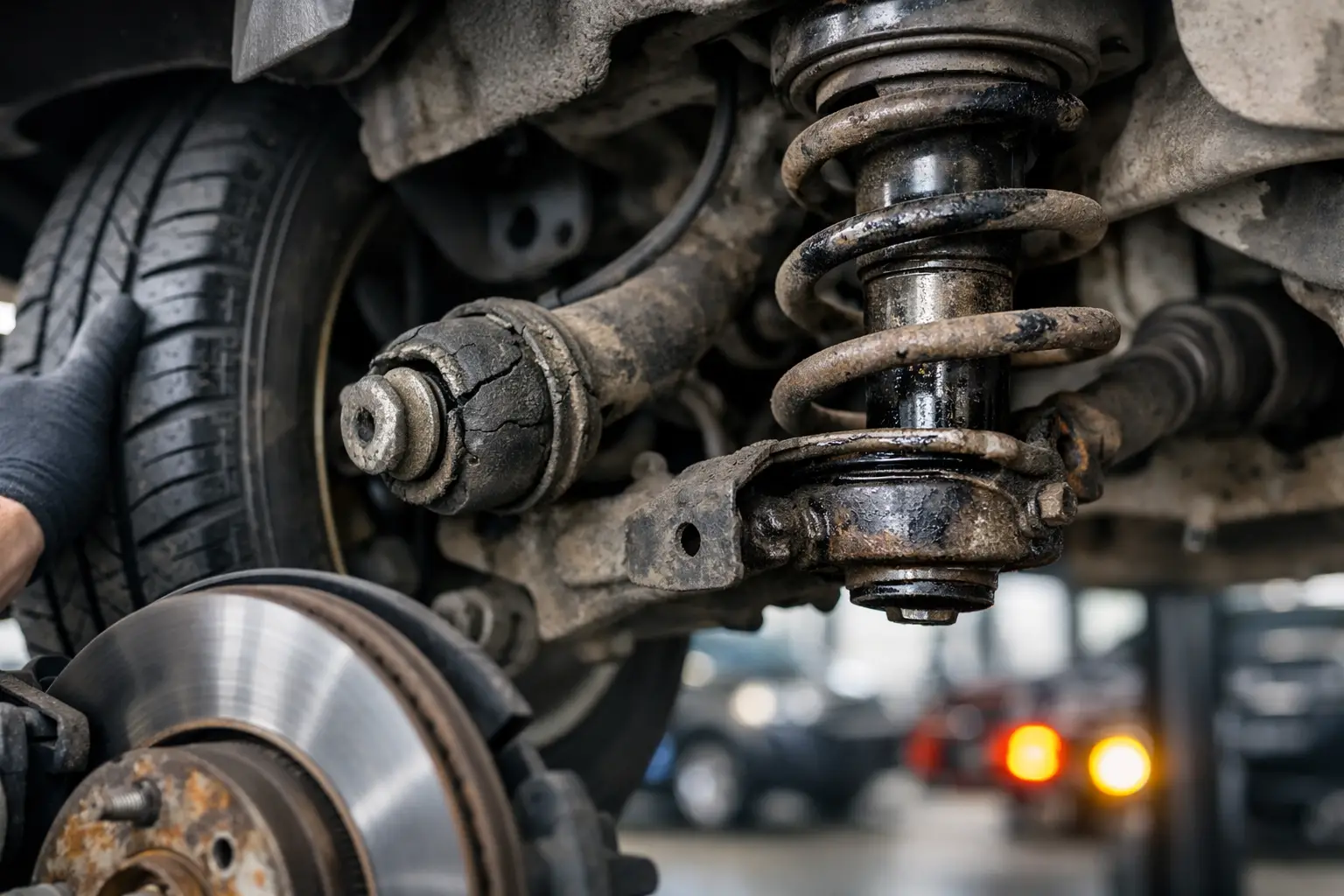
Not every symptom is felt from behind the wheel. Sometimes a quick visual check reveals a problem. Oil leaking from a damper body, a broken coil spring, or a car sitting lower on one corner can all indicate suspension wear or damage.
Broken springs are especially worth mentioning on UK roads, where potholes and poor surfaces do the suspension no favours. Some springs break with an obvious snap and immediate change in ride height. Others crack near the end coil and stay unnoticed until inspection.
If you have recently failed an MOT on suspension items, it is sensible to address the wider condition of the system rather than only the minimum required repair. Parts on the opposite side or on the same axle may be close behind.
Why VAG owners should not leave it too long
Audi, Volkswagen, Škoda and SEAT models often rely on precise suspension geometry to deliver the ride and steering feel they were built for. When wear creeps in, the car can become noisy, less comfortable and more expensive to run.
There is also a knock-on effect. Worn suspension can increase tyre wear, place extra stress on steering components and make it harder to judge whether another issue is tyre-related, alignment-related or truly mechanical. If your car also feels unsettled under power, especially on a quattro or 4WD model, it is worth ruling out drivetrain and suspension issues together rather than treating them as separate guesses.
When to book an inspection
If you have noticed one symptom consistently, book it in. If you have noticed two or three together – such as knocking, uneven tyre wear and vague steering – do not wait for the next service interval.
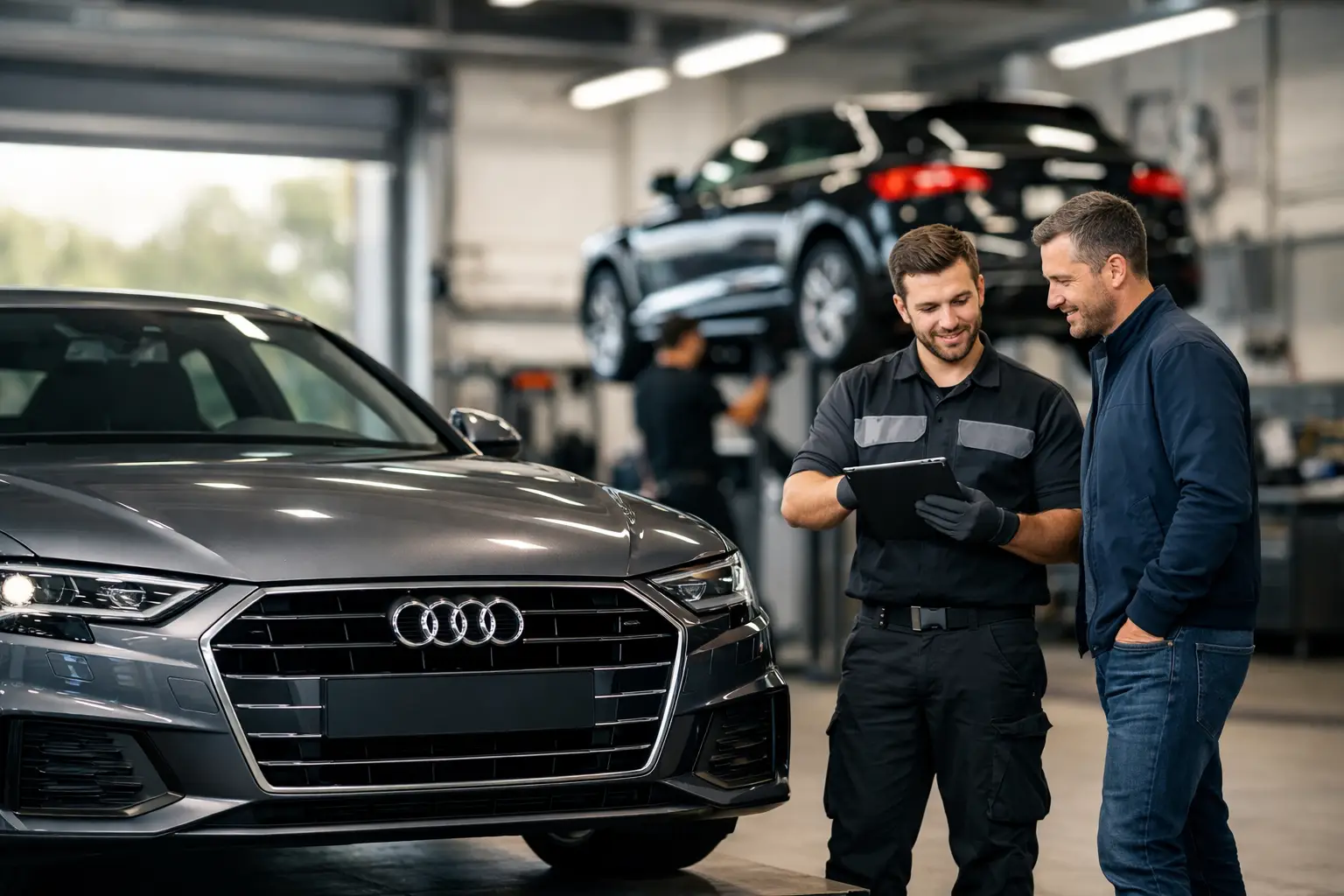
A workshop familiar with VAG platforms can usually narrow things down quickly because the common wear points repeat across many models. That matters if you use your car daily and do not want it off the road longer than necessary. For drivers around Aldermaston, Tadley, Basingstoke, Reading and Newbury, choosing a local specialist can also make the process easier to manage, especially when courtesy car availability and sensible booking times make a difference.
The key is not to chase symptoms with guesswork. Suspension noises can travel through the shell, tyre wear can have multiple causes, and a car that feels unstable may need more than one part. Proper inspection, good-quality OEM or equivalent parts, and alignment where needed will always beat replacing the cheapest visible item and hoping for the best.
What happens during a proper suspension check
A good inspection goes beyond a quick lever test. The technician should assess play in joints and bushes, look for fluid leaks, inspect springs and mounts, check tyre wear patterns and road test the vehicle if required. On some cars, faults only become obvious under load or at a certain speed.
There is also a practical judgement call. Not every slightly worn bush needs immediate replacement, and not every noise points to a major bill. The right advice is honest advice – what needs doing now, what can be monitored, and what is worth replacing in pairs on the same axle for balanced handling.
If your Audi, VW, Škoda or SEAT has stopped feeling as composed as it should, trust that instinct. Cars rarely improve on their own, and the earlier suspension wear is identified, the easier it usually is to put right before it turns into tyres, handling issues and a bigger repair than necessary.