A vibration through the floor at 30-50 mph, a shudder on light throttle, or a droning feel that comes and goes under load usually points to more than just a tyre issue. With VAG 4WD drivetrain vibration diagnosis, the challenge is working out whether the fault is coming from the tyres and wheels, the propshaft, Haldex system, rear differential, engine and gearbox mounts, or even something that only appears when torque is transferred through the driveline.
On Audi, Volkswagen, SEAT and Škoda 4WD models, these faults can be deceptively similar from the driver’s seat. A vibration that feels like a wheel balance problem can actually be a worn coupling bearing, a seized Haldex pump filter issue, excessive movement in a mount, or wear within a CV joint that only shows up under load. That is why proper diagnosis matters more than guessing and replacing parts.
Why VAG 4WD drivetrain vibration diagnosis needs a methodical approach
Modern VAG four-wheel-drive systems are not all identical. Quattro, 4Motion and related platform systems vary by model and generation, and the way the car distributes drive front to rear changes what you feel when something starts to wear. On many transverse-engine cars with Haldex-based four-wheel drive, the rear axle may only be brought in when needed. On longitudinal layouts, the driveline behaviour is different again.
That matters because vibration is often load-sensitive. Some cars are smooth on overrun but vibrate under acceleration. Others feel fine at town speeds and only become rough at motorway pace. A good diagnosis is not simply plugging in a scan tool and reading fault codes. Fault memory can help, but plenty of drivetrain vibration complaints leave no useful code at all.
The starting point is always the same – confirm the symptom, identify the conditions where it appears, and test the whole system rather than chasing the most obvious component.
Common causes of 4WD vibration on VAG vehicles
Tyres and wheels still deserve attention first, because they are common and relatively straightforward to rule out. Uneven tyre wear, mismatched brands, damaged sidewalls, buckled wheels and poor balancing can all mimic a driveline issue. On four-wheel-drive VAG models, tyre circumference differences can also upset the system more than owners expect, especially if one axle has worn significantly more than the other.
After that, the propshaft is high on the list. Worn joints, imbalance, damage from impact, or deterioration in centre support components can create a vibration that builds with road speed. Sometimes the complaint is strongest through the seats and centre tunnel rather than the steering wheel, which is a useful clue.
Haldex-equipped cars add another layer. If servicing has been missed, contamination within the system can affect pump performance and clutch operation. That does not always create a dramatic warning light. Instead, you may get hesitation in torque transfer, shunt, or a vibration that appears during corner exit or moderate acceleration. If you are already wondering where to get an Audi DSG service or Haldex service locally, the answer is the same as for any specialist drivetrain concern – choose a workshop that sees these systems regularly and understands the platform, not one that treats every 4WD setup as interchangeable.
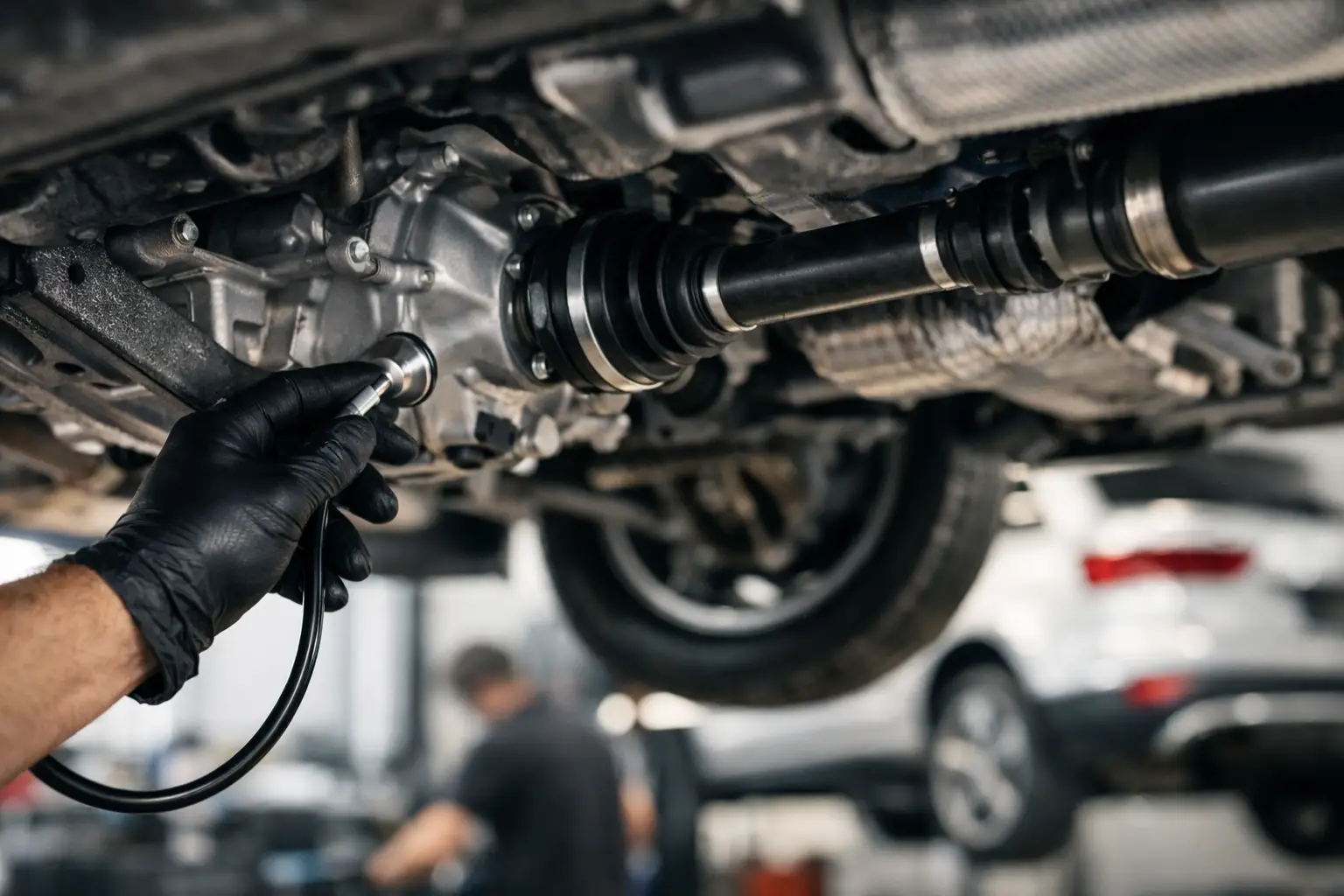
Engine mounts, gearbox mounts and dogbone mounts are another frequent factor. Even when they are not the root cause, worn mounts can amplify normal driveline movement into something the driver feels clearly inside the cabin. Inner CV joints can do the same, especially when they wear in a way that causes vibration under torque without producing the clicking noise many people associate with outer joints.
Rear differential wear is less common than tyre or mount issues, but it does happen. Bearing noise and vibration can overlap, and on some cars the difference between a hum, a drone and a vibration is not obvious until the vehicle is inspected and road-tested properly.
How a proper VAG 4WD drivetrain vibration diagnosis is carried out
The best results come from a structured process. That starts with a detailed conversation about when the vibration happens. Is it under acceleration only? Does it disappear if you lift off? Is it worse from cold? Has the car recently had tyres, suspension work or a clutch or gearbox repair? Small details often point the diagnosis in the right direction.
From there, a road test is essential. Reproducing the exact symptom matters. A vibration at 40 mph in fourth gear under light load tells you something different from a vibration at 70 mph regardless of gear. Good technicians will also pay attention to where the vibration is felt – through the steering wheel, seat base, floor, pedals or whole shell.
Workshop checks then build the picture. Tyres and wheels are inspected for damage, wear pattern and matching sizes. Suspension and steering components are checked for play. Mounts are assessed for excessive movement or collapse. The underside is inspected for signs of impact damage, fluid leaks and driveline play.
On VAG vehicles, diagnostic equipment also plays a part. Haldex operation, stored faults, measured values and adaptation issues may all help, but only when interpreted alongside the physical checks. If the Haldex has been neglected, the system may need service attention before a final judgement can be made on component health.
In some cases, the next step is isolating sections of the driveline. That might mean checking propshaft condition closely, assessing CV joints under the right load conditions, or looking for wear patterns that only show when torque is applied. This is where platform experience makes a difference. The fault is not always where the customer feels it.
Why replacing parts blindly gets expensive fast
Vibration complaints often attract guesswork. A car gets tyres, then a wheel balance, then a mount, then maybe a propshaft, with no firm proof that any of those parts were actually at fault. Sometimes the original problem remains throughout, and the owner is left paying for several attempts rather than one accurate diagnosis.
That is especially true on Audi, VW, Škoda and SEAT 4WD cars because multiple systems interact. A slightly worn mount, ageing tyres and a Haldex service issue can combine into one complaint. Replace only one element and the vibration may improve but not disappear, which makes the real fault harder to pin down afterwards.
A specialist approach saves money by narrowing the issue down first. It also helps avoid fitting poor-quality pattern parts that introduce fresh problems. On driveline work, OEM or equivalent quality matters.
When local specialist support makes sense
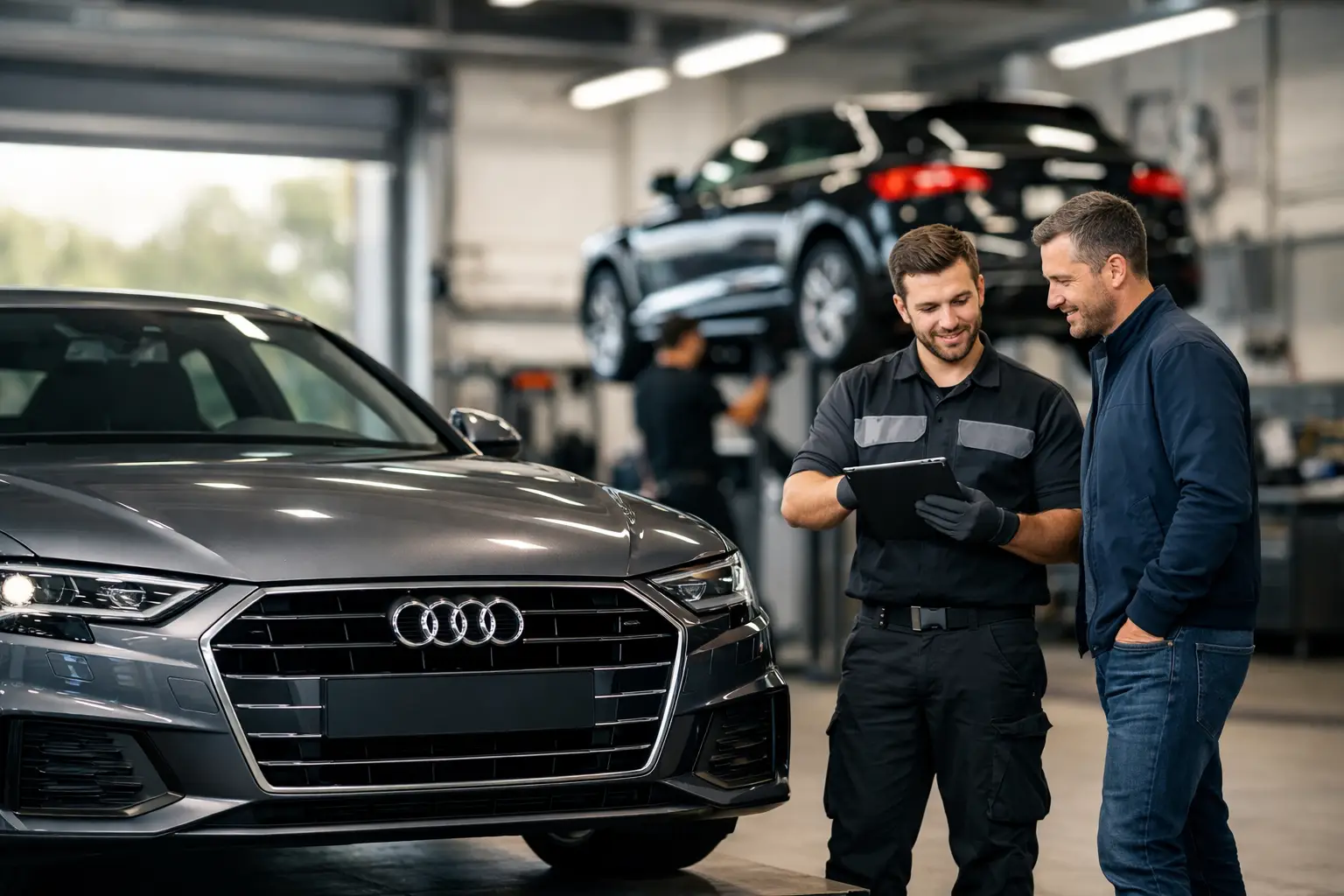
If you are based around Aldermaston, Tadley, Basingstoke, Reading or Newbury, convenience matters almost as much as capability. A daily-driven family SUV or commuter Audi that has developed a vibration is not just an annoyance – it is a disruption. Choosing a VAG specialist close enough to drop off easily, with the right diagnostic equipment and proper familiarity with these common platform faults, makes the process far less stressful.
For local owners, that also means one workshop can usually handle the wider issue rather than just identifying it. If the vibration turns out to be linked to overdue Haldex maintenance, worn mounts, differential concerns or related service work, it can be dealt with properly in the same place. That is often a better experience than bouncing between a tyre depot, a general garage and a main dealer.
Where internal site pages would normally help, this is the sort of job that sits naturally alongside specialist diagnostics, Haldex servicing, drivetrain repairs and VAG brand-specific service pages for Audi, Volkswagen, Škoda and SEAT. For drivers in the wider west Berkshire and north Hampshire area, being near Aldermaston also makes access straightforward from surrounding routes without heading into a larger town centre dealership setup.
Signs you should get it checked sooner rather than later
Some vibrations stay annoying for months. Others point to wear that can spread into more expensive components if ignored. If the car has started shuddering under acceleration, feels rougher in tight manoeuvres, produces a new hum from underneath, or has had recent tyre or suspension work followed by a change in behaviour, it is worth having it assessed.
The same applies if your 4WD system has an uncertain service history. Haldex-equipped cars benefit from proper maintenance, and missed servicing can turn a routine job into a larger repair bill. If you have bought the car used and there is no clear evidence of drivetrain service work, that is a sensible place to start.
A good workshop should be able to tell you whether the issue is urgent, whether it is safe to keep driving short term, and whether the next step is diagnostic time, service work or repair.
For VAG owners, the real value in accurate diagnosis is confidence. You are not paying for guesswork, and you are not being told to replace half the driveline just to see what happens. You are getting a clear route to the fault, a sensible plan to fix it properly, and a car that feels right again when you head back out on the road.